Zinc Anode Block
CN → US| HS编码 | 关税税率 | 原产国 | 目的国 | 文档 |
|---|---|---|---|---|
| 7901110000 | 36.5% | CN | US | 官方文档 |
| 7901200000 | 38.0% | CN | US | 官方文档 |
| 8543309040 | 37.6% | CN | US | 官方文档 |
| 8543309080 | 37.6% | CN | US | 官方文档 |
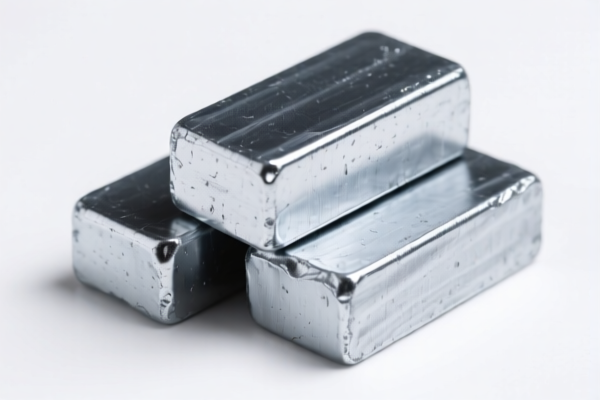
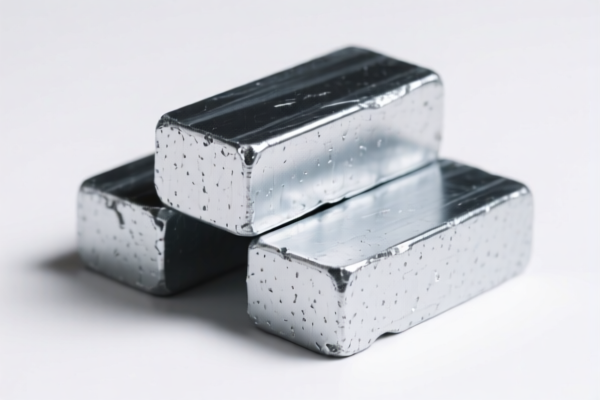
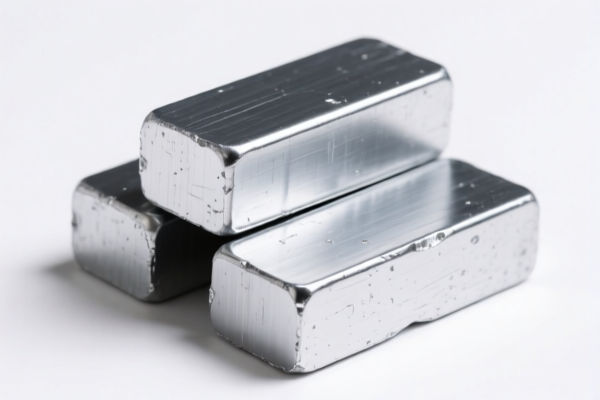
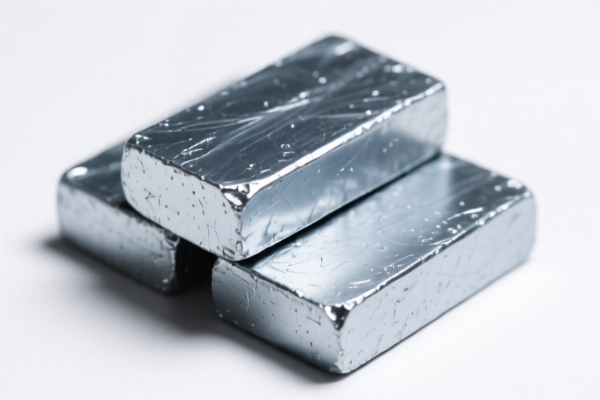
商品图片
AI分析
⚡ Zinc Anode Block (Zinc Sacrificial Anode)
🌐 HS Code Reference & Customs Clearance Guide | 2026 Latest Tariff Analysis | Professional Clearance Strategy
📌 I. Product Definition & Classification: Do You Really Understand "Zinc Anode Block"?
Zinc Anode Blocks are critical components used in cathodic protection systems. They are designed to corrode preferentially, thereby protecting steel or iron structures (such as pipelines, ship hulls, offshore platforms, and water tanks) from rust and corrosion.
In international trade, the classification depends heavily on the form (forged vs. alloy) and the specific application (as a raw material vs. a specific part of an electrolytic device).
⚠️ Key Distinction Point:
- If the block is simply unwrought zinc or zinc alloy (raw material form) → Classified under Chapter 79.
- If the block is specifically identified as a part/component of an electrolytic or electroplating apparatus → Classified under Chapter 85.
📦 II. HS Code Classification Details (2026 Latest Tariff Authority Comparison)
| HS Code | Product Description | Application Scenario | Material/Form |
|---|---|---|---|
7901.11.00.00 |
Zinc, unwrought, containing ≥ 99.99% zinc by weight | High-purity zinc blocks for industrial smelting or casting | ✅ Unwrought / High Purity |
7901.20.00.00 |
Zinc, unwrought, other than above | Zinc alloys or lower-purity unwrought zinc blocks | ✅ Unwrought / Alloy or Lower Purity |
8543.30.90.40 |
Parts of electroplating apparatus, other than for magnesium anodes | Specific parts of electrolytic devices used for metal finishing | ✅ Component of Electrolytic Device |
8543.30.90.80 |
Other parts of electroplating apparatus, for electrolytic/electroplating uses | General purpose anodes used in specific electroplating lines | ✅ Component of Electrolytic Device |
🔍 Key Reminder:
- Misclassification Risk: Many traders mistakenly classify all zinc blocks under Chapter 79. However, if the product is explicitly marketed or designed as a part of an electroplating machine (rather than just raw zinc), it may fall under 8543.
- Material vs. Function:
- Pure/Alloy Zinc Block → 7901
- Functional Anode Part → 8543
💰 III. 2026 Latest Tariff Rate Breakdown (Including Surcharges & Policy Add-ons)
✅ Applicable Country: United States (US)
✅ Country of Origin: China (CN)
✅ Effective Date: 2025 November 10 onwards (including subsequent imports)
🎯 1. 7901.11.00.00 — Zinc, Unwrought, ≥ 99.99% Zinc
| Item | Content |
|---|---|
| Base Tariff Rate | 1.5% (ad valorem) |
| Section 301 Surcharge | +25.0% (Under US Trade Act Section 301) |
| Section 122 Surcharge | +10.0% (Specific tariff provision) |
| Total Tariff Rate | 36.5% |
| Tax Calculation | CIF Value × 36.5% |
| De Minimis Eligibility | ❌ Not Eligible (High tariff rates exclude low-value shipments from de minimis exemption) |
| Legal Path | Section 301: 7901.11.00.00 → Section 122: +10% |
📌 Explanation:
- This is the standard tariff for high-purity unwrought zinc.
- The 25% Section 301 tariff is the dominant cost driver.
- The 10% Section 122 is an additional penalty surcharge applicable to certain Chinese-origin goods.
🎯 2. 7901.20.00.00 — Zinc, Unwrought, Other
| Item | Content |
|---|---|
| Base Tariff Rate | 3.0% (ad valorem) |
| Section 301 Surcharge | +25.0% |
| Section 122 Surcharge | +10.0% |
| Total Tariff Rate | 38.0% |
| Tax Calculation | CIF Value × 38.0% |
| De Minimis Eligibility | ❌ Not Eligible |
| Legal Path | Section 301: 7901.20.00.00 → Section 122: +10% |
📌 Note:
- Higher base rate (3.0%) compared to high-purity zinc (1.5%).
- Applies to zinc alloys or non-99.99% purity unwrought zinc.
- Total effective tariff is slightly higher than the high-purity version.
🎯 3. 8543.30.90.40 — Parts of Electroplating Apparatus (Other than for Magnesium Anodes)
| Item | Content |
|---|---|
| Base Tariff Rate | 2.6% (ad valorem) |
| Section 301 Surcharge | +25.0% |
| Section 122 Surcharge | +10.0% |
| Total Tariff Rate | 37.6% |
| Tax Calculation | CIF Value × 37.6% |
| De Minimis Eligibility | ❌ Not Eligible |
| Legal Path | Section 301: 8543.30.90.40 → Section 122: +10% |
📌 Explanation:
- Classified as a part of machinery/apparatus (Chapter 85).
- Base tariff is lower than raw zinc, but the 301 and 122 surcharges remain the same, resulting in a total of 37.6%.
- Suitable if the anode is explicitly a component of an electroplating line.
🎯 4. 8543.30.90.80 — Other Parts of Electroplating Apparatus
| Item | Content |
|---|---|
| Base Tariff Rate | 2.6% (ad valorem) |
| Section 301 Surcharge | +25.0% |
| Section 122 Surcharge | +10.0% |
| Total Tariff Rate | 37.6% |
| Tax Calculation | CIF Value × 37.6% |
| De Minimis Eligibility | ❌ Not Eligible |
| Legal Path | Section 301: 8543.30.90.80 → Section 122: +10% |
📌 Note:
- Similar to8543.30.90.40, this is a "catch-all" for other electroplating parts.
- Total tariff is identical at 37.6%.
- Use this if the specific "magnesium anode" exclusion does not apply but it is still a functional part.
🛠️ IV. Customs Clearance Practical Advice (Battle-Tested Pitfall Avoidance Guide)
✅ 1. Documentation Checklist (All are Mandatory)
| Document | Must Provide | Description |
|---|---|---|
| ✅ Product Specification Sheet | ✔️ | Must detail zinc purity (e.g., 99.99% vs. Alloy), weight, dimensions, and intended use (Cathodic Protection vs. Electroplating). |
| ✅ Material Test Report | ✔️ | Third-party lab report confirming zinc content (critical for distinguishing between 7901.11 and 7901.20). |
| ✅ Product Photos (Clear Labeling) | ✔️ | Show the block shape, any markings, and packaging. |
| ✅ Commercial Invoice | ✔️ | Clearly state "Zinc Anode Block for Cathodic Protection" or "Part of Electroplating Apparatus". Avoid vague terms like "Zinc Metal". |
| ✅ Packing List | ✔️ | Detail gross/net weight, number of blocks per pallet. |
| ✅ Certificate of Origin (CO) | ✔️ | Required for determining origin-based surcharges (Section 301/122 apply to China-origin). |
✅ 2. Declaration Tips (Key Mnemonics)
🔥 “Check Purity First, Then Function! Base Rate Changes, But 35% Surcharge Stays!”
| Scenario | Correct Declaration Strategy | Incorrect Action |
|---|---|---|
| High Purity Zinc Block (≥99.99%) | 7901.11.00.00 (Total 36.5%) |
Misdeclare as 7901.20 → Higher Base Rate |
| Zinc Alloy Block | 7901.20.00.00 (Total 38.0%) |
Misdeclare as High Purity → False Declaration Penalty |
| Anode for Electroplating Machine | 8543.30.90.40 or .80 (Total 37.6%) |
Declare as Raw Material → Potential Re-classification & Delay |
| Raw Zinc for Smelting | 7901.11.00.00 or .20 |
Declare as "Part of Machine" → Wrong Functional Classification |
📌 Critical Warning:
- The 25% Section 301 and 10% Section 122 are applied to ALL the above HS codes.
- The difference lies only in the Base Tariff (1.5% vs 3.0% vs 2.6%).
- Therefore, the total tariff varies between 36.5% and 38.0%.
✅ 3. Special Circumstances Handling
| Situation | Handling Advice |
|---|---|
| OEM Custom Shapes | Provide engineering drawings. If the shape is purely functional for a specific tank, argue for 8543 (Part of Apparatus). If it's a standard ingot/block, use 7901. |
| Mixed Shipments (Zinc + Alloys) | Declare separately. Do not combine different purity levels into one HS code. |
| Used vs. New | If the anode is used/spent, it may be classified differently or face stricter environmental checks. Ensure it is declared as New if intended for installation. |
| Small Samples | De Minimis Exemption is NOT available due to high tariff rates (>30%). Even small shipments will incur full duties. |
🌍 V. Global Market Clearance Comparison (2026 Latest)
| Country/Region | Recommended HS Code | Total Tariff (China Origin) | Certification Requirements | Notes |
|---|---|---|---|---|
| 🇺🇸 USA | 7901.11.00.00 |
36.5% | N/A | High tariffs due to 301+122 clauses. |
| 🇨🇳 China | 7901.11.00.00 |
5% (Import Duty) | N/A | No Section 301/122 for domestic trade. |
| 🇪🇺 EU | 7901.11.00.00 |
3.5% - 5% | CE (if part of machinery) | Lower tariffs. No Section 301. |
| 🇨🇦 Canada | 7901.11.00.00 |
0% - 5% | N/A | Favorable trade agreement (CUSMA). |
| 🇦🇺 Australia | 7901.11.00.00 |
5% | N/A | Standard MFN rate. |
📌 Conclusion:
- USA is the highest cost market for Zinc Anodes due to punitive tariffs.
- Base Tariff Optimization: Choosing7901.11(High Purity) saves 1.5% compared to7901.20. Choosing8543saves 0.4% compared to7901.20but requires strong functional justification.
- Consider Supply Chain Diversification if volume is high, as the 36.5%-38.0% tariff significantly impacts margin.
📌 VI. Common Mistakes & Pitfall Guide (Lessons Learned)
❌ Mistake 1: Ignoring Zinc Purity
👉 Consequence: Declaring 99.9% zinc as 99.99% (7901.11) instead of 7901.20.
👉 Result: Customs audit, penalty for false declaration, and potential back-taxes.
👉 Fix: Always include a lab test report proving purity level.
❌ Mistake 2: Confusing "Raw Material" with "Machine Part"
👉 Consequence: Declaring a standard zinc block as 8543 (Part of Electroplating Apparatus) to save on base rate.
👉 Result: Customs may reject the functional claim if it's just a generic block, forcing re-classification to 7901.
👉 Fix: Only use 8543 if the block is specifically designed as a replaceable part of an electroplating line and documented as such.
❌ Mistake 3: Assuming De Minimis Applies
👉 Consequence: Shipping small samples under $800 hoping for duty-free entry.
👉 Result: Rejected. All entries above are subject to Section 301/122 surcharges, which generally block de minimis exemption.
👉 Fix: Budget for full tariffs even for small shipments.
✅ Correct Approach:
"Zinc Anode Block, High Purity (99.99%), Unwrought, for Cathodic Protection, Made in China, HS Code 7901.11.00.00"
🎯 VII. Conclusion: Precise Classification, Profit Protection!
🎯 Remember the Mnemonic:
🔹 "Purity Dictates Base Rate (1.5% vs 3.0%); 35% Surcharge is Fixed!"
🔹 "Function Dictates Chapter (79 vs 85); But Surcharge Still Hits!"
🔹 "Total Tariff is ~37%; Don't Guess, Get Lab Tests!"
📌 Pro Tip:
If your zinc anodes are manufactured in Vietnam, Mexico, or Thailand, you may apply for IEEPA Exemptions or avoid Section 301 tariffs entirely.
Recommend Applying for an Advance Ruling (US CBP) before your first shipment to lock in the HS Code and tariff liability.
📣 Immediate Action:
📞 Contact a Licensed Customs Broker + Provide Purity Lab Reports + Apply for Advance Ruling
🚀 Ensure your Zinc Anodes, Pass Customs Smoothly, Maximize Margins!
✨ Professional Clearance Starts with Accurate Classification!
💼 Your Cost Savings Are Calculated in Every Decimal Point!
用户评价
关于 HS 编码归类
协调制度(HS)是由世界海关组织(WCO)制定的国际贸易商品分类标准。全球 200 多个国家采用 HS 系统作为海关关税、贸易统计和进出口监管的基础。
每个 HS 编码遵循以下层级结构:
- 章(2 位)——商品大类(例如:第 84 章:机器和机械设备)
- 品目(4 位)——章内的更具体分类
- 子目(6 位)——国际通用细分,所有 WCO 成员国统一使用
- 本国细分(8-10 位)——各国自行扩展的细分编码,如美国 HTSUS 10 位编码
正确的 HS 编码归类对于顺利通关、准确缴纳关税和遵守贸易法规至关重要。错误归类可能导致海关延误、多缴关税或罚款。
从CN进口到US时,适用的关税税率可能包括:
- 最惠国(MFN)税率——适用于 WTO 成员国的标准关税税率
- 普通税率——适用于无贸易协定国家
- 贸易救济关税——附加关税,如 301 条款(反倾销)、232 条款(国家安全)或反补贴税
本页内容仅供参考。如需正式归类,请咨询当地海关或持牌报关代理。