Zipper Binder
CN → US| HS编码 | 关税税率 | 原产国 | 目的国 | 文档 |
|---|---|---|---|---|
| 4820300020 | 35.0% | CN | US | 官方文档 |
| 3926909989 | 22.8% | CN | US | 官方文档 |
| 3926908700 | 40.3% | CN | US | 官方文档 |
| 4820300020 | 35.0% | CN | US | 官方文档 |
| 3926908700 | 40.3% | CN | US | 官方文档 |
商品图片


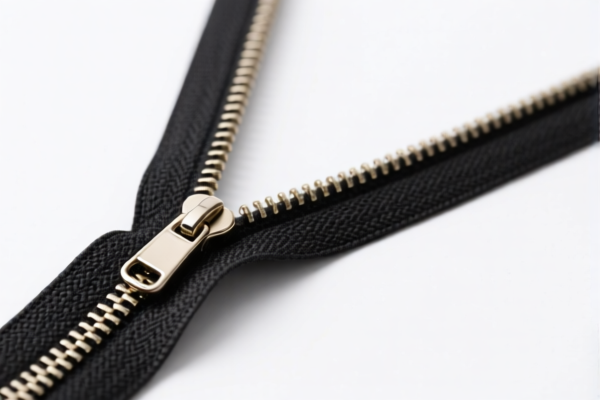
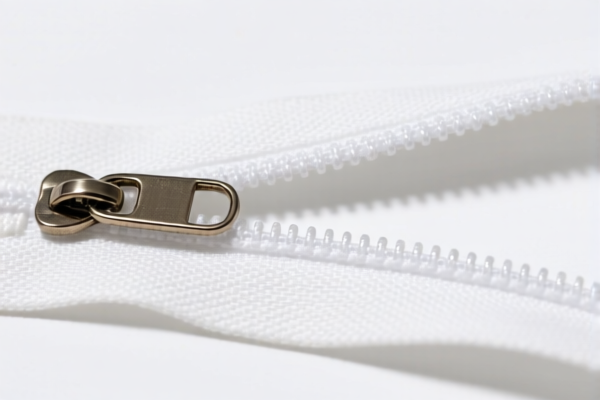
AI分析
📔 Zipper Binder (Looseleaf Binders / Plastic Stationery)
🌐 HS Code Reference & Clearance Guide | 2026 Latest Tariff Analysis | Professional Customs Strategy
📌 I. Product Definition & Classification: Do You Really Understand "Zipper Binders"?
The "Zipper Binder" (often referred to as Looseleaf Binders or Document Organizers) is a common stationery item used for archiving, organizing, and transporting documents. In international trade, its classification hinges on material composition and structural design.
1. Paper/Cardboard Based Binders (4820.30.00.20)
- Description: Binders made primarily of paperboard, cardboard, or coated paper, with metal or plastic rings/holes.
- Key Feature: The main structural body is paper-based.
- Classification Logic: Falls under "Looseleaf binders" in Chapter 48 (Paper and Paperboard).
2. Plastic Based Binders (3926.90.99.89 / 3926.90.87.00)
- Description: Binders made entirely or mostly of plastic (e.g., PVC, PP, PE), including plastic zippered document sleeves, plastic lever-arch files, or plastic-covered binders.
- Key Feature: The primary material is plastic.
- Classification Logic: Falls under "Articles of plastics" in Chapter 39.
⚠️ Critical Distinction:
- If the binder’s body is paper/cardboard → Go to HS 4820.30.00.20 (Lower Base Tariff).
- If the binder’s body is plastic → Go to HS 3926.90.87.00 or 3926.90.99.89 (Higher Base Tariff).
- Note: Even if a plastic binder has paper pages inside, the external packaging/binder structure determines the HS code.
📦 II. HS Code Classification Details (2026 Latest Tariff Authority Comparison)
| HS Code | Product Description | Material | Application Scenario | Tax Burden |
|---|---|---|---|---|
4820.30.00.20 |
Looseleaf Binders | Paper/Cardboard | Office stationery, school notebooks, paper-based document folders | 🔵 Low Base Tariff (0%) |
3926.90.99.89 |
Other Plastic Articles | Plastic | Plastic zippered pouches, plastic document organizers, miscellaneous plastic stationery | 🟡 Medium Base Tariff (5.3%) |
3926.90.87.00 |
Other Plastic Articles (Flat Binders) | Plastic | Plastic flat binders, plastic file organizers, plastic-covered binders | 🔴 High Base Tariff (5.3%) |
🔍 Key Reminder:
- Paper-based binders are classified under Chapter 48. They benefit from 0% base tariff.
- Plastic-based binders are classified under Chapter 39. They face 5.3% base tariff + 25% Section 301 Tariff + 10% IEEPA Tariff.
- Do not confuse plastic pages inside a paper binder with the binder itself. The binder’s outer structure dictates the classification.
💰 III. 2026 Latest Tariff Rate Breakdown (Including Surtaxes, Policy Surcharges)
✅ Applicable Country: United States (US)
✅ Origin: China (CN)
✅ Effective Time: From November 10, 2025 (including subsequent imports)
🎯 1. 4820.30.00.20 —— Paper/Cardboard Looseleaf Binders
| Item | Content |
|---|---|
| Base Tariff | 0% (ad valorem) |
| Section 301 Surtax | +25% (from USITC Footnote 9903.88.01) |
| IEEPA Surtax | +10% (for China/HK products, effective from Nov 10, 2025) |
| Total Tariff Rate | 35.0% |
| Tax Calculation | CIF Value × 35% |
| De Minimis Exemption? | ❌ No (deny_de_minimis) |
| Legal Basis Path | IEEPA:9903.01.25 → IEEPA:9903.01.24 → USITC:4820.30.00.20 → FOOTNOTE:9903.88.01 |
📌 Explanation:
- Although the base tariff is 0%, the Section 301 surcharge (25%) and IEEPA surcharge (10%) still apply to Chinese-origin goods.
- Total 35% is relatively low compared to plastic alternatives.
- This is the most cost-effective classification if the binder is paper-based.
🎯 2. 3926.90.99.89 —— Other Plastic Articles (Miscellaneous)
| Item | Content |
|---|---|
| Base Tariff | 5.3% |
| Section 301 Surtax | +7.5% (Note: Some plastic items may have lower Section 301 rates depending on specific product lists; here assumed 7.5% per data) |
| IEEPA Surtax | +10% |
| Total Tariff Rate | 22.8% |
| Tax Calculation | CIF Value × 22.8% |
| De Minimis Exemption? | ❌ No (deny_de_minimis) |
| Legal Basis Path | IEEPA:9903.01.24 → USITC:3926.90.99.89 → FOOTNOTE:9903.88.01 |
📌 Note:
- This code applies to general plastic stationery that does not fit into specific plastic binder sub-headings.
- Total 22.8% is surprisingly lower than the plastic flat binders below, due to potentially different Section 301 applicability.
- Verification Required: Ensure the product truly fits "Other" and not "Flat Binders."
🎯 3. 3926.90.87.00 —— Plastic Flat Binders / File Organizers
| Item | Content |
|---|---|
| Base Tariff | 5.3% |
| Section 301 Surtax | +25% (Full Section 301 rate for specific plastic binders) |
| IEEPA Surtax | +10% |
| Total Tariff Rate | 40.3% |
| Tax Calculation | CIF Value × 40.3% |
| De Minimis Exemption? | ❌ No (deny_de_minimis) |
| Legal Basis Path | IEEPA:9903.01.25 → IEEPA:9903.01.24 → USITC:3926.90.87.00 → FOOTNOTE:9903.88.01 |
📌 Warning:
- This is the highest tariff among all options.
- Applies to plastic binders that are explicitly classified as "flat binders" or "file organizers" under specific plastic subheadings.
- Avoid this code if possible, unless the product strictly matches the description and cannot be classified elsewhere.
🛠️ IV. Customs Clearance Practical Advice (Battle-Tested Pitfall Avoidance)
✅ 1. Required Documentation Checklist (Non-Negotiable)
| Document | Must Provide | Description |
|---|---|---|
| ✅ Product Specification Sheet | ✔️ | Material composition (e.g., "Body: Paperboard, Cover: Coated Paper"), dimensions, type of rings/zippers |
| ✅ Product Photos | ✔️ | Clear images of the binder’s structure, material texture, and any labeling |
| ✅ Commercial Invoice | ✔️ | Must specify "Looseleaf Binder" or "Zipper Binder" and material (e.g., "Paper-based Binder") |
| ✅ Packing List | ✔️ | Weight and quantity details |
| ✅ Material Declaration | ✔️ | Explicitly state if the binder is Paper-Based or Plastic-Based |
✅ 2. Declaration Tips (Key Mnemonics)
🔥 "Material Dictates Code, Paper Wins Low Tax!"
| Scenario | Correct Declaration | Wrong Approach |
|---|---|---|
| Paper/Cardboard Binder | 4820.30.00.20 "Paper Looseleaf Binder" |
Misdeclared as plastic → 40.3% |
| Plastic Zippered Pouch | 3926.90.99.89 "Plastic Stationery Article" |
Misdeclared as paper → Penalty |
| Plastic Flat Binder | 3926.90.87.00 "Plastic Flat Binder" |
Misdeclared as generic plastic → Higher/lower rate risk |
| Mixed Material (Plastic Cover on Paper Body) | Check Primary Structure | If plastic cover dominates, may go to 3926.90.87.00 |
📌 Critical Strategy:
- If your binder has a plastic cover but a paperboard interior, argue for 4820.30.00.20 by emphasizing the structural core is paper/cardboard.
- If the entire binder is molded plastic (including rings), it must go to 3926.90.87.00 or 3926.90.99.89.
✅ 3. Special Case Handling
| Scenario | Handling Advice |
|---|---|
| OEM Custom Binders | Provide design specs to prove material composition |
| Plastic Binders with Metal Rings | Still classified as Plastic (Chapter 39) because plastic is the primary material |
| Paper Binders with Plastic Coating | If coating is thin, still Paper (Chapter 48). If coating is thick/polymeric, may shift to Chapter 39 |
| De Minimis (Section 321) | ❌ Not Eligible for any of these HS codes due to denied de minimis status for China-origin goods under current IEEPA/Section 301 rules |
🌍 V. Global Market Clearance Comparison (2026 Latest)
| Country/Region | Recommended HS Code | Tariff Rate | Certification Requirements | Remarks |
|---|---|---|---|---|
| 🇺🇸 USA | 4820.30.00.20 (Paper) |
35.0% | None specific | Best option if paper-based |
| 🇺🇸 USA | 3926.90.99.89 (Plastic Misc.) |
22.8% | None specific | Check if product qualifies |
| 🇺🇸 USA | 3926.90.87.00 (Plastic Flat) |
40.3% | None specific | Highest cost |
| 🇪🇺 EU | 4820.10.00 (Paper) |
0% | CE (if applicable) | No Section 301/IEEPA |
| 🇨🇳 China | 4820.10.00 (Paper) |
5% | None | Lower than US tariffs |
| 🇬🇧 UK | 4820.10.00 (Paper) |
0% | UKCA | No US-style surcharges |
📌 Conclusion:
- USA imposes significant surcharges on Chinese-origin stationery.
- Paper-based binders (4820.30.00.20) are the most tax-efficient choice for the US market (35% total).
- Plastic binders face 22.8%–40.3%, making them less competitive.
📌 VI. Common Mistakes & Pitfall Avoidance (Blood & Tears Lessons)
❌ Mistake 1: Declaring a plastic binder as paper-based to save tax
👉 Consequence: Customs inspection finds plastic → Penalty + Back Taxes + Potential Fraud Charges
❌ Mistake 2: Using 3926.90.87.00 for a general plastic pouch
👉 Consequence: Overpaid tariffs (40.3% vs. 22.8%) → Lost Profit
❌ Mistake 3: Ignoring IEEPA 10% surcharge
👉 Consequence: Underestimating landed cost → Margin Erosion
❌ Mistake 4: Assuming De Minimis (800.32) applies
👉 Consequence: Shipment held at customs → Delay + Storage Fees
✅ Correct Approach:
"Paper-based Looseleaf Binder, 3-Ring, A4 Size, Model XYZ, 100% Recycled Paperboard Body"
🎯 VII. Conclusion: Professional Declaration, Save Time & Money!
🎯 Remember the Mnemonics:
🔹 "Paper Wins Low Tax, Plastic Pays More!"
🔹 "HS Code Defines Your Cost, Wrong Code Means Big Loss!"
🔹 "35% for Paper, 40% for Plastic, Choose Wisely!"
📌 Pro Tip:
If you are importing plastic binders, consider:
1. Re-evaluating material: Can you switch to paper/cardboard?
2. Applying for Advance Ruling: To confirm if your plastic binder fits 3926.90.99.89 (22.8%) instead of 3926.90.87.00 (40.3%).
3. Supply Chain Diversification: Sourcing from non-China origins may avoid IEEPA surcharges.
📣 Immediate Action:
📞 Contact a professional customs broker + Provide product photos + Request HS Code Advance Ruling
🚀 Ensure smooth clearance, maximize profit, and minimize tax burden!
✨ Professional Customs Clearance Starts with Accurate Classification!
💼 Every Dollar Saved is Pure Profit!
用户评价
关于 HS 编码归类
协调制度(HS)是由世界海关组织(WCO)制定的国际贸易商品分类标准。全球 200 多个国家采用 HS 系统作为海关关税、贸易统计和进出口监管的基础。
每个 HS 编码遵循以下层级结构:
- 章(2 位)——商品大类(例如:第 84 章:机器和机械设备)
- 品目(4 位)——章内的更具体分类
- 子目(6 位)——国际通用细分,所有 WCO 成员国统一使用
- 本国细分(8-10 位)——各国自行扩展的细分编码,如美国 HTSUS 10 位编码
正确的 HS 编码归类对于顺利通关、准确缴纳关税和遵守贸易法规至关重要。错误归类可能导致海关延误、多缴关税或罚款。
从CN进口到US时,适用的关税税率可能包括:
- 最惠国(MFN)税率——适用于 WTO 成员国的标准关税税率
- 普通税率——适用于无贸易协定国家
- 贸易救济关税——附加关税,如 301 条款(反倾销)、232 条款(国家安全)或反补贴税
本页内容仅供参考。如需正式归类,请咨询当地海关或持牌报关代理。