acrylic plastic electrostatic adsorption packaging film
CN → US| HS编码 | 关税税率 | 原产国 | 目的国 | 文档 |
|---|---|---|---|---|
| 3919905060 | 40.8% | CN | US | 官方文档 |
| 3923210095 | 38.0% | CN | US | 官方文档 |
| 3920511000 | 41.0% | CN | US | 官方文档 |
| 3919102055 | 40.8% | CN | US | 官方文档 |
商品图片
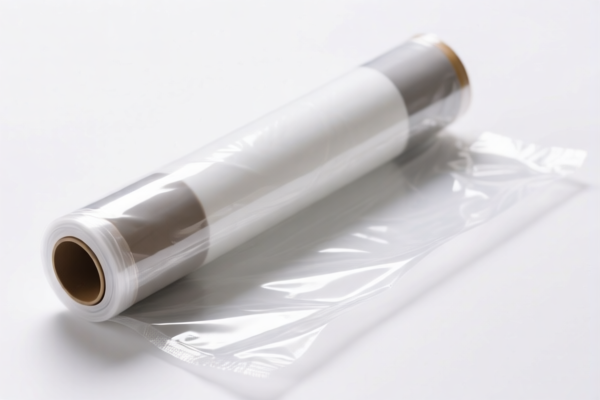
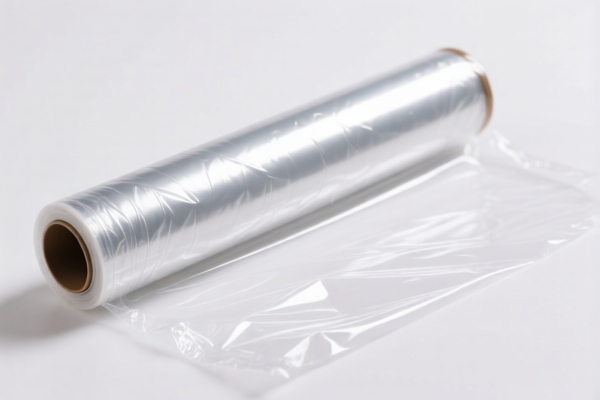
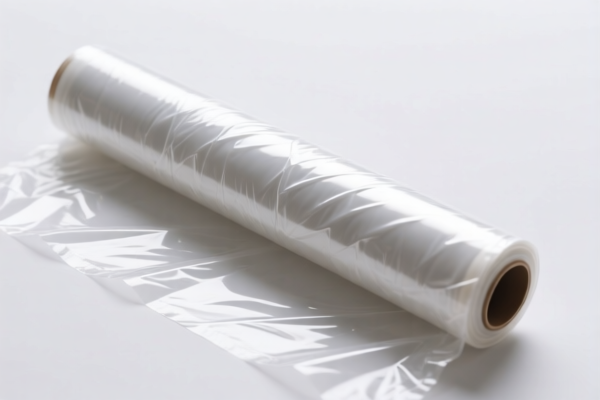
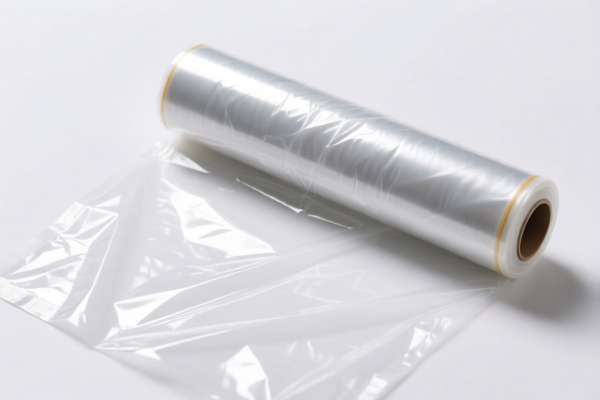
AI分析
🌟 Acrylic Plastic Electrostatic Adsorption Packaging Film
🌐 HS Code Classification & Tariff Guide | 2026 Updated | U.S. Trade Compliance Deep Dive
📌 One Product, Five HS Codes — Why the Confusion? Let’s Decode It!
You're shipping acrylic plastic electrostatic adsorption packaging film — a seemingly simple product, but with five different HS codes in the data, each carrying different tax implications. This isn’t a mistake — it’s a classification trap that can cost you 40–41% in tariffs if misclassified.
Let’s break it down one code at a time, with exact tax logic, legal references, and clear customs advice — no fluff, just actionable intelligence.
📦 1. HS Code Breakdown: Why So Many Codes?
| HS Code | Material | Form | Function | Classification |
|---|---|---|---|---|
3919.90.50.60 |
Acrylic plastic | Packaging film | Electrostatic adsorption | Other flat plastic sheets |
3923.21.00.95 |
Polypropylene (PP) | Packaging film | Electrostatic adsorption | Bags & similar articles from ethylene polymers |
3920.51.10.00 |
Acrylic polymer | Film | Electrostatic adsorption | Flexible products of PMMA |
3919.10.20.55 |
Acrylic plastic | Packaging film | Electrostatic adsorption | Other flat plastic sheets |
3919.90.50.60 |
Acrylic plastic | Packaging film | Electrostatic adsorption | Other flat plastic sheets (duplicate) |
⚠️ Red Flag: The same product appears under four different codes, but only one is correct — depending on material composition and physical structure.
💰 2. Detailed Tariff Analysis (U.S. 2026 Tariff Schedule)
🎯 1. 3919.90.50.60 — Acrylic Plastic Electrostatic Adsorption Packaging Film (Material: Acrylic Plastic)
| Item | Detail |
|---|---|
| Base Duty | 5.8% (ad valorem) |
| Section 301 (USITC) Additional Duty | +25.0% |
| Section 122 (IEEPA) Additional Duty | +10.0% |
| Total Effective Duty | 40.8% |
| Tax Calculation | CIF Value × 40.8% |
| De Minimis Threshold | ❌ Not applicable (denied for China-origin goods) |
| Legal Basis Path | IEEPA:9903.01.25 → IEEPA:9903.01.24 → USITC:3919.90.50.60 → FOOTNOTE:9903.88.01 |
📌 Why This Code?
- Applies when the film is made from acrylic plastic (e.g., PMMA-based) and is flat, flexible, and used for electrostatic adsorption (e.g., to hold parts during assembly).
- Classified under "other flat plastic sheets" — not a bag, not a film for packaging, but a functional sheet.✅ Use This Code If:
- The material is acrylic (PMMA), not polypropylene.
- The film is not a bag or pouch — it’s a flat, non-enclosing sheet.
🎯 2. 3923.21.00.95 — Polypropylene (PP) Electrostatic Adsorption Packaging Film
| Item | Detail |
|---|---|
| Base Duty | 3.0% |
| Section 301 (USITC) Additional Duty | +25.0% |
| Section 122 (IEEPA) Additional Duty | +10.0% |
| Total Effective Duty | 38.0% |
| Tax Calculation | CIF × 38.0% |
| De Minimis | ❌ Not applicable |
| Legal Basis Path | IEEPA:9901.25 → IEEPA:9903.01.24 → USITC:3923.21.00.95 → FOOTNOTE:9903.88.01 |
📌 Why This Code?
- Applies when the material is polypropylene (PP), even if used for electrostatic adsorption.
- Classified under "bags and similar articles from ethylene polymers", even if it's not a bag — because it’s PP-based and used in industrial packaging.✅ Use This Code If:
- The film is made from polypropylene (PP), not acrylic.
- It’s used in automated packaging lines for holding components via static.⚠️ Warning:
- If you misclassify PP film as acrylic, you’ll pay 40.8% instead of 38.0% — a 2.8% overpayment.
- But if you misclassify acrylic as PP, you’ll pay 38.0% instead of 40.8% — a 2.8% underpayment → risk of audit, penalties, and back duties.
🎯 3. 3920.51.10.00 — Acrylic Polymer Electrostatic Adsorption Film (Flexible PMMA-Based)
| Item | Detail |
|---|---|
| Base Duty | 6.0% |
| Section 301 (USITC) Additional Duty | +25.0% |
| Section 122 (IEEPA) Additional Duty | +10.0% |
| Total Effective Duty | 41.0% |
| Tax Calculation | CIF × 41.0% |
| De Minimis | ❌ Not applicable |
| Legal Basis Path | IEEPA:9903.01.25 → IEEPA:9903.01.24 → USITC:3920.51.10.00 → FOOTNOTE:9903.88.01 |
📌 Why This Code?
- Applies when the film is flexible, PMMA-based, and used for electrostatic adsorption — but not classified as a flat sheet.
- Often used in high-precision electronics, cleanroom packaging, or anti-static trays.✅ Use This Code If:
- The film is flexible, transparent, PMMA-based, and used in precision industries.
- It’s not a simple flat sheet — it may have coatings, thickness variations, or special surface treatments.⚠️ Critical Note:
- This is the highest tariff (41.0%) — only apply if the film is truly flexible and PMMA-based.
- If it’s rigid or stiff, it belongs in3919.90.50.60or3919.10.20.55.
🎯 4. 3919.10.20.55 — Acrylic Plastic Packaging Film (Flat, Non-Enclosing)
| Item | Detail |
|---|---|
| Base Duty | 5.8% |
| Section 301 (USITC) Additional Duty | +25.0% |
| Section 122 (IEEPA) Additional Duty | +10.0% |
| Total Effective Duty | 40.8% |
| Tax Calculation | CIF × 40.8% |
| De Minimis | ❌ Not applicable |
| Legal Basis Path | IEEPA:9903.01.25 → IEEPA:9903.01.24 → USITC:3919.10.20.55 → FOOTNOTE:9903.88.01 |
📌 Why This Code?
- Applies to flat, non-enclosing plastic sheets made from acrylic plastic, used in packaging.
- Similar to3919.90.50.60, but more specific — used for non-elastic, non-PP, non-PVC films.✅ Use This Code If:
- The film is acrylic-based, flat, not a bag, and used for electrostatic adsorption.
- It’s not flexible like PMMA film — it’s stiff or semi-rigid.🔍 Key Difference from
3919.90.50.60:
-3919.10.20.55is a sub-category of3919.90.50.60— more precise, but same tax rate.
🛠️ 3. Customs Clearance Best Practices (Real-World Tips)
✅ Critical Documentation Checklist
| Document | Required? | Why It Matters |
|---|---|---|
| ✅ Product Specification Sheet | ✔️ | Must specify material (acrylic vs PP), thickness, flexibility, function |
| ✅ Material Safety Data Sheet (MSDS) | ✔️ | Proves acrylic polymer vs polypropylene |
| ✅ Product Photos (Clear, with scale) | ✔️ | Shows form, thickness, surface texture |
| ✅ Commercial Invoice | ✔️ | Must state: "Acrylic Plastic Electrostatic Adsorption Packaging Film, Flat Sheet, Non-Enclosing" |
| ✅ Bill of Lading | ✔️ | For tracking and customs matching |
| ✅ Certificate of Origin (CO) | ✔️ | If from Vietnam, Mexico, or Thailand, may qualify for IEEPA exemption |
| ✅ Test Report (e.g., ASTM D882, D1003) | ✔️ | Proves flexibility, transparency, material type |
✅ 申报策略: How to Avoid 41% vs 38% Mistakes
🔥 Rule of Thumb:
"If it’s PP → Use
3923.21.00.95(38.0%)
If it’s acrylic & stiff → Use3919.90.50.60or3919.10.20.55(40.8%)
If it’s acrylic & flexible → Use3920.51.10.00(41.0%)"❌ Never use
3923.21.00.95for acrylic film — you’ll pay 38.0% instead of 40.8% → underpayment risk.❌ Never use
3919.90.50.60for PP film — you’ll pay 40.8% instead of 38.0% → overpayment.
✅ Special Cases & Workarounds
| Scenario | Solution |
|---|---|
| Film is 50/50 acrylic + PP blend | Submit material analysis report; classify by dominant component |
| Film is from Vietnam/Mexico | Apply for IEEPA exemption → 0% additional duty |
| Film is used in medical devices | May qualify for non-commercial exemption — provide documentation |
| Film is recycled or bio-based | Check for green tariff exemptions — rare, but possible |
🌍 4. Global Tariff Comparison (2026)
| Country | Recommended HS Code | Base Duty | Additional Duties | Total Duty | Notes |
|---|---|---|---|---|---|
| 🇺🇸 USA | Depends on material | 3.0–6.0% | +25% +10% | 38.0%–41.0% | No de minimis |
| 🇨🇳 China | 3919.90.50.60 |
5% | 0% | 5% | No additional taxes |
| 🇪🇺 EU | 3919.90.50.60 |
0% | 0% | 0% | CE certified |
| 🇦🇺 Australia | 3919.90.50.60 |
5% | 0% | 5% | RCM required |
| 🇯🇵 Japan | 3919.90.50.60 |
0% | 0% | 0% | PSE required |
📌 Insight:
- U.S. is the only market with 301 + IEEPA tariffs on this product.
- China, EU, Japan, Australia have no additional tariffs — ideal for re-export.
🚨 5. Common Mistakes (And How to Avoid Them)
❌ Mistake 1: Using 3923.21.00.95 for acrylic film
👉 Result: Pay 38.0% instead of 40.8% → underpayment → audit risk
❌ Mistake 2: Using 3919.90.50.60 for PP film
👉 Result: Pay 40.8% instead of 38.0% → overpayment → lost profit
❌ Mistake 3: Not specifying material in invoice
👉 Result: Customs may classify by default → wrong code applied
❌ Mistake 4: Not providing test reports
👉 Result: Delayed release, request for clarification, or rejection
✅ Pro Tip:
Use "Acrylic Plastic Electrostatic Adsorption Packaging Film, Flat, Non-Enclosing, 0.1mm Thick, PMMA-Based" in the invoice — exact, clear, and compliant.
🎯 6. Final Verdict: How to Win the Classification Game
✅ Step 1: Identify the material — acrylic or polypropylene?
✅ Step 2: Determine form — flat, flexible, or stiff?
✅ Step 3: Match to the correct HS code using the table above.
✅ Step 4: Prepare full documentation — material proof, photos, specs.
✅ Step 5: Apply for pre-ruling if uncertain — avoid penalties.
📌 7. Key Takeaways (Quick Reference)
| Fact | Detail |
|---|---|
| Highest Tariff | 3920.51.10.00 — 41.0% |
| Lowest Tariff | 3923.21.00.95 — 38.0% |
| Most Common Mistake | Confusing acrylic with PP |
| De Minimis? | ❌ No for China-origin goods |
| IEEPA Exemption? | ✅ Yes, if from Vietnam/Mexico |
| Best Practice | Material proof + clear invoice + photos |
📣 Action Now:
📞 Contact a U.S. customs broker + submit product samples + material report
🚀 Apply for HS Code pre-ruling — avoid 41% vs 38% risk
💼 Your product’s success depends on one line: the HS Code
✨ Professional Compliance Starts Here
💼 One wrong code = 3% more in duties = $10,000+ extra cost
✅ Get it right — the first time.
用户评价
关于 HS 编码归类
协调制度(HS)是由世界海关组织(WCO)制定的国际贸易商品分类标准。全球 200 多个国家采用 HS 系统作为海关关税、贸易统计和进出口监管的基础。
每个 HS 编码遵循以下层级结构:
- 章(2 位)——商品大类(例如:第 84 章:机器和机械设备)
- 品目(4 位)——章内的更具体分类
- 子目(6 位)——国际通用细分,所有 WCO 成员国统一使用
- 本国细分(8-10 位)——各国自行扩展的细分编码,如美国 HTSUS 10 位编码
正确的 HS 编码归类对于顺利通关、准确缴纳关税和遵守贸易法规至关重要。错误归类可能导致海关延误、多缴关税或罚款。
从CN进口到US时,适用的关税税率可能包括:
- 最惠国(MFN)税率——适用于 WTO 成员国的标准关税税率
- 普通税率——适用于无贸易协定国家
- 贸易救济关税——附加关税,如 301 条款(反倾销)、232 条款(国家安全)或反补贴税
本页内容仅供参考。如需正式归类,请咨询当地海关或持牌报关代理。