activated carbon decolorizing carbon
CN → US| HS编码 | 关税税率 | 原产国 | 目的国 | 文档 |
|---|---|---|---|---|
| 3802100050 | 39.8% | CN | US | 官方文档 |
| 3802100010 | 39.8% | CN | US | 官方文档 |
| 2803000010 | 35.0% | CN | US | 官方文档 |
| 2803000050 | 35.0% | CN | US | 官方文档 |
| 3802100020 | 39.8% | CN | US | 官方文档 |
商品图片
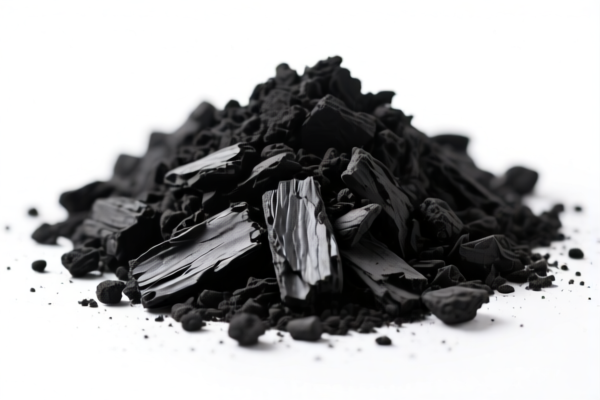
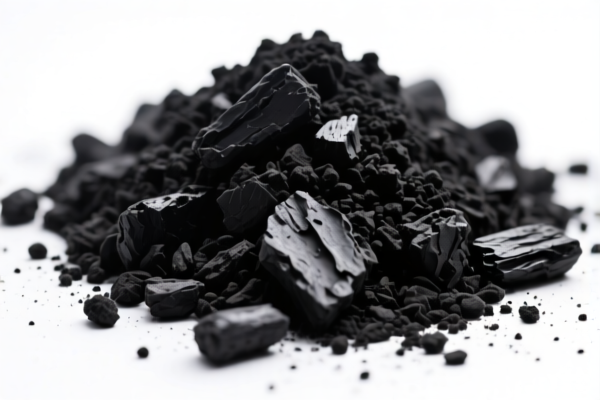

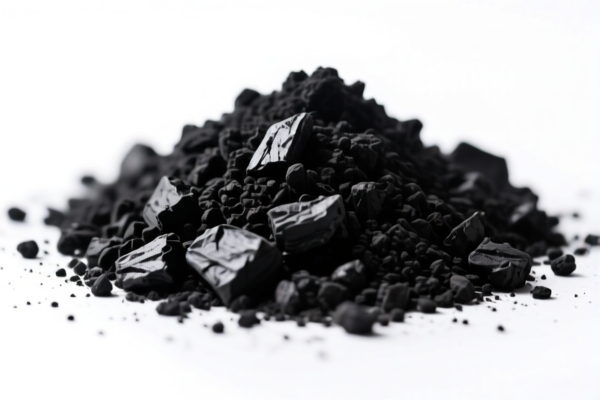
AI分析
🌑 Activated Carbon: Decolorizing & Refining Grades (Industrial Grade)
🌐 HS Code Reference & Customs Clearance Guide | 2026 Latest Tariff Analysis | Professional Entry Strategy for US Imports
📌 I. Product Definition & Classification: What Exactly is "Decolorizing Activated Carbon"?
Activated Carbon for Decolorizing and Refining is a porous, adsorbent carbon material primarily used in the industrial purification of liquids and gases. It is crucial in industries such as food & beverage (sugar, oils), pharmaceuticals, chemicals, and wastewater treatment.
In international trade, the classification hinges on two main factors:
1. Composition: Is it processed organic carbon (Section 38) or basic elemental carbon (Section 28)?
2. Form: Is it in granular/powder form for liquid processing, or formed into bricks/blocks for specific industrial applications?
⚠️ Key Distinction Point:
- If the carbon is processed (e.g., chemical treatment, activation, specific pore structure development) and classified under chemical products → HS 3802.10.
- If the carbon is considered a basic element (black carbon, soot, or unprocessed carbon black analogs) → HS 2803.00.
- Note: Customs authorities often scrutinize the "degree of processing." Highly activated, functionalized carbon usually falls under 3802, while basic carbon forms may fall under 2803.
📦 II. HS Code Classification Details (2026 Latest Tariff Authority Mapping)
Based on the provided data, here are the valid HS Codes and their specific descriptions:
| HS Code | Product Description | Application/Context | Classification Logic |
|--------|--------------------------|-----------------------------|
| 3802.10.00.50 | Activated Carbon for Decolorizing & Refining (Industrial) | General industrial decolorization,符合其他活性炭类目 (Fits other AC categories) | Processed Chemical Product: High surface area, activated. |
| 3802.10.00.10 | Activated Carbon for Decolorizing & Refining | Specific form of activation for refining processes | Processed Chemical Product: Core category for functional AC. |
| 2803.00.00.10 | Activated Carbon for Decolorizing/Refining (Carbon Form) | Categorized as "Carbon Black" or similar elemental carbon forms | Basic Element: Treated as a basic form of carbon rather than a complex chemical preparation. |
| 2803.00.00.50 | Activated Carbon for Decolorizing/Refining (Other Carbon Forms) | Other forms of elemental carbon not specified above | Basic Element: Broad category for non-specific elemental carbon. |
| 3802.10.00.20 | Activated Carbon Bricks (Industrial Decolorizing) | Brick/block form for specific industrial filtration/decolorization units | Processed Chemical Product: Specific form (brick) under AC category. |
🔍 Critical Reminder:
- The difference between 3802 (4.8% base duty) and 2803 (0% base duty) is significant for base duty calculation, but both are subject to the same additional tariffs in the current US-China trade environment.
- Do not mix forms: "Bricks" have a specific code (3802.10.00.20), while granular/powder for general decolorizing usually falls under.10or.50.
💰 III. 2026 Latest Tariff Rate Breakdown (Including Surtaxes & Policy Add-ons)
✅ Applicable Country: United States (US)
✅ Country of Origin: China (CN)
✅ Effective Date: Ongoing (Current enforcement includes Section 301 & IEEPA measures)
🎯 1. For HS Codes under Chapter 38 (3802.10.00.10, 3802.10.00.20, 3802.10.00.50)
These codes are classified as "Chemical Products".
| Item | Detail |
|---|---|
| Base Duty Rate | 4.8% (Standard MFN Rate for Chapter 38) |
| Section 301 Surtax | +25.0% (USITC Footnote 9903.88.01 / Section 301 List 4B) |
| IEEPA Add-on Tariff | +10% (Executive Order under International Emergency Economic Powers Act for Chinese goods) |
| Total Effective Rate | 39.8% |
| Tax Calculation | CIF Value × 39.8% |
| De Minimis Eligibility | ❌ No (Subject to high tariffs, likely deny de minimis exemption depending on current enforcement thresholds) |
| Legal Authority Path | USITC:3802.10 → Section301:Footnote9903.88.01 → IEEPA:9903.01.25 |
📌 Explanation:
- The 4.8% is the standard duty for activated carbon.
- The 25% is the heavy penalty for Chinese manufacturing under Section 301.
- The 10% is an additional layer of tariff under IEEPA.
- Total: 39.8%. This is a high-cost item for importers.
🎯 2. For HS Codes under Chapter 28 (2803.00.00.10, 2803.00.00.50)
These codes are classified as "Elements & Compounds" (Carbon).
| Item | Detail |
|---|---|
| Base Duty Rate | 0.0% (Free entry for basic carbon forms in many contexts) |
| Section 301 Surtax | +25.0% (USITC Footnote 9903.88.01 / Section 301 List 4B) |
| IEEPA Add-on Tariff | +10% (Executive Order under IEEPA for Chinese goods) |
| Total Effective Rate | 35.0% |
| Tax Calculation | CIF Value × 35.0% |
| De Minimis Eligibility | ❌ No (Same restrictions apply) |
| Legal Authority Path | USITC:2803.00 → Section301:Footnote9903.88.01 → IEEPA:9903.01.25 |
📌 Explanation:
- While the base duty is 0%, the additional tariffs (25% + 10%) remain unchanged.
- Total: 35.0%.
- Strategic Note: This is 4.8% cheaper than the Chapter 38 classification. However, misclassifying a highly processed activated carbon as "basic carbon" (Chapter 28) can lead to customs audits, penalties, and back-taxes if the processing level is deemed sufficient for Chapter 38.
🛠️ IV. Customs Clearance Practical Advice (Battle-Tested Pitfall Avoidance)
✅ 1. Required Documentation Checklist
| Document | Mandatory? | Details |
|---|---|---|
| ✅ Product Specification Sheet | ✔️ | Must detail pore size, iodine number, moisture content, and ash content. Proves "Activated" status. |
| ✅ Certificate of Origin | ✔️ | Essential to confirm CN origin (triggers tariffs). |
| ✅ Commercial Invoice | ✔️ | Clearly state: "Activated Carbon, Decolorizing Grade, Not for Human Consumption" (if applicable). |
| ✅ Packing List | ✔️ | Detail weight/volume. |
| ✅ HS Code Pre-Ruling (Optional but Recommended) | ✔️ | If uncertain between 3802 and 2803, apply for an Advance Ruling from CBP. |
| ✅ Safety Data Sheet (SDS) | ✔️ | For hazardous material handling (though AC is generally non-hazardous, it’s required for shipping). |
✅ 2. Classification Strategy & Keyword Optimization
🔥 "Be Specific, Avoid Ambiguity, Match the Process"
| Scenario | Recommended HS Code | Why? | Risk if Misclassified |
|---|---|---|---|
| Granular/Powder for Sugar/Wine Refining | 3802.10.00.10 |
Clearly fits "Decolorizing/Refining" chemical product. | High risk of being flagged if claimed as 2803 without proof of "basic" form. |
| Carbon Bricks/Blocks for Industrial Filters | 3802.10.00.20 |
Specific form ("Bricks") matches subheading. | If declared as generic "carbon," might face valuation scrutiny. |
| Basic Carbon Black/Soot-like Material | 2803.00.00.10 |
Only if it is essentially unprocessed carbon pigment/black. | High Audit Risk: CBP may reclassify to 3802 + retroactive taxes if activation is evident. |
| Other Carbon Forms (Not specified) | 2803.00.00.50 |
Catch-all for Chapter 28 carbon. | Same as above; ensure it truly lacks chemical processing features. |
✅ 3. Cost Optimization Tips
- Verify Processing Level: If your product is truly just "carbonized" and not chemically "activated" (high surface area), you might argue for Chapter 28 (35% total duty). However, most "Decolorizing Activated Carbon" is highly activated and legally belongs in Chapter 38 (39.8%). Do not guess this without expert lab data.
- Third-Country Transshipment: If sourced from China, consider if a minimal transformation in a third country (e.g., Vietnam, Mexico) can change the Origin. Warning: Simple repacking or bagging does not change origin. Substantial transformation (e.g., chemical activation) is required.
- Duty Drawback: If you export goods made with this carbon, explore Duty Drawback programs to recover the 39.8% paid on inputs.
🌍 V. Global Market Comparison (2026 Context)
| Market | Recommended HS Code | Base Duty | Additional Surtax (CN) | Total Effective Duty | Notes |
|---|---|---|---|---|---|
| 🇺🇸 USA | 3802.10.00.10 |
4.8% | +35% (25% Sec 301 + 10% IEEPA) | 39.8% | High barrier. Section 301 is permanent unless revoked. |
| 🇺🇸 USA | 2803.00.00.10 |
0.0% | +35% (25% Sec 301 + 10% IEEPA) | 35.0% | Only if legally defensible as "basic carbon." |
| 🇪🇺 EU | 3802.10 |
~6.5% | 0% (No Section 301) | ~6.5% | No IEEPA equivalent. Much cheaper for EU importers. |
| 🇨🇳 China | 3802.10 |
~6.5% | 0% (Retaliatory tariffs vary) | ~6.5% | Domestic trade. |
| 🇯🇵 Japan | 3802.10 |
~7.5% | 0% | ~7.5% | No surtaxes on Chinese AC. |
📌 Conclusion:
- USA is the most expensive market for Chinese Activated Carbon due to the combination of Section 301 and IEEPA.
- Margin Erosion: The 4% difference between Chapter 28 and 38 is negligible compared to the administrative risk. Recommendation: Use3802.10.00.10or3802.10.00.50for standard decolorizing carbon.
📌 VI. Common Errors & Pitfalls (Lessons Learned)
❌ Error 1: Declaring "Activated Carbon" as "Charcoal" or "Biochar" to avoid tariffs.
👉 Consequence: CBP knows the difference. Biochar has different agricultural regulations. Rejection & Penalty.
❌ Error 2: Claiming HS 2803 for high-grade activated carbon to save 4.8%.
👉 Consequence: CBP requests iodine number/adsorption tests. If it fails the "basic carbon" threshold, you owe back taxes + interest. Risk > Reward.
❌ Error 3: Ignoring the IEEPA 10% add-on.
👉 Consequence: Many brokers only quote 25%. The total is 35% or 39.8%. Under-budgeting leads to cash flow issues.
❌ Error 4: Incorrect Description on Invoice.
👉 Consequence: If you write "Generic Carbon," customs cannot assess proper duty. Delays & Holds.
✅ Correct Description Example:
"Activated Carbon, Granular, Decolorizing Grade, Iodine Number >900mg/g, for Industrial Refining, Not for Human Consumption, Made in China."
🎯 VII. Conclusion: Professional Entry for Maximum Efficiency
🎯 Key Takeaways:
🔹 Standard Decolorizing AC = HS 3802.10 → 39.8% Total Duty.
🔹 Brick Form AC = HS 3802.10.00.20 → 39.8% Total Duty.
🔹 Chapter 28 (35%) is risky unless you have proof of "basic carbon" status.
🔹 No De Minimis Exemption for these goods from China.
📌 Pro Tip:
If your volume is high, consider Duty Mitigation or Special Trade Programs. Engage a licensed customs broker to file for Trade Advisory Board recommendations if specific exemptions apply to your industry (e.g., environmental remediation equipment components).
📣 Immediate Action Plan:
1. Test Your Product: Get a lab report on Iodine Number and Ash Content.
2. Consult Broker: Confirm if your product fits 3802.10.00.10 or .50.
3. Budget for 39.8%: Do not underquote for US imports.
4. Document Everything: Keep SDS, Specs, and Invoices ready for CBP audit.
✨ Precision in Classification Saves Dollars in Duty!
💼 Don't let tariff complexity stop your trade. Optimize your HS Code today!
用户评价
关于 HS 编码归类
协调制度(HS)是由世界海关组织(WCO)制定的国际贸易商品分类标准。全球 200 多个国家采用 HS 系统作为海关关税、贸易统计和进出口监管的基础。
每个 HS 编码遵循以下层级结构:
- 章(2 位)——商品大类(例如:第 84 章:机器和机械设备)
- 品目(4 位)——章内的更具体分类
- 子目(6 位)——国际通用细分,所有 WCO 成员国统一使用
- 本国细分(8-10 位)——各国自行扩展的细分编码,如美国 HTSUS 10 位编码
正确的 HS 编码归类对于顺利通关、准确缴纳关税和遵守贸易法规至关重要。错误归类可能导致海关延误、多缴关税或罚款。
从CN进口到US时,适用的关税税率可能包括:
- 最惠国(MFN)税率——适用于 WTO 成员国的标准关税税率
- 普通税率——适用于无贸易协定国家
- 贸易救济关税——附加关税,如 301 条款(反倾销)、232 条款(国家安全)或反补贴税
本页内容仅供参考。如需正式归类,请咨询当地海关或持牌报关代理。