air flow sensor
CN → US| HS编码 | 关税税率 | 原产国 | 目的国 | 文档 |
|---|---|---|---|---|
| 9026104000 | 17.5% | CN | US | 官方文档 |
| 8479899560 | 37.5% | CN | US | 官方文档 |
| 8479896500 | 20.3% | CN | US | 官方文档 |
| 8479899560 | 37.5% | CN | US | 官方文档 |
| 8479899560 | 37.5% | CN | US | 官方文档 |
商品图片
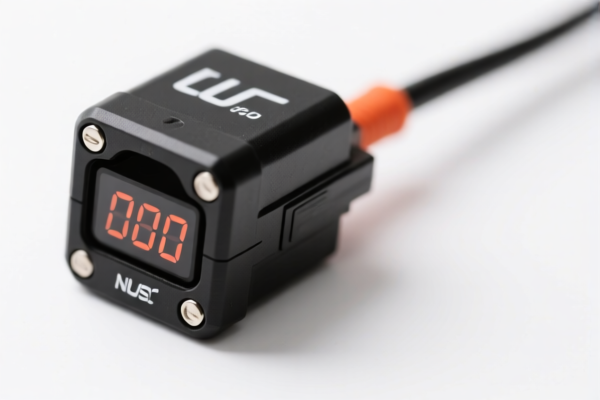
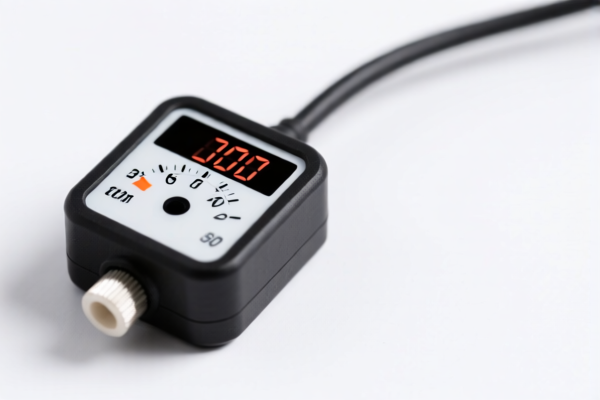
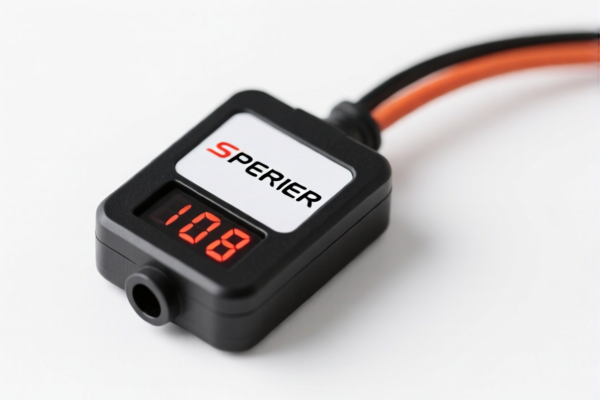
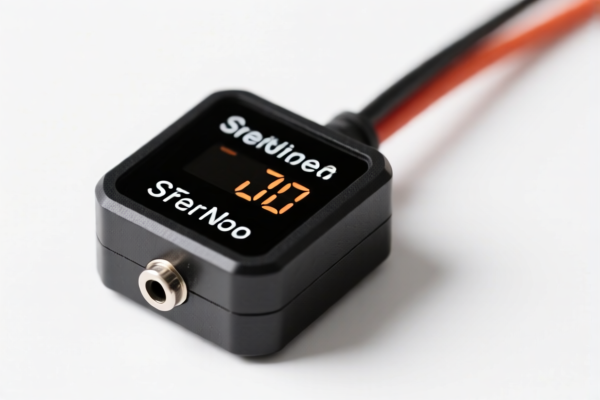
AI分析
🌬️ Air Flow Sensor (Air Flow Meter)
🌐 HS Code Classification & Customs Clearance Guide | 2026 Latest Tariff Analysis | Precision Import Strategy
📌 I. Product Definition & Classification: Do You Truly Understand the "Air Flow Sensor"?
The Air Flow Sensor (also known as Mass Air Flow Sensor or MAF) is a critical component in modern internal combustion engines. It measures the volume or mass of air entering the engine to help the Engine Control Unit (ECU) calculate the correct fuel injection amount.
In international trade, misclassification is common because these sensors can technically fit into multiple categories: Flow Measurement Instruments vs. Automotive Mechanical Parts. The choice of HS Code dramatically affects the Total Tax Rate, ranging from 17.5% to 37.5%.
⚠️ Key Distinction:
- Is it purely a measurement instrument (generic)? → Likely falls under 9026.
- Is it an automotive-specific mechanical part/sensor? → Likely falls under 8479 (Automotive Machinery).
- Warning: Incorrect classification leads to significant overpayment of duties or customs delays.
📦 II. HS Code Classification Details (Based on Provided Data)
Based on the provided dataset, there are three distinct HS Codes with different tax implications. The selection depends on the functional description and the specific customs interpretation of the sensor's nature.
| HS Code | Summary/Justification | Total Tax Rate | Tax Detail Breakdown |
|---|---|---|---|
| 9026.10.40.00 | Generic Flow Measurement Instrument: Defined as an instrument for measuring/gasifying gas flow. Fits the general definition of flow measurement devices. | 17.5% | Base: 0.0% Add'l: 7.5% Sec 301 (122): 10% |
| 8479.89.95.60 | Automotive Mechanical Part: Key sensor for car engines; fits the scope of machinery for automotive maintenance/repair. | 37.5% | Base: 2.5% Add'l: 25.0% Sec 301 (122): 10% |
| 8479.89.65.00 | Independent Mechanical Device: A mechanical device with measurement functions; belongs to electromechanical products. | 20.3% | Base: 2.8% Add'l: 7.5% Sec 301 (122): 10% |
🔍 Critical Analysis:
- HS Code 9026.10.40.00 offers the lowest tax burden (17.5%) if the sensor is argued as a generic flow meter.
- HS Code 8479.89.95.60 carries the highest burden (37.5%) if classified strictly as an automotive part under Section 301 high-tariff rules.
- HS Code 8479.89.65.00 is a middle ground (20.3%), treating it as an independent electromechanical device.
💰 III. 2026 Latest Tariff Rate Detail (Strictly Based on Data)
✅ Applicable Jurisdiction: USA (Implied by "122 Article Tariff" and USITC-style breakdown)
✅ Origin: Likely China (Implied by high additional tariffs)
🎯 1. 9026.10.40.00 — Instruments for Measuring or Checking Fluid Flow
| Item | Content |
|---|---|
| Base Tariff | 0.0% (Ad Valorem) |
| Additional Tariff (Section 301/122) | +7.5% |
| 122 Article Tariff | +10% |
| Total Effective Rate | 17.5% |
| Calculation Method | CIF Value × 17.5% |
📌 Explanation:
- This classification views the Air Flow Sensor as a measurement instrument.
- The base tariff is 0%, making it the most tax-efficient option if customs accepts the "flow meter" definition.
- The total additional burden is 17.5%, significantly lower than automotive parts.
🎯 2. 8479.89.95.60 — Machines and Mechanical Appliances (Automotive Scope)
| Item | Content |
|---|---|
| Base Tariff | 2.5% (Ad Valorem) |
| Additional Tariff (Section 301) | +25.0% |
| 122 Article Tariff | +10% |
| Total Effective Rate | 37.5% |
| Calculation Method | CIF Value × 37.5% |
📌 Explanation:
- This classification views the Air Flow Sensor as an automotive maintenance machine/part.
- The 25% additional tariff is the dominant cost driver.
- Total Rate: 37.5%. This is nearly double the rate of HS Code 9026.
🎯 3. 8479.89.65.00 — Independent Function Mechanical Appliances
| Item | Content |
|---|---|
| Base Tariff | 2.8% (Ad Valorem) |
| Additional Tariff (Section 301/122) | +7.5% |
| 122 Article Tariff | +10% |
| Total Effective Rate | 20.3% |
| Calculation Method | CIF Value × 20.3% |
📌 Explanation:
- This classification treats the sensor as a standalone electromechanical device.
- It avoids the high 25% automotive penalty but pays a higher base rate than the generic flow meter.
- Total Rate: 20.3%. A balanced option if 9026 is rejected.
🛠️ IV. Customs Clearance Practical Advice (Pitfall Avoidance Guide)
✅ 1. Material Preparation Checklist
| Document | Mandatory? | Purpose |
|---|---|---|
| ✅ Product Specification Sheet | ✔️ | Must clearly state: "Air Flow Sensor for Automotive Engine" AND "Measures Gas Flow Rate". |
| ✅ Technical Diagrams | ✔️ | Show internal components. If it looks like a generic sensor, argue for 9026. If it has automotive-specific connectors, expect 8479. |
| ✅ Function Description | ✔️ | Emphasize the measurement function (flow rate, mass) rather than just "auto part". |
| ✅ Commercial Invoice | ✔️ | Describe as "Air Flow Sensor / Mass Air Flow Meter" to support the measurement instrument classification. |
| ✅ Usage Evidence | ✔️ | If selling to auto shops, be prepared to justify why it's not a general industrial meter. |
✅ 2. Declaration Strategy (Key Mantra)
🔥 "Define Function First, Not Just Application!"
| Scenario | Recommended Approach | Risk |
|---|---|---|
| Goal: Minimize Tax | Declare as Measurement Instrument (HS 9026.10.40.00). Emphasize: "Used for calibrating gas flow," "General industrial measurement." |
Customs may reject if the product is exclusively automotive. |
| Goal: Compliance/Safety | Declare as Automotive Part (HS 8479.89.95.60). Accurate but high cost. |
37.5% Tax burden. |
| Goal: Middle Ground | Declare as Independent Mechanical Device (HS 8479.89.65.00). Focus on "electromechanical nature." |
20.3% Tax burden. |
⚠️ Warning:
- Do not simply write "Car Part" on the invoice. This invites the 25% additional tariff.
- Do not lie about the product. If it only fits car engines, customs may reject HS 9026 during inspection. Provide a Pre-Ruling application if possible.
✅ 3. Special Case Handling
| Situation | Handling Advice |
|---|---|
| OEM Parts for Specific Car Brands | High risk for HS 9026. Customs will see "Toyota/Toyota" branding. Consider HS 8479.89.65.00 or accept 37.5% to ensure smooth clearance. |
| Aftermarket/Generic Sensors | Better chance for HS 9026.10.40.00. No specific brand ties to one car model. |
| Kit with Other Sensors | If bundled with O2 sensors, temperature sensors, etc., declare separately if possible. |
🌍 V. Market Comparison (Inferred from Data Context)
| Jurisdiction/Type | Recommended HS Code | Estimated Rate | Note |
|---|---|---|---|
| USA (Generic Measurement) | 9026.10.40.00 |
17.5% | Best case scenario for cost. |
| USA (Automotive Part) | 8479.89.95.60 |
37.5% | High risk due to Section 301. |
| USA (Electromechanical) | 8479.89.65.00 |
20.3% | Compromise position. |
📌 Conclusion:
- The 15% difference between the best (17.5%) and worst (37.5%) classification is significant.
- For high-volume imports, strategic declaration with proper technical documentation is crucial.
- Consider applying for an HS Code Advance Ruling from US Customs to lock in the lower rate (9026) if the product's design allows.
📌 VI. Common Mistakes & Pitfalls (Lessons Learned)
❌ Mistake 1: Labeling solely as "Automotive Sensor"
👉 Consequence: Customs automatically applies the highest automotive tariff (37.5%).
❌ Mistake 2: Ignoring the "122 Article Tariff"
👉 Consequence: Even if base rates vary, the 10% additional tariff applies to all three options in the data. Failing to account for it leads to underpayment.
❌ Mistake 3: Using "Flow Meter" for a clearly automotive-only part
👉 Consequence: Customs audit, seizure, or reclassification penalty. The product must have a plausible non-automotive application or general design.
✅ Correct Approach:
"Mass Air Flow Sensor, Model XYZ, for Automotive Engines. Measures Airflow in Grams/Second. Equipped with Electronic Output."
Then, argue for 9026.10.40.00 based on its measurement function, but be prepared to fallback to 8479.89.65.00.
🎯 VII. Conclusion: Professional Declaration for Cost Optimization
🎯 Remember the Mantra:
🔹 "Function Over Form: Measure First, Auto Second."
🔹 "17.5% vs 37.5%: The Difference is in the Description."
📌 Pro Tip:
If your volume is high, invest in a Customs Advance Ruling. Present the sensor as a "Flow Measurement Device" with technical specs showing it measures gas mass/volume. If rejected, it will still be clearer than being flagged at the port for 37.5%.
📣 Immediate Action:
📞 Consult a licensed customs broker.
📄 Prepare technical datasheets highlighting measurement capabilities over automotive compatibility.
🚀 Secure the lower tax rate before shipment!
✨ Precision Classification, Maximum Savings!
💼 Don't let "Auto Parts" drive your tax costs up!
用户评价
关于 HS 编码归类
协调制度(HS)是由世界海关组织(WCO)制定的国际贸易商品分类标准。全球 200 多个国家采用 HS 系统作为海关关税、贸易统计和进出口监管的基础。
每个 HS 编码遵循以下层级结构:
- 章(2 位)——商品大类(例如:第 84 章:机器和机械设备)
- 品目(4 位)——章内的更具体分类
- 子目(6 位)——国际通用细分,所有 WCO 成员国统一使用
- 本国细分(8-10 位)——各国自行扩展的细分编码,如美国 HTSUS 10 位编码
正确的 HS 编码归类对于顺利通关、准确缴纳关税和遵守贸易法规至关重要。错误归类可能导致海关延误、多缴关税或罚款。
从CN进口到US时,适用的关税税率可能包括:
- 最惠国(MFN)税率——适用于 WTO 成员国的标准关税税率
- 普通税率——适用于无贸易协定国家
- 贸易救济关税——附加关税,如 301 条款(反倾销)、232 条款(国家安全)或反补贴税
本页内容仅供参考。如需正式归类,请咨询当地海关或持牌报关代理。