空气流量传感器
CN → US| HS Code | Tariff Rate | Origin | Destination | Doc |
|---|---|---|---|---|
| 8479899560 | 37.5% | CN | US | Official Doc |
| 9026104000 | 17.5% | CN | US | Official Doc |
| 8479896500 | 20.3% | CN | US | Official Doc |
Product Images
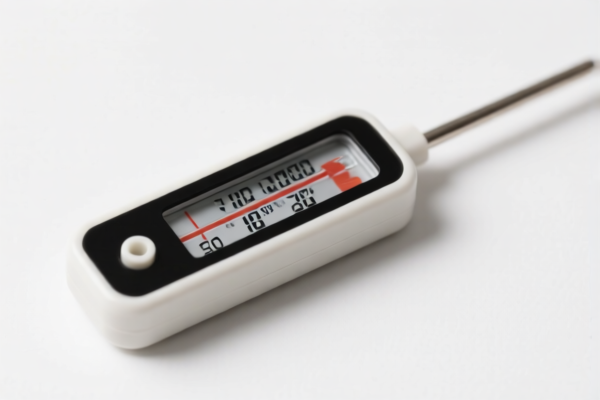
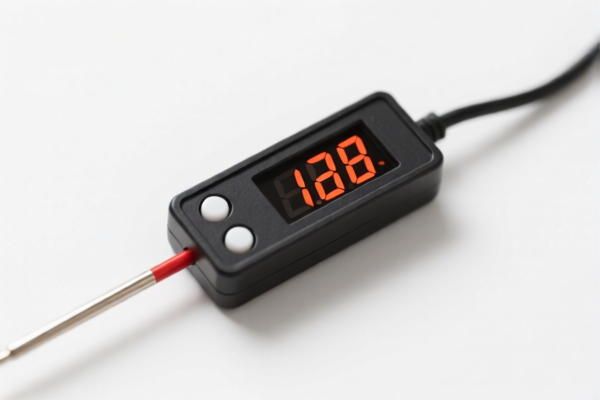
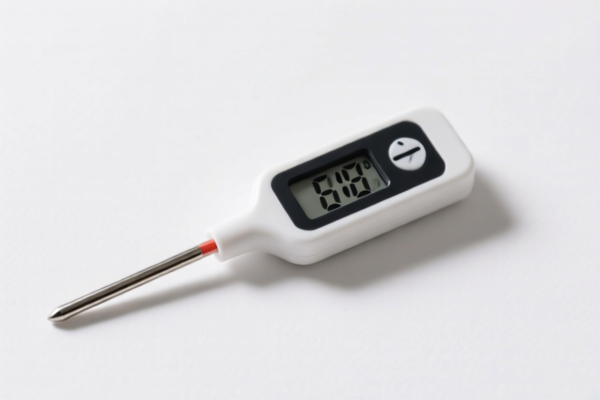
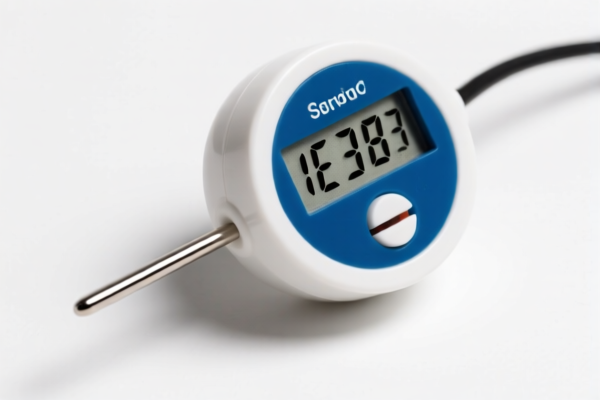
AI Analysis
💨 Air Flow Sensors (MAF/MAP Sensors)
🌐 HS Code Reference & Customs Clearance Guide | 2026 Latest Tariff Analysis | Professional Clearance Strategy
📌 I. Product Definition & Classification: What Exactly is an "Air Flow Sensor"?
An Air Flow Sensor (typically Mass Air Flow or MAF sensor) is a critical component in modern internal combustion engines and industrial gas handling systems. It measures the volume or mass of air entering the engine to calculate the correct fuel mixture. In international trade, its classification varies significantly based on functional intent and structural integration.
⚠️ Key Distinction Points:
- If the sensor is primarily used for measuring gas flow in general industrial or laboratory settings → It falls under Measurement Instruments. - If the sensor is specifically designed for automotive engines (car repairs/maintenance) or functions as an independent mechanical device with self-contained electric motors → It falls under Machinery Parts/Devices.
📦 II. HS Code Classification Details (2026 Latest Tariff Authority Comparison)
Based on the provided data, there are three distinct classification paths. Each path carries a drastically different tax burden.
| HS Code | Product Description | Application Scenario | Tax Logic |
|---|---|---|---|
9026.10.40.00 |
Instruments for measuring/checking liquid or gas flow | General industrial gas flow measurement, laboratory instruments, non-automotive specific flow meters. | Measurement Instrument |
8479.89.65.00 |
Machinery with independent functions, having measurement capabilities | General mechanical devices that combine machinery functions with measurement; not strictly automotive or generic flow meters. | Independent Mechanical Device |
8479.89.95.60 |
Mechanical parts for automotive maintenance & repair; Other machinery with self-contained electric motors | Automotive engine components (MAF sensors for cars), mechanical parts for vehicle maintenance, or electromechanical devices. | Auto Parts / Electromechanical Machinery |
🔍 Critical Reminder:
- Automotive Specificity: If the sensor is clearly labeled for "Car Engine Repair" or "Automotive Maintenance," customs may lean toward 8479.89.95.60. - General Measurement: If it’s a generic flow meter for HVAC or industrial gas lines, 9026.10.40.00 is the most accurate technical classification. - Independent Function: If it’s a standalone unit with complex mechanical + electric features but not strictly an "auto part," 8479.89.65.00 might apply.
💰 III. 2026 Latest Tariff Rate Details (Including Surcharges & Policy Add-ons)
✅ Applicable Country: United States (US)
✅ Origin: China (CN)
✅ Effective Date: Post-2025 policies (including Section 301 and IEEPA surcharges)
🎯 1. 9026.10.40.00 —— Flow Measuring Instruments (Lowest Risk/Rate)
| Item | Content |
|---|---|
| Base Duty Rate | 0% |
| Section 301 Surcharge | +7.5% |
| Section 122 Tariff | +10% |
| Total Effective Rate | 17.5% |
| Tax Calculation | CIF Value × 17.5% |
| De Minimis Eligibility | ❌ No (Denied) |
| Legal Basis Path | Section 301: 7.5% + IEEPA/Section 122: 10% + Base: 0% |
📌 Explanation:
- This category benefits from a 0% base duty, which is significantly lower than machinery parts. - The 17.5% total is composed of the 7.5% Section 301 tariff and a 10% Section 122 surcharge. - Strategic Advantage: If your product can be justified as a general "flow measuring instrument" rather than an "auto part," this is the most cost-effective classification.
🎯 2. 8479.89.95.60 —— Auto Maintenance Parts / Other Machinery (Highest Risk/Rate)
| Item | Content |
|---|---|
| Base Duty Rate | 2.5% |
| Section 301 Surcharge | +25.0% |
| Section 122 Tariff | +10% |
| Total Effective Rate | 37.5% |
| Tax Calculation | CIF Value × 37.5% |
| De Minimis Eligibility | ❌ No (Denied) |
| Legal Basis Path | Section 301: 25% + IEEPA/Section 122: 10% + Base: 2.5% |
📌 Explanation:
- This code applies if the sensor is classified as an automotive maintenance part or a generic electromechanical machine. - The 25% Section 301 tariff is the key driver here, making this the most expensive classification. - Risk Warning: If customs audits your shipment and determines it is an "auto part" but you declared it as a "flow meter," you will face back taxes, penalties, and delays.
🎯 3. 8479.89.65.00 —— Independent Mechanical Devices (Mid-Range)
| Item | Content |
|---|---|
| Base Duty Rate | 2.8% |
| Section 301 Surcharge | +7.5% |
| Section 122 Tariff | +10% |
| Total Effective Rate | 20.3% |
| Tax Calculation | CIF Value × 20.3% |
| De Minimis Eligibility | ❌ No (Denied) |
| Legal Basis Path | Section 301: 7.5% + IEEPA/Section 122: 10% + Base: 2.8% |
📌 Explanation:
- This is a middle-ground classification for mechanical devices with measurement functions that don’t fit neatly into "flow meters" or "auto parts." - The 7.5% Section 301 tariff is lower than the auto-part category, but the 2.8% base duty is higher than the flow meter category. - Use this only if the product is a standalone mechanical unit with integrated measurement capabilities.
🛠️ IV. Customs Clearance Practical Advice (Battle-Tested Pitfall Avoidance Guide)
✅ 1. Preparation Checklist (Non-Negotiable)
| Document | Required? | Details |
|---|---|---|
| ✅ Product Specifications | ✔️ | Must clearly state: "Air Flow Sensor," measuring range, output signal, application (Auto vs. Industrial). |
| ✅ Function Description | ✔️ | Explain how it measures flow (thermal, pressure, etc.). Crucial for HS Code justification. |
| ✅ Product Photos (Label & Interior) | ✔️ | Show connectors, housing, and any "For Automotive Use Only" labels. |
| ✅ Commercial Invoice | ✔️ | Description must match HS Code logic. Avoid vague terms like "Sensor." Use "Gas Flow Measuring Instrument" or "Engine Air Flow Sensor." |
| ✅ Certificate of Origin | ✔️ | Required for tariff calculation and potential FTA benefits (if applicable, though unlikely for US-China here). |
✅ 2. Declaration Strategy (Key Mantra)
🔥 “Function First, Application Second, Name Accurate, Tax Minimized!”
| Scenario | Recommended HS Code | Wrong Way | Consequence |
|---|---|---|---|
| General Industrial Gas Flow Meter | 9026.10.40.00 |
8479.89.95.60 |
Save 20% (17.5% vs 37.5%) |
| Strict Automotive MAF Sensor | 8479.89.95.60 |
9026.10.40.00 |
Audit Risk: If misclassified, heavy penalties + back taxes. |
| Standalone Mechanical Device with Sensor | 8479.89.65.00 |
9026.10.40.00 |
Moderate Tax: 20.3% is safer than 37.5% if auto-part is doubtful. |
📌 Note on "Auto Parts" vs. "Instruments":
- US Customs (CBP) is aggressive on auto parts from China. If your sensor has no specific "automotive" marking and is sold as a generic industrial component, strongly consider9026.10.40.00. - However, if it is exclusively sold to auto repair shops and labeled for "Ford/Chevy/etc.," you must use8479.89.95.60to avoid fraud allegations.
✅ 3. Special Case Handling
| Situation | Handling Advice |
|---|---|
| OEM Auto Parts | If you are supplying directly to auto manufacturers, expect 37.5%. No escape. |
| Aftermarket/Universal Sensors | If the sensor is "universal" or used in industrial HVAC, argue for 9026.10.40.00. Provide technical sheets showing non-automotive use cases. |
| Mixed Shipments | Do not mix auto-specific and industrial-specific sensors in one shipment under one HS Code. Split declarations to avoid blanket penalties. |
🌍 V. Global Market Comparison (2026 Latest)
| Country/Region | Recommended HS Code | Tariff (China Origin) | Notes |
|---|---|---|---|
| 🇺🇸 USA | 9026.10.40.00 |
17.5% (Base 0% + 7.5% Sec 301 + 10% Sec 122) | Lowest Rate. Best if technically defensible as a flow meter. |
| 🇺🇸 USA (Auto Parts) | 8479.89.95.60 |
37.5% (Base 2.5% + 25% Sec 301 + 10% Sec 122) | Highest Rate. Applies to clear automotive components. |
| 🇨🇳 China (Import) | 9026.10.40.00 |
~0-5% | Check local VAT. No Section 301. |
| 🇪🇺 EU | 9026.10.00 |
0% | No additional surcharges typically. |
📌 Conclusion:
- The US market is the most challenging due to Section 301 and Section 122 tariffs. - Strategic Goal: If your sensor can be technically justified as a "gas flow measuring instrument" (9026.10.40.00) rather than an "auto part" (8479.89.95.60), you save 20% in duties. - Documentation is Key: Ensure your technical manuals and invoices support the "measurement instrument" classification if you choose that route.
📌 VI. Common Errors & Pitfall Guide (Blood & Tears Lessons)
❌ Error 1: Declaring an Auto MAF Sensor as a generic "Flow Meter"
👉 Consequence: Customs audits reveal automotive-specific features → Seizure of goods + Penalties.
❌ Error 2: Declaring a Generic Industrial Flow Sensor as an "Auto Part"
👉 Consequence: Overpaying 20% (37.5% vs 17.5%) unnecessarily.
❌ Error 3: Using vague descriptions like "Sensor" or "Part"
👉 Consequence: Customs assigns default higher duty rates or holds shipment for classification review.
✅ Correct Approach:
For Industrial/Universal:
"Air Flow Sensor, Gas Flow Measuring Instrument, Thermal Mass Flow Type, Industrial Application, Model XYZ"
For Automotive:
"Mass Air Flow (MAF) Sensor for Automotive Engine Repair, Model ABC"
🎯 VII. Conclusion: Professional Classification Saves Money!
🎯 Remember the Mantra:
🔹 “Instrument 17.5%, Auto 37.5%, Choose Right, Profit Bright!”
🔹 “HS Code is Destiny, 20% Difference, Don’t Pay Extra!”
📌 Pro Tip:
If your product is sold globally and not exclusively for autos, insist on 9026.10.40.00 for US exports. Provide a technical declaration stating the device is a "general-purpose gas flow measuring instrument" to withstand customs scrutiny.
📣 Immediate Action:
📞 Consult a US Customs Broker + Provide Technical Datasheets + Apply for Pre-Ruling (ACE Portal) if shipment value is high.
🚀 Clear Customs Smoothly, Reduce Costs, Maximize Profits!
✨ Professional Clearance Starts with Accurate Classification!
💼 Every Dollar Saved is Pure Profit!
Customer Reviews
About HS Code Classification
The Harmonized System (HS) is an internationally standardized nomenclature developed by the World Customs Organization (WCO) to classify traded products. Over 200 countries use the HS system as the basis for customs tariffs, trade statistics, and import/export regulations.
Each HS code follows a hierarchical structure:
- Chapter (2 digits) — Broad category of goods (e.g., Chapter 84: Machinery and Mechanical Appliances)
- Heading (4 digits) — More specific grouping within the chapter
- Subheading (6 digits) — Internationally standardized breakdown, used by all WCO member countries
- National subdivisions (8-10 digits) — Country-specific extensions for further classification, such as US HTSUS 10-digit codes
Correct HS code classification is essential for smooth customs clearance, accurate duty payment, and compliance with trade regulations. Misclassification can lead to customs delays, overpayment of duties, or penalties.
When importing from CN to US, the applicable tariff rates may include:
- Most-Favored-Nation (MFN) rate — The standard duty rate applied to WTO members
- General rate — Applied to countries without trade agreements
- Trade remedy duties — Additional tariffs such as Section 301 (anti-dumping), Section 232 (national security), or countervailing duties
The information provided on this page is for reference purposes only. For official classification, please consult with your local customs authority or a licensed customs broker.