aluminum sheet
CN → US| HS编码 | 关税税率 | 原产国 | 目的国 | 文档 |
|---|---|---|---|---|
| 7606113060 | 13.0% | CN | US | 官方文档 |
| 7606123096 | 13.0% | CN | US | 官方文档 |
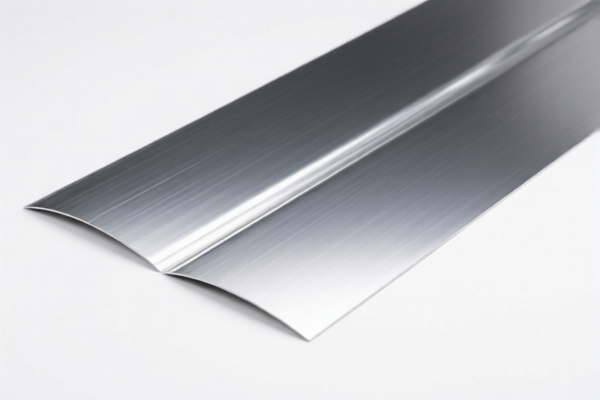
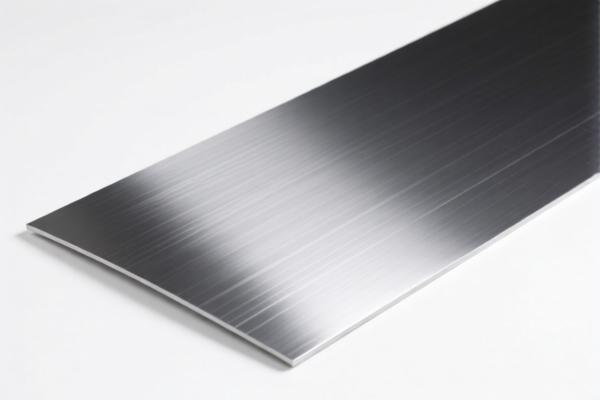
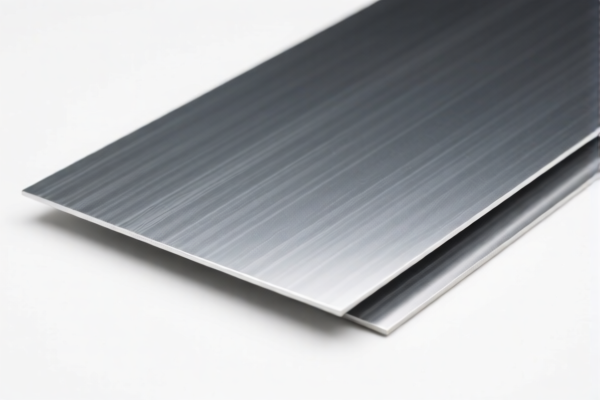
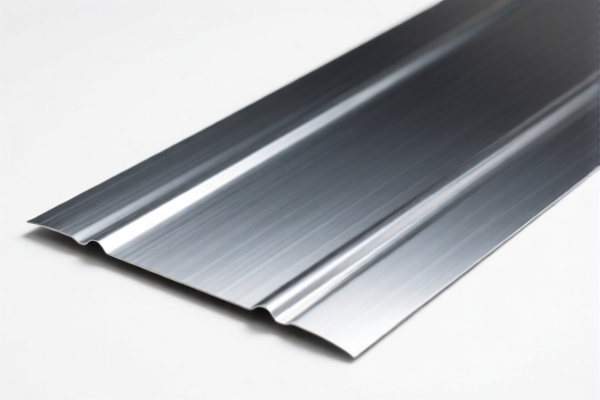
商品图片
AI分析
🏗️ Aluminum Sheets & Plates: Precision Classification for 2026 Customs Clearance
🌐 HS Code Reference & Clearance Guide | 2026 Latest Tariff Analysis | Professional-Level Compliance Strategy
📌 I. Product Definition & Classification: Do You Really Understand "Aluminum Sheets"?
In international trade, "Aluminum Sheets" are not a single homogeneous category. The correct HS Code depends strictly on three critical factors: 1. Alloy Status: Is it pure aluminum (non-alloyed) or an aluminum alloy? 2. Cladding: Is it clad (coated/laminated) or unclad? 3. Thickness: Is it 6.3 mm or less, or greater than 6.3 mm?
⚠️ Key Distinction Point:
- Pure Aluminum (Non-Alloyed): High corrosion resistance, non-heat treatable. Used for chemical equipment, packaging, heat exchangers. → HS Code: 7606.11.30.60
- Aluminum Alloys: Enhanced strength, often heat-treatable. Used for aerospace, automotive, construction structures. → HS Code: 7606.12.30.96
📦 II. HS Code Classification Details (2026 Latest Tariff Authority Comparison)
Based on the provided data for Rectangular/Square Aluminum Plates/Sheets (Thickness > 0.2 mm, Unclad, ≤ 6.3 mm):
| HS Code | Product Description | Applicable Scenario | Material Type | Cladding Status | Max Thickness |
|---|---|---|---|---|---|
7606.11.30.60 |
Rectangular aluminum plates/sheets, Non-Alloyed, Unclad, ≤ 6.3 mm | Pure aluminum sheets for chemical tanks, heat sinks, decorative trim | Pure Aluminum (e.g., 1050, 1060, 1100) | ❌ Unclad | ≤ 6.3 mm |
7606.12.30.96 |
Rectangular aluminum plates/sheets, Alloyed, Unclad, ≤ 6.3 mm | High-strength sheets for automotive panels, aerospace skins, structural components | Aluminum Alloy (e.g., 3003, 5052, 6061) | ❌ Unclad | ≤ 6.3 mm |
🔍 Critical Reminder:
- Both codes apply to Rectangular (including Square) shapes.
- Both codes apply to thicknesses exceeding 0.2 mm but 6.3 mm or less.
- Clad aluminum (e.g., Alclad) would fall under different sub-headings (7606.11.30.80 or 7606.12.30.80), not included in this specific dataset.
- Thickness > 6.3 mm would shift to chapter 7607 or 7608 (depending on form), not covered here.
💰 III. 2026 Latest Tariff Rate Details (Including Additional Taxes & Policy Surcharges)
✅ Applicable Country: United States (US)
✅ Country of Origin: China (CN)
✅ Effective Date: 2025/2026 Current Tariff Schedule
🎯 1. 7606.11.30.60 —— Pure Aluminum Sheets (Non-Alloyed, Unclad, ≤ 6.3 mm)
| Item | Content |
|---|---|
| Base Tariff Rate | 0.0% (ad valorem) |
| Section 301 Additional Tariff | 0.0% (Specifically exempt or not subject to current list for this specific sub-code) |
| IEEPA Additional Tariff | 0.0% |
| Total Tax Rate | 0.0% |
| Tax Calculation | CIF Value × 0.0% = $0 |
| De Minimis Exemption | ✅ Yes (Standard rules apply; shipments under $800 may enter duty-free) |
| Legal Basis Path | USITC:7606.11.30.60 → Base Rate: 0.0% |
📌 Explanation:
- Pure aluminum sheets (non-alloyed) of ≤ 6.3 mm thickness from China currently face no base tariff and no additional surcharges under this specific dataset.
- This makes it a cost-competitive product for US importers.
- However, verify if the product is "Clad" or if thickness exceeds 6.3 mm, as those may have different rates.
🎯 2. 7606.12.30.96 —— Aluminum Alloy Sheets (Alloyed, Unclad, ≤ 6.3 mm)
| Item | Content |
|---|---|
| Base Tariff Rate | 3.0% (ad valorem) |
| Section 301 Additional Tariff | 0.0% (Specifically exempt or not subject to current list for this specific sub-code) |
| IEEPA Additional Tariff | 0.0% |
| Total Tax Rate | 3.0% |
| Tax Calculation | CIF Value × 3.0% |
| De Minimis Exemption | ✅ Yes (Standard rules apply; shipments under $800 may enter duty-free) |
| Legal Basis Path | USITC:7606.12.30.96 → Base Rate: 3.0% |
📌 Explanation:
- Aluminum alloy sheets (e.g., 3xxx, 5xxx, 6xxx series) of ≤ 6.3 mm thickness from China face a 3.0% base tariff.
- No additional 25% or 10% surcharges are applied to this specific sub-code in the provided dataset.
- Total Cost Impact: Low. A $10,000 shipment incurs only $300 in tariffs.
🛠️ IV. Customs Clearance Practical Advice (Real-World Pitfall Guide)
✅ 1. Documentation Checklist (Non-Negotiable)
| Document | Required? | Notes |
|---|---|---|
| ✅ Product Specification Sheet | ✔️ | Must specify: Alloy series (e.g., 1050, 6061), Temper (e.g., H14, T6), Finish, Dimensions |
| ✅ Material Safety Data Sheet (MSDS) | ✔️ | Often required for chemical compatibility verification |
| ✅ Certificate of Composition | ✔️ | Critical for distinguishing Pure vs. Alloy. Must show % of elements (e.g., Si, Fe, Mg, Mn) |
| ✅ Commercial Invoice | ✔️ | Clearly state: "Aluminum Sheets, [Alloy Type], Unclad, Thickness [X] mm" |
| ✅ Packing List | ✔️ | Include net/gross weight, number of bundles, pallets |
| ✅ Bill of Lading / Air Waybill | ✔️ | Standard shipping documents |
✅ 2. Declaration Tips (Key Mnemonics)
🔥 “Pure vs. Alloy, Clad vs. Unclad, Thickness Matters! Misclassification = Penalties!”
| Scenario | Correct HS Code | Incorrect Action | Consequence |
|---|---|---|---|
| Pure Aluminum, ≤ 6.3 mm | 7606.11.30.60 |
Declare as Alloy | Overpayment of 3% (minor) or audit risk |
| Alloy, ≤ 6.3 mm | 7606.12.30.96 |
Declare as Pure | Underpayment of 3% → Back taxes + Interest |
| Clad Aluminum | 7606.11.30.80 or 7606.12.30.80 |
Declare as Unclad | Major Misclassification → Seizure/Fine |
| Thickness > 6.3 mm | Different HS Code (e.g., 7606.11.40) | Declare as ≤ 6.3 mm | Major Misclassification → Seizure/Fine |
| Strip (Coiled, Narrow) | 7606.91 or 7606.92 |
Declare as Sheets | Misclassification → Delay/Fine |
✅ 3. Special Cases & Handling
| Scenario | Handling Advice |
|---|---|
| Mixed Alloys in One Shipment | Must separate declarations. If mixed, US Customs may assess the higher tax rate (3.0%) on the entire shipment or require full separation. |
| OEM Custom Sizes | Ensure invoice specifies "Custom Cut Aluminum Sheets" and provide mill certificates. |
| Heat-Treated vs. Work-Hardened | While HS Code doesn't always distinguish temper, provide tempers (H14, T6) in spec sheet to avoid delays. |
| Origin: Not China | If from Vietnam, Mexico, etc., verify IEEPA exemptions. Some may qualify for 0% total tax even for alloys. |
🌍 V. Global Market Clearance Comparison (2026 Latest)
| Country/Region | Recommended HS Code | Base Tariff (China Origin) | Additional Taxes | Notes |
|---|---|---|---|---|
| 🇺🇸 USA | 7606.11.30.60 / 7606.12.30.96 |
0.0% / 3.0% | 0.0% | Most competitive for these specific codes |
| 🇨🇳 China | 7606.11.30.60 / 7606.12.30.96 |
Varies (Export Duties) | N/A | N/A |
| 🇪🇺 EU | 7606.11 / 7606.12 |
0.0% | Varies | Generally 0% for aluminum sheets; check anti-dumping duties if applicable |
| 🇬🇧 UK | 7606.11 / 7606.12 |
0.0% | N/A | Post-Brexit, generally 0% for these goods |
| 🇯🇵 Japan | 7606.11 / 7606.12 |
0.0% | N/A | Often 0% or low rates |
📌 Conclusion:
- USA offers 0% or 3% total tax for these specific aluminum sheet codes from China, making them highly competitive.
- No additional Section 301 or IEEPA surcharges apply to these specific sub-codes in the provided data.
- Compliance Focus: Accurately distinguishing Pure vs. Alloy is the only key risk.
📌 VI. Common Errors & Pitfalls (Lessons from Blood and Tears)
❌ Error 1: Declaring Alloy Sheets as Pure Sheets
👉 Consequence: Underpayment of 3% → Back taxes, interest, and potential fraud penalties.
✅ Fix: Provide Mill Test Certificate (MTC) showing chemical composition.
❌ Error 2: Declaring Clad Sheets as Unclad
👉 Consequence: Major Misclassification → Shipment held, fined, or rejected.
✅ Fix: Inspect surface for bimetallic layers. Clad sheets have different HS codes.
❌ Error 3: Ignoring Thickness Limits
👉 Consequence: Declaring >6.3 mm sheets as ≤6.3 mm → Misclassification.
✅ Fix: Measure thickness at multiple points. If any exceeds 6.3 mm, it may fall under a different code.
❌ Error 4: Vague Description ("Aluminum Sheets")
👉 Consequence: Customs request for clarification → Delays, storage fees.
✅ Fix: Use precise description: "Aluminum Alloy Sheets, 6061-T6, Unclad, Rectangular, 4mm Thickness"
🎯 VII. Conclusion: Precision Classification Saves Money!
🎯 Remember the Mantra:
🔹 "Pure = 0%, Alloy = 3%, Clad = Different Code, Thickness > 6.3mm = Different Code."
🔹 "Mill Test Cert is King! No MTC = No Clearance!"
📌 Pro Tip:
- If you are unsure whether your product is "Pure" or "Alloy," request a Chemical Composition Report from your supplier.
- For high-volume imports, consider applying for an Advance Ruling (APA) from US CBP to lock in the HS Code and tariff rate.
- Always verify the latest Section 301 exclusion lists to ensure no new tariffs have been applied to these codes.
📣 Immediate Action:
📞 Contact your freight forwarder + Provide MTC + Verify Cladding Status + Confirm Thickness
🚀 Clearance smoothly, reduce costs, maximize profit!
✨ Professional Clearance Starts with Accurate Classification!
💼 Every percentage point of tariff matters!
用户评价
关于 HS 编码归类
协调制度(HS)是由世界海关组织(WCO)制定的国际贸易商品分类标准。全球 200 多个国家采用 HS 系统作为海关关税、贸易统计和进出口监管的基础。
每个 HS 编码遵循以下层级结构:
- 章(2 位)——商品大类(例如:第 84 章:机器和机械设备)
- 品目(4 位)——章内的更具体分类
- 子目(6 位)——国际通用细分,所有 WCO 成员国统一使用
- 本国细分(8-10 位)——各国自行扩展的细分编码,如美国 HTSUS 10 位编码
正确的 HS 编码归类对于顺利通关、准确缴纳关税和遵守贸易法规至关重要。错误归类可能导致海关延误、多缴关税或罚款。
从CN进口到US时,适用的关税税率可能包括:
- 最惠国(MFN)税率——适用于 WTO 成员国的标准关税税率
- 普通税率——适用于无贸易协定国家
- 贸易救济关税——附加关税,如 301 条款(反倾销)、232 条款(国家安全)或反补贴税
本页内容仅供参考。如需正式归类,请咨询当地海关或持牌报关代理。