aniline modified resin raw material
CN → US| HS编码 | 关税税率 | 原产国 | 目的国 | 文档 |
|---|---|---|---|---|
| 3909390000 | 41.5% | CN | US | 官方文档 |
| 3913901000 | 35.0% | CN | US | 官方文档 |
| 3909400000 | 41.5% | CN | US | 官方文档 |
| 3913905000 | 41.5% | CN | US | 官方文档 |
| 3909390000 | 41.5% | CN | US | 官方文档 |
商品图片

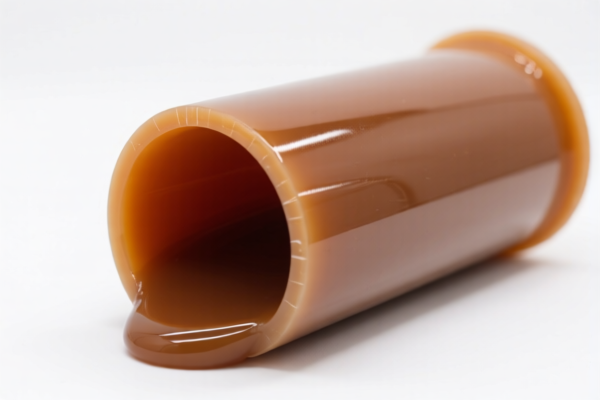
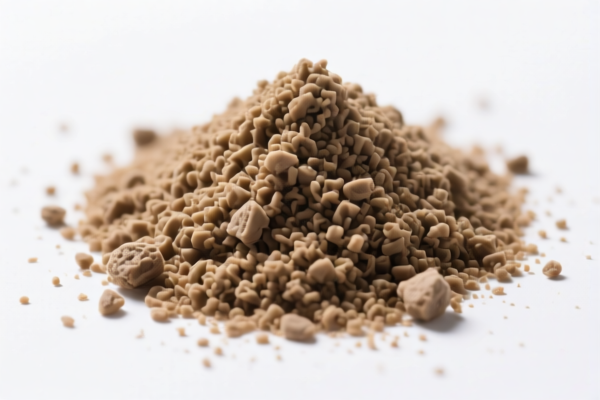

AI分析
🧪 Aniline Modified Resin Raw Material
🌐 HS Code Reference & Customs Clearance Guide | 2026 Latest Tariff Analysis | Professional Compliance Strategy
📌 I. Product Definition & Classification: Do You Truly Understand "Aniline Modified Resin"?
Aniline Modified Resin is a specialized chemical polymer material, primarily used in adhesives, coatings, sealants, and industrial laminates. In international trade, its classification hinges on its chemical nature and degree of modification:
- Phenolic Resin Derivatives (Phenolic Resins): If the resin base is primarily phenol-formaldehyde with aniline modification, it falls under Chapter 39, Heading 39.09 (Amino-resins, phenolic resins, and polyurethanes).
- Modified Natural Polymers/Other Synthetic Resins: If the modification process changes the fundamental nature to fit under "other modified resins" or derivatives of natural polymers, it may fall under Chapter 39, Heading 39.13.
⚠️ Key Distinction Point:
- If the primary component is Phenolic Resin (even if modified with aniline) →归类 to 3909.
- If the product is considered a Modified Natural Polymer or Other Synthetic Organic Polymers not specifically listed in 3901-3908 →归类 to 3913.
- The term "Aniline Modified" strongly suggests a phenolic background, but the legal classification depends on the specific chemical structure and customs rulings.
📦 II. HS Code Classification Details (2026 Latest Tariff Authority Comparison)
Based on the provided data, here are the five possible HS Codes with their specific justifications:
| HS Code | Product Description | Justification for Classification | Tax Rate (Total) |
|---|---|---|---|
3909.39.00.00 |
Aniline-Modified Phenolic Resin, matching the definition of phenolic resins and their derivatives. | Primary Classification. Aniline modification is a standard treatment for phenolic resins to improve flexibility and adhesion. It fits perfectly under Phenolic Resins. | 41.5% |
3913.90.10.00 |
Aniline-Modified Resin, categorized under natural polymers and their modified forms. | Alternative Classification. If the resin base is viewed as a derivative of a natural polymer (e.g., casein, soy) modified with aniline/phenolic components, this code applies. Note: Base duty is 0%. | 35.0% |
3909.40.00.00 |
Primary Shape Phenolic Resin, material and code requirements fully consistent. | Strict Phenolic Interpretation. If the aniline content is considered negligible or part of the standard phenolic resin formulation, it is treated as standard phenolic resin in primary shapes. | 41.5% |
3913.90.50.00 |
Modified Resin, conforms to the material attributes of modified natural polymers/chemical derivatives. | Broad "Other Modified Resin" Category. Used if the resin is a complex derivative that doesn't fit standard phenolic or amino-resin definitions but is clearly a "modified" synthetic/natural blend. | 41.5% |
3909.39.00.00 |
Aniline-Modified Phenolic Resin, consistent with phenolic resin and its derivative definitions. | Repetition for Emphasis. Same as the first entry, reinforcing that 3909 is the most likely correct heading for "Aniline-Modified" products due to the phenolic backbone. | 41.5% |
🔍 Key Reminder:
- The difference between 3909 and 3913 is critical. 3909 (Phenolic/Amino) has a 6.5% base duty, while 3913.90.10 has a 0% base duty.
- However, both are subject to additional tariffs. The 3913.90.10 option offers a lower total rate (35.0%) compared to 41.5% for the 3909/3913.90.50 options.
- Customs Strategy: If your product can be legally argued as a "modified natural polymer derivative" (unlikely for purely synthetic phenolics, but possible for bio-based blends), 3913.90.10.00 is the cost-saving choice. Otherwise, 3909.39.00.00 is the standard, safe classification.
💰 III. 2026 Latest Tariff Rate Breakdown (Including Surtaxes, Policy Add-ons)
✅ Applicable Country: United States (US)
✅ Origin: China (CN)
✅ Effective Date: From November 10, 2025 (including subsequent imports)
🎯 1. 3909.39.00.00 & 3909.40.00.00 & 3913.90.50.00 —— Phenolic/Modified Resins (Standard Scenario)
| Item | Content |
|---|---|
| Base Duty Rate | 6.5% (ad valorem) |
| Section 301 Surcharge | +25.0% (USITC Footnote for Chinese goods) |
| IEEPA Surcharge | +10% (Targeting China/HK products, effective Nov 10, 2025) |
| Total Tariff Rate | 41.5% |
| Tax Calculation | CIF Value × 41.5% |
| De Minimis Eligibility | ❌ No (deny_de_minimis) |
| Legal Basis Path | Base: 6.5% → 301: 25.0% → IEEPA: 10.0% → Total: 41.5% |
📌 Explanation:
- The 6.5% base duty is standard for phenolic resins (3909) and most modified resins (3913).
- The 25% Section 301 tariff is the standard punitive tariff on Chinese chemical imports.
- The 10% IEEPA tariff is an additional layer on top of the 301 tariff.
- Total Cost Impact: Nearly half of the product value can be consumed by tariffs.
🎯 2. 3913.90.10.00 —— Modified Natural Polymers/Other (Cost-Saving Scenario)
| Item | Content |
|---|---|
| Base Duty Rate | 0.0% (ad valorem) |
| Section 301 Surcharge | +25.0% |
| IEEPA Surcharge | +10% |
| Total Tariff Rate | 35.0% |
| Tax Calculation | CIF Value × 35.0% |
| De Minimis Eligibility | ❌ No (deny_de_minimis) |
| Legal Basis Path | Base: 0.0% → 301: 25.0% → IEEPA: 10.0% → Total: 35.0% |
📌 Note:
- This is the only option with a 0% base duty.
- If your "Aniline Modified Resin" can be substantiated as a derivative of a natural polymer (e.g., soy-based phenolics, modified casein, etc.), this code saves 6.5% on the base duty.
- Risk: If customs audits and determines it is not a natural polymer derivative, they will reassess it to 3909 or 3913.90.50, demanding the extra 6.5% + penalties.
🛠️ IV. Customs Clearance Practical Advice (Real-World Pitfall Avoidance)
✅ 1. Required Documentation Checklist (No Exceptions)
| Document | Mandatory? | Description |
|---|---|---|
| ✅ Material Safety Data Sheet (MSDS) | ✔️ | Must specify chemical composition, CAS numbers, and "Aniline-Modified" status. |
| ✅ Product Specification Sheet | ✔️ | Detail the resin base (Phenolic vs. Natural), aniline content %, and physical form (powder, liquid, solid). |
| ✅ Composition Analysis Report | ✔️ | Third-party lab report proving the chemical structure to support HS Code choice (3909 vs 3913). |
| ✅ Commercial Invoice | ✔️ | Must clearly state: "Aniline-Modified Phenolic Resin" or "Modified Natural Polymer Resin" – avoid vague terms like "Chemical Raw Material". |
| ✅ Packing List | ✔️ | Detail net/gross weight, container numbers. |
| ✅ Certificate of Origin | ✔️ | If claiming any preferential treatment or proving CN origin for 301/IEEPA applicability. |
✅ 2. Declaration Tips (Critical Mnemonic)
🔥 "Be Precise: Phenolic vs. Natural, Aniline is Key, Base Duty Decides the Price!"
| Scenario | Correct Declaration | Wrong Approach |
|---|---|---|
| Standard Synthetic Phenolic | 3909.39.00.00 - "Phenolic Resin, Aniline Modified" |
Vague "Plastic Raw Material" → 100% inspection delay |
| Bio-based/Modified Natural | 3913.90.10.00 - "Modified Natural Polymer Resin" |
Mislabeling as "Phenolic" → Overpay 6.5% base duty |
| Complex Synthetic Blend | 3913.90.50.00 - "Other Modified Synthetic Resin" |
Incorrectly using 3909 → If structure differs, penalty risk |
✅ 3. Special Circumstances Handling
| Situation | Recommendation |
|---|---|
| Customs Audit on Composition | Provide CAS numbers for the base resin and the aniline modifier. If the base is >50% phenolic, 3909 is safer. If modified natural polymer dominates, 3913.90.10 is viable. |
| Partial Exemption Claims | Check if your specific manufacturing facility or end-use qualifies for any Section 301 exclusions. (Rare for raw chemicals, but worth verifying). |
| Mixed Containers | If shipping with other resins, separate declarations are mandatory. Do not mix 3909 and 3913 items in one line item. |
🌍 V. Global Market Comparison (2026 Latest)
| Country/Region | Recommended HS Code | Duty Rate | Certification Required | Notes |
|---|---|---|---|---|
| 🇺🇸 USA | 3909.39.00.00 / 3913.90.10.00 |
41.5% / 35.0% | None specific for raw resin | High Surtax. IEEPA 10% is new and significant. |
| 🇨🇳 China | 3909.39.00.00 |
6.5% - 8% | None | Lower base duty, no 301/IEEPA. |
| 🇪🇺 EU | 3909.40.00 |
6.5% | REACH Registration | REACH compliance is critical for aniline-containing chemicals. |
| 🇯🇵 Japan | 3909.40.00 |
6.0% | FSC (if food contact) | Generally stable, no surtaxes. |
| 🇲🇽 Mexico | 3909.39.00 |
0% - 5% | NOM Standards | Potential benefit under USMCA if originating there. |
📌 Conclusion:
- USA is the most expensive market due to the combination of Base Duty + Section 301 + IEEPA.
- EU requires REACH registration for aniline-modified resins due to aniline's chemical nature.
- Strategy: If exporting to the US, optimize HS Code selection (aim for 3913.90.10.00 if legally defensible) to save 6.5% on base duty.
📌 VI. Common Errors & Pitfalls (Lessons Learned)
❌ Error 1: Declaring as "Plastic Raw Material" (Generic)
👉 Consequence: Customs assigns arbitrary HS Code, often resulting in highest possible duty or detention for review.
❌ Error 2: Ignoring IEEPA 10% Surcharge
👉 Consequence: Under-declaration of duty. Once detected, back taxes + interest + penalties apply.
❌ Error 3: Using 3913.90.10.00 for Pure Synthetic Phenolics
👉 Consequence: Customs reclassifies to 3909.39.00.00, demanding the 6.5% base duty difference + penalties.
✅ Correct Practice:
"Aniline-Modified Phenolic Resin, Liquid, CAS [Number], for Industrial Adhesives, Made in China"
Ensure MSDS explicitly states the resin base to support the 3909 vs 3913 argument.
🎯 VII. Conclusion: Precision Classification, Cost Efficiency
🎯 Key Takeaways:
🔹 "Aniline Modified" usually means Phenolic (3909), but check for Natural Polymer content.
🔹 "3913.90.10" saves 6.5% base duty if legally justifiable.
🔹 "Total Tax is High (35-41.5%). Do not ignore IEEPA 10%."
📌 Pro Tip:
If your product is not made in China (e.g., produced in Vietnam, Thailand, or the US under USMCA), the 301 and IEEPA surtaxes may not apply, dropping the total tax to just the base duty (0-6.5%).
Action:
📞 Consult a licensed customs broker for a Pre-Ruling if your resin composition is complex.
🚀 Accurate HS Code = Lower Duty + Faster Clearance.
✨ Professional Customs Clearance Starts with Precise Classification!
💼 Every percentage point of duty is money in your pocket!
用户评价
关于 HS 编码归类
协调制度(HS)是由世界海关组织(WCO)制定的国际贸易商品分类标准。全球 200 多个国家采用 HS 系统作为海关关税、贸易统计和进出口监管的基础。
每个 HS 编码遵循以下层级结构:
- 章(2 位)——商品大类(例如:第 84 章:机器和机械设备)
- 品目(4 位)——章内的更具体分类
- 子目(6 位)——国际通用细分,所有 WCO 成员国统一使用
- 本国细分(8-10 位)——各国自行扩展的细分编码,如美国 HTSUS 10 位编码
正确的 HS 编码归类对于顺利通关、准确缴纳关税和遵守贸易法规至关重要。错误归类可能导致海关延误、多缴关税或罚款。
从CN进口到US时,适用的关税税率可能包括:
- 最惠国(MFN)税率——适用于 WTO 成员国的标准关税税率
- 普通税率——适用于无贸易协定国家
- 贸易救济关税——附加关税,如 301 条款(反倾销)、232 条款(国家安全)或反补贴税
本页内容仅供参考。如需正式归类,请咨询当地海关或持牌报关代理。