aromatic antibacterial granules
CN → US| HS编码 | 关税税率 | 原产国 | 目的国 | 文档 |
|---|---|---|---|---|
| 2942003500 | 41.5% | CN | US | 官方文档 |
| 3824992900 | 41.5% | CN | US | 官方文档 |
| 3824992100 | 35.0% | CN | US | 官方文档 |
| 2942000500 | 41.5% | CN | US | 官方文档 |
| 3808921500 | 41.5% | CN | US | 官方文档 |
商品图片
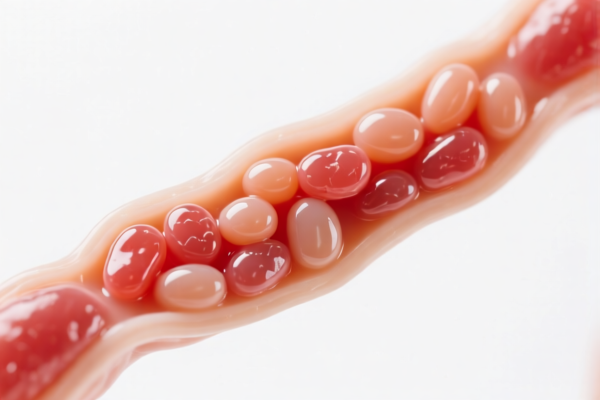
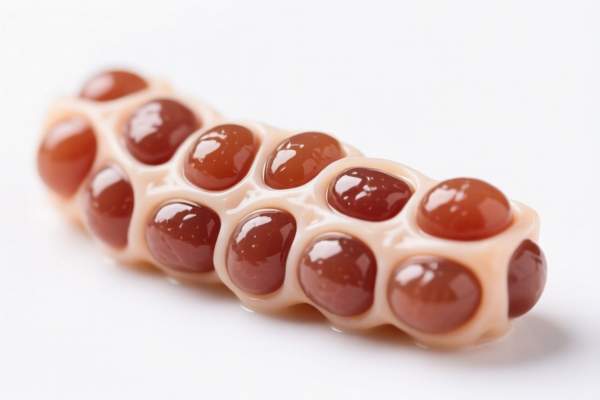
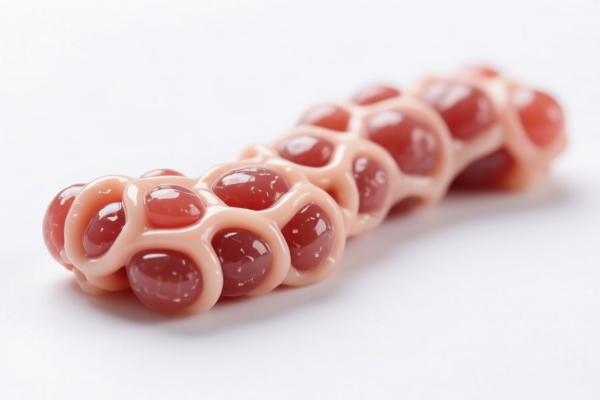
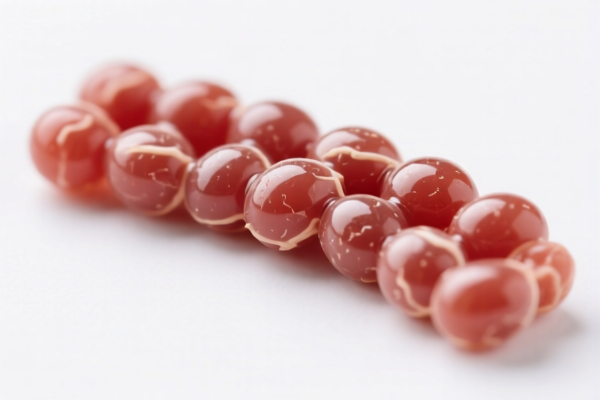
AI分析
🌿 Aromatic Antibacterial Granules (Aromatics-based Sanitizers)
🌐 HS Code Reference & Customs Clearance Guide | 2026 Tariff Analysis | Strategic Compliance Strategy
📌 Part I: Product Definition & Classification: Do You Truly Understand "Aromatic Antibacterial Granules"?
Aromatic Antibacterial Granules represent a specialized class of chemical agents used for disinfection, preservation, or pest control. In international trade, their classification hinges critically on two factors:
1. Chemical Nature: Are they purely aromatic organic compounds (chemical entities) or mixtures containing them?
2. Functional Classification: Are they intended as pharmaceuticals, simple pesticides, or general industrial chemical preparations?
⚠️ Key Distinction Points:
- If the product is a pure aromatic compound used for medicinal or pharmaceutical purposes → Classified under Chapter 29 (Organic Chemicals).
- If the product is a mixture/preparation containing aromatic substances but used for non-medical disinfection/pest control → Classified under Chapter 38 (Miscellaneous Chemical Products).
- Critical Threshold: In Chapter 38, the concentration of aromatic substances (often >5% or >10% depending on specific subheadings) triggers different tax treatments.
📦 Part II: HS Code Classification Details (2026 Latest Tariff Authority Cross-Reference)
The data provided indicates a split between Chapter 29 (Pure Organic Chemicals) and Chapter 38 (Preparations). Below is the authoritative mapping based on the provided dataset.
| HS Code | Product Description | Applicability Scenario | Tax Category |
|---|---|---|---|
2942.00.35.00 |
Aromatic Antibacterial Granules, matching aromatic material & granular form | Pure aromatic organic chemical in granular form | 📌 High Tax Bracket |
2942.00.05.00 |
Aromatic Antibacterial Granules, Aromatic material & Medicinal Use | Pharmaceutical-grade aromatic antibacterial agents | 📌 High Tax Bracket |
3824.99.29.00 |
Aromatic Antibacterial Granules, Chemical preparations containing aromatic substances | General industrial/commercial chemical preparations with aromatic content | 📌 High Tax Bracket |
3824.99.21.00 |
Aromatic Antibacterial Granules, Chemical products containing >5% aromatic substances | Specific subheading for preparations with higher aromatic concentration (0% Base) | ⭐ Lower Base Tax Bracket |
3808.92.15.00 |
Aromatic Antibacterial Granules, Disinfectant preparations containing aromatic materials | Pesticides/Disinfectants where aromatic material is the active or key ingredient | 📌 High Tax Bracket |
🔍 Critical Analysis:
- Chapter 29 (2942.xx): Applies to pure aromatic organic chemicals. If your product is a defined chemical entity (e.g., a specific benzene derivative used for antibacterial action), it falls here.
- Chapter 38 (3824.xx / 3808.xx): Applies to mixtures/preparations.
-3824.99.21.00is unique in the dataset for having a 0.0% Base Tariff, likely due to specific trade agreements or category definitions for high-aromatic content preparations, though it still attracts heavy surcharges.
-3808.92.15.00specifically targets disinfectants/pesticides. If the granules are sold primarily for killing bacteria in agriculture or household cleaning, this is the most likely functional fit.
💰 Part III: 2026 Latest Tariff Rate Detailed Breakdown (Including Surcharges & Policy Add-ons)
✅ Applicable Country: United States (US)
✅ Origin: China (CN)
✅ Effective Date: From Nov 10, 2025 (inclusive) onwards
The dataset provides two distinct tax structures. Let's break them down.
🎯 1. High Tax Bracket Structure (Applicable to 2942.00.35.00, 2942.00.05.00, 3824.99.29.00, 3808.92.15.00)
| Item | Content |
|---|---|
| Base Tariff Rate | 6.5% (Ad Valorem) |
| Section 301 Surcharge | +25.0% (Retaliatory Trade Tariff) |
| IEEPA Clause 122 Surcharge | +10.0% (Emergency Economic Powers Act - China Specific) |
| Total Effective Tax Rate | 41.5% |
| Tax Calculation | CIF Value × 41.5% |
| De Minimis Exemption Eligible? | ❌ No (Denied for these codes under current IEEPA/301 rules) |
| Legal Authority Path | HTSUS: 2942.00/3824.99/3808.92 → USITC Footnote 301: 25% → IEEPA: 122 Clause: 10% |
📌 Explanation:
- This is the standard punitive rate for most chemical imports from China into the US.
- 301 Tariff (25%): Applied due to the "List 4C" or similar trade war designations for chemical products.
- IEEPA 122 (10%): A specific emergency surcharge targeting critical supply chains or strategic goods from China.
- Total 41.5% is extremely high. Profit margins must absorb this, or costs must be passed to consumers.
🎯 2. Lower Base Tax Bracket Structure (Applicable to 3824.99.21.00)
| Item | Content |
|---|---|
| Base Tariff Rate | 0.0% |
| Section 301 Surcharge | +25.0% |
| IEEPA Clause 122 Surcharge | +10.0% |
| Total Effective Tax Rate | 35.0% |
| Tax Calculation | CIF Value × 35.0% |
| De Minimis Exemption Eligible? | ❌ No (Surcharges typically override de minimis) |
| Legal Authority Path | HTSUS: 3824.99.21 → USITC Footnote 301: 25% → IEEPA: 122 Clause: 10% |
📌 Strategic Advantage:
- While the base duty is 0%, the total landed cost tax is still 35%.
- This is 6.5% cheaper than the other four codes.
- Condition: You must prove the product fits the description of "Chemical Products containing >5% aromatic substances" under subheading3824.99.21. This requires precise chemical composition documentation.
🛠️ Part IV: Customs Clearance Operational Advice (Practical Pitfall Avoidance Guide)
✅ 1. Required Documentation Checklist (Non-negotiable)
| Document | Mandatory? | Explanation |
|---|---|---|
| ✅ Certificate of Analysis (CoA) | ✔️ | Must detail chemical composition, specifically the percentage of aromatic substances. Critical for choosing between 3824.99.21 (0% base) vs others. |
| ✅ Product Specification Sheet | ✔️ | Detail the form (Granules), function (Antibacterial/Sanitizer), and ingredients. |
| ✅ Formula/Ingredients List | ✔️ | Breakdown by weight %. If aromatic content is >5%, you may qualify for 3824.99.21.00. |
| ✅ Safety Data Sheet (SDS) | ✔️ | Required for chemical handling. Must match HS Code classification. |
| ✅ Commercial Invoice | ✔️ | Clearly state: "Aromatic Antibacterial Granules – Chemical Preparation" or "Organic Chemical". Avoid vague terms like "Cleaning Powder". |
| ✅ Origin Certificate | ✔️ | Proof of Chinese origin triggers the 301/IEEPA surcharges. |
| ✅ EPA Registration (if applicable) | ✔️ | If classified as a pesticide/disinfectant (3808), EPA registration may be required before customs release. |
✅ 2. Classification Strategy & Declaration Tips
🔥 “Accuracy Saves 6.5%: Prove the Aromatic Content!”
| Scenario | Correct HS Code | Risk of Misclassification |
|---|---|---|
| Product is a pure aromatic chemical (e.g., specific benzene derivative) | 2942.00.35.00 or 2942.00.05.00 |
Low risk if pure. High tax (41.5%). |
| Product is a mixture with <5% aromatic substances | 3824.99.29.00 (likely) |
Must use higher base rate code. Tax 41.5%. |
| Product is a mixture with >5% aromatic substances | 3824.99.21.00 |
✅ Optimal Choice. Tax 35%. Requires proof. |
| Product is a registered disinfectant/pesticide | 3808.92.15.00 |
If it has EPA registration, this is legally required regardless of aromatic content. Tax 41.5%. |
| Product is a pharmaceutical | 2942.00.05.00 |
If intended for human/animal medical use. Tax 41.5%. |
📌 Crucial Warning:
- Do NOT arbitrarily choose3824.99.21.00to save tax. If customs audits your chemical report and finds <5% aromatic content, you will face penalties, back taxes, and seizure.
- If the product is a registered disinfectant,3808.92.15.00may be mandatory by US EPA regulations, overriding the tax-saving potential of Chapter 38.99.
✅ 3. Special Circumstances Handling
| Situation | Handling Advice |
|---|---|
| OEM/Private Label | Provide contract manufacturing agreement. Ensure the formula matches the declared HS Code. |
| High Aromatic Content (>5%) | Submit CoA showing aromatic % >5%. Argue for 3824.99.21.00 to save 6.5%. |
| EPA Registered Product | If registered as a pesticide/disinfectant, you must use 3808 series. Cannot avoid 41.5% rate. |
| Pharmaceutical Use | If for medical treatment, use 2942.00.05.00. Requires FDA compliance documentation. |
| Granular Form Only | Physical form does not change Chapter 29/38 classification. It only affects internal subheadings. |
🌍 Part V: Global Market Comparison (2026 Latest)
| Country/Region | Recommended HS Code | Base Tax | Surcharges | Total Est. Tax | Remarks |
|---|---|---|---|---|---|
| 🇺🇸 USA | 3824.99.21.00 (Optimal) |
0% | +25% (301) +10% (IEEPA) | 35% | Best tax efficiency if composition allows. |
| 🇨🇳 China | 3824.99.21.00 |
~5-10% | None | ~10-15% | Import into China is cheaper; export from China incurs US tariffs. |
| 🇪🇺 EU | 3808.92 or 3824.99 |
0-6.5% | None (generally) | 0-6.5% | No 301/IEEPA surcharges. Much more favorable for global distribution. |
| 🇦🇺 Australia | 3808.92 |
5% | None | 5% | Low duty, but requires strict chemical safety (NICNAS/AIHS) registration. |
📌 Conclusion:
- The US market is the most expensive due to the 35-41.5% total duty.
- EU/Australia offer significant duty advantages (0-6.5%), but have stricter chemical safety registrations (REACH in EU).
- Strategy: If targeting the US, optimize for3824.99.21.00to save 6.5%. If targeting EU, prepare for REACH compliance to enjoy 0% duty.
📌 Part VI: Common Mistakes & Pitfall Guide (Lessons Learned)
❌ Mistake 1: Declaring "Chemical Mixture" without specifying aromatic content.
👉 Consequence: Customs defaults to the highest base rate code (2942 or 3824.99.29) → 41.5% tax.
✅ Fix: Provide CoA proving >5% aromatic content to claim 3824.99.21.00 (35% tax).
❌ Mistake 2: Ignoring EPA Registration if product is a disinfectant.
👉 Consequence: Seizure by CBP for missing EPA import notice.
✅ Fix: Verify if EPA registration is required. If yes, use 3808.92.15.00 and provide EPA notice number.
❌ Mistake 3: Confusing "Antibacterial" (Biological) with "Antiseptic/Disinfectant" (Chemical).
👉 Consequence: Misclassification under Chapter 30 (Pharmaceuticals) vs Chapter 38.
✅ Fix: If for environmental/surface cleaning, use Chapter 38 (3808/3824). If for human medical use, use Chapter 30/29.
❌ Mistake 4: Assuming De Minimis (Section 321) applies.
👉 Consequence: Denial. IEEPA and 301 surcharges typically invalidate de minimis exemptions for Chinese origin.
✅ Fix: Plan for full duty payment (35-41.5%) even for small shipments.
🎯 Part VII: Conclusion: Professional Classification Saves Money!
🎯 Remember the Mantra:
🔹 "Check Aromatic %: >5% is Golden (0% Base), <5% is Costly (6.5% Base)."
🔹 "Disinfectant? Check EPA First. Medical? Check FDA."
🔹 "US Tariff is Brutal: 35% vs 41.5% is 6.5% of CIF. On $100k, that's $6,500 saved!"
📌 Pro Tip:
If your product is highly aromatic (>5%) and NOT a registered pesticide/pharmaceutical, always aim for 3824.99.21.00. It is the most tax-efficient code in your dataset. Prepare your Certificate of Analysis meticulously to support this claim.
📣 Immediate Action:
📞 Contact your customs broker + Provide CoA + Request Advance Ruling if shipment value is high.
🚀 Maximize margin, minimize duty risk!
✨ Professional Clearance Starts with Precise Classification!
💼 Every cent of duty is a cent of profit lost!
用户评价
关于 HS 编码归类
协调制度(HS)是由世界海关组织(WCO)制定的国际贸易商品分类标准。全球 200 多个国家采用 HS 系统作为海关关税、贸易统计和进出口监管的基础。
每个 HS 编码遵循以下层级结构:
- 章(2 位)——商品大类(例如:第 84 章:机器和机械设备)
- 品目(4 位)——章内的更具体分类
- 子目(6 位)——国际通用细分,所有 WCO 成员国统一使用
- 本国细分(8-10 位)——各国自行扩展的细分编码,如美国 HTSUS 10 位编码
正确的 HS 编码归类对于顺利通关、准确缴纳关税和遵守贸易法规至关重要。错误归类可能导致海关延误、多缴关税或罚款。
从CN进口到US时,适用的关税税率可能包括:
- 最惠国(MFN)税率——适用于 WTO 成员国的标准关税税率
- 普通税率——适用于无贸易协定国家
- 贸易救济关税——附加关税,如 301 条款(反倾销)、232 条款(国家安全)或反补贴税
本页内容仅供参考。如需正式归类,请咨询当地海关或持牌报关代理。