aromatic hydrocarbon mold plastic adhesive
CN → US| HS编码 | 关税税率 | 原产国 | 目的国 | 文档 |
|---|---|---|---|---|
| 3506915000 | 37.1% | CN | US | 官方文档 |
| 3506990000 | 37.1% | CN | US | 官方文档 |
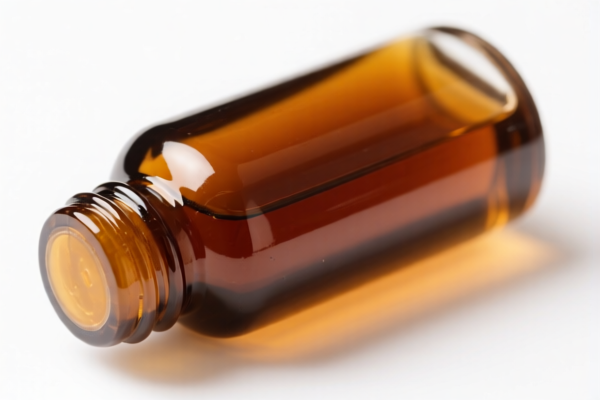
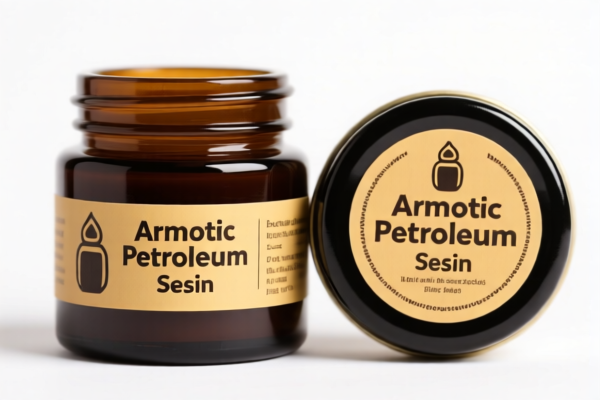
商品图片


AI分析
🧪 Aromatic Hydrocarbon Mold Plastic Adhesive
🌐 HS Code Reference & Customs Clearance Guide | 2026 Latest Tariff Analysis | Professional Classification Strategy
📌 I. Product Definition & Classification: What Exactly is "Aromatic Hydrocarbon Mold Plastic Adhesive"?
An Aromatic Hydrocarbon Mold Plastic Adhesive is a specialized industrial adhesive used primarily in the manufacturing and repair of plastic molds, components, or assemblies. It typically consists of adhesives based on synthetic polymers (often derived from aromatic hydrocarbons like benzene or toluene derivatives) or rubber, designed to bond plastics or plastic components within mold assemblies.
In international trade, the classification depends heavily on packaging size and chemical composition:
Key Distinction Criteria: - Retail Packaging (≤ 1 kg Net Weight): Products put up for retail sale as glues or adhesives, not exceeding 1 kg, fall under specific subheadings for "prepared adhesives." - Non-Retail / Bulk / Industrial (> 1 kg or not for retail): May fall under different general headings if not explicitly defined as "prepared adhesives for retail." However, based on the provided data, we focus on the retail-bound categories. - Polymer-Based: If the adhesive is based on polymers of headings 3901–3913 (plastics) or rubber, it falls under HS 3506.91. - Other Adhesives: If not based on those specific polymers/rubber, it falls under HS 3506.99.
⚠️ Critical Note:
- The term "Aromatic Hydrocarbon" describes the solvent or base chemistry but does not change the HS code structure unless it alters the polymer basis.
- The packaging size (≤ 1 kg) is the decisive factor for the subheadings provided in the data.
📦 II. HS Code Classification Details (2026 Latest Tariff Authority Comparison)
| HS Code | Product Description | Applicability | Basis |
|---|---|---|---|
3506.91.50.00 |
Prepared adhesives; products suitable for use as glues/adhesives, put up for retail sale, ≤ 1 kg net weight; Other: Adhesives based on polymers of headings 3901–3913 or on rubber; Other | Adhesives specifically based on plastics (polymers 3901-3913) or rubber, sold in small retail packages | ✅ Polymer/Rubber-based |
3506.99.00.00 |
Prepared adhesives; products suitable for use as glues/adhesives, put up for retail sale, ≤ 1 kg net weight; Other: Other | Adhesives that do not fall under the polymer/rubber category (e.g., based on other organic chemicals), sold in small retail packages | ❌ Non-Polymer/Rubber-based |
🔍 重点提醒:
- If the adhesive is based on polymers of headings 3901–3913 (e.g., acrylic, epoxy, PVC-based plastics) or rubber, use 3506.91.50.00.
- If it is a general-purpose aromatic hydrocarbon-based adhesive (e.g., based on phenolic, polyester, or other non-3901-3913 polymers), use 3506.99.00.00.
- Packaging is key: If sold in bulk (>1 kg), these specific retail subheadings may not apply, and the product might be classified elsewhere (e.g., 3506.10 or 3506.91.00.00). However, based on the provided data, we assume retail packaging ≤1 kg.
💰 III. 2026 Latest Tariff Rate Detail (Including Additional Taxes, Policy Surcharges)
✅ Applicable Country: United States (US)
✅ Origin: China (CN)
✅ Effective Date: 2025-11-10 onwards (including subsequent imports)
🎯 1. 3506.91.50.00 — Adhesives Based on Polymers of Headings 3901–3913 or Rubber
| Item | Content |
|---|---|
| Base Tariff | 0% (ad valorem) |
| USITC Additional Tax | 0% |
| IEEPA Additional Tax | 0% |
| Total Tariff | 0% |
| Tax Calculation | CIF Value × 0% = $0 |
| De Minimis Eligible? | ✅ Yes (subject to current de minimis limits, e.g., $800) |
| Legal Basis Path | HTSUS:3506.91.50.00 |
📌 Explanation:
- This HS code currently benefits from zero additional tariffs under the provided data.
- This makes it a highly cost-effective classification if the adhesive qualifies as polymer/rubber-based.
- No Section 301 or IEEPA surcharges apply to this specific subheading in the provided data.
🎯 2. 3506.99.00.00 — Other Prepared Adhesives
| Item | Content |
|---|---|
| Base Tariff | 2.1% (ad valorem) |
| USITC Additional Tax | 25.0% |
| IEEPA Additional Tax | Included in the 25.0% or applied as part of the total? |
| Total Tariff | 27.1% |
| Tax Calculation | CIF Value × 27.1% |
| De Minimis Eligible? | ❌ No (deny_de_minimis due to high tariff rate triggering Section 301/IEEPA rules) |
| Legal Basis Path | HTSUS:3506.99.00.00 → USITC Footnote 9903.88.01 → IEEPA:9903.01.25 |
📌 Note:
- The 27.1% total tariff includes the 2.1% base + 25.0% additional tax (likely under Section 301 and IEEPA combined for this category).
- De Minimis Exemption Denied: Due to the high tariff rate (>20%), shipments under $800 are not exempt from duties.
- Risk: This classification is significantly more expensive and triggers strict customs scrutiny.
🛠️ IV. Customs Clearance Practical Advice (Real-World Pitfall Avoidance)
✅ 1. Document Checklist (All Mandatory)
| Document | Required | Description |
|---|---|---|
| ✅ Product Specification Sheet | ✔️ | Must detail chemical composition, polymer basis (if any), solvent type, curing time |
| ✅ SDS (Safety Data Sheet) | ✔️ | Critical for aromatic hydrocarbon content; must list hazardous components per GHS |
| ✅ Commercial Invoice | ✔️ | Must clearly state "Adhesive for Plastic Molds" and net weight per package (≤1 kg if claiming retail subheading) |
| ✅ Packaging Description | ✔️ | Confirm if sold in retail-sized containers (≤1 kg) to justify HS 3506.91/99 subheadings |
| ✅ Certificate of Origin (CO) | ✔️ | For US-China trade, to determine eligibility for additional taxes |
| ✅ Third-Party Test Report | ✔️ | Proof of polymer/rubber basis if claiming 3506.91.50.00 |
✅ 2. Declaration Tips (Key Rules)
🔥 “Packaging is King, Chemistry is Queen!”
| Scenario | Correct Declaration | Incorrect Practice |
|---|---|---|
| Adhesive is polymer-based (3901-3913) & ≤1 kg | 3506.91.50.00 (0% tariff) |
Misclassifying as 3506.99.00.00 → 27.1% |
| Adhesive is general-purpose, ≤1 kg | 3506.99.00.00 (27.1% tariff) |
Claiming polymer basis without proof |
| Bulk packaging (>1 kg) | Not covered in provided data (likely 3506.10 or 3506.91.00.00) | Forcing retail subheading → Customs Rejection/Fines |
| Aromatic hydrocarbon solvent | Clearly disclose in SDS | Omitting hazardous content → Demurrage/Seizure |
✅ 3. Special Handling Cases
| Case | Recommendation |
|---|---|
| OEM Adhesive for Specific Plastic | Provide technical data sheet proving polymer compatibility to support 3506.91.50.00 |
| Hybrid Adhesive (Rubber + Polymer) | Classify under 3506.91.50.00 if rubber/polymer is predominant |
| Small Samples (<1 kg) for Testing | Can use 3506.91.50.00 or 3506.99.00.00 depending on composition |
| High Hazardous Content | Ensure DOT/HAZMAT compliance for air/sea freight; aromatic hydrocarbons may be flammable |
🌍 V. Global Market Comparison (2026 Latest)
| Country/Region | Recommended HS Code | Tariff | Certification | Notes |
|---|---|---|---|---|
| 🇺🇸 USA | 3506.91.50.00 |
0% | SDS, DOT (if hazardous) | Best tariff option if polymer-based |
| 🇺🇸 USA | 3506.99.00.00 |
27.1% | SDS, DOT | High cost; avoid if possible |
| 🇨🇳 China | 3506.91/99 | ~10-15% | CCC (if applicable) | Base tariff may differ |
| 🇪🇺 EU | 3506.91/99 | 0-6.5% | REACH, CLP | Lower tariffs, but strict chemical registration |
| 🇯🇵 Japan | 3506.91/99 | 0-5% | JIS, MSDS | Competitive tariffs |
📌 Conclusion:
- USA offers 0% tariff for polymer/rubber-based adhesives (3506.91.50.00), but 27.1% for others.
- Strategy: If your adhesive is based on plastics (3901-3913) or rubber, ensure it is classified under 3506.91.50.00 to save 27.1%.
- Proof: Be prepared to provide technical documentation proving polymer/rubber basis to customs.
📌 VI. Common Mistakes & Pitfalls (Lessons Learned)
❌ Mistake 1: Classifying all "plastic adhesives" under 3506.99.00.00
👉 Consequence: Pay 27.1% instead of 0%.
✅ Fix: Check if the adhesive is based on polymers 3901-3913 or rubber. If yes, use 3506.91.50.00.
❌ Mistake 2: Shipping bulk adhesive but declaring as ≤1 kg retail
👉 Consequence: Customs seizure for misdeclaration.
✅ Fix: Clearly state net weight on invoice. If >1 kg, use general heading (not provided in data).
❌ Mistake 3: Ignoring hazardous content (Aromatic Hydrocarbons)
👉 Consequence: Freight rejection, delays, fines.
✅ Fix: Provide accurate SDS and ensure HAZMAT compliance.
❌ Mistake 4: Assuming "Adhesive" is one category
👉 Consequence: Wrong tariff, audit risk.
✅ Fix: Differentiate between polymer-based vs. other adhesives.
✅ Correct Declaration Example:
"Aromatic Hydrocarbon-Based Adhesive for Plastic Molds, Based on Polymers of Heading 3903, Put Up in 500g Retail Containers, Net Weight 0.5kg, Model: XYZ, SDS Available"
🎯 VII. Conclusion: Smart Classification Saves Money!
🎯 Remember:
🔹 “Polymer/Rubber? 0% Tariff. Other? 27.1% Tariff.”
🔹 “Packaging ≤1kg? Use Retail Subheadings. >1kg? Different Rules.”
🔹 “Aromatic Hydrocarbon? Declare Hazards!”
📌 Pro Tip:
- If your adhesive is not based on polymers 3901-3913 or rubber, consider reformulating to use polymer-based chemistry to qualify for 0% tariff.
- Always pre-classify with a customs broker and obtain an Advance Ruling for high-value shipments.
📣 Take Action Now:
📞 Consult a Customs Broker + Provide SDS + Verify Polymer Basis
🚀 Save 27.1%, Avoid Delays, Ensure Smooth Clearance!
✨ Professional Classification, Precise Costs, Efficient Clearance!
💼 Every percentage point saved is profit earned!
用户评价
关于 HS 编码归类
协调制度(HS)是由世界海关组织(WCO)制定的国际贸易商品分类标准。全球 200 多个国家采用 HS 系统作为海关关税、贸易统计和进出口监管的基础。
每个 HS 编码遵循以下层级结构:
- 章(2 位)——商品大类(例如:第 84 章:机器和机械设备)
- 品目(4 位)——章内的更具体分类
- 子目(6 位)——国际通用细分,所有 WCO 成员国统一使用
- 本国细分(8-10 位)——各国自行扩展的细分编码,如美国 HTSUS 10 位编码
正确的 HS 编码归类对于顺利通关、准确缴纳关税和遵守贸易法规至关重要。错误归类可能导致海关延误、多缴关税或罚款。
从CN进口到US时,适用的关税税率可能包括:
- 最惠国(MFN)税率——适用于 WTO 成员国的标准关税税率
- 普通税率——适用于无贸易协定国家
- 贸易救济关税——附加关税,如 301 条款(反倾销)、232 条款(国家安全)或反补贴税
本页内容仅供参考。如需正式归类,请咨询当地海关或持牌报关代理。