aromatic modified thermosetting petroleum resin
CN → US| HS编码 | 关税税率 | 原产国 | 目的国 | 文档 |
|---|---|---|---|---|
| 3911902500 | 41.1% | CN | US | 官方文档 |
| 3911904500 | 40.8% | CN | US | 官方文档 |
| 3806900000 | 39.2% | CN | US | 官方文档 |
| 2707500000 | 35.0% | CN | US | 官方文档 |
| 2707999090 | 35.0% | CN | US | 官方文档 |
商品图片


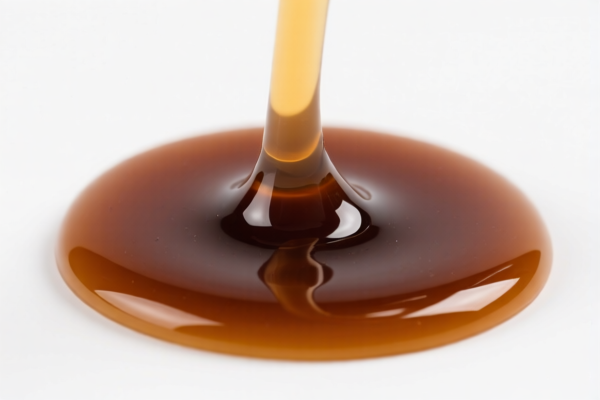
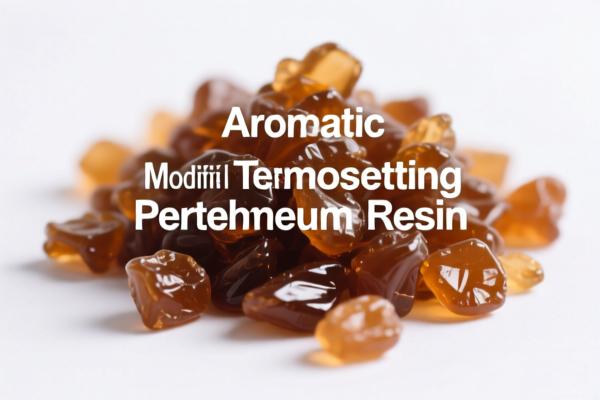
AI分析
🏭 Aromatic Modified Thermosetting Petroleum Resin (芳香族改性热固性石油树脂)
🌐 HS Code Reference & Customs Clearance Guide | 2026 Latest Tariff Full Analysis | Professional Clearance Strategy
📌 I. Product Definition & Classification: Do You Really Understand "Petroleum Resin"?
Aromatic Modified Thermosetting Petroleum Resin is a critical chemical intermediate used in adhesives, coatings, inks, and rubber compounding. It is derived from aromatic hydrocarbons (like C9 or C10 fractions) and undergoes polymerization to form a thermosetting solid.
In international trade, it is often misclassified due to its chemical ambiguity. It can be confused with: 1. Other Resins (Chapter 39): If it fits the specific description of "other primary forms of plastics." 2. Prepared Binders (Chapter 38): If it is considered a derivative of rosin or similar natural products. 3. Hydrocarbon Oils/Intermediates (Chapter 27): If it is viewed primarily as a processed aromatic hydrocarbon mixture rather than a polymerized resin.
⚠️ Key Distinction Point:
- If it is a polymerized solid with specific aromatic properties and used as a resinous binder → Likely 3911 or 3806.
- If it is primarily a mixture of aromatic hydrocarbons (weight of aromatics > non-aromatics) without significant polymerization → Likely 2707.
📦 II. HS Code Classification Details (2026 Latest Tariff Authority Comparison)
| HS Code | Product Description | Applicable Scenario | Tax Rate (Total) |
|---|---|---|---|
3911.90.25.00 |
Aromatic petroleum resins, matching material and component requirements | Standard aromatic petroleum resin, primary form, specific chemical match | 41.1% |
3911.90.45.00 |
Aromatic petroleum resins, conforming to the classification of chemicals in their primary form | General aromatic resin, primary form, broader chemical classification | 40.8% |
3806.90.00.00 |
Petroleum resins belonging to rosin and its derivatives, conforming to primary form chemicals | Misclassification or broad category as "rosin-like" derivative | 39.2% |
2707.50.00.00 |
Aromatic hydrocarbon products, conforming to chemical intermediate/raw material attributes | Viewed as processed aromatic oil/intermediate, not fully polymerized | 35.0% |
2707.99.90.90 |
Aromatic components exceeding non-aromatic components in similar products | Mixture where aromatics dominate, treated as hydrocarbon oil | 35.0% |
🔍 Key Reminder:
- 3911 codes are for polymerized resins.
- 2707 codes are for hydrocarbon mixtures/oils.
- 3806 is generally for rosin derivatives, but sometimes used broadly for "prepared binders" if the specific resin description isn't met.
- The choice depends heavily on the degree of polymerization and chemical analysis (aromatic content vs. polymer content).
💰 III. 2026 Latest Tariff Rate Details (Including Surcharges & Policy Additions)
✅ Applicable Country: United States (US)
✅ Origin: China (CN)
✅ Effective Date: November 10, 2025 onwards (including subsequent imports)
🎯 1. 3911.90.25.00 —— Aromatic Petroleum Resin (Specific Match)
| Item | Details |
|---|---|
| Base Duty | 6.1% (Ad Valorem) |
| Section 301 Surcharge | +25.0% (From USITC Footnote 9903.88.01) |
| IEEPA Surcharge | +10.0% (Targeting China/HK products, effective Nov 10, 2025) |
| Total Tax Rate | 41.1% |
| Tax Calculation | CIF Value × 41.1% |
| De Minimis Exemption | ❌ Not Eligible (deny_de_minimis) |
| Legal Basis Path | IEEPA:9903.01.25 → IEEPA:9903.01.24 → USITC:3911.90.25.00 → FOOTNOTE:9903.88.01 |
📌 Explanation:
- "Section 301 Surcharge 25%" comes from the Trade Act Section 301 under "Additional Duties";
- "IEEPA 10%" is the Additional Duty on China under the International Emergency Economic Powers Act;
- Total 41.1%, belonging to High Tariff category, must be anticipated in advance!
🎯 2. 3911.90.45.00 —— Aromatic Petroleum Resin (Primary Chemical Form)
| Item | Details |
|---|---|
| Base Duty | 5.8% |
| Section 301 Surcharge | +25.0% |
| IEEPA Surcharge | +10.0% |
| Total Tax Rate | 40.8% |
| Tax Calculation | CIF × 40.8% |
| De Minimis Exemption | ❌ Not Eligible |
| Legal Basis Path | IEEPA:9903.01.24 → USITC:3911.90.45.00 → FOOTNOTE:9903.88.01 |
📌 Note:
- Similar to the previous code, both fall under "Resin Class";
- Even if it is "C9 Resin," "C10 Resin," or "Hydrocarbon Resin," as long as it is aromatic and primary form, it applies.
🎯 3. 3806.90.00.00 —— Petroleum Resin (Rosin Derivative/Prepared Binder)
| Item | Details |
|---|---|
| Base Duty | 4.2% |
| Section 301 Surcharge | +25.0% |
| IEEPA Surcharge | +10.0% |
| Total Tax Rate | 39.2% |
| Tax Calculation | CIF × 39.2% |
| De Minimis Exemption | ❌ Not Eligible |
📌 Note:
- This code is often used if the resin is considered a "prepared binder" or derivative.
- However, if it clearly fits "Petroleum Resin," Customs may prefer 3911.
🎯 4. 2707.50.00.00 —— Aromatic Hydrocarbon Products (Intermediate)
| Item | Details |
|---|---|
| Base Duty | 0.0% |
| Section 301 Surcharge | +25.0% |
| IEEPA Surcharge | +10.0% |
| Total Tax Rate | 35.0% |
| Tax Calculation | CIF × 35.0% |
| De Minimis Exemption | ❌ Not Eligible |
📌 Note:
- If the product is deemed a hydrocarbon mixture rather than a polymerized resin, the base duty is 0%.
- This is 6.1% cheaper than3911.90.25.00.
- Risk: Customs may challenge this if the product is clearly a resin (polymer).
🎯 5. 2707.99.90.90 —— Aromatic Components Exceeding Non-Aromatics
| Item | Details |
|---|---|
| Base Duty | 0.0% |
| Section 301 Surcharge | +25.0% |
| IEEPA Surcharge | +10.0% |
| Total Tax Rate | 35.0% |
| Tax Calculation | CIF × 35.0% |
| De Minimis Exemption | ❌ Not Eligible |
📌 Note:
- Similar to2707.50, this applies if the aromatic content is high but it's classified as an oil/mixture.
- Again, 35.0% total, but high risk of reclassification if it's a solid resin.
🛠️ IV. Customs Clearance Practical Advice (Battle-Tested Pitfall Guide)
✅ 1. Required Document Checklist (Missing Any = Delay)
| Document | Mandatory | Notes |
|---|---|---|
| ✅ Product Specification Sheet | ✔️ | Must include chemical composition, aromatic content %, polymerization degree. |
| ✅ MSDS (Material Safety Data Sheet) | ✔️ | For hazardous material assessment. |
| ✅ Chemical Structure Analysis Report | ✔️ | To prove if it's a resin (3911/3806) or hydrocarbon (2707). |
| ✅ Commercial Invoice | ✔️ | Must clearly state "Aromatic Petroleum Resin" or "Hydrocarbon Mixture." |
| ✅ Certificate of Origin (CO) | ✔️ | If not Chinese, to check for tariff exemptions. |
| ✅ Packing List | ✔️ | Clear weight/volume details. |
✅ 2. Declaration Strategy (Key Mnemonic)
🔥 “Solid Resin goes to 3911, Hydrocarbon Oil goes to 2707. Don’t mix them up!”
| Scenario | Correct Declaration | Wrong Practice |
|---|---|---|
| Solid Aromatic Resin | 3911.90.25.00 or 3911.90.45.00 |
Misdeclare as 2707 → 35% (Savings but High Risk) |
| Hydrocarbon Mixture (Oil) | 2707.50.00.00 |
Misdeclare as 3911 → 41.1% (Overpaid) |
| Prepared Binder (Rosin-like) | 3806.90.00.00 |
Misdeclare as 2707 → 35% (Risk) |
| Mixed Packaging | Declare as Whole | Split declaration → Each item taxed separately, potential penalties |
✅ 3. Special Cases Handling
| Situation | Handling Advice |
|---|---|
| OEM Custom Resin | Provide customer order + chemical formula to avoid being labeled "unknown." |
| Resin with Additives | If additives > 10%, may need to reclassify as "Preparation" (3824), but check if 3911 still applies. |
| Partial Polymerization | If between oil and resin, provide chemical analysis to justify 2707 vs 3911. |
| Export to US from China | High Risk: Both 3911 and 2707 have 301/IEEPA surcharges. No exemption for China origin. |
🌍 V. Global Main Market Clearance Comparison (2026 Latest)
| Country/Region | Recommended HS Code | Tariff | Certification Requirements | Notes |
|---|---|---|---|---|
| 🇺🇸 USA | 3911.90.25.00 |
41.1% (CN Origin) | None specific | High tariff, strict classification |
| 🇨🇳 China | 3911.90.25.00 |
6.1% | None | No additional surcharges |
| 🇪🇺 EU | 3911.90.00 |
~6.5% | REACH Registration | No additional surcharges |
| 🇦🇺 Australia | 3911.90.00 |
5% | None | No surcharges |
| 🇯🇵 Japan | 3911.90.00 |
~5-7% | None | No surcharges |
📌 Conclusion:
- USA is the only market with high additional tariffs for this product from China;
- Cost for China-origin resin in US is extremely high, suggesting supply chain diversification or value-added processing abroad.
📌 VI. Common Mistakes & Pitfall Guide (Blood & Tears Lessons)
❌ Mistake 1: Declaring "Solid Resin" as "Hydrocarbon Oil" (2707) to save 6.1%
👉 Consequence: Customs audit → Penalty + Back Tax + Potential Fraud Investigation!
❌ Mistake 2: Not providing chemical analysis
👉 Consequence: Customs unable to classify → Delayed release or forced classification to highest duty.
❌ Mistake 3: Using vague terms like "Chemical Intermediate"
👉 Consequence: Customs will assign arbitrary HS Code → Likely 3911 with full surcharges.
❌ Mistake 4: Ignoring IEEPA 10% surcharge
👉 Consequence: Under-declared value → Audit and heavy fines.
✅ Correct Approach:
“Aromatic Petroleum Resin, Solid, Primary Form, CAS No. XXXXX, Aromatic Content >XX%, Model XYZ, For Adhesives Use.”
🎯 VII. Conclusion: Professional Declaration Saves Money!
🎯 Remember Mnemonic:
🔹 “Resin is 3911 (41%), Oil is 2707 (35%). Don’t cheat, or Customs will check!”
🔹 “HS Code determines destiny, 6% difference is huge, wrong declaration costs more!”
📌 Tips:
- If your resin is originating from Vietnam, Mexico, Thailand, Malaysia, you may apply for IEEPA Exemption, reducing tax to 35% or less (depending on base duty).
- Apply for Advance Ruling (Pre-classification) before shipment to avoid customs disputes.
📣 Take Action Now:
📞 Contact professional customs broker + Provide chemical analysis + Apply for HS Code Advance Ruling
🚀 Let your resin clear customs smoothly, efficiently, and profitably!
✨ Professional Clearance Starts with Accurate Classification!
💼 Every cent of your cost deserves precise calculation!
用户评价
关于 HS 编码归类
协调制度(HS)是由世界海关组织(WCO)制定的国际贸易商品分类标准。全球 200 多个国家采用 HS 系统作为海关关税、贸易统计和进出口监管的基础。
每个 HS 编码遵循以下层级结构:
- 章(2 位)——商品大类(例如:第 84 章:机器和机械设备)
- 品目(4 位)——章内的更具体分类
- 子目(6 位)——国际通用细分,所有 WCO 成员国统一使用
- 本国细分(8-10 位)——各国自行扩展的细分编码,如美国 HTSUS 10 位编码
正确的 HS 编码归类对于顺利通关、准确缴纳关税和遵守贸易法规至关重要。错误归类可能导致海关延误、多缴关税或罚款。
从CN进口到US时,适用的关税税率可能包括:
- 最惠国(MFN)税率——适用于 WTO 成员国的标准关税税率
- 普通税率——适用于无贸易协定国家
- 贸易救济关税——附加关税,如 301 条款(反倾销)、232 条款(国家安全)或反补贴税
本页内容仅供参考。如需正式归类,请咨询当地海关或持牌报关代理。