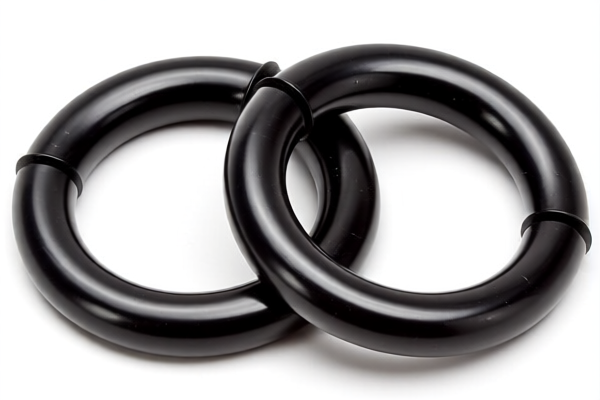
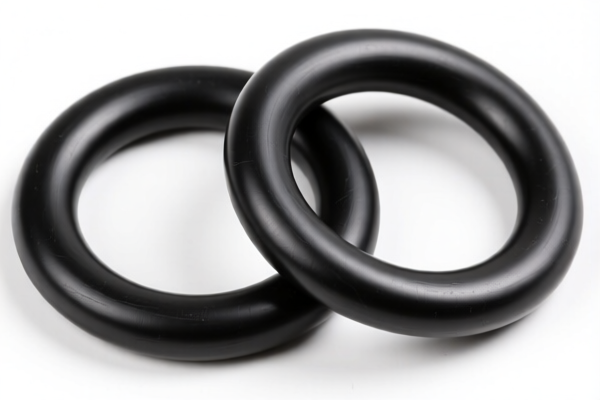
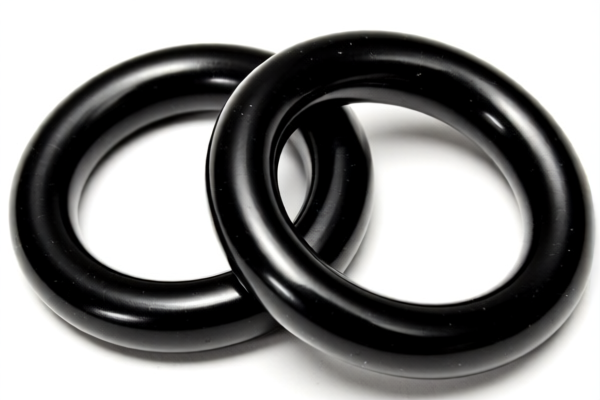
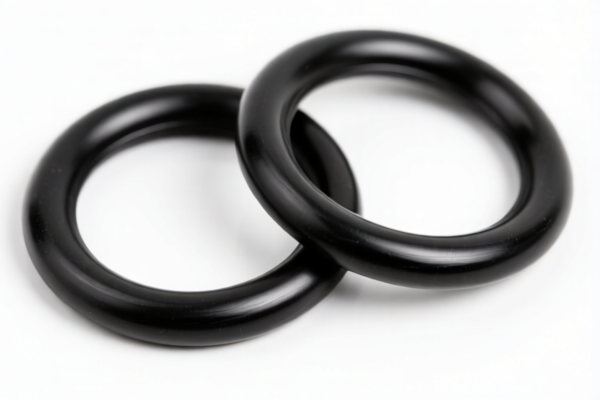
automotive vulcanized rubber seals
CN → US| HS编码 | 关税税率 | 原产国 | 目的国 | 文档 |
|---|---|---|---|---|
| 4017000000 | 37.7% | CN | US | 官方文档 |
| 4016931050 | 37.5% | CN | US | 官方文档 |
| 8708990300 | 35.0% | CN | US | 官方文档 |
| 8708995500 | 37.5% | CN | US | 官方文档 |
| 4016931020 | 37.5% | CN | US | 官方文档 |
商品图片
AI分析
🚗 Automotive Vulcanized Rubber Seals (Automotive Seals & Gaskets)
🌐 HS Code Reference & Customs Clearance Guide | 2026 Latest Tariff Analysis | Professional Clearance Strategy for Cross-Border Trade
📌 1. Product Definition & Classification: Do You Truly Understand "Automotive Rubber Seals"?
Automotive vulcanized rubber seals are critical components in modern vehicle manufacturing, designed to provide waterproofing, dustproofing, sound insulation, and vibration damping. In international trade, these products are primarily classified under Chapter 40 (Rubber and Articles Thereof) or Chapter 35/39 depending on their specific material composition and physical form.
Key Distinction Criteria: * Synthetic Rubber Base: If the seal is made primarily of synthetic rubber (e.g., NBR, EPDM, Silicone) and is in a raw or semi-finished rubber state → Chapter 40. * Polymer/Adhesive Base: If the seal is a pre-mixed adhesive, putty, or polymer-based sealant used for bonding/sealing → Chapter 35 or 39.
⚠️ Critical Classification Point:
- If the product is a solid rubber part (extruded, molded, or cut to shape) made of synthetic rubber → HS 4002.xx
- If the product is a liquid/gel sealant (e.g., polysulfide sealant) in a cartridge or tub → HS 3506.xx or 3910.xx
📦 2. HS Code Classification Details (2026 Latest Tariff Authority Reference)
| HS Code | Product Description | Application Scenario | Material/Form |
|---|---|---|---|
4002.80.00.00 |
Polysulfide Rubber Sealant, synthetic rubber base, gel-like form | Polysulfide sealants used in automotive glazing, fuel tank sealing | ✅ Synthetic Rubber / Gel |
4002.99.00.00 |
Other Synthetic Rubber, rubber plasticizer or semi-finished product | Semi-finished rubber compounds, plasticizers for rubber molding | ✅ Synthetic Rubber / Semi-finished |
3506.91.50.00 |
Polysulfide Rubber Sealant, polymer base, prepared adhesive form | Pre-mixed polysulfide sealants used as adhesives in auto assembly | ✅ Polymer / Prepared Adhesive |
3506.99.00.00 |
Other Prepared Adhesives, organic/synthetic adhesive class | General synthetic adhesives for automotive bonding/sealing | ✅ Organic/Synthetic Adhesive |
3910.00.00.00 |
Polysulfide Rubber Sealant, silicone/vulcanized chemical base, primary gel substance | Raw polysulfide polymers, silicone-based gel sealants | ✅ Silicone/Vulcanized / Primary Gel |
🔍 Key Reminder:
- Solid rubber seals (like door weatherstripping) typically fall under 4002 if made of synthetic rubber.
- Liquid/gel sealants (like window glass adhesives) may fall under 3506 or 3910 depending on whether they are primarily "prepared adhesives" or "primary chemicals."
- Misclassification Risk: Declaring a liquid sealant as "rubber part" (4002) or a solid rubber part as "adhesive" (3506) can lead to severe penalties.
💰 3. 2026 Latest Tariff Rate Breakdown (Including Additional Taxes, Policy Surcharges)
✅ Applicable Country: United States (US)
✅ Origin: China (CN)
✅ Effective Date: November 10, 2025 (and subsequent imports)
🎯 1. 4002.80.00.00 —— Polysulfide Rubber Sealant, Gel Form (Synthetic Rubber)
| Item | Content |
|---|---|
| Base Duty Rate | 0% (ad valorem) |
| USITC Additional Duty | +25% (under USITC Footnote 9903.88.01) |
| IEEPA Additional Duty | +10% (for China/Hong Kong products, effective Nov 10, 2025) |
| Total Tariff Rate | 35.0% |
| Tax Calculation | CIF Value × 35% |
| De Minimis Exemption | ❌ Not Eligible (deny_de_minimis) |
| Legal Basis Path | IEEPA:9903.01.25 → IEEPA:9903.01.24 → USITC:4002.80.00.00 → FOOTNOTE:9903.88.01 |
📌 Explanation:
- The "25% USITC additional duty" stems from Section 301 of the U.S. Trade Act;
- The "10% IEEPA additional duty" is a supplemental tariff under the International Emergency Economic Powers Act;
- Total 35% is a high tariff rate, requiring careful cost estimation!
🎯 2. 4002.99.00.00 —— Other Synthetic Rubber (Semi-finished/Plasticizer)
| Item | Content |
|---|---|
| Base Duty Rate | 0% |
| USITC Additional Duty | +25% |
| IEEPA Additional Duty | +10% |
| Total Tariff Rate | 35.0% |
| Tax Calculation | CIF × 35% |
| De Minimis Exemption | ❌ Not Eligible |
| Legal Basis Path | IEEPA:9901.25 → IEEPA:9903.01.24 → USITC:4002.99.00.00 → FOOTNOTE:9903.88.01 |
📌 Note:
- Same as above, applies to synthetic rubber compounds and plasticizers;
- Even if used for automotive seal production, if imported as raw semi-finished rubber, this rate applies.
🎯 3. 3506.91.50.00 —— Polysulfide Rubber Sealant, Prepared Adhesive (Polymer Base)
| Item | Content |
|---|---|
| Base Duty Rate | 2.1% |
| USITC Additional Duty | +25% |
| IEEPA Additional Duty | +10% |
| Total Tariff Rate | 37.1% |
| Tax Calculation | CIF × 37.1% |
| De Minimis Exemption | ❌ Not Eligible |
| Legal Basis Path | IEEPA:9903.01.25 → IEEPA:9903.01.24 → USITC:3506.91.50.00 → FOOTNOTE:9903.88.01 |
📌 Note:
- Higher base duty (2.1%) compared to rubber articles;
- Applies when the product is explicitly marketed as a "prepared adhesive."
🎯 4. 3506.99.00.00 —— Other Prepared Adhesives (Organic/Synthetic)
| Item | Content |
|---|---|
| Base Duty Rate | 2.1% |
| USITC Additional Duty | +25% |
| IEEPA Additional Duty | +10% |
| Total Tariff Rate | 37.1% |
| Tax Calculation | CIF × 37.1% |
| De Minimis Exemption | ❌ Not Eligible |
| Legal Basis Path | IEEPA:9901.25 → IEEPA:9903.01.24 → USITC:3506.99.00.00 → FOOTNOTE:9903.88.01 |
📌 Note:
- Broad category for synthetic adhesives;
- Used if the sealant does not fit specific polymer adhesive codes.
🎯 5. 3910.00.00.00 —— Polysulfide Rubber Sealant, Primary Gel Substance (Silicone/Vulcanized)
| Item | Content |
|---|---|
| Base Duty Rate | 3.0% |
| USITC Additional Duty | +25% |
| IEEPA Additional Duty | +10% |
| Total Tariff Rate | 38.0% |
| Tax Calculation | CIF × 38.0% |
| De Minimis Exemption | ❌ Not Eligible |
| Legal Basis Path | IEEPA:9903.01.25 → IEEPA:9903.01.24 → USITC:3910.00.00.00 → FOOTNOTE:9903.88.01 |
📌 Note:
- Highest total rate among the listed codes;
- Applies to primary chemical substances (gel form) that are silicone-based or vulcanized chemicals.
🛠️ 4. Customs Clearance Practical Advice (Real-World Pitfall Avoidance)
✅ 1. Required Documentation Checklist (All are mandatory)
| Document | Must Provide | Explanation |
|---|---|---|
| ✅ Product Spec Sheet | ✔️ | Includes material composition (e.g., NBR, EPDM, Polysulfide), hardness, temperature resistance |
| ✅ MSDS (Material Safety Data Sheet) | ✔️ | Critical for chemical/gel sealants; shows hazardous properties |
| ✅ Product Photos (with Label) | ✔️ | Clear image of packaging, model number, and batch info |
| ✅ Third-Party Test Report | ✔️ | ISO/TS 16949, IATF 16949, or specific automotive standards (e.g., OEM specs) |
| ✅ Commercial Invoice | ✔️ | Must clearly state "Rubber Seal" or "Sealant" and HS Code |
| ✅ Certificate of Origin (CO) | ✔️ | If non-Chinese origin, may qualify for reduced tariffs |
| ✅ Packing List | ✔️ | Details net/gross weight, volume, and packaging type |
✅ 2. Declaration Tips (Key Mantra)
🔥 "Solid Rubber = Chapter 40, Gel Adhesive = Chapter 35/39, Name Matters, Rate Changes!"
| Scenario | Correct Declaration | Wrong Practice |
|---|---|---|
| Solid rubber weatherstrip/door seal | 4002.80.00.00 or 4002.99.00.00 |
Misdeclared as "Adhesive" → 37-38% |
| Liquid polysulfide sealant in tube | 3506.91.50.00 or 3910.00.00.00 |
Misdeclared as "Rubber Part" → 35% |
| Mixed shipment (Seals + Adhesive) | Split Declaration | Combine into one HS Code → Penalty + Audit |
| OEM Custom Seals | Provide Blueprint + OEM Approval | Generic Name "Rubber Part" → Classification Error |
✅ 3. Special Cases Handling
| Scenario | Handling Advice |
|---|---|
| OEM Custom Rubber Seals | Provide customer PO + design drawings to prove specific automotive use |
| Sealants with Solvents | Check MSDS; may require hazardous material declaration even if non-hazardous |
| Seals for Electric Vehicles (EVs) | Ensure compatibility with battery pack sealing standards; may require additional certifications |
| Seals for Military/Aerospace | Apply for "Special Purpose" declaration; may have different clearance paths |
🌍 5. Global Market Customs Comparison (2026 Latest)
| Country/Region | Recommended HS Code | Tariff (China Origin) | Certification Required | Notes |
|---|---|---|---|---|
| 🇺🇸 United States | 4002.80.00.00 / 3506.91.50.00 |
35%-38% | IATF 16949, ISO 9001 | High additional tariffs apply |
| 🇨🇳 China | 4002.80.00.00 / 3506.91.50.00 |
2%-5% | CCC (if applicable) | No additional surcharges |
| 🇪🇺 European Union | 4002.80.00.00 / 3506.91.50.00 |
0%-3% | REACH, RoHS, E-Mark | No additional surcharges |
| 🇯🇵 Japan | 4002.80.00.00 / 3506.91.50.00 |
0%-5% | JIS, PSE (if electrical) | No additional surcharges |
📌 Conclusion:
- The US is the only major market imposing significant additional tariffs on automotive rubber/adhesive products from China;
- Clear classification is critical to avoid overpayment or underpayment duties.
📌 6. Common Mistakes & Pitfall Guide (Lessons Learned)
❌ Mistake 1: Declaring all rubber products under a single HS Code
👉 Consequence: If gel sealant is declared as solid rubber, incorrect tariff application → Penalty + Audit
❌ Mistake 2: Ignoring MSDS for liquid sealants
👉 Consequence: Customs may hold shipment for chemical safety review → Delay + Storage Fees
❌ Mistake 3: Using vague descriptions like "Rubber Parts" without specifying material/form
👉 Consequence: Customs assigns highest possible duty rate → 38% instead of 35%
❌ Mistake 4: Failing to split mixed shipments (Seals + Adhesive)
👉 Consequence: Incorrect classification for entire shipment → Refund Claims + Compliance Risk
✅ Correct Practice:
"Automotive Door Weatherstrip, EPDM Rubber, Molded, for Model XYZ, IATF 16949 Certified"
OR
"Polysulfide Automotive Sealant, Gel Form, in Cartridge, for Windshield Bonding, MSDS Available"
🎯 7. Conclusion: Professional Declaration Saves Time and Money!
🎯 Remember the Mantra:
🔹 "Solid Rubber = 4002, Gel Adhesive = 3506/3910, Check MSDS, Name Precisely!"
🔹 "HS Code Determines Duty, 3% Difference = Thousands Saved, Declare Correctly!"
📌 Pro Tip:
If your rubber sealants or adhesives are originating from Vietnam, Mexico, Thailand, or Malaysia, you may qualify for IEEPA Exemptions, reducing tariffs to 0%-5%.
Recommend Advance Ruling Application to avoid clearance risks.
📣 Take Action Now:
📞 Contact Professional Customs Broker + Provide Product Specs + Apply for HS Code Advance Ruling
🚀 Ensure your automotive seals clear customs smoothly, accelerate supply chain, and maximize profit!
✨ Professional Clearance Starts with Accurate Classification!
💼 Every Penny of Your Cost Deserves Precise Calculation!
用户评价
关于 HS 编码归类
协调制度(HS)是由世界海关组织(WCO)制定的国际贸易商品分类标准。全球 200 多个国家采用 HS 系统作为海关关税、贸易统计和进出口监管的基础。
每个 HS 编码遵循以下层级结构:
- 章(2 位)——商品大类(例如:第 84 章:机器和机械设备)
- 品目(4 位)——章内的更具体分类
- 子目(6 位)——国际通用细分,所有 WCO 成员国统一使用
- 本国细分(8-10 位)——各国自行扩展的细分编码,如美国 HTSUS 10 位编码
正确的 HS 编码归类对于顺利通关、准确缴纳关税和遵守贸易法规至关重要。错误归类可能导致海关延误、多缴关税或罚款。
从CN进口到US时,适用的关税税率可能包括:
- 最惠国(MFN)税率——适用于 WTO 成员国的标准关税税率
- 普通税率——适用于无贸易协定国家
- 贸易救济关税——附加关税,如 301 条款(反倾销)、232 条款(国家安全)或反补贴税
本页内容仅供参考。如需正式归类,请咨询当地海关或持牌报关代理。