baby diaper bag
CN → US| HS编码 | 关税税率 | 原产国 | 目的国 | 文档 |
|---|---|---|---|---|
| 4202929100 | 52.6% | CN | US | 官方文档 |
| 4202923131 | 52.6% | CN | US | 官方文档 |
| 6307909891 | 24.5% | CN | US | 官方文档 |
商品图片
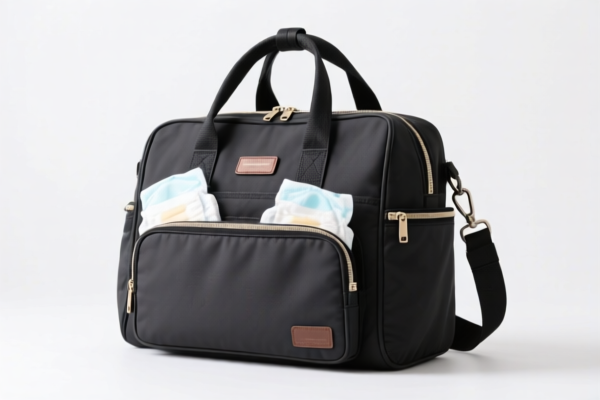


AI分析
🍼 Baby Diaper Bag (Mommy Bags / Nursery Totes)
🌐 HS Code Reference & Customs Clearance Guide | 2026 Latest Tariff Analysis | Professional Compliance Strategy
📌 I. Product Definition & Classification: What Exactly is a "Diaper Bag"?
A Baby Diaper Bag is a specialized travel accessory designed for parents, serving the dual purpose of a backpack, tote, or handbag while organizing infant care essentials (diapers, wipes, bottles, clothes).
In international trade, the classification hinges on two critical factors: 1. Surface Material: Typically textile (nylon, canvas, polyester, leather, or synthetic leather). 2. Functionality: It functions as a container/backpack/handbag, not merely a clothing accessory or general household item.
⚠️ Key Distinction:
- If it is a structured bag (backpack, tote, shoulder bag) made of textile/synthetic material → Falls under Chapter 42 (Articles of Leather; Travel Goods).
- If it is loosely classified as a general "made-up textile article" without specific bag features → May fall under Chapter 63 (Other Made-up Textile Articles).
- Note: The provided data explicitly categorizes it under Bag/Travel Goods (Ch 42) or General Textile Goods (Ch 63).
📦 II. HS Code Classification Details (Based on Provided Data)
| HS Code | Product Description (Based on Data) | Surface Material | Tax Rate |
|---|---|---|---|
4202.92.91.00 |
Travel/Travel-Like Bags Classified as bags/backpacks. Exterior surface is typically textile. No material conflict. |
Textile / Synthetic | 52.6% |
4202.92.31.31 |
Travel/Sports/Like Bags Similar to above. Fits characteristics of textile-surface travel goods. |
Textile / Synthetic | 52.6% |
6307.90.98.91 |
Other Made-Up Articles Classified as a "finished consumer good (bag-type)" under "Other finished goods." No material conflict. |
Textile | 24.5% |
🔍 Critical Insight:
- Codes4202.92...treat the diaper bag as a Travel Good/Bag. This is the standard classification for branded, structured bags.
- Code6307.90...treats it as a General Textile Article. This might apply if the bag lacks specific "bag" characteristics (e.g., very simple pouch-like structure) or if a specific duty mitigation strategy is needed.
- Warning: The tax difference is massive (52.6% vs. 24.5%). Incorrect classification leads to severe penalties or unexpected costs.
💰 III. 2026 Latest Tariff Rate Breakdown (Including Surcharges)
✅ Applicable Country: United States (US)
✅ Country of Origin: China (CN)
✅ Effective Date: Post-2025/2026 (Including 122 Section Tariffs)
🎯 1. Codes 4202.92.91.00 & 4202.92.31.31 —— Travel Goods/Backpacks (High Tariff)
| Item | Detail |
|---|---|
| Base Tariff | 17.6% (Standard MFN Rate for Travel Goods) |
| Section 301 Surcharge | +25.0% (Trade War Tariff) |
| Section 122 Tariff | +10.0% (Specific US Trade Measure) |
| Total Effective Rate | 52.6% |
| Tax Calculation | CIF Value × 52.6% |
| De Minimis Exemption | ❌ Denied (deny_de_minimis) |
| Legal Pathway | Base Duty → Section 301 Footnote → Section 122 Specific List |
📌 Explanation:
- These codes classify the diaper bag as a structured bag. US Customs views structured bags from China as highly competitive manufactured goods, thus applying all applicable surcharges.
- Total 52.6% is a heavy burden. This rate applies to most premium, branded, or structured diaper bags.
🎯 2. Code 6307.90.98.91 —— Other Made-Up Textile Articles (Lower Tariff)
| Item | Detail |
|---|---|
| Base Tariff | 7.0% (Standard Rate for Other Made-Up Textile Items) |
| Section 301 Surcharge | +7.5% (Reduced surcharge for this specific subcategory) |
| Section 122 Tariff | +10.0% |
| Total Effective Rate | 24.5% |
| Tax Calculation | CIF Value × 24.5% |
| De Minimis Exemption | ❌ Denied (deny_de_minimis) |
| Legal Pathway | Base Duty → Section 301 Footnote → Section 122 Specific List |
📌 Explanation:
- By classifying the diaper bag under "Other Finished Textile Articles" rather than "Travel Bags," the base duty drops from 17.6% to 7.0%.
- The Section 301 surcharge is also lower (7.5% vs. 25%).
- Total 24.5% is significantly more competitive.
- ⚠️ Risk: This classification must be defensible. If customs determines the item is clearly a "bag" (has straps, handles, main compartment structure), they may reclassify it to Chapter 42, leading to back-taxes and penalties.
🛠️ IV. Customs Clearance Operational Advice (Practical Pitfall Avoidance)
✅ 1. Preparation Checklist (Must-Have Documents)
| Document | Required | Purpose |
|---|---|---|
| ✅ Product Spec Sheet | ✔️ | Detail dimensions, materials (outer fabric, lining, zippers), and compartments. |
| ✅ Product Photos | ✔️ | Clear images of the bag from all angles, showing handles/straps to prove "bag" structure. |
| ✅ Commercial Invoice | ✔️ | Description must match HS Code. E.g., if using 6307, describe as "Textile Travel Pouch/Bag"; if 4202, use "Backpack/Travel Bag." |
| ✅ Material Composition Statement | ✔️ | Verify % of textile vs. synthetic vs. leather. Critical for Chapter 42 vs. 63. |
| ✅ Packaging List | ✔️ | Show contents to ensure no electronic accessories (which would change classification entirely). |
✅ 2. Declaration Strategy (Key Mantras)
🔥 "Structure Defines Chapter, Material Defines Subheading!"
| Scenario | Recommended HS Code | Reasoning |
|---|---|---|
| Structured Bag (Backpack/Tote with stiff shape, multiple handles) | 4202.92.91.00 |
Clearly fits "Articles of leather or travel goods." High tax (52.6%). |
| Soft/Loose Bag (Simple pouch, less structured, primarily textile function) | 6307.90.98.91 |
Fits "Other made-up textile articles." Lower tax (24.5%). Requires strong defense. |
| Bag with Electronics (e.g., built-in warmer, charging port) | Different Code Entirely | Not covered in this data. Likely Chapter 85 or 90. |
✅ 3. Special Handling for Diaper Bags
| Situation | Advice |
|---|---|
| OEM/Unbranded | Provide factory invoices. Avoid "brand name" in description if trying to argue for lower-value textile classification, but ensure accuracy. |
| Set with Accessories | If the bag comes with bottles/wipes, declare the bag as the primary item. Do not bundle unrelated goods to lower the bag's tax. |
| Material Mix | If the bag has leather straps (>70% surface area), it may fall under different leather codes. Stick to textile if using the provided codes. |
🌍 V. Global Market Comparison (2026 Context)
| Region | Typical HS Code | Estimated Duty (China Origin) | Notes |
|---|---|---|---|
| 🇺🇸 USA | 4202.92 or 6307.90 |
52.6% vs 24.5% | Section 301 & 122 add huge burden. Classification choice is critical. |
| 🇨🇳 China | 4202.92 |
10-15% | Standard import duty. No Section 301. |
| 🇪🇺 EU | 4202.92 |
4% + VAT (20-25%) | No Section 301. VAT is the main cost driver. |
| 🇬🇧 UK | 4202.92 |
12% + VAT (20%) | Post-Brexit tariff structure. |
| 🇨🇦 Canada | 4202.92 |
17.5% + GST/HST | Standard MFN rates. |
📌 Conclusion:
- USA is the most expensive market for diaper bags due to trade tariffs.
- EU and UK are more favorable in terms of base duty, but VAT adds significant cost.
- China has moderate duties but no punitive trade surcharges.
📌 VI. Common Errors & Pitfalls (Lessons Learned)
❌ Error 1: Classifying a structured backpack as a "Textile Pouch" (6307) to save tax.
👉 Consequence: Customs audit reveals "bag" structure. Back-taxes + Penalties for misdeclaration.
❌ Error 2: Ignoring Section 122 Tariffs.
👉 Consequence: The 10% surcharge applies to both codes. Underestimating total landed cost.
❌ Error 3: Using "Baby Bag" as the sole description.
👉 Consequence: Ambiguity. Customs may assign a default high-duty code. Use precise terms: "Textile Travel Backpack" or "Made-Up Textile Carry-All."
✅ Correct Approach:
"Textile Travel Bag, Back-Style, Exterior Surface: Nylon, Interior: Polyester Lining, Model DB-100"
Match description strictly to the chosen HS Code characteristics.
🎯 VII. Conclusion: Professional Classification for Cost Efficiency
🎯 Remember the Rule:
🔹 "Structured Bag = Chapter 42 (High Tax)"
🔹 "Loose Textile Article = Chapter 63 (Lower Tax)"
🔹 "Section 122 (10%) hits both!"
📌 Strategic Tip:
- If your diaper bag is highly structured (hard to deny as a bag), you must use 4202.92. Accept the 52.6% cost.
- If your product is a simple, soft pouch or less structured, you may argue for 6307.90 to achieve 24.5%.
- Consult a licensed customs broker to review product photos before shipment. The cost of an audit far exceeds the legal consultation fee.
📣 Immediate Action:
📞 Contact a Customs Broker + Provide Product Photos + Verify Material Composition
🚀 Ensure Accurate Declaration, Avoid Delays, Maximize Profit Margins!
✨ Professional Clearance Starts with Precise Classification!
💼 Every Percent of Duty Saved is Pure Profit!
用户评价
关于 HS 编码归类
协调制度(HS)是由世界海关组织(WCO)制定的国际贸易商品分类标准。全球 200 多个国家采用 HS 系统作为海关关税、贸易统计和进出口监管的基础。
每个 HS 编码遵循以下层级结构:
- 章(2 位)——商品大类(例如:第 84 章:机器和机械设备)
- 品目(4 位)——章内的更具体分类
- 子目(6 位)——国际通用细分,所有 WCO 成员国统一使用
- 本国细分(8-10 位)——各国自行扩展的细分编码,如美国 HTSUS 10 位编码
正确的 HS 编码归类对于顺利通关、准确缴纳关税和遵守贸易法规至关重要。错误归类可能导致海关延误、多缴关税或罚款。
从CN进口到US时,适用的关税税率可能包括:
- 最惠国(MFN)税率——适用于 WTO 成员国的标准关税税率
- 普通税率——适用于无贸易协定国家
- 贸易救济关税——附加关税,如 301 条款(反倾销)、232 条款(国家安全)或反补贴税
本页内容仅供参考。如需正式归类,请咨询当地海关或持牌报关代理。