baby shoes
CN → US| HS编码 | 关税税率 | 原产国 | 目的国 | 文档 |
|---|---|---|---|---|
| 6403997590 | 17.0% | CN | US | 官方文档 |
| 6403916090 | 18.5% | CN | US | 官方文档 |
| 6402993173 | 16.0% | CN | US | 官方文档 |
| 6402914063 | 16.0% | CN | US | 官方文档 |
| 6404114900 | 47.5% | CN | US | 官方文档 |
商品图片
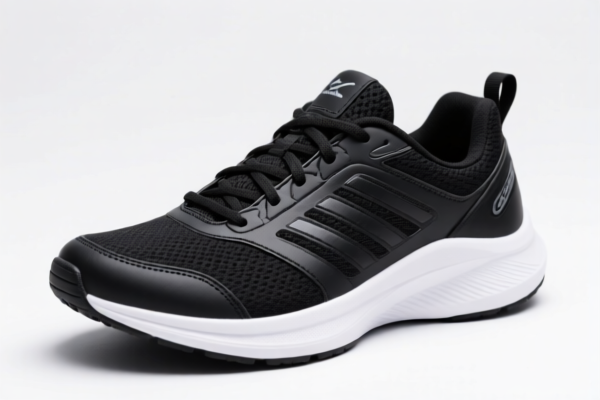
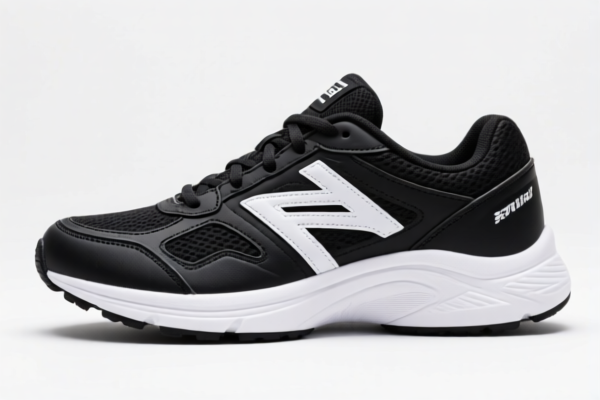
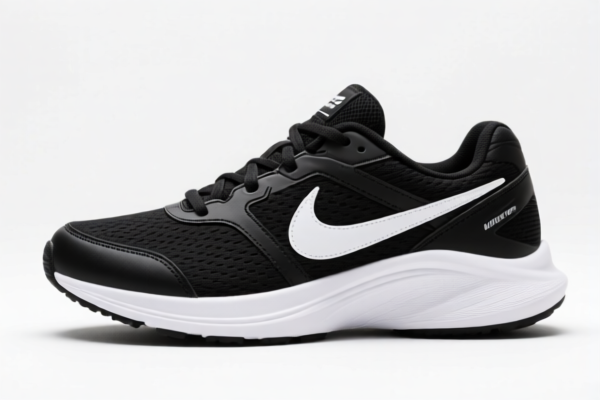
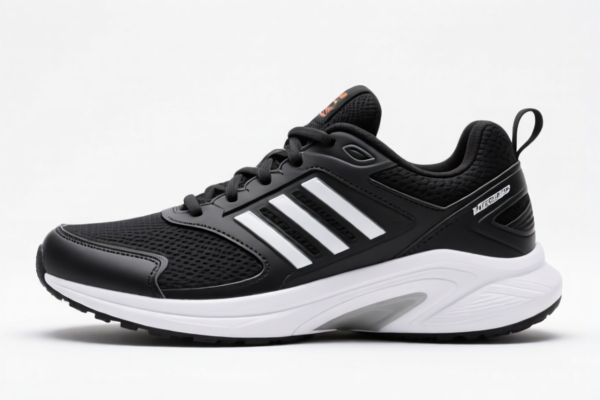
AI分析
👶 Baby Shoes (Infant & Toddler Footwear)
🌐 HS Code Reference & Customs Clearance Guide | 2026 Latest Tariff Analysis | Professional Strategy for US Imports
📌 1. Product Definition & Classification: Do You Really Understand "Baby Shoes"?
Baby shoes are not just small adult shoes; they are specialized footwear designed for infants and toddlers. In international trade, specifically under US Customs regulations, the classification hinges heavily on two factors: 1. Material Composition: Specifically the upper material (leather, rubber, plastic, textile) and the sole material (rubber, plastic, leather, textile). 2. Target Age Group: Distinctions between "Infant" (typically under 2 years), "Child," and "Youth."
⚠️ Critical Distinction:
- If the shoes are made of Rubber/Plastic → They fall under Chapter 64, Heading 6402.
- If the shoes are made of Leather → They fall under Chapter 64, Heading 6403.
- If the shoes are Textile/Sneakers (e.g., canvas or knit uppers with rubber soles) → They fall under Chapter 64, Heading 6404.
Misclassification here is common because "Baby Shoe" is not a specific HS Code description. You must describe the physical materials to get the right code.
📦 2. HS Code Classification Details (2026 Latest Tariff Authority)
| HS Code | Product Description | Application Scenario | Key Material Feature |
|---|---|---|---|
6402.99.31.73 |
Other footwear with outer soles of rubber or plastics, uppers of rubber or plastics (Contains Infant Shoes) | Rubber booties, plastic rain shoes, soft-soled infant walkers | ✅ Rubber/Plastic Upper & Sole |
6402.91.40.63 |
Other footwear, with outer soles of rubber or plastics, uppers of rubber or plastics, suitable for children and infants | Soft rubber slippers, simple plastic sandals for babies | ✅ Rubber/Plastic Upper & Sole |
6403.99.75.90 |
Other footwear with outer soles of rubber or plastics, other uppers (General Catch-all for Children's Leather Shoes) | Leather sneakers, formal leather shoes for toddlers (where specific leather codes don't apply) | ⚠️ Inferred Leather/Other Upper + Rubber/Plastic Sole |
6403.91.60.90 |
Other footwear with outer soles of rubber or plastics, uppers of leather (Youth/Boy Specific) | Leather boots, high-top leather shoes for boys/toddlers | ✅ Leather Upper + Rubber/Plastic Sole |
6404.11.49.00 |
Footwear with uppers of textile materials, with outer soles of rubber or plastics (Sneakers/Canvas) | Canvas high-tops, knit mesh baby shoes, athletic-style footwear | ✅ Textile Upper + Rubber/Plastic Sole |
🔍 Key Reminder:
-6402Codes: For soft, flexible shoes made entirely of rubber or plastic. Common for first walkers.
-6403Codes: For structured shoes where the upper is leather. Note that6403.91often targets "Youth/Boys," while6403.99is a broader catch-all.
-6404Codes: For textile uppers (canvas, fabric, mesh). This is a high-risk category for high tariffs (see below).
💰 3. 2026 Latest Tariff Rate Breakdown (Including Surtaxes & Policy Add-ons)
✅ Applicable Country: United States (US)
✅ Country of Origin: China (CN)
✅ Effective Date: Post-November 10, 2025 (Includes subsequent imports)
🎯 1. 6402.99.31.73 & 6402.91.40.63 —— Rubber/Plastic Infant Shoes
| Item | Content |
|---|---|
| Base Tariff | 6.0% (Ad Valorem) |
| Section 301 Surcharge | 0.0% (No additional 301 tariff for these specific sub-heads) |
| Section 122 Tariff | +10% (Targeting China-specific goods) |
| Total Tariff Rate | 16.0% |
| Tax Calculation | CIF Value × 16.0% |
| De Minimis Eligibility | ❌ No (Denied) |
| Legal Basis Path | Base Tariff: 6.0% → Sec 301: 0.0% → Sec 122: 10% |
📌 Explanation:
- These codes benefit from lower base tariffs (6%).
- However, the 10% Section 122 tariff still applies to Chinese goods.
- Total 16% is relatively manageable compared to textile shoes.
🎯 2. 6403.99.75.90 —— General Children's Leather/Other Shoes (Catch-all)
| Item | Content |
|---|---|
| Base Tariff | 7.0% |
| Section 301 Surcharge | 0.0% |
| Section 122 Tariff | +10% |
| Total Tariff Rate | 17.0% |
| Tax Calculation | CIF Value × 17.0% |
| De Minimis Eligibility | ❌ No |
| Legal Basis Path | Base Tariff: 7.0% → Sec 301: 0.0% → Sec 122: 10% |
📌 Explanation:
- This is a "fall-back" category. If your leather shoe doesn't fit specific "Boys/Youth" codes, it lands here.
- Total 17%. Slightly higher than rubber shoes due to the 1% higher base tariff.
🎯 3. 6403.91.60.90 —— Leather Youth/Boy Shoes
| Item | Content |
|---|---|
| Base Tariff | 8.5% |
| Section 301 Surcharge | 0.0% |
| Section 122 Tariff | +10% |
| Total Tariff Rate | 18.5% |
| Tax Calculation | CIF Value × 18.5% |
| De Minimis Eligibility | ❌ No |
| Legal Basis Path | Base Tariff: 8.5% → Sec 301: 0.0% → Sec 122: 10% |
📌 Explanation:
- Specific codes for "Leather Upper + Rubber/Plastic Sole" often carry higher base tariffs due to domestic industry protections.
- Total 18.5% is the highest among the leather/rubber categories in this dataset.
🎯 4. 6404.11.49.00 —— Textile Upper Sneakers (High Risk!)
| Item | Content |
|---|---|
| Base Tariff | 37.5% |
| Section 301 Surcharge | 0.0% |
| Section 122 Tariff | +10% |
| Total Tariff Rate | 47.5% |
| Tax Calculation | CIF Value × 47.5% |
| De Minimis Eligibility | ❌ No |
| Legal Basis Path | Base Tariff: 37.5% → Sec 301: 0.0% → Sec 122: 10% |
📌 WARNING:
- Base Tariff 37.5% is extremely high for footwear. This reflects strict protection for domestic textile/sneaker manufacturing.
- Total 47.5% will severely erode margins.
- Do NOT misdeclare rubber shoes as textile to save money if they are clearly rubber; customs inspections will catch material discrepancies.
- If your shoes are Knit/Mesh/Canvas, you MUST accept this 47.5% rate unless you can prove a different material composition.
🛠️ 4. Customs Clearance Practical Advice (Avoid Pitfalls)
✅ 1. Material Testing is Mandatory (Non-negotiable)
| Document | Requirement | Purpose |
|---|---|---|
| Material Composition Report | ✔️ Must Provide | Detailed % breakdown of Upper (Leather vs. Textile vs. Rubber) and Sole. |
| Product Photos | ✔️ Must Provide | Clear view of the inner lining, stitching, and sole texture. |
| Care Label | ✔️ Must Provide | Often lists material composition (e.g., "Upper: 100% Leather"). |
| Third-Party Lab Test | ✔️ Recommended | ASTM F2412/F2413 or equivalent material test to prove textile vs. leather. |
🔥 Key Strategy:
- If you can prove the upper is not leather and not textile (e.g., synthetic PU classified as plastic/rubber under specific legal notes), you might lower the tariff from 47.5% or 18.5% to 16-17%. - However, "Synthetic Leather" (PU) often falls under Textile/Chapter 6402 or 6403 depending on construction. Consult a lab.
✅ 2. Declaration Strategy (Key Rules)
| Scenario | Correct Declaration | Wrong Action | Consequence |
|---|---|---|---|
| Rubber Booties | 6402.99.31.73 "Footwear with outer soles of rubber or plastics, uppers of rubber or plastics" |
Declare as "Leather Shoes" | Penalty for false declaration + Higher Tax |
| Canvas Sneakers | 6404.11.49.00 "Footwear with uppers of textile materials" |
Declare as "Rubber Shoes" | Seizure for fraud + 47.5% tax still applied + Fine |
| Leather Boots | 6403.91.60.90 or 6403.99.75.90 |
Declare as "Textile" | Impossible. Visual inspection fails. |
| Mixed Materials | Analyze the principal material | Split申报 (Partial Declaration) | Customs will reclassify as the highest tariff item |
🔥 Golden Rule:
"Textile = 47.5%, Rubber/Plastic = 16%, Leather = 17-18%."
Your profit margin must absorb the difference. If your product is textile, you must price accordingly.
✅ 3. Special Cases & Exemptions
| Situation | Handling Advice |
|---|---|
| OEM Custom Shoes | Provide design specs showing material layers. If the "upper" is a knit fabric, it's Textile (6404). If it's a molded plastic shell, it's Rubber/Plastic (6402). |
| Baby Shoes with Leather Accents | If the majority of the upper surface area is leather, it's 6403. If leather is just a small patch on a textile shoe, it may still be 6404. This is a common audit trigger. |
| Section 122 Tariff (10%) | Cannot be avoided for China-origin goods. Ensure your supplier has a valid Certificate of Origin. |
| De Minimis (Section 321) | ❌ Not Eligible. Footwear from China is explicitly denied de minimis treatment. All shipments must go through formal entry. |
🌍 5. Global Market Comparison (2026 Snapshot)
| Country/Region | Recommended HS Code (Example) | Est. Total Tariff (China Origin) | Notes |
|---|---|---|---|
| 🇺🇸 USA | 6404.11.49.00 (Textile) |
47.5% | Highest base tariff. Sec 122 +10%. |
| 🇨🇳 China | 6404.11.49.00 |
~10-15% | Import duties into China are different. |
| 🇪🇺 EU | 6404.11.99 |
9.6% + VAT | No Section 122 equivalent. Standard MFN rate. |
| 🇬🇧 UK | 6404.11.99 |
12% | Post-Brexit tariffs apply. |
| 🇨🇦 Canada | 6404.11.20 |
12.5% | Standard MFN. |
📌 Conclusion:
- The US market is the most expensive for importing baby shoes from China due to the combination of high base tariffs for textiles and Section 122 add-ons. - Rubber/Plastic shoes (6402) are the most cost-effective to import into the US at 16%.
📌 6. Common Mistakes & Pitfalls (Lessons Learned)
❌ Mistake 1: Calling "Knit Baby Shoes" "Rubber Shoes" to avoid 47.5% tax.
👉 Result: Customs lab test reveals textile content. Seizure + 47.5% back-tariff + Penalties.
❌ Mistake 2: Ignoring the "122 Tariff" (10%).
👉 Result: Underpaying duties by 10%. Customs will issue a Bill for Duties + Interest.
❌ Mistake 3: Misidentifying "Synthetic Leather" (PU).
👉 Result: If it's PU, it might be classified as Textile (6404) if woven/knitted, or Rubber/Plastic (6402) if solid/molded. Getting this wrong leads to 16% vs 47.5% disputes.
✅ Correct Action:
"Infant Shoe, Model XYZ, Outer Sole: Thermoplastic Rubber (TPR), Upper: 100% Canvas Textile, Lining: Cotton. HS Code 6404.11.49.00."
🎯 7. Conclusion: Strategic Sourcing & Costing
🎯 Remember the Formula:
🔹 Textile Upper = 47.5% (High Risk, Low Margin)
🔹 Leather Upper = 17-18.5% (Medium Risk)
🔹 Rubber/Plastic Upper = 16.0% (Lowest Risk, Best Margin)
📌 Pro Tip:
If you are importing from China, consider shifting product lines toward Rubber/Plastic infant walkers/soft shoes (6402) to save ~31.5% in tariffs compared to textile sneakers.
Alternatively, explore near-shoring (Vietnam/Mexico) to avoid Section 122 and potentially Section 301 taxes, though US duties on Vietnam may still apply.
📣 Immediate Action:
📞 Test Your Materials! Send a sample to a third-party lab (e.g., SGS, Intertek) for Upper Material Identification.
🚀 Calculate Landed Cost: UseCIF × 47.5%for textiles vsCIF × 16%for rubber.
📄 File for Advance Ruling if your material composition is complex (e.g., mixed fabric/leather).
✨ Professional Clearance Starts with Accurate Material Declaration!
💼 Don't let a 30% tax difference eat your profit!
用户评价
关于 HS 编码归类
协调制度(HS)是由世界海关组织(WCO)制定的国际贸易商品分类标准。全球 200 多个国家采用 HS 系统作为海关关税、贸易统计和进出口监管的基础。
每个 HS 编码遵循以下层级结构:
- 章(2 位)——商品大类(例如:第 84 章:机器和机械设备)
- 品目(4 位)——章内的更具体分类
- 子目(6 位)——国际通用细分,所有 WCO 成员国统一使用
- 本国细分(8-10 位)——各国自行扩展的细分编码,如美国 HTSUS 10 位编码
正确的 HS 编码归类对于顺利通关、准确缴纳关税和遵守贸易法规至关重要。错误归类可能导致海关延误、多缴关税或罚款。
从CN进口到US时,适用的关税税率可能包括:
- 最惠国(MFN)税率——适用于 WTO 成员国的标准关税税率
- 普通税率——适用于无贸易协定国家
- 贸易救济关税——附加关税,如 301 条款(反倾销)、232 条款(国家安全)或反补贴税
本页内容仅供参考。如需正式归类,请咨询当地海关或持牌报关代理。