bamboo plate printed
CN → US商品图片
AI分析
🎋 Bamboo Plates (Printed/Decorated) | Eco-Friendly Tableware
🌐 HS Code Reference & Customs Clearance Guide | 2026 Latest Tariff Analysis | Professional Strategy
📌 I. Product Definition & Classification: What Exactly Are "Printed Bamboo Plates"?
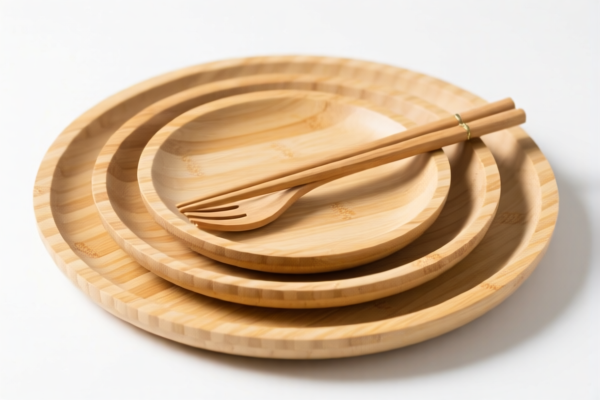
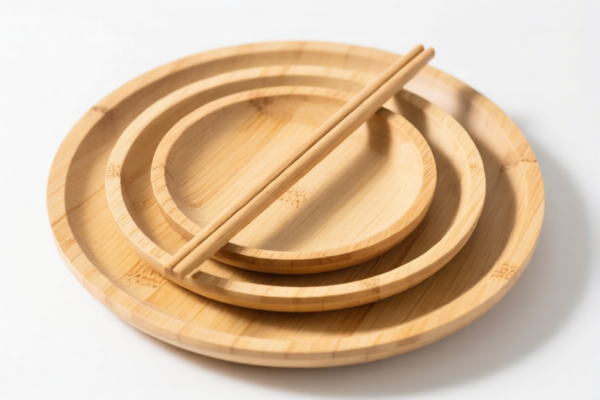
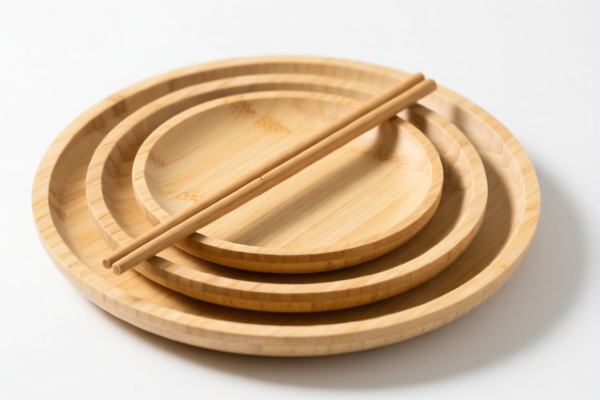
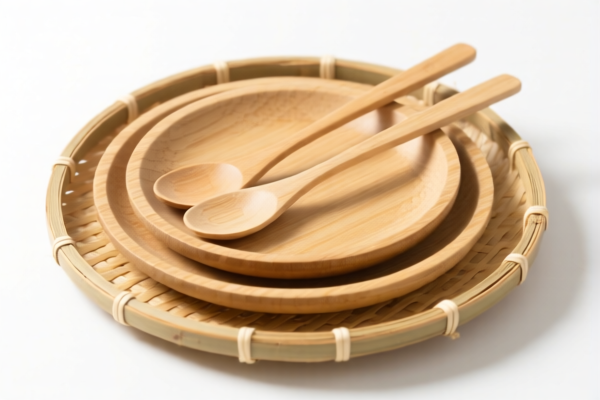
Bamboo plates are sustainable, biodegradable tableware made from processed bamboo pulp or solid bamboo strips. When described as "printed" or "decorated," it implies the presence of additional processing (screen printing, UV coating, or engraving) for branding or aesthetic purposes.
In international trade, the classification hinges on two critical factors:
1. Material Composition: Is it 100% natural bamboo, or a composite with plastic/resin (melamine)?
2. Processing Level: Is it raw processed bamboo, or a finished ready-to-use item?
⚠️ Key Distinction Point:
- 100% Bamboo/Plant Fiber: Classified under Chapter 46 (Plaiting materials) or Chapter 44 (Wood/Bamboo articles), specifically 4602 or 4421.
- Bamboo + Plastic Resin (Melamine): Classified under Chapter 39 (Plastics) as 3924.10. This is the most common category for "printed bamboo-look" plates.
- Solid Bamboo (Turned/Carved): Classified under 4421.99 or 4602.19.
📦 II. HS Code Classification Details (2026 Latest Tariff Authority Comparison)
| HS Code | Product Description | Application Scenario | Material Composition | Printing Status |
|---|---|---|---|---|
4602.19.00.00 |
Articles of plaiting materials, incl. bamboo | Hand-woven, solid bamboo strips, often with engraved/print designs | 100% Bamboo/Natural Fiber | ✅ Decorative Printing/Engraving |
4421.99.98.90 |
Other articles of wood or bamboo | Turned or machined bamboo plates, possibly lacquered or printed | 100% Bamboo (Solid) | ✅ Surface Treatment/Print |
3924.10.00.00 |
Tableware & Kitchenware of plastics | Most Common: Bamboo-fiber composite with Melamine resin (plastic) | Bamboo Fiber + Plastic Resin | ✅ Fully Printed/Branded |
4823.69.00.00 |
Other paper plates/cups | If "bamboo" refers to pulp-based paper plates | Bamboo Pulp + Paper | ✅ Printed/Embossed |
9601.90.00.00 |
Worked ivory, bone, etc. | Excluded (rarely used for plates) | N/A | N/A |
🔍 Critical Reminder:
- If the product is "Bamboo Fiber + Melamine Resin" (common in eco-friendly disposables), it MUST be classified under3924.10.00.00(Plastics). Customs often reject Chapter 46/44 claims for these composites because plastic dominates the essential character.
- "Printed" does not change the HS code for Chapter 39 or 46 but may require disclosure of ink composition (eco-friendly vs. toxic) for safety compliance (FDA/LFGB).
💰 III. 2026 Latest Tariff Rate Details (Including Surcharges & Policy Add-ons)
✅ Applicable Country: United States (US)
✅ Country of Origin: China (CN)
✅ Effective Date: November 10, 2025 onwards (post-2025 trade adjustments)
🎯 1. 3924.10.00.00 —— Tableware of Plastics (Most Common for "Printed Bamboo" Composites)
| Item | Content |
|---|---|
| Base Tariff | 0% (ad valorem) |
| USITC Additional Tariff | +7.5% (Standard for plastic tableware under Section 301 Phase 3) |
| IEEPA Additional Tariff | +10% (Section 232/301 extension for consumer goods from China, effective Nov 2025) |
| Total Tariff | 17.5% |
| Tax Calculation | CIF Value × 17.5% |
| De Minimis Exemption | ❌ Not Available (Section 321 de minimis usually excludes Section 301 goods) |
| Legal Path | USITC:3924.10.00.00 → FOOTNOTE:9903.88.01 → IEEPA:9903.01.25 |
📌 Explanation:
- Most "printed bamboo plates" sold as eco-friendly are actually bamboo-melamine composites. These are treated as plastic tableware.
- The 17.5% rate is significantly lower than electronics (45%) but still substantial.
- Note: If the product is 100% natural bamboo (no plastic), it may qualify for a lower or zero base rate, but the 10% IEEPA often still applies due to broader "Chinese manufactured goods" rules unless specific exclusions exist.
🎯 2. 4602.19.00.00 —— Articles of Plaited Bamboo (100% Natural)
| Item | Content |
|---|---|
| Base Tariff | 0% (often duty-free for natural plaited goods) |
| USITC Additional Tariff | +7.5% (if included in Section 301 List 3A/3B/3C) |
| IEEPA Additional Tariff | +10% (if not exempted) |
| Total Tariff | 17.5% (Likely) |
| De Minimis Exemption | ❌ Not Available |
| Legal Path | USITC:4602.19.00.00 → FOOTNOTE:9903.88.01 |
📌 Note:
- Pure bamboo plaited goods are sometimes exempt from higher tariffs, but "printed" adds value that may shift classification.
- Always verify if the specific HS code is on the Excluded List from Section 301 tariffs.
🛠️ IV. Customs Clearance Operational Advice (Practical Pitfall Avoidance)
✅ 1. Required Documents List (Non-Negotiable)
| Document | Required | Explanation |
|---|---|---|
| ✅ Product Composition Statement | ✔️ | Must specify % of Bamboo Fiber vs. Resin/Plastic. Critical for HS Code accuracy. |
| ✅ Front and Back Photos | ✔️ | Show the printing/design. If printing is on the food-contact surface, FDA compliance is strict. |
| ✅ FDA Compliance Certificate | ✔️ | Food-contact surfaces must be LFGB (EU) or FDA compliant. Printing inks must be food-safe. |
| ✅ Commercial Invoice | ✔️ | Clearly state: "Bamboo Fiber Tableware with Decorative Printing" – avoid vague "Bamboo Product". |
| ✅ Packing List | ✔️ | Detail gross/net weight. Bamboo is lightweight but bulky. |
| ✅ Country of Origin Certificate | ✔️ | Essential for tariff calculation (US vs. CN). |
✅ 2. Declaration Tips (Key Mnemonic)
🔥 "Plastic Core = HS 3924; Pure Bamboo = HS 4602; Print is Decor, Not Material!"
| Scenario | Correct Declaration | Wrong Practice |
|---|---|---|
| Bamboo + Melamine Resin | 3924.10.00.00 |
Misdeclaring as 4602 (Pure Bamboo) → High Penalty |
| 100% Solid Bamboo | 4602.19.00.00 |
Misdeclaring as 4421 (Wood) → Classification Error |
| Paper-like Bamboo Pulp | 4823.69.00.00 |
Misdeclaring as 3924 → Tax Underpayment Risk |
| Heavy Ink/Layered Coating | Disclose as "Laminated" | Hiding printing process → Customs Inspection Delay |
✅ 3. Special Circumstances Handling
| Situation | Handling Advice |
|---|---|
| Food Contact Surface Printing | Must provide FDA 21 CFR 175.105 or LFGB migration test reports. Toxic inks cause immediate rejection. |
| "Biodegradable" Claims | If claiming biodegradable, provide ASTM D6400 or EN 13432 certification. False claims lead to FTC fines. |
| Mixed Shipments (Plates + Forks) | Declare plates under 3924.10.00.00. Forks may be 3924.10.00.00 (if plastic) or 8215.99 (if metal). Keep separate if different HS. |
| OEM Custom Printing | Provide design approval letter to prove branding is customer-specific, not generic. |
🌍 V. Global Market Clearance Comparison (2026 Latest)
| Country/Region | Recommended HS Code | Tariff Rate | Certification Requirements | Notes |
|---|---|---|---|---|
| 🇺🇸 USA | 3924.10.00.00 |
17.5% (China) | FDA + CPSIA (if kids' items) | Strict on ink safety |
| 🇨🇳 China | 3924.10.00.00 |
0% (Import) | None | Export-focused product |
| 🇪🇺 EU | 3924.10.00.00 |
6.5% (General) | REACH + LFGB | No Section 301 tariffs |
| 🇬🇧 UK | 3924.10.00.00 |
6.5% | UKCA + FSA Compliance | Post-Brexit standards |
| 🇦🇺 Australia | 3924.10.00.00 |
5.0% | Wine Australia (if wine-related) | Low tariff, high safety checks |
📌 Conclusion:
- USA has the highest cost due to Section 301 + IEEPA tariffs (17.5%).
- EU/UK have lower base tariffs but strict chemical safety (REACH/LFGB) requirements for printed surfaces.
- 100% Bamboo may avoid some plastic tariffs but faces Fumigation/MOCA requirements for wood/bamboo products.
📌 VI. Common Errors & Pitfall Guide (Lessons Learned)
❌ Error 1: Declaring Melamine-Bamboo composite as "100% Bamboo"
👉 Consequence: Customs reclassifies to 3924, assesses 17.5% tariff + penalty for misdeclaration.
❌ Error 2: Ignoring FDA compliance for printed ink on food-contact surfaces
👉 Consequence: Goods seized and destroyed at US port. No FDA compliance = No entry.
❌ Error 3: Using vague description "Bamboo Plate"
👉 Consequence: Customs request for additional information, causing 10-15 day delays.
❌ Error 4: Claiming "Biodegradable" without certification
👉 Consequence: FTC Green Guide violation fines in the US/EU.
✅ Correct Approach:
"Bamboo Fiber Tableware, Melamine-Resin Composite, Decoratively Printed with Food-Safe Ink, FDA Compliant, Model XYZ, HS Code 3924.10.00.00"
🎯 VII. Conclusion: Precision in Classification Saves Costs!
🎯 Remember Mnemonic:
🔹 "Plastic Core = 3924; Pure Bamboo = 4602; Print is Decor, Not Material!"
🔹 "FDA for Food-Contact; REACH for Europe; Tariffs Hit Hard in USA!"
📌 Pro Tip:
- For US Imports: Consider China-to-Mexico/Vietnam consolidation to avoid IEEPA 10% tariff, if supply chain allows.
- For EU Imports: Ensure LFGB Migration Test for printed inks to prevent customs hold.
- Always request Supplier’s HS Code Confirmation Letter for record-keeping.
📣 Immediate Action:
📞 Consult your Customs Broker + Provide Ink Safety Data Sheet (SDS) + Verify FDA Compliance.
🚀 Ensure your "Printed Bamboo Plates" clear customs smoothly, avoid penalties, and maximize profit margins!
✨ Professional Clearance Starts with Accurate Classification!
💼 Every Dollar Saved on Tariffs is Pure Profit!
用户评价
关于 HS 编码归类
协调制度(HS)是由世界海关组织(WCO)制定的国际贸易商品分类标准。全球 200 多个国家采用 HS 系统作为海关关税、贸易统计和进出口监管的基础。
每个 HS 编码遵循以下层级结构:
- 章(2 位)——商品大类(例如:第 84 章:机器和机械设备)
- 品目(4 位)——章内的更具体分类
- 子目(6 位)——国际通用细分,所有 WCO 成员国统一使用
- 本国细分(8-10 位)——各国自行扩展的细分编码,如美国 HTSUS 10 位编码
正确的 HS 编码归类对于顺利通关、准确缴纳关税和遵守贸易法规至关重要。错误归类可能导致海关延误、多缴关税或罚款。
从CN进口到US时,适用的关税税率可能包括:
- 最惠国(MFN)税率——适用于 WTO 成员国的标准关税税率
- 普通税率——适用于无贸易协定国家
- 贸易救济关税——附加关税,如 301 条款(反倾销)、232 条款(国家安全)或反补贴税
本页内容仅供参考。如需正式归类,请咨询当地海关或持牌报关代理。