bamboo pulp insulation material
CN → US| HS编码 | 关税税率 | 原产国 | 目的国 | 文档 |
|---|---|---|---|---|
| 4706930100 | 35.0% | CN | US | 官方文档 |
| 4823700040 | 35.0% | CN | US | 官方文档 |
| 4706300000 | 35.0% | CN | US | 官方文档 |
| 4823901000 | 35.0% | CN | US | 官方文档 |
商品图片
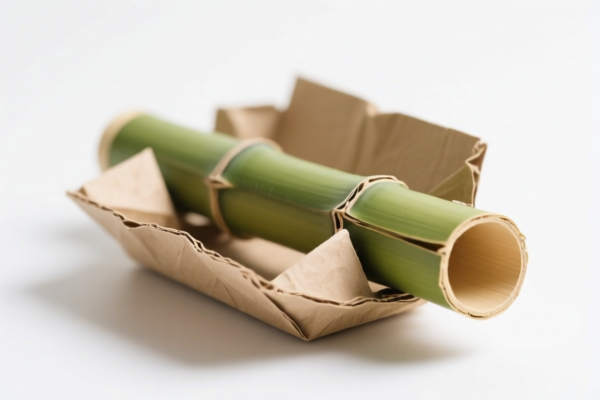
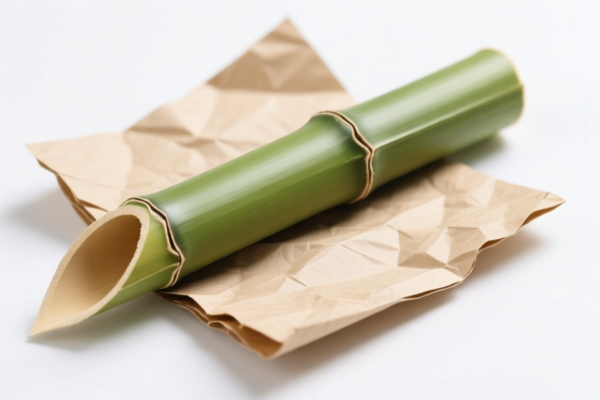

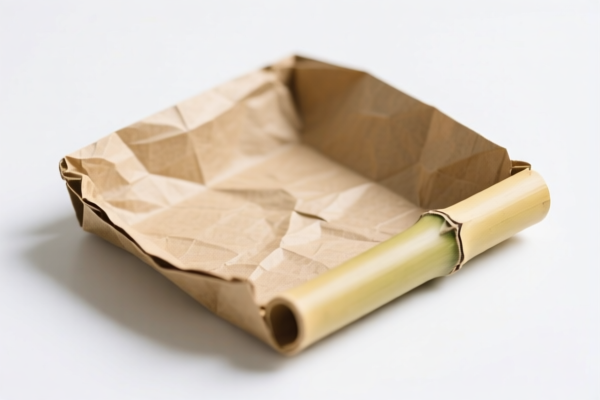
AI分析
🎋 Bamboo Pulp Insulation Material (竹浆纸/竹浆绝缘材料)
🌐 HS Code Reference & Customs Clearance Guide | 2026 Latest Tariff Analysis | Professional Strategy
📌 I. Product Definition & Classification: What Exactly Is "Bamboo Pulp Insulation"?
Bamboo pulp insulation material refers to products made from bamboo fiber pulp, processed into paper, boards, or molded shapes specifically designed for electrical insulation or thermal buffering. In international trade, the classification depends heavily on the form (sheet, molded, waste) and the primary function (insulation vs. raw material).
⚠️ Key Classification Logic:
- If it is raw pulp or waste fibers → Classified under Chapter 47 (Pulps) or 4823.70.
- If it is finished molded articles (specific shapes) → Classified under 4823.70.
- If it is general paper/cardboard used for insulation → Classified under 4823.90.
- Crucial Note: All listed HS Codes below attract a 35.0% Total Tax Rate due to US-China trade tensions (Section 301 + IEEPA).
📦 II. HS Code Classification Details (2026 Latest Tariff Authority Comparison)
| HS Code | Product Description | Application Scenario | Key Characteristics |
|---|---|---|---|
4706.93.01.00 |
Bamboo pulp as cellulosic fiber material for insulation | Raw pulp, intermediate semi-finished products | Cellulose-based material, not yet shaped into final articles. |
4823.70.00.40 |
Bamboo pulp paper molded/pulsated products | Molded insulation pads, custom-shaped insulators | Molded/Pulsated: Specific shapes formed by pressure/molding. |
4706.30.00.00 |
Waste paper, waste cardboard, or other fiber waste from bamboo | Recycled bamboo pulp, waste fibers, scrap material | Waste/Scrap: Non-virgin material, recycled content. |
4823.90.10.00 |
Other paper products, specifically paper-based insulation | General paper sheets, cardboard insulation, general purpose | General Paper/Board: Flat or rolled insulation materials, not molded. |
🔍 Critical Distinction:
- Molded vs. Sheet: If the product is press-molded into a specific 3D shape (like a washer or pad), it falls under 4823.70. If it is a flat sheet or roll, it falls under 4823.90.
- Raw vs. Finished: If the product is essentially "pulp" or "waste fiber" without final structural integrity, it may fall under 4706.
- Tax Implication: Regardless of the specific sub-heading, all these codes currently bear the same high tariff burden for US-bound goods.
💰 III. 2026 Latest Tariff Rate Details (Including Surcharge & Policy Add-ons)
✅ Applicable Country: United States (US)
✅ Country of Origin: China (CN)
✅ Effective Time: Current rates apply for imports post-2024/2025 policy adjustments.
🎯 1. Common Tariff Structure for All Listed HS Codes
| Item | Content |
|---|---|
| HS Codes | 4706.93.01.00, 4823.70.00.40, 4706.30.00.00, 4823.90.10.00 |
| Base Tariff Rate | 0.0% (Ad Valorem) |
| Section 301 Surcharge | +25.0% (USITC Footnote 9903.88.01 / 301 Tariff) |
| Section 122 / IEEPA Surcharge | +10.0% (Targeted China-specific tariff) |
| Total Tax Rate | 35.0% |
| Tax Calculation | CIF Value × 35% |
| De Minimis Exemption | ❌ Not Applicable (High tariff thresholds exclude small packages from 8042(a)(3)(A) exemption) |
| Legal Basis Path | IEEPA:9903.01.25 → USITC:4823.70.00.40/4823.90.10.00/4706.x0.00.00 → FOOTNOTE:301/TARIFF |
📌 Explanation:
- "Base Tariff 0%": Bamboo products often enjoy low base MFN rates.
- "Section 301 Surcharge 25%": This is the standard Trump-era/Biden-maintained tariff on many Chinese manufactured goods, including paper/pulp products.
- "Section 122 / IEEPA 10%": Additional penalties or emergency tariffs applied to specific Chinese imports.
- Total 35%: This is a significant cost factor. Importers must calculate landed costs carefully.
🛠️ IV. Customs Clearance Practical Advice (Avoid Pitfalls)
✅ 1. Required Documentation Checklist
| Document | Mandatory? | Notes |
|---|---|---|
| ✅ Product Specification Sheet | Yes | Must specify: Material (100% Bamboo Pulp), Form (Molded/Sheet/Waste), Use (Insulation). |
| ✅ Commercial Invoice | Yes | Clearly state "Bamboo Pulp Insulation Material" or specific description. Avoid vague terms like "Packaging." |
| ✅ Packing List | Yes | Detail weight, dimensions, and quantity. |
| ✅ Certificate of Origin (CO) | Yes | Essential for origin verification. |
| ✅ Photos of Product | Yes | Show product shape, labels, and any markings. Helps customs verify if it's "Molded" (4823.70) or "Sheet" (4823.90). |
| ✅ Test Reports | Optional but Recommended | If claiming special insulation properties, provide lab reports (dielectric strength, thermal resistance). |
✅ 2. Declaration Tips (Key Mnemonic)
🔥 "Molded is 70, Sheet is 90, Waste is 47, Tax is 35, No Excuse!"
| Scenario | Correct HS Code | Wrong Action | Consequence |
|---|---|---|---|
| Custom-shaped insulation pads | 4823.70.00.40 |
Declare as "Paper Sheet" (4823.90) |
Risk of misclassification penalty. |
| Flat bamboo paper rolls | 4823.90.10.00 |
Declare as "Molded Product" (4823.70) |
Risk of misclassification penalty. |
| Bamboo pulp waste/scrap | 4706.30.00.00 |
Declare as "Virgin Pulp" (4706.93) |
Duty evasion risk. |
| Raw bamboo pulp | 4706.93.01.00 |
Declare as "Finished Insulation" | Delay for inspection. |
✅ 3. Special Circumstances
| Situation | Handling Advice |
|---|---|
| Mixed Shipments | If shipment contains both molded and sheet items, separate shipments if possible to avoid complex classification disputes. |
| "Insulation" Claim | Ensure the product is indeed used for insulation. If it's merely packaging, customs may still classify it as paper, but the "insulation" claim might trigger additional scrutiny for electrical safety standards (UL/IEC). |
| Origin Verification | Customs may check if the bamboo is actually sourced from China. If it's "Chinese-made but bamboo from Southeast Asia," provide supply chain proof. |
🌍 V. Global Market Comparison (2026 Latest)
| Country/Region | Recommended HS Code | Tariff Rate | Certification Requirements | Notes |
|---|---|---|---|---|
| 🇺🇸 USA | 4823.70.00.40 / 4823.90.10.00 |
35.0% | None specific for paper, but UL/IEC for electrical safety | High tariff barrier. |
| 🇨🇳 China | 4823.70.00.40 / 4823.90.10.00 |
Low/0% | CCC (if applicable) | No additional surcharges. |
| 🇪🇺 EU | 4823.70.00.40 / 4823.90.10.00 |
0%~5% | CE (if electrical contact) | No Section 301 equivalent. |
| 🇦🇺 Australia | 4823.70.00.40 / 4823.90.10.00 |
5% | RCM (if electrical) | Moderate tariff. |
| 🇯🇵 Japan | 4823.70.00.40 / 4823.90.10.00 |
0%~5% | PSE (if electrical) | Low tariff. |
📌 Conclusion:
- USA is the highest-cost market due to the 35% total tariff.
- EU, Japan, and Australia are more favorable for bamboo pulp products.
- Consider supply chain diversification (e.g., processing in Vietnam or Thailand) to mitigate US tariffs, if applicable.
📌 VI. Common Mistakes & Pitfalls (Lessons Learned)
❌ Mistake 1: Using "Paper" as the generic description
👉 Consequence: Customs may misclassify as general paper (4804), leading to audit and back-tariffs.
Fix: Use "Bamboo Pulp Insulation Material" or "Molded Bamboo Fiber Product."
❌ Mistake 2: Ignoring the "Molded" vs. "Sheet" distinction
👉 Consequence: Misclassification under 4823.70 vs. 4823.90 might seem minor, but incorrect documentation can lead to delays.
Fix: Provide clear photos showing if the product is 3D molded or 2D flat.
❌ Mistake 3: Assuming "Insulation" exempts from tariffs
👉 Consequence: No such exemption exists for Section 301 goods.
Fix: Budget for 35% tariff in cost models.
✅ Correct Declaration Example:
"Bamboo Pulp Molded Insulation Pads, 100% Cellulose, For Electrical Use, HS Code 4823.70.00.40"
🎯 VII. Conclusion: Professional Classification, Cost Optimization!
🎯 Remember the Mnemonic:
🔹 "Molded is 70, Sheet is 90, Waste is 47, Tax is 35, No Excuse!"
🔹 "HS Code decides the cost, 35% tax is the reality, declare accurately, avoid penalties!"
📌 Tips:
- If you are importing into the USA, consider Advance Ruling from CBP to confirm the exact HS code and tax liability.
- For Electrical Insulation, ensure the product meets UL 1446 or IEC 60243 standards to facilitate customs and safety checks.
- Cost Calculation: Always include the 35% tariff in your landed cost. Example: $100 CIF → $135 Tax → $235 Landed Cost.
📣 Immediate Action:
📞 Contact professional customs brokers
📝 Provide detailed product specs and photos
🚀 Optimize your supply chain to handle high tariffs!
✨ Professional Customs Clearance Starts with Accurate Classification!
💼 Every percentage point matters!
用户评价
关于 HS 编码归类
协调制度(HS)是由世界海关组织(WCO)制定的国际贸易商品分类标准。全球 200 多个国家采用 HS 系统作为海关关税、贸易统计和进出口监管的基础。
每个 HS 编码遵循以下层级结构:
- 章(2 位)——商品大类(例如:第 84 章:机器和机械设备)
- 品目(4 位)——章内的更具体分类
- 子目(6 位)——国际通用细分,所有 WCO 成员国统一使用
- 本国细分(8-10 位)——各国自行扩展的细分编码,如美国 HTSUS 10 位编码
正确的 HS 编码归类对于顺利通关、准确缴纳关税和遵守贸易法规至关重要。错误归类可能导致海关延误、多缴关税或罚款。
从CN进口到US时,适用的关税税率可能包括:
- 最惠国(MFN)税率——适用于 WTO 成员国的标准关税税率
- 普通税率——适用于无贸易协定国家
- 贸易救济关税——附加关税,如 301 条款(反倾销)、232 条款(国家安全)或反补贴税
本页内容仅供参考。如需正式归类,请咨询当地海关或持牌报关代理。