basket, basketry and wickerwork
CN → US| HS编码 | 关税税率 | 原产国 | 目的国 | 文档 |
|---|---|---|---|---|
| 9503000071 | 10.0% | CN | US | 官方文档 |
| 4602123500 | 35.0% | CN | US | 官方文档 |
| 4601930500 | 37.7% | CN | US | 官方文档 |
| 4602121600 | 40.0% | CN | US | 官方文档 |
| 4601932000 | 41.6% | CN | US | 官方文档 |
商品图片
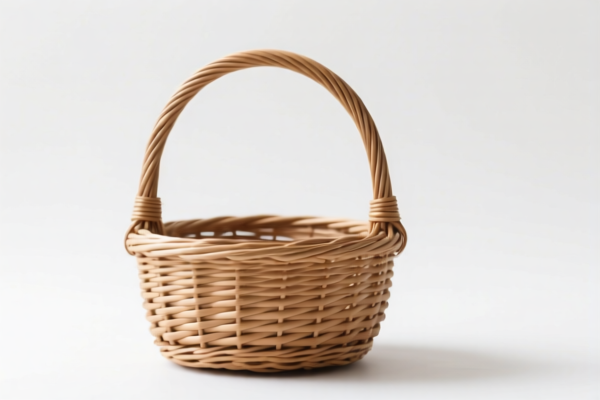
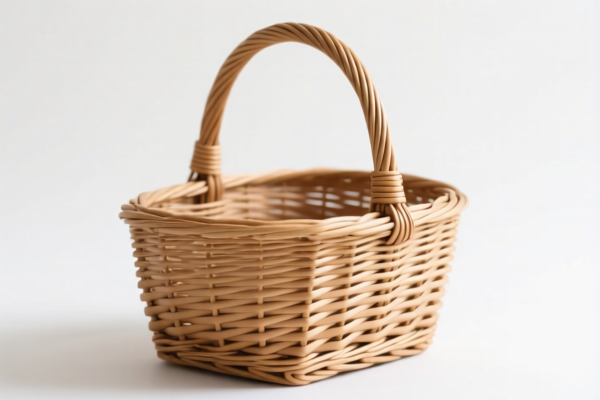
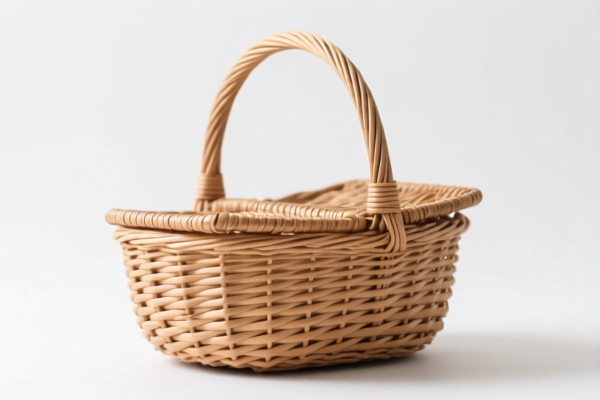
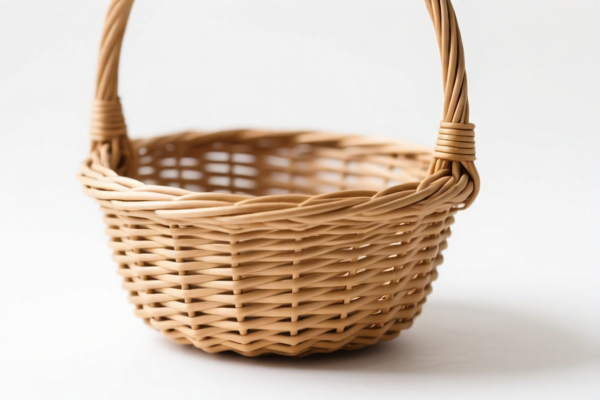
AI分析
🧺 Basketry & Wickerwork (Baskets, Basketry Products)
🌐 HS Code Reference & Customs Clearance Guide | 2026 Latest Tariff Analysis | Professional Entry Strategy
📌 Part 1: Product Definition & Classification: Do You Really Understand "Basketry"?
Basketry, wickerwork, and rattan products are ubiquitous in household storage, decoration, and industrial packaging. In international trade, classification depends heavily on material composition (rattan, bamboo, straw, fiber) and state (woven, plaited, or assembled).
Key Distinction Criteria: * Raw/Plaited Materials: Unassembled woven mats or strips → Often fall under Chapter 46 (Basketry, Wickerwork, and Other Products of Plaiting Materials). * Finished Goods: Assembled baskets, containers, or decorative items → Can fall under Chapter 46 (if strictly defined) or Chapter 95 (Toys, Games, Sports Equipment; Specifically, "Other" articles if not specified elsewhere, often used for general baskets not fitting specific material chapters like wood or plastic). * Material Ambiguity: If the material is not explicitly stated as "rattan" or "bamboo" but is generic "wickerwork," customs may infer natural/synthetic fibers, potentially shifting classification to Chapter 95 (9503) based on "other" categories.
⚠️ Critical Note:
- "Rattan" vs. "Wicker": "Rattan" refers to the plant material; "Wicker" refers to the weaving technique.
- HS Code Conflict: Chapter 46 is specific to plaiting materials (rattan, bamboo, etc.), while Chapter 95 acts as a residual category for baskets that don't fit more specific material headers (like wood 4415 or plastic 3924).
- Misclassification Risk: Declaring a generic "basket" incorrectly can lead to massive tariff discrepancies (from 0% to 45%).
📦 Part 2: HS Code Classification Details (2026 Latest Tariff Authority Comparison)
Based on the provided data, here are the four potential classifications and their tax implications:
| HS Code | Product Description & Logic | Tax Rate (Total) | Tax Breakdown |
|---|---|---|---|
| 9503.00.00.71 | General/Residual Basket: Classified as "Other" woven products. Used when material is ambiguous or generic. Inferred as natural/synthetic fiber/rattan. | 10.0% | Base: 0% Add. Tariff: 0% Section 122 Tariff: 10% |
| 4602.12.35.00 | Rattan Woven Product: Explicitly matches "Rattan" (藤制品) and "Woven Material." Matches the specific subheading for rattan baskets. | 35.0% | Base: 0% Add. Tariff: 25% (Section 301) Section 122 Tariff: 10% |
| 4601.93.05.00 | Rattan Plaited Material: Matches "Rattan" material and "Plaited/Weaving Material" form. Often used for semi-finished or specific plaited goods. | 37.7% | Base: 2.7% Add. Tariff: 25% Section 122 Tariff: 10% |
| 4602.12.16.00 | Rattan Basket Specific: Perfect match for "Rattan" + "Basket" + "Woven Material." Most precise fit for finished rattan baskets. | 40.0% | Base: 5.0% Add. Tariff: 25% Section 122 Tariff: 10% |
| 4601.93.20.00 | General Woven/Rattan Item: Broad match for "Rattan/Woven Material" and "Product." Less specific than 4602.12. | 41.6% | Base: 6.6% Add. Tariff: 25% Section 122 Tariff: 10% |
🔍 Key Insight:
- Chapter 46 (4601/4602) is generally for products of plaiting materials (rattan, bamboo, straw, etc.).
- Chapter 95 (9503) is a residual category. If your product is a generic "basket" not clearly defined as rattan/bamboo, customs might default here, lowering the base rate but still applying the Section 122 tariff.
- Tax Disparity: The difference between 10% (9503) and 40% (4602) is 30 percentage points. This is a critical cost driver.
💰 Part 3: 2026 Latest Tariff Rate Explanation (Including Surcharges & Policy Add-ons)
✅ Applicable Country: United States (US)
✅ Origin: China (CN)
✅ Effective Date: November 10, 2025 (and subsequent imports)
🎯 1. 9503.00.00.71 —— General/Woven Basket (Residual Category)
| Item | Detail |
|---|---|
| Base Duty Rate | 0% (ad valorem) |
| USITC Additional Duty | 0% (Not subject to Section 301 surcharge in this classification) |
| IEEPA Section 122 Tariff | +10% (Specific to certain Chinese imports) |
| Total Duty Rate | 10.0% |
| Calculation | CIF Value × 10% |
| De Minimis Eligibility | ❌ No (Deny de minimis for this category) |
| Legal Basis Path | IEEPA:9903.01.25 → USITC:9503.00.00.71 → FOOTNOTE:122 |
📌 Explanation:
- This is the lowest tax option.
- It assumes the basket is not strictly "rattan" or falls under a residual "other" category.
- Risk: Customs may challenge this if the product is clearly rattan, demanding reclassification to Chapter 46 with higher taxes.
🎯 2. 4602.12.35.00 —— Rattan Woven Product
| Item | Detail |
|---|---|
| Base Duty Rate | 0% |
| USITC Additional Duty (301) | +25% |
| IEEPA Section 122 Tariff | +10% |
| Total Duty Rate | 35.0% |
| Calculation | CIF Value × 35% |
| De Minimis Eligibility | ❌ No |
| Legal Basis Path | IEEPA:9901.25 → IEEPA:9903.01.24 → USITC:4602.12.35.00 → FOOTNOTE:9903.88.01 |
📌 Explanation:
- Applies to finished rattan woven items.
- Higher base cost due to Section 301 tariffs.
🎯 3. 4601.93.05.00 —— Rattan Plaited Material
| Item | Detail |
|---|---|
| Base Duty Rate | 2.7% |
| USITC Additional Duty (301) | +25% |
| IEEPA Section 122 Tariff | +10% |
| Total Duty Rate | 37.7% |
| Calculation | CIF Value × 37.7% |
| De Minimis Eligibility | ❌ No |
| Legal Basis Path | IEEPA:9901.25 → IEEPA:9903.01.24 → USITC:4601.93.05.00 → FOOTNOTE:9903.88.01 |
📌 Explanation:
- Often used for semi-finished plaited goods or specific woven materials.
- Base rate is higher (2.7%), leading to a higher total tax.
🎯 4. 4602.12.16.00 —— Specific Rattan Basket
| Item | Detail |
|---|---|
| Base Duty Rate | 5.0% |
| USITC Additional Duty (301) | +25% |
| IEEPA Section 122 Tariff | +10% |
| Total Duty Rate | 40.0% |
| Calculation | CIF Value × 40% |
| De Minimis Eligibility | ❌ No |
| Legal Basis Path | IEEPA:9901.25 → IEEPA:9903.01.24 → USITC:4602.12.16.00 → FOOTNOTE:9903.88.01 |
📌 Explanation:
- Most precise fit for finished rattan baskets.
- Highest standard duty rate among Chapter 46 options.
🎯 5. 4601.93.20.00 —— General Rattan/Woven Item
| Item | Detail |
|---|---|
| Base Duty Rate | 6.6% |
| USITC Additional Duty (301) | +25% |
| IEEPA Section 122 Tariff | +10% |
| Total Duty Rate | 41.6% |
| Calculation | CIF Value × 41.6% |
| De Minimis Eligibility | ❌ No |
| Legal Basis Path | IEEPA:9901.25 → IEEPA:9903.01.24 → USITC:4601.93.20.00 → FOOTNOTE:9903.88.01 |
📌 Explanation:
- Broad category for woven/rattan products.
- Highest total tax rate in the provided data.
🛠️ Part 4: Customs Clearance Practical Advice (Avoiding Pitfalls)
✅ 1. Documentation Checklist (Mandatory)
| Document | Required | Notes |
|---|---|---|
| ✅ Product Spec Sheet | ✔️ | Must specify material (e.g., "Natural Rattan," "Synthetic Wicker," "Bamboo"). |
| ✅ Material Composition | ✔️ | Percentage of natural vs. synthetic materials. |
| ✅ Product Photos | ✔️ | Clear images showing weave pattern, handle, and overall structure. |
| ✅ Commercial Invoice | ✔️ | Must describe item as "Rattan Basket," "Wicker Basket," or "Plastic Basket" accurately. |
| ✅ Packing List | ✔️ | Include dimensions and weight. |
| ✅ Origin Certificate | ✔️ | Confirm country of origin (China). |
✅ 2. Classification Strategy (Key Mnemonic)
🔥 "Material Defines Code, Section 122 Applies to All!"
| Scenario | Recommended HS Code | Tax Rate | Risk |
|---|---|---|---|
| Generic Basket (Material Unspecified) | 9503.00.00.71 |
10% | High Risk: If customs identifies material as rattan, they will reclassify and charge back taxes. |
| Explicit Rattan Basket | 4602.12.16.00 |
40% | Low Risk: Accurate classification. |
| Explicit Rattan Plaited Material | 4601.93.05.00 |
37.7% | Low Risk: If sold as raw woven sheets. |
| Synthetic/Plastic Basket | Not in Data | Vary | Check Chapter 39 or 63 |
📌 Warning:
- Do Not Under-Declare: Declaring a rattan basket as "Plastic Basket" (Chapter 39) or "Other" (Chapter 95) to save taxes is fraud if material evidence exists.
- Section 122 Tariff: Applies to all these codes (10% extra). It cannot be avoided by changing Chapter 46 to 95 if the product is deemed to fall under the specific Section 122 scope.
✅ 3. Special Cases
| Situation | Advice |
|---|---|
| Mixed Materials (e.g., Rattan + Plastic) | If >50% rattan by weight/volume, likely Chapter 46. If plastic dominant, Chapter 39. |
| Handmade vs. Machine-Made | Does not significantly change HS Code, but may affect "Handmade" claims for specific subheadings. |
| Decorative vs. Functional | If purely decorative, still classified by material. Function rarely changes Chapter 46/95 boundary. |
🌍 Part 5: Global Customs Comparison (2026)
| Country/Region | Recommended HS Code | Duty Rate | Certification | Notes |
|---|---|---|---|---|
| 🇺🇸 USA | 9503.00.00.71 or 4602.12.16.00 |
10% - 40% | None specific | Section 122 applies. |
| 🇨🇳 China | 4602.12.16.00 |
5% | None | No additional tariffs. |
| 🇪🇺 EU | 4602.11.00 |
2.5% | CE (if applicable) | No Section 122 equivalent. |
| 🇬🇧 UK | 4602.11.00 |
2.5% | None | Post-Brexit rules apply. |
📌 Conclusion:
- USA is the most complex market due to Section 301 and Section 122 tariffs.
- Cost Optimization: If material is ambiguous,9503.00.00.71(10%) offers significant savings, but must be defensible.
- Risk Management: If the product is clearly rattan, paying 40% is safer than risking penalties for misclassification.
📌 Part 6: Common Mistakes & Pitfalls (Lessons Learned)
❌ Mistake 1: Using "Basket" as the sole description without material details.
👉 Consequence: Customs may classify under the highest duty rate or demand reclassification, causing delays.
👉 Fix: Specify "Rattan Basket," "Wicker Basket," or "Fiber Basket."
❌ Mistake 2: Assuming all baskets are 10% tax.
👉 Consequence: If it's rattan, tax is 40%.
👉 Fix: Verify material composition before declaring.
❌ Mistake 3: Ignoring Section 122 Tariff.
👉 Consequence: Unexpected 10% additional cost on all Chapter 46/95 baskets.
👉 Fix: Factor 10% into all cost calculations.
✅ Correct Practice:
"Rattan Woven Basket, Handmade, for Storage, 100% Natural Rattan" →
4602.12.16.00(40%)
"Synthetic Fiber Basket, Machine Made" → Check Chapter 39/63 (Not in Data, but likely lower base duty).
🎯 Part 7: Conclusion: Professional Declaration for Cost Efficiency
🎯 Remember:
🔹 "Material is King, Section 122 is Queen!"
🔹 "Rattan = 40%, Generic = 10%, Risk = Penalties!"
📌 Pro Tip:
- If your basket is not made of rattan/bamboo (e.g., plastic, metal, wood), do not use Chapter 46 codes.
- For rattan, be prepared to pay the higher 40% duty, or provide strong evidence to justify the 10% "other" category if structurally appropriate.
- Pre-Ruling: Consider applying for a Binding Tariff Information (BTI) or Pre-Ruling from US Customs if your shipment volume is large.
📣 Action Required:
📞 Contact your freight forwarder with material specs.
🚀 Accurate Classification Saves Money!
💼 Don't let a 30% tax difference ruin your profit margin.
✨ Professional Customs Clearance Starts with Precision!
💼 Your Every Penny Counts in Global Trade!
用户评价
关于 HS 编码归类
协调制度(HS)是由世界海关组织(WCO)制定的国际贸易商品分类标准。全球 200 多个国家采用 HS 系统作为海关关税、贸易统计和进出口监管的基础。
每个 HS 编码遵循以下层级结构:
- 章(2 位)——商品大类(例如:第 84 章:机器和机械设备)
- 品目(4 位)——章内的更具体分类
- 子目(6 位)——国际通用细分,所有 WCO 成员国统一使用
- 本国细分(8-10 位)——各国自行扩展的细分编码,如美国 HTSUS 10 位编码
正确的 HS 编码归类对于顺利通关、准确缴纳关税和遵守贸易法规至关重要。错误归类可能导致海关延误、多缴关税或罚款。
从CN进口到US时,适用的关税税率可能包括:
- 最惠国(MFN)税率——适用于 WTO 成员国的标准关税税率
- 普通税率——适用于无贸易协定国家
- 贸易救济关税——附加关税,如 301 条款(反倾销)、232 条款(国家安全)或反补贴税
本页内容仅供参考。如需正式归类,请咨询当地海关或持牌报关代理。