beer cork
CN → US| HS编码 | 关税税率 | 原产国 | 目的国 | 文档 |
|---|---|---|---|---|
| 4504104700 | 35.0% | CN | US | 官方文档 |
| 3926909989 | 22.8% | CN | US | 官方文档 |
| 4503106000 | 35.0% | CN | US | 官方文档 |
| 4503102000 | 35.0% | CN | US | 官方文档 |
| 4503106000 | 35.0% | CN | US | 官方文档 |
商品图片
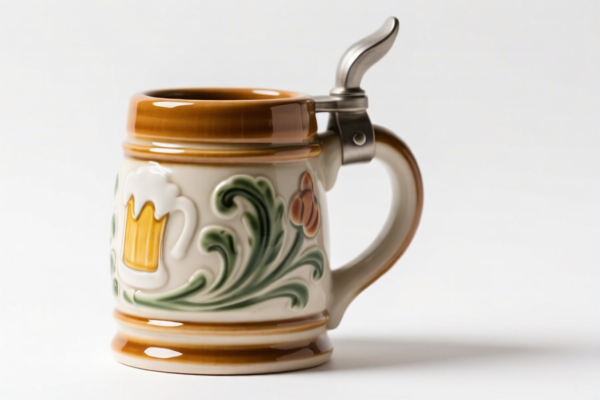
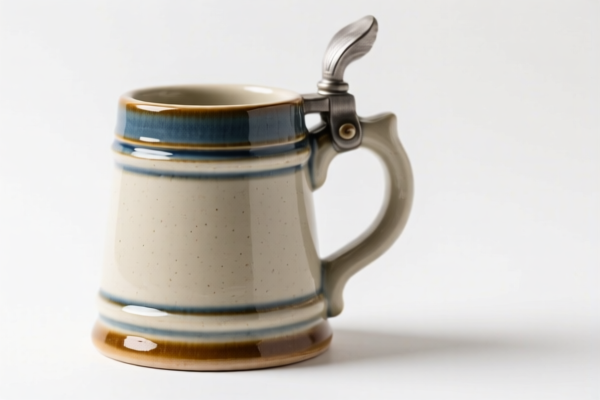
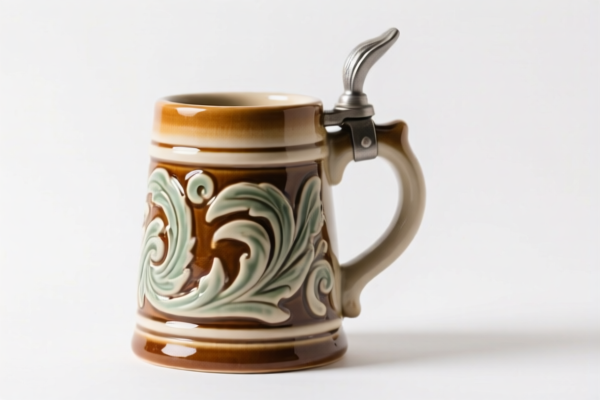
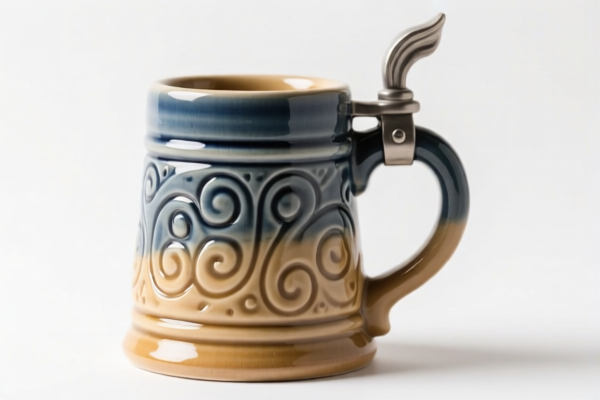
AI分析
🍺 Beer Cork (Stoppers for Bottles)
🌐 HS Code Reference & Customs Clearance Guide | 2026 Latest Tariff Analysis | Professional Clearance Strategy
📌 Part 1: Product Definition & Classification: Do You Really Understand "Beer Cork"?
A Beer Cork, specifically designed to seal beer bottles, is a critical packaging component in the beverage industry. In international trade, its classification depends heavily on the material composition and specific form.
Natural Cork Stopper: Made entirely from the bark of the cork oak tree (Quercus suber). This is the most traditional and premium type.
Composite/Synthetic Cork: Made from plastic, rubber, or a composite of cork dust and binders.
⚠️ Key Distinction Point:
- If the product is 100% natural cork and shaped as a stopper → It falls under Chapter 45 (Cork and Cork Products).
- If the product is plastic, rubber, or a composite where plastic/cork dust is the main character → It may fall under Chapter 39 (Plastics) or other material categories.
- The summary explicitly links "Beer Cork" to "Cork Stopper" (软木塞), matching the core definition in HS Code 4503.
📦 Part 2: HS Code Classification Details (Latest 2026 Tariff Reference)
Based on the provided data, here are the specific HS Codes and their rationales for classifying "Beer Cork":
| HS Code | Product Description & Rationale | Material/Form | Total Tax Rate |
|---|---|---|---|
4504.10.47.00 |
Cork Stoppers, Matched Material: Specifically for cork stoppers where the material is cork, and the form is a stopper. | Natural Cork / Stopper Form | 35.0% |
3926.90.99.89 |
Inferred Composite Material: Inferred to be a composite of cork/plastic, fitting "Other articles of plastics and other materials." | Plastic/Cork Composite | 22.8% |
4503.10.60.00 |
Exact Match: The product name "Beer Cork" fully matches "Cork Stoppers" in this classification. Material and purpose match perfectly. | Natural Cork | 35.0% |
4503.10.20.00 |
Core Component: The product material is cork, and the form is a stopper, belonging to the core components of this category. | Natural Cork | 35.0% |
4503.10.60.00 |
Natural Material Match: The "Beer Cork" in the product name matches "Cork Stoppers" in the classification. Material is natural cork. | Natural Cork | 35.0% |
🔍 Key Insight:
- The majority of entries (4503.10.20.00,4503.10.60.00,4504.10.47.00) point to natural cork stoppers, which incur a 35% total tax.
- Only if the product is a plastic-cork composite does the tax drop to 22.8% under3926.90.99.89.
- Misclassification Risk: Declaring a natural cork as a plastic composite to lower taxes is risky and may lead to penalties if physical inspection reveals natural cork.
💰 Part 3: 2026 Latest Tariff Rate Breakdown (Including Surtaxes & Policy Additions)
✅ Applicable Country: United States (US)
✅ Origin: China (CN)
✅ Effective Date: From November 10, 2025 (including subsequent imports)
🎯 1. 4503.10.20.00 / 4503.10.60.00 / 4504.10.47.00 —— Natural Cork Stoppers
| Item | Content |
|---|---|
| Base Tariff | 0.0% (Ad Valorem) |
| Section 301 Surtax | +25.0% (Added Tariff) |
| Section 122 Tariff | +10.0% (Specific US Trade Regulation) |
| Total Tax Rate | 35.0% |
| Tax Calculation | CIF Value × 35% |
| De Minimis Exemption | ❌ Not Eligible (High-risk category for low-value shipments) |
| Legal Basis Path | Base: 0% → Section 301: 25% → Section 122: 10% → Total: 35% |
📌 Explanation:
- "Base Tariff 0%": Natural cork products often have zero base duty under normal trade agreements.
- "Added Tariff 25%": This is the standard Section 301 tariff on many Chinese goods.
- "Section 122 Tariff 10%": A specific additional tariff applicable to these goods under current US trade regulations.
- Total 35%: This is a significant cost. Importers must factor this into their pricing strategy.
🎯 2. 3926.90.99.89 —— Plastic/Composite Corks
| Item | Content |
|---|---|
| Base Tariff | 5.3% |
| Section 301 Surtax | +7.5% |
| Section 122 Tariff | +10.0% |
| Total Tax Rate | 22.8% |
| Tax Calculation | CIF Value × 22.8% |
| De Minimis Exemption | ❌ Not Eligible |
| Legal Basis Path | Base: 5.3% → Section 301: 7.5% → Section 122: 10% → Total: 22.8% |
📌 Note:
- This classification is only valid if the product is predominantly plastic or a composite where plastic defines the essential character.
- Even with a lower rate, the base tariff is higher than natural cork, but the Section 301 surtax is lower (7.5% vs. 25%).
🛠️ Part 4: Customs Clearance Practical Advice (Actionable Pitfall Avoidance)
✅ 1. Required Documentation Checklist (Mandatory)
| Document | Required | Description |
|---|---|---|
| ✅ Product Specification Sheet | ✔️ | Must clearly state material composition (e.g., "100% Natural Cork" vs. "Polyethylene Composite"). |
| ✅ Material Composition Certificate | ✔️ | From manufacturer proving the ratio of cork to plastic/glue. |
| ✅ Product Photos | ✔️ | Clear images showing texture, cross-section, and labeling. |
| ✅ Commercial Invoice | ✔️ | Must specify "Beer Cork Stopper" and HS Code. |
| ✅ Packing List | ✔️ | Include net/gross weight and quantity. |
| ✅ Origin Certificate | ✔️ | If applicable, for potential FTZ benefits (though US-China tariffs are high). |
✅ 2. Declaration Tips (Key Mantras)
🔥 "Material Defines HS, Composite Needs Proof, Natural Cork is 35%, Plastic is 22.8%!"
| Scenario | Correct Declaration | Wrong Approach |
|---|---|---|
| 100% Natural Cork | HS Code: 4503.10.60.00Description: "Natural Cork Stoppers for Beer Bottles" |
Misdeclare as plastic to save tax → High Risk of Audit & Penalties |
| Composite Cork (Plastic + Cork Dust) | HS Code: 3926.90.99.89Description: "Composite Plastic/Cork Stoppers" |
Provide no material proof → Customs may reclassify to 4503 (35%) |
| Cork Agglomerate (Reconstituted) | HS Code: 4504.10.47.00Description: "Cork Agglomerate Stoppers" |
Declare as natural cork → Mismatch in physical inspection |
✅ 3. Special Handling for High-Tax Items
| Situation | Recommendation |
|---|---|
| High Tax Burden (35%) | Evaluate if switching to composite materials (22.8%) is viable for quality/perception. |
| Supply Chain Diversification | Consider sourcing from non-China origins (e.g., Portugal, Spain) to avoid Section 301/122 tariffs. |
| Pre-Import Ruling | Apply for an Advance Ruling from CBP if the material composition is ambiguous (composite vs. natural). |
| De Minimis Loophole | ❌ Do Not Rely: Beer corks are often flagged as high-risk for de minimis ($800 exemption) due to their value and material nature. |
🌍 Part 5: Global Market Comparison (2026 Outlook)
| Country/Region | Recommended HS Code | Estimated Duty | Notes |
|---|---|---|---|
| 🇺🇸 USA | 4503.10.60.00 |
35.0% | High tariffs due to Section 301 & 122. |
| 🇨🇳 China | 4503.10.60.00 |
~2.5% - 5% | Lower import duties on natural cork. |
| 🇪🇺 EU | 4503.10.00 |
0% - 2.4% | Generally favorable for natural cork; no Section 301. |
| 🇬🇧 UK | 4503.10.00 |
0% - 2.4% | Similar to EU post-Brexit. |
| 🇦🇺 Australia | 4503.10.00 |
5.0% | Moderate duty, no major surtaxes. |
📌 Conclusion:
- The US market is the most expensive for Chinese-origin beer corks due to 35% total tax.
- EU and UK remain the most cost-effective markets for natural cork products.
- Consider third-country manufacturing (e.g., Vietnam, Mexico) if targeting the US, but verify "substantial transformation" rules to avoid circumvention claims.
📌 Part 6: Common Mistakes & Pitfall Guide (Lessons Learned)
❌ Mistake 1: Declaring "Composite Cork" as "Natural Cork" to claim 0% base tax.
👉 Consequence: Customs inspection reveals plastic content → Reclassification to 35% + Penalties.
❌ Mistake 2: Ignoring Section 122 Tariff (10%).
👉 Consequence: Underpayment of 10% → Audit & Back Taxes.
❌ Mistake 3: Using vague descriptions like "Cork Product."
👉 Consequence: Customs uncertainty → Delays & Potential Misclassification.
✅ Correct Approach:
"Beer Bottle Cork Stopper, Material: 100% Natural Cork, Diameter: 24mm, Length: 45mm, HS Code: 4503.10.60.00"
🎯 Part 7: Conclusion: Precision Classification Saves Money!
🎯 Remember:
🔹 "Natural Cork = 35% Tax in US"
🔹 "Composite Cork = 22.8% Tax in US"
🔹 "Material Proof is Key!"
📌 Pro Tip:
If your beer corks are originating from Portugal, Spain, or Italy, you may avoid US Section 301/122 tariffs entirely (check current FTAs).
Recommend Advance Ruling for composite materials to ensure correct classification under 3926.90.99.89.
📣 Immediate Action:
📞 Contact a licensed customs broker.
📦 Provide material specs & photos.
📋 Apply for HS Code Pre-Ruling if uncertain.
🚀 Secure your supply chain, minimize tax leakage, and ensure smooth clearance!
✨ Professional clearance starts with accurate classification!
💼 Every cent saved is a cent earned!
用户评价
关于 HS 编码归类
协调制度(HS)是由世界海关组织(WCO)制定的国际贸易商品分类标准。全球 200 多个国家采用 HS 系统作为海关关税、贸易统计和进出口监管的基础。
每个 HS 编码遵循以下层级结构:
- 章(2 位)——商品大类(例如:第 84 章:机器和机械设备)
- 品目(4 位)——章内的更具体分类
- 子目(6 位)——国际通用细分,所有 WCO 成员国统一使用
- 本国细分(8-10 位)——各国自行扩展的细分编码,如美国 HTSUS 10 位编码
正确的 HS 编码归类对于顺利通关、准确缴纳关税和遵守贸易法规至关重要。错误归类可能导致海关延误、多缴关税或罚款。
从CN进口到US时,适用的关税税率可能包括:
- 最惠国(MFN)税率——适用于 WTO 成员国的标准关税税率
- 普通税率——适用于无贸易协定国家
- 贸易救济关税——附加关税,如 301 条款(反倾销)、232 条款(国家安全)或反补贴税
本页内容仅供参考。如需正式归类,请咨询当地海关或持牌报关代理。