biodiesel
CN → US| HS编码 | 关税税率 | 原产国 | 目的国 | 文档 |
|---|---|---|---|---|
| 1522000000 | 21.3% | CN | US | 官方文档 |
| 3826003000 | 41.5% | CN | US | 官方文档 |
| 1507100000 | 36.6% | CN | US | 官方文档 |
| 1507904040 | 36.6% | CN | US | 官方文档 |
| 3826003000 | 41.5% | CN | US | 官方文档 |
商品图片


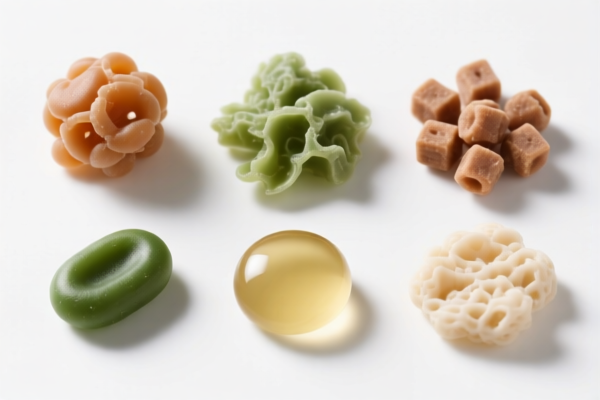

AI分析
🌱 Biodiesel Raw Materials: HS Code Classification & Tariff Breakdown (2026 Guide)
🌐 HS Code Reference & Customs Clearance Guide | 2026 Latest Tariff Analysis | Professional Clearance Strategy
📌 Part 1: Product Definition & Classification: Do You Really Understand "Biodiesel Raw Materials"?
Biodiesel raw materials are the foundational inputs for producing renewable diesel fuel. In international trade, they are not a single uniform product but are classified based on their chemical composition, processing level, and origin. Misclassification can lead to massive tariff differences (up to 20%+).
The data provided highlights four key scenarios for raw materials, primarily focusing on the impact of US Trade Restrictions (Section 301 & IEEPA) on Chinese-origin goods.
⚠️ Key Distinction Points:
- Refined/Processed Residues vs. Crude Oils: Are they by-products of fat processing or crude vegetable oils?
- Specific vs. General Categories: Does the HS code specifically name "Biodiesel/Blends" (3826) or fall under generic fats/oils (15xx)?
- Tariff Impact: The total tax rate varies significantly based on whether the product is seen as a specific biofuel ingredient or a general agricultural commodity.
📦 Part 2: HS Code Classification Details (Based on Provided Data)
Below is the detailed breakdown of the HS Codes and corresponding tax structures provided in your dataset. Note that all scenarios assume imports into the United States from China, subject to current trade measures.
Scenario A: Fats/Oils Processing Residues
| HS Code | Product Description | Material Attribute | Application Scenario |
|---|---|---|---|
1522.00.00.00 |
De-oiled Stearin / Tallow Residues | Residues from the treatment of fats/oils; fits the attribute of primary oil material products. | Animal fats, tallow by-products, or residues after de-oiling. |
Scenario B: Specific Biodiesel & Blends
| HS Code | Product Description | Material Attribute | Application Scenario |
|---|---|---|---|
3826.00.30.00 |
Biodiesel and Blends | Matches the material definition of biodiesel and its mixtures; fits the primary form of raw materials. | Pure biodiesel (FAME) or pre-mixed blends intended for fuel use. |
Scenario C: Crude Soybean Oil
| HS Code | Product Description | Material Attribute | Application Scenario |
|---|---|---|---|
1507.10.00.00 |
Crude Soybean Oil | Matches the material attribute of crude vegetable oils (like soybean oil); classified as a primary product/raw material. | Unrefined soybean oil before esterification. |
Scenario D: Other Fats/Fatty Acids (Catch-All)
| HS Code | Product Description | Material Attribute | Application Scenario |
|---|---|---|---|
1507.90.40.40 |
Other Fats/Oils (Soybean-derived) | Matches attributes of oils/fatty acid esters; falls under the "other" catch-all category with no material conflict. | Refined soybean oil or other specific soy derivatives not covered under crude codes. |
🔍 Important Note on Duplication:
- The HS Code3826.00.30.00appears twice in the data with identical tax details. It represents the most specific classification for biodiesel fuel blends.
- Codes1507and1522represent agricultural/chemical inputs used to make biodiesel, whereas3826is the finished fuel product or direct fuel blend.
💰 Part 3: 2026 Latest Tariff Rate Breakdown (Including Surtaxes & Policy Surcharges)
✅ Applicable Country: United States (US)
✅ Origin: China (CN)
✅ Effective Time: Current trade measures (Section 301 + IEEPA)
🎯 1. 1522.00.00.00 – Residues from Fat/Oil Treatment
| Item | Content |
|---|---|
| Base Tariff | 3.8% (Ad Valorem) |
| Section 301 Surcharge | 7.5% (Standard 301 List) |
| IEEPA Surcharge (Section 122) | 10% (Specific to this category/China) |
| Total Effective Tax Rate | 21.3% |
| Tax Calculation | CIF Value × 21.3% |
| Legal Basis | Base Rate + Section 301 + IEEPA Section 122 |
📌 Explanation:
- This is the lowest tax burden among the provided options.
- It applies to residues/by-products, which are sometimes treated more leniently than primary agricultural commodities.
🎯 2. 3826.00.30.00 – Biodiesel and Blends (Highest Tax)
| Item | Content |
|---|---|
| Base Tariff | 6.5% |
| Section 301 Surcharge | 25.0% (Maximum Tier for Certain Industrial/Fuel Goods) |
| IEEPA Surcharge (Section 122) | 10% |
| Total Effective Tax Rate | 41.5% |
| Tax Calculation | CIF Value × 41.5% |
| Legal Basis | Base Rate + High Tier 301 + IEEPA Section 122 |
📌 Explanation:
- This is the highest tax burden.
- Biodiesel and its blends are often targeted with higher 301 tariffs due to their industrial and energy sector status.
- Warning: If you are importing pure biodiesel or pre-mixed fuel, expect this rate unless an exemption applies.
🎯 3. 1507.10.00.00 & 1507.90.40.40 – Soybean Oils (Crude & Other)
| Item | Content |
|---|---|
| Base Tariff | 19.1% (High base for crude vegetable oils) |
| Section 301 Surcharge | 7.5% |
| IEEPA Surcharge (Section 122) | 10% |
| Total Effective Tax Rate | 36.6% |
| Tax Calculation | CIF Value × 36.6% |
| Legal Basis | Base Rate + Section 301 + IEEPA Section 122 |
📌 Explanation:
- Crude soybean oil carries a high base tariff (19.1%) compared to residues or biodiesel blends.
- While the 301 surcharge is lower (7.5% vs 25% for biodiesel), the high base rate results in a total of 36.6%.
- This applies whether it is crude (1507.10) or refined/other soybean oil (1507.90).
🛠️ Part 4: Customs Clearance Practical Advice (Battle-Tested Pitfall Avoidance)
✅ 1. Essential Documentation Checklist (Non-Negotiable)
| Document | Must Provide? | Purpose |
|---|---|---|
| ✅ Certificate of Analysis (COA) | ✔️ | Crucial for distinguishing between "Residue" (1522), "Crude Oil" (1507), and "Biodiesel" (3826). Must show FAME content, glycerin levels, and density. |
| ✅ Bill of Lading / Commercial Invoice | ✔️ | Must clearly state the exact chemical name (e.g., "Soybean Methyl Ester (FAME)" vs. "Crude Soybean Oil"). |
| ✅ Certificate of Origin (CO) | ✔️ | Required to verify Chinese origin and apply correct Section 301/IEEPA rates. |
| ✅ Product Specifications | ✔️ | Includes flash point, viscosity, and sulfur content to prove fuel grade vs. food grade. |
| ✅ Third-Party Lab Report | ✔️ | ASTM D6751 or EN 14214 compliance reports to justify HS 3826 classification. |
✅ 2. Declaration Tactics (Key Mantra)
🔥 “Chemical Identity Determines Code, Code Determines Cost!”
| Situation | Correct Declaration | Risk of Error |
|---|---|---|
| Pure Biodiesel (FAME) | 3826.00.30.00 |
❌ If declared as "Oil," you might be audited for fraud. If declared as "Residue," you face underpayment penalties. |
| Crude Soybean Oil (Pre-Esterification) | 1507.10.00.00 |
❌ If declared as "Biodiesel," it will be rejected (not fuel yet). If declared as "Residue," tax is understated. |
| Tallow/Fat Residues | 1522.00.00.00 |
❌ Must prove it is a by-product of refining, not a primary fat. |
| Refined Soybean Oil (Feedstock) | 1507.90.40.40 |
❌ Must distinguish from crude (1507.10). Tax is same (36.6%), but classification accuracy matters for audit trails. |
✅ 3. Special Circumstances Handling
| Situation | Handling Advice |
|---|---|
| Blends (Biodiesel + Petroleum Diesel) | If >80% biodiesel, may still fall under 3826. If <80%, it might be classified as "Mineral Oil Blend" (different code). Check ASTM standards. |
| Origin Masking (Transshipment) | Strictly Avoid. US Customs (CBP) aggressively audits biodiesel from China for circumvention. Even via Vietnam/Malaysia, if the chemical essence is Chinese, IEEPA applies. |
| Exemption Requests | Some biodiesel producers from China may have previously benefited from anti-dumping duty exclusions. Check if any active exclusions exist for your specific producer. |
| Environmental Compliance | Ensure EPA (Environmental Protection Agency) registration is complete before clearance. Biodiesel is regulated under the Renewable Fuel Standard (RFS). |
🌍 Part 5: Global Market Comparison (2026 Latest)
| Country/Region | Recommended HS Code | Estimated Tax (CN Origin) | Certification Required | Notes |
|---|---|---|---|---|
| 🇺🇸 USA | 3826.00.30.00 |
41.5% | EPA Registration + ASTM D6751 | Highest duty due to Section 301 & 122. |
| 🇨🇳 China | 3826.00.30.00 |
~5-13% (Import Duty + VAT) | GB 19147 Standard | Low import duty, high VAT (13%). |
| 🇪🇺 EU | 3826.00.00 |
0% (If Green Certificate Valid) | EN 14214 + RED II Compliance | Tax depends on sustainability proof (GHG savings). |
| 🇧🇷 Brazil | 3826.00.00 |
~14-20% | INMETRO Certification | Major biodiesel market, strict quality checks. |
| 🇮🇩 Indonesia | 3826.00.00 |
~5-10% | SNI Standard | B35/B40 mandate drives demand. |
📌 Conclusion:
- The US market is the most expensive for Chinese biodiesel due to the combination of base tariffs and aggressive surtaxes (Section 301 + IEEPA).
- The EU and Brazil offer more favorable conditions if you can prove sustainability and quality compliance.
📌 Part 6: Common Errors & Pitfall Guide (Lessons Learned)
❌ Error 1: Declaring "Biodiesel" as "Vegetable Oil" to save tax.
👉 Consequence: CBP will audit the COA. If it shows FAME content, you will be liable for back taxes + 20% penalty.
👉 Correct: Use 3826.00.30.00.
❌ Error 2: Confusing "Crude Soybean Oil" (1507) with "Soybean Oil Methyl Ester" (3826).
👉 Consequence: Incorrect HS code leads to clearance delay. Crude oil is an agricultural commodity; biodiesel is a chemical/fuel.
👉 Correct: Verify chemical structure (Esterification process).
❌ Error 3: Ignoring the "Residue" definition for 1522.
👉 Consequence: If you import refined fat but declare it as "residue" to get the lower 21.3% tax, you risk an audit for undervaluation/classification error.
👉 Correct: Only use 1522 if the material is genuinely a by-product of oil extraction.
✅ Correct Practice:
"Fatty Acid Methyl Esters (Biodiesel), Sourced from Soybean Oil, ASTM D6751 Compliant, Non-Aqueous, for Fuel Use"
🎯 Part 7: Conclusion: Precise Classification Saves Thousands!
🎯 Remember the Mantra:
🔹 "Biodiesel is 3826 (41.5%), Soybean Oil is 1507 (36.6%), Residues are 1522 (21.3%). Pick the right one, or pay the price!"
🔹 "US Market is tough. Document everything. Avoid classification errors."
📌 Pro Tip:
- If you are importing Biodiesel (3826), consider if the product can be classified as a by-product if possible, though this is rare for pure biodiesel.
- For Soybean Oil (1507), ensure the "Crude" vs "Refined" distinction is clear in the invoice, though the tax rate is currently the same in this dataset.
- Always request a Pre-Ruling from US CBP if the chemical composition is borderline between "Oil" and "Biodiesel Blend."
📣 Immediate Action:
📞 Contact a licensed customs broker + Provide COA + Apply for HS Code Pre-Ruling
🚀 Let your biodiesel pass smoothly, avoiding the 41.5% shock!
✨ Professional Clearance Starts with Precise Classification!
💼 Every dollar of tax is a dollar of profit. Save both.
用户评价
关于 HS 编码归类
协调制度(HS)是由世界海关组织(WCO)制定的国际贸易商品分类标准。全球 200 多个国家采用 HS 系统作为海关关税、贸易统计和进出口监管的基础。
每个 HS 编码遵循以下层级结构:
- 章(2 位)——商品大类(例如:第 84 章:机器和机械设备)
- 品目(4 位)——章内的更具体分类
- 子目(6 位)——国际通用细分,所有 WCO 成员国统一使用
- 本国细分(8-10 位)——各国自行扩展的细分编码,如美国 HTSUS 10 位编码
正确的 HS 编码归类对于顺利通关、准确缴纳关税和遵守贸易法规至关重要。错误归类可能导致海关延误、多缴关税或罚款。
从CN进口到US时,适用的关税税率可能包括:
- 最惠国(MFN)税率——适用于 WTO 成员国的标准关税税率
- 普通税率——适用于无贸易协定国家
- 贸易救济关税——附加关税,如 301 条款(反倾销)、232 条款(国家安全)或反补贴税
本页内容仅供参考。如需正式归类,请咨询当地海关或持牌报关代理。