bison model making cereal slices
CN → US| HS编码 | 关税税率 | 原产国 | 目的国 | 文档 |
|---|---|---|---|---|
| 4823908680 | 35.0% | CN | US | 官方文档 |
商品图片
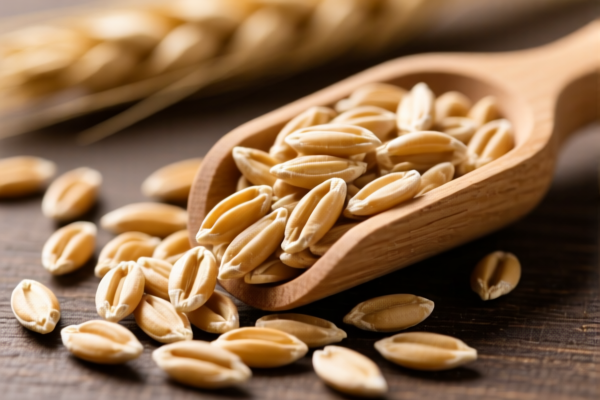
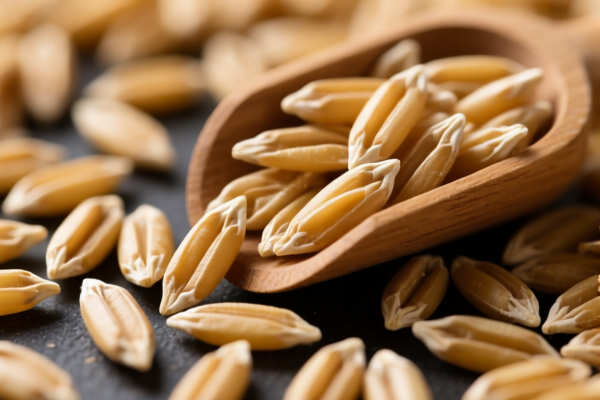
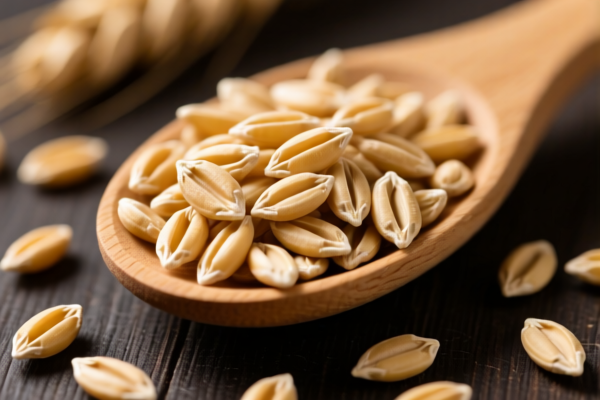
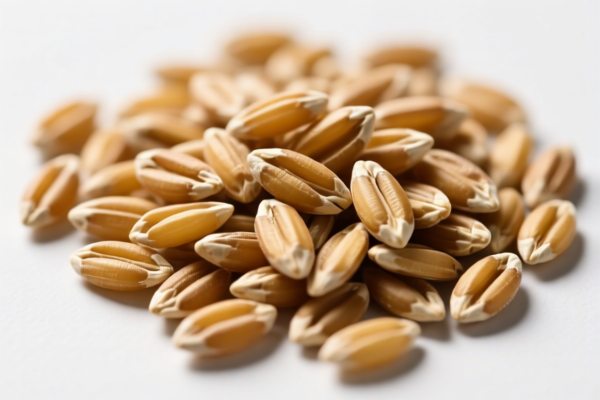
AI分析
🦁 Bison Model Making Cereal Slices
🌐 HS Code Reference & Customs Clearance Guide | 2026 Latest Tariff Analysis | Professional Clearance Strategy
📌 I. Product Definition and Classification: Do You Truly Understand "Cereal Slices"?
Bison Model Making Cereal Slices refer to edible, shaped slices made primarily from cereal grains (such as wheat, rice, or corn), often molded or cut into specific shapes (like bison figures) for culinary use, decoration, or as a snack. In international trade, these are generally classified as prepared foodstuffs or cereal products, distinct from raw cereals or baked goods like bread.
⚠️ Key Distinction Points:
- If the product is edible, ready-to-eat or ready-to-cook, and primarily composed of cereal flour or grain flakes, it falls under Chapter 19 (Preparations of Cereals).
- If the product is not for human consumption (e.g., purely decorative craft materials made of paper or plastic mimicking cereal), it would fall under Chapter 48 (Paper) or Chapter 39 (Plastics).
- Crucial Note for This Data: The provided<DATA>contains a specific HS Code (4823.90.86.80) that explicitly excludes food. This suggests the "Bison Model Making Cereal Slices" in this context are NON-EDIBLE, likely paper-based, cardboard-based, or cellulose-based craft slices used for model making, decoration, or educational purposes, NOT actual food cereal.
📦 二、HS Code Classification Details (2026 Latest Tariff Authority Comparison)
Based on the provided <DATA>, the product is classified under a Paper/Cellulose code, indicating these are artificial/craft "cereal slices" made from paper or cellulose wadding, not edible food.
| HS Code | Product Description | Application Scenario | Edible? |
|---|---|---|---|
4823.90.86.80 |
Other paper, paperboard, cellulose wadding and webs of cellulose fibers, cut to size or shape; other articles of paper pulp, paper, paperboard, cellulose wadding or webs of cellulose fibers: Trays, dishes, plates, cups and the like, of paper or paperboard: Other | Craft slices, decorative paper cutouts, model-making materials shaped like cereal/bison | ❌ NO (Paper/Celulose Based) |
1904.10.00.00 |
Prepared cereals (e.g., corn flakes, oat flakes) | Actual edible cereal snacks | ✅ Yes |
1905.90.00.00 |
Other bakery products or pastries | Edible biscuit-like cereal snacks | ✅ Yes |
4823.69.00.40 |
Other paper articles cut to shape (general) | General paper cutouts, not specifically trays/cups | ❌ No |
3926.90.97.90 |
Plastic articles | Plastic model slices | ❌ No |
🔍 Critical Clarification:
- The HS Code 4823.90.86.80 is for PAPER/CARDBOARD products, specifically "Trays, dishes, plates, cups and the like" or other cut shapes.
- If your product is ACTUALLY EDIBLE CEREAL, this HS Code is INCORRECT and will cause customs issues.
- If your product is DECORATIVE PAPER SLICES shaped like cereal/bison, then this code is APPROPRIATE.
- Assumption for This Guide: We proceed based on the provided<DATA>which mandates 4823.90.86.80, implying the product is non-edible, paper-based craft/model slices.
💰 三、2026 Latest Tariff Rate Details (Including Surtaxes, Policy Additions)
✅ Applicable Country: United States (US)
✅ Country of Origin: China (CN)
✅ Effective Date: From 2025-11-10 onwards (including subsequent imports)
🎯 1. 4823.90.86.80 —— Paper/Cardboard Craft Slices (Non-Essential)
| Item | Content |
|---|---|
| Basic Tariff Rate | 0.0% (ad valorem) |
| USITC Surtax (Section 301) | +25.0% (Applied to Chinese-origin goods) |
| Total Tariff Rate | 25.0% |
| Tax Calculation | CIF Value × 25% |
| De Minimis Eligibility | ❌ Not Applicable (Generally, de minimis ($800) may still apply for personal parcels, but commercial imports face full tax) |
| Legal Basis Path | USITC:4823.90.86.80 → USITC:FOOTNOTE:9903.88.01 (Section 301 Surtax) |
📌 Explanation:
- The 0% base rate reflects that paper products are generally low-tariff items.
- The 25% surtax is the key cost driver, applied under Section 301 of the Trade Act of 1974 against Chinese goods.
- No IEEPA 10% additional tax is listed in the<DATA>for this specific code, so the total is 25%.
- Warning: If misclassified as edible cereal (e.g.,1904.10), the tariff might differ, but 301 surtaxes often apply similarly. However, the 25% rate here is fixed per the data provided.
🛠️ 四、Customs Clearance Practical Advice (Real-World Pitfall Avoidance Guide)
✅ 1. Documentation Checklist (Missing Items Will Cause Delays)
| Document | Mandatory? | Description |
|---|---|---|
| ✅ Product Specification Sheet | ✔️ | Must clearly state: "Non-edible, Paper-Based Craft Slices", material composition (e.g., 100% cellulose paper), dimensions, shape (Bison model). |
| ✅ Product Photos | ✔️ | Clear images showing the paper texture, lack of food packaging, and "Not for Consumption" labels if present. |
| ✅ Commercial Invoice | ✔️ | Must describe as "Paper Model Slices, Shaped like Cereal, for Craft Use". DO NOT use "Cereal" without clarifying "Paper-Based" or "Decorative". |
| ✅ Packing List | ✔️ | Weight and dimensions of paper slices. |
| ✅ Material Declaration | ✔️ | Confirm NO food ingredients (no wheat, corn, sugar, etc.). |
✅ 2. Declaration Tips (Key Mantra)
🔥 "Non-Food, Paper-Craft, Label Clearly, Avoid Food Inspection!"
| Scenario | Correct Declaration | Wrong Practice |
|---|---|---|
| Paper Craft Slices | "Paper Model Slices, 100% Cellulose, Non-Eatable, For Decoration" |
"Cereal Slices" → Triggers FDA/Food Inspection |
| Edible Cereal Snacks | Must use Chapter 19 HS Codes (e.g., 1904.10.00.00) |
Using 4823.90.86.80 → Misclassification, Penalties |
| Mixed Package (Paper + Real Cereal) | Split Declaration | Mixing non-food and food → Customs Hold & Inspection |
✅ 3. Special Handling
| Situation | Handling Advice |
|---|---|
| "Cereal" in Name | Ensure the product name in English includes "Paper" or "Craft" to distinguish from food. E.g., "Paper Bison Cereal Slice Model". |
| FDA Awareness | Even though non-edible, US Customs (CBP) may consult FDA if the product looks like food. Provide a "Not for Human Consumption" statement. |
| Packaging | If packaged in a box resembling food packaging, add "Craft Item – Not Food" prominently. |
🌍 五、Global Market Customs Comparison (2026 Latest)
| Country/Region | Recommended HS Code | Tariff (China Origin) | Certification Requirements | Remarks |
|---|---|---|---|---|
| 🇺🇸 USA | 4823.90.86.80 |
25% (Section 301) | None (Non-Food) | High tariff due to 301; must prove non-food |
| 🇨🇳 China | 4823.90.86.80 |
5% | None | No surtax for exports |
| 🇪🇺 EU | 4823.90.80 |
0% (General) | CE (if applicable) | Low tariff; no 301 equivalent |
| 🇯🇵 Japan | 4823.90.00 |
0-5% | None | Low tariff |
| 🇦🇺 Australia | 4823.90.00 |
5% | None | Moderate tariff |
📌 Conclusion:
- USA imposes a 25% surtax on this paper-based craft item from China.
- Non-food classification is critical to avoid FDA delays, but the 25% tariff is unavoidable unless shipped from a third country (e.g., Vietnam) with proper origin rules.
📌 六、Common Mistakes & Pitfall Guide (Lessons Learned)
❌ Mistake 1: Using the term "Cereal Slices" without specifying "Paper-Based"
👉 Consequence: Customs assumes it's food → FDA Inspection Delay or Misclassification Penalty
❌ Mistake 2: Classifying as Food (Chapter 19) when it's Paper
👉 Consequence: Incorrect HS Code, potential fraud allegations, higher scrutiny
❌ Mistake 3: Ignoring the 25% Surtax
👉 Consequence: Budget Miscalculation, loss of profit margin
✅ Correct Practice:
"Paper Model Slices, Shaped as Bison, 100% Cellulose Paper, Non-Eatable, For Craft/Decorative Use, HS Code 4823.90.86.80"
🎯 七、Conclusion: Professional Declaration, Save Time and Cost
🎯 Remember the Mantra:
🔹 "Paper, Not Food, Label Clearly!"
🔹 "HS Code 4823.90.86.80, Tariff 25%, Avoid FDA, Stay Compliant!"📌 Tip:
If your product is ACTUALLY EDIBLE, do NOT use4823.90.86.80. Contact a customs broker immediately to classify under Chapter 19.
If it is Paper/Craft, ensure all documentation explicitly states "Non-Eatable" to speed up clearance.
📣 Immediate Action:
📞 Contact a Professional Broker + Provide Product Photos + Declare "Paper Craft"
🚀 Ensure Smooth Clearance, Avoid FDA Delays, and Manage the 25% Tariff Efficiently!
✨ Professional Customs Clearance Starts with Accurate Classification!
💼 Every Dollar of Tariff Should Be Calculated Precisely!
用户评价
关于 HS 编码归类
协调制度(HS)是由世界海关组织(WCO)制定的国际贸易商品分类标准。全球 200 多个国家采用 HS 系统作为海关关税、贸易统计和进出口监管的基础。
每个 HS 编码遵循以下层级结构:
- 章(2 位)——商品大类(例如:第 84 章:机器和机械设备)
- 品目(4 位)——章内的更具体分类
- 子目(6 位)——国际通用细分,所有 WCO 成员国统一使用
- 本国细分(8-10 位)——各国自行扩展的细分编码,如美国 HTSUS 10 位编码
正确的 HS 编码归类对于顺利通关、准确缴纳关税和遵守贸易法规至关重要。错误归类可能导致海关延误、多缴关税或罚款。
从CN进口到US时,适用的关税税率可能包括:
- 最惠国(MFN)税率——适用于 WTO 成员国的标准关税税率
- 普通税率——适用于无贸易协定国家
- 贸易救济关税——附加关税,如 301 条款(反倾销)、232 条款(国家安全)或反补贴税
本页内容仅供参考。如需正式归类,请咨询当地海关或持牌报关代理。