bleached non woven fabric
CN → US| HS编码 | 关税税率 | 原产国 | 目的国 | 文档 |
|---|---|---|---|---|
| 5603110070 | 35.0% | CN | US | 官方文档 |
| 5603110095 | 35.0% | CN | US | 官方文档 |
商品图片
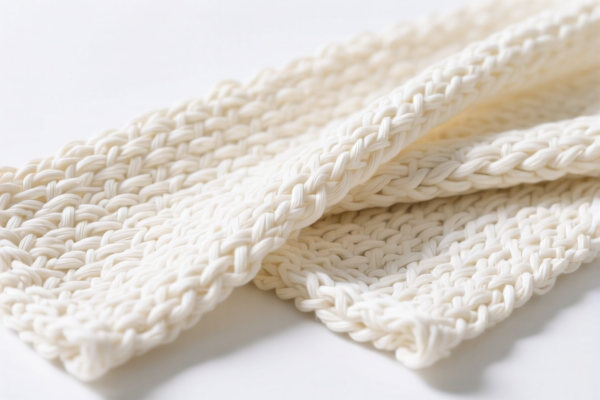
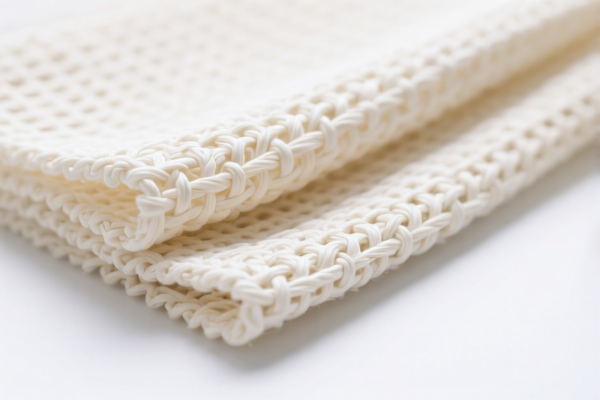
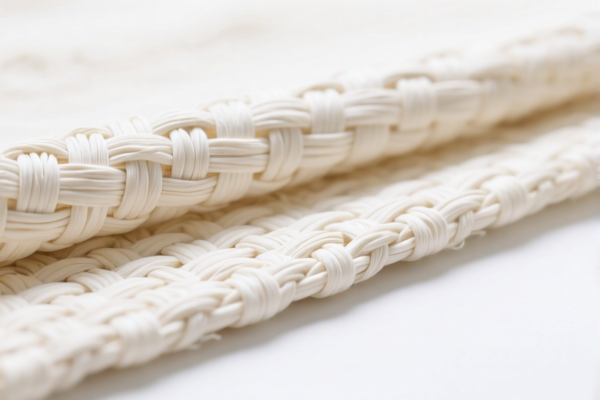

AI分析
🧵 Bleached Non-Woven Fabric (Nonwovens, Man-Made Filaments <25 g/m²)
🌐 HS Code Reference & Customs Clearance Guide | 2026 Latest Tariff Analysis | Professional Strategy
📌 Part 1: Product Definition & Classification: What is "Bleached Non-Woven Fabric"?
"Bleached Non-Woven Fabric" refers to fabric structures made from bonded filaments (typically synthetic like polyester, polypropylene, or nylon) that have undergone a bleaching process to remove natural impurities or achieve a bright white appearance. In international trade, the classification hinges on two critical technical parameters: 1. Material: Is it made from man-made filaments (synthetic continuous fibers)? 2. Weight: Is the basis weight not more than 25 g/m²?
⚠️ Critical Distinction:
- If the fabric weighs more than 25 g/m², it falls under HS5603.12–5603.14.
- If it is made from staple fibers (short fibers) rather than filaments, it falls under HS5603.91–5603.94.
- Only if it is man-made filaments AND ≤ 25 g/m² does it belong to the codes below.
📦 Part 2: HS Code Classification Details (2026 Official Tariff)
Based strictly on the provided , the product is classified under HS Chapter 56 (Nonwovens). Specifically, it falls under the subheading for man-made filaments weighing ≤ 25 g/m².
| HS Code | Product Description | Key Attributes | Applicable Scenario |
|---|---|---|---|
5603.11.00.70 |
Nonwovens, man-made filaments ≤ 25 g/m²: Nonwoven articles, ready for use, packaged for industrial, institutional, or retail sale (223) | ✅ Finished Goods ✅ Packaged ✅ Industrial/Retail Ready |
Medical masks, wipes, sanitary products, retail packs of nonwovens |
5603.11.00.95 |
Nonwovens, man-made filaments ≤ 25 g/m²: Other (223) | ✅ Raw Material/Intermediate ✅ Bulk or Not Fully Packaged |
Bulk rolls for conversion, unfinished sheets, industrial raw stock |
🔍 Key Insight:
-5603.11.00.70: Use this if the product is sold as a final item (e.g., "pack of wet wipes," "pack of facial tissues," or "industrial cleaning cloths") or is clearly prepared for direct sale/use.
-5603.11.00.95: Use this if the product is a bulk roll or sheet intended for further manufacturing (e.g., a factory buying large rolls to cut into shapes).
- Both codes apply to bleached nonwovens made of man-made filaments under 25 g/m².
💰 Part 3: 2026 Tariff Rate Breakdown (US Market Focus)
✅ Applicable Country: United States (US)
✅ Country of Origin: China (CN)
✅ Effective Date: Current trade restrictions apply
🎯 1. 5603.11.00.70 & 5603.11.00.95 – Bleached Non-Woven Fabric (<25 g/m²)
| Item | Detail |
|---|---|
| Base Tariff | 0.0% (Most Favored Nation rate for nonwovens of this type) |
| Section 301 Additional Duty | +25.0% (List 3 / List 4A applicable to many textiles/nonwovens) |
| Total Effective Tax Rate | 25.0% |
| Tax Calculation Basis | CIF Value (Cost, Insurance, Freight) × 25% |
| De Minimis Exemption? | ❌ No (Section 301 duties apply regardless of value) |
| Legal Reference Path | HTSUS: 5603.11.00 → USITC: Footnote 9903.88.01 (or equivalent Section 301 listing) |
📌 Explanation:
- Although the base tariff is 0%, the 25% additional duty significantly impacts cost.
- This 25% is not a standard tariff; it is a retaliatory/additional duty imposed under Section 301 of the Trade Act.
- No exemptions are available for standard commercial shipments of this type from China.
🛠️ Part 4: Customs Clearance Practical Advice (Avoid Pitfalls)
✅ 1. Required Documentation Checklist
| Document | Required? | Notes |
|---|---|---|
| Commercial Invoice | ✅ Yes | Must clearly state: "Bleached Non-Woven Fabric, Man-Made Filaments, Weight ≤ 25 g/m²" |
| Packing List | ✅ Yes | Specify net/gross weight and dimensions to verify g/m² calculation if challenged |
| Product Specification Sheet | ✅ Yes | Must confirm: 1. Material composition (e.g., 100% Polyester Filament) 2. Basis weight (g/m²) 3. Processing (Bleached) |
| Certificate of Origin | ✅ Yes | Essential for proving origin; if from China, 25% duty applies |
| Import License | ❌ Usually No | Nonwovens generally do not require special licenses, but check for sanitary/medical end-uses |
✅ 2. Classification Tips
🔥 "Weight is King, Fiber is Queen!"
- Check the Grammage: If your fabric is 26 g/m² or higher, the duty rate may differ (though often still 0% base, verify Section 301 lists for higher weight nonwovens).
- Check the Fiber Type: If the fabric is made from staple fibers (short fibers), it does NOT fall under5603.11. It would fall under5603.91(man-made staple fibers ≤ 25 g/m²). Ensure the spec sheet says "Filament" not "Staple."
- Bleaching: Bleaching does not change the HS code but must be declared to confirm it is not a chemically treated medical device (which might require FDA clearance if used for medical purposes).
✅ 3. Special Cases
| Scenario | Recommendation |
|---|---|
| Medical Use (e.g., N95 Masks) | If the nonwoven is the material for masks, classify the fabric as above. If importing finished masks, they may have different HS codes and FDA requirements. |
| Retail Packs | Use 5603.11.00.70. Ensure packaging is labeled as "Ready for Retail Sale." |
| Bulk Rolls | Use 5603.11.00.95. Declare as "Raw Material" or "Intermediate Good." |
| Origin Transshipment | Do NOT declare non-Chinese origin if produced in China. Misdeclaration leads to seizure and fines. |
🌍 Part 5: Global Market Comparison (2026)
| Country/Region | HS Code | Base Duty | Additional Duty | Total Effective Duty | Notes |
|---|---|---|---|---|---|
| 🇺🇸 USA | 5603.11.00.70 / .95 |
0% | +25% | 25% | Section 301 applies |
| 🇨🇳 China | 5603.11.00 |
0–6%* | None | 0–6% | Import duty varies by exact subheading; VAT (13%) applies |
| 🇪🇺 EU | 5603.11 |
~6.5% | None | 6.5% | No additional sanctions |
| 🇬🇧 UK | 5603.11 |
~6.5% | None | 6.5% | Post-Brexit tariff regime |
| 🇦🇺 Australia | 5603.11 |
5% | None | 5% | FTA may apply for some origins |
📌 Conclusion:
- The 25% duty in the US is the primary cost driver for Chinese-origin bleached nonwovens.
- Diversify Sourcing: Consider sourcing from Vietnam, India, or Bangladesh to avoid Section 301 duties (verify local rules of origin).
📌 Part 6: Common Errors & Pitfalls
❌ Error 1: Misidentifying Staple Fiber as Filament
👉 Consequence: Incorrect HS code, potential duty underpayment/overpayment, and delays.
✅ Fix: Confirm material spec: "Filament" (long continuous strands) vs. "Staple" (short chopped fibers).
❌ Error 2: Ignoring the 25 g/m² threshold
👉 Consequence: If weight is >25 g/m², it falls under different subheadings (5603.12, etc.), which may have different duty rates or Section 301 applicability.
✅ Fix: Provide certified lab test reports for basis weight.
❌ Error 3: Failing to Declare Bleaching
👉 Consequence: Customs may classify as "Raw/Grey" nonwovens, which might have different environmental or safety compliance requirements.
✅ Fix: Explicitly state "Bleached" on the invoice.
❌ Error 4: Assuming De Minimis Exemption Applies
👉 Consequence: Many importers mistakenly think small shipments are duty-free. Section 301 duties apply to all imports, regardless of value.
✅ Fix: Pay the 25% duty on every shipment, even low-value samples.
🎯 Part 7: Conclusion – Professional Clearance, Cost Control
🎯 Key Takeaways:
🔹 "Filament + <25 g/m² + Bleached = 5603.11"
🔹 "US Duty = 25% (Additional) on top of 0% Base"
🔹 "Packing Determines Code: 70 (Retail/Ready) vs. 95 (Other/Bulk)"
📌 Pro Tip:
If you are importing large volumes, consider Bonded Warehouses or FTZs (Free Trade Zones) to defer duty payments until the goods are sold in the US. For medical-grade nonwovens, ensure additional FDA registration and 510(k) clearance if applicable.
📣 Immediate Action:
📞 Consult a Licensed Customs Broker for pre-classification rulings.
📄 Verify Lab Reports for weight and fiber type.
💰 Factor in the 25% Additional Duty into your CIF pricing model.
✨ Precision in Classification Saves Dollars in Duties!
💼 Stay Compliant, Stay Competitive in 2026!
用户评价
关于 HS 编码归类
协调制度(HS)是由世界海关组织(WCO)制定的国际贸易商品分类标准。全球 200 多个国家采用 HS 系统作为海关关税、贸易统计和进出口监管的基础。
每个 HS 编码遵循以下层级结构:
- 章(2 位)——商品大类(例如:第 84 章:机器和机械设备)
- 品目(4 位)——章内的更具体分类
- 子目(6 位)——国际通用细分,所有 WCO 成员国统一使用
- 本国细分(8-10 位)——各国自行扩展的细分编码,如美国 HTSUS 10 位编码
正确的 HS 编码归类对于顺利通关、准确缴纳关税和遵守贸易法规至关重要。错误归类可能导致海关延误、多缴关税或罚款。
从CN进口到US时,适用的关税税率可能包括:
- 最惠国(MFN)税率——适用于 WTO 成员国的标准关税税率
- 普通税率——适用于无贸易协定国家
- 贸易救济关税——附加关税,如 301 条款(反倾销)、232 条款(国家安全)或反补贴税
本页内容仅供参考。如需正式归类,请咨询当地海关或持牌报关代理。