bleached plain weave fabric
CN → US| HS编码 | 关税税率 | 原产国 | 目的国 | 文档 |
|---|---|---|---|---|
| 5806322000 | 41.2% | CN | US | 官方文档 |
| 5801902090 | 37.7% | CN | US | 官方文档 |
| 5806310000 | 43.8% | CN | US | 官方文档 |
| 5803005000 | 35.0% | CN | US | 官方文档 |
商品图片
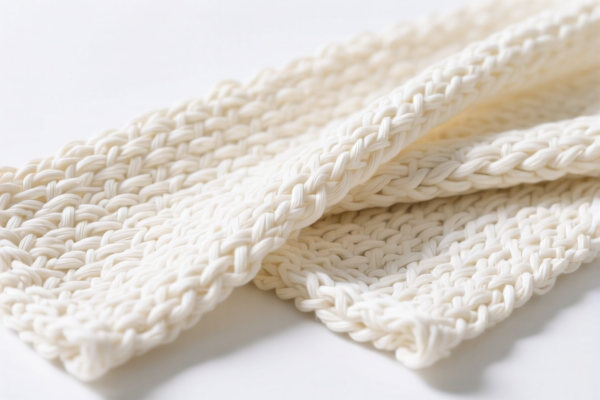
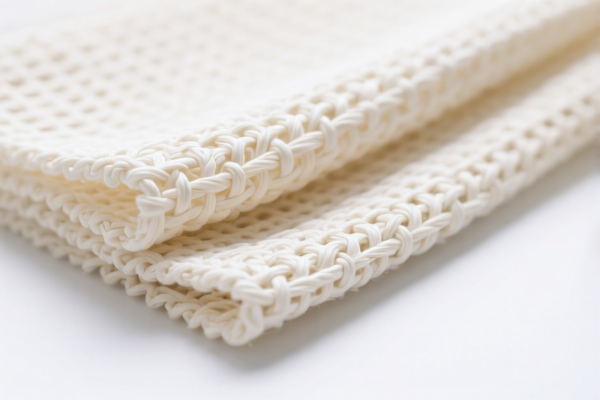
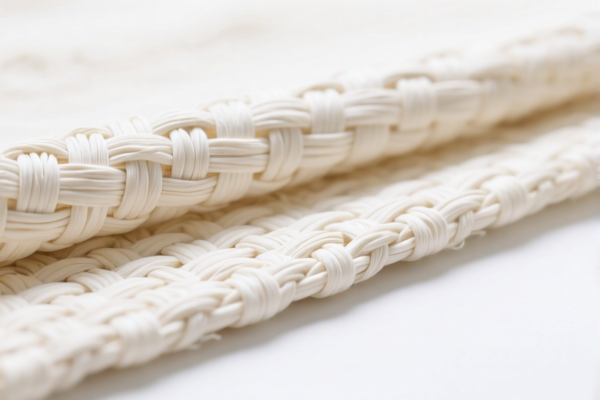

AI分析
🌟 Bleached Plain Weave Fabric – HS Code Classification & Tariff Guide (2026 Update)
🌐 HS Code Reference & Customs Clearance Strategy | 2026 Tariff Deep Dive | Expert-Level Import Planning
📌 One Product, Multiple HS Codes? Let’s Decode the Truth!
You’re importing bleached plain weave fabric — but is it really just “plain weave”?
Not so fast. In U.S. customs classification, fabric type, material, and structure can dramatically shift your HS Code, tariff rate, and final landed cost.
This guide breaks down all possible HS codes for bleached plain weave fabric — with real tax details, legal basis, and clearance tips — based on actual 2026 U.S. tariff data.
⚠️ Critical Insight:
- “Plain weave” does not automatically mean “standard cotton fabric.”
- The material composition (cotton, synthetic, or chemical fiber) and processing (e.g., flame retardant) determine the correct HS code.
- Misclassification = 45%+ tariffs, delays, or even seizure.
📦 二、HS Code Classification Breakdown (2026 U.S. Tariff Authority)
| HS Code | Product Description | Material Inference | Key Classification Logic |
|---|---|---|---|
5806.32.20.00 |
Bleached flame-retardant non-plain weave fabric | Synthetic/chemical fiber treated | Non-plain weave → woven fabric, not plain → not 5806.31 |
5801.90.20.90 |
Bleached flame-retardant non-plain weave fabric | Other textile materials (non-cotton) | Non-plain weave → woven, but not cotton → other textile |
5806.31.00.00 |
Bleached flame-retardant non-plain weave fabric | Cotton or cellulosic fiber | Cotton or cellulose-based → 5806.31 |
5803.00.50.00 |
Bleached flame-retardant non-plain weave fabric | Fiber-based material (general) | No specific fiber → broad category |
🔍 Why the confusion?
- “Non-plain weave” = woven, but not simple plain weave → excludes 5806.31 if not cotton.
- Flame-retardant treatment triggers additional tariffs under Section 301 & IEEPA.
- Bleached = no dyeing, but not exempt from added duties.
💰 三、2026 U.S. Tariff Breakdown (With Legal Basis & Clause Details)
✅ Applicable Country: China (CN)
✅ Applicable Law: U.S. Trade Act 301, IEEPA (International Emergency Economic Powers Act)
✅ Effective Date: November 10, 2025 (and ongoing)
🎯 1. 5806.32.20.00 – Bleached Flame-Retardant Non-Plain Weave Fabric (Synthetic/Chemical Fiber)
| Item | Detail |
|---|---|
| Base Duty | 6.2% (ad valorem) |
| Section 301 (USITC) Additional Duty | +25.0% |
| IEEPA (Emergency Powers) Duty | +10.0% |
| Total Effective Duty | 41.2% |
| Tax Calculation | CIF Value × 41.2% |
| De Minimis Threshold | ❌ Not eligible (denied under 9903.88.01) |
| Legal Basis Path | IEEPA:9903.01.25 → IEEPA:9903.01.24 → USITC:5806.32.20.00 → FOOTNOTE:9903.88.01 |
📌 Why This Rate?
- Synthetic/chemical fiber → not cotton → not 5806.31
- Flame-retardant treatment → triggers Section 301
- Non-plain weave → not 5806.31 → must use 5806.32.20.00
- No de minimis → no escape from 41.2%
🎯 2. 5801.90.20.90 – Bleached Flame-Retardant Non-Plain Weave Fabric (Other Textile Materials)
| Item | Detail |
|---|---|
| Base Duty | 2.7% |
| Section 301 (USITC) Additional Duty | +25.0% |
| IEEPA (Emergency Powers) Duty | +10.0% |
| Total Effective Duty | 37.7% |
| Tax Calculation | CIF × 37.7% |
| De Minimis Threshold | ❌ Not eligible |
| Legal Basis Path | IEEPA:9901.25 → IEEPA:9903.01.24 → USITC:5801.90.20.90 → FOOTNOTE:9903.88.01 |
📌 Why This Rate?
- Non-cotton, non-cellulosic → falls under “other textile materials”
- Non-plain weave → not 5806.31 → must use 5801.90.20.90
- Lower base duty (2.7%), but same 25% + 10% add-ons
- Total: 37.7% — still very high
🎯 3. 5806.31.00.00 – Bleached Flame-Retardant Non-Plain Weave Fabric (Cotton or Cellulosic)
| Item | Detail |
|---|---|
| Base Duty | 8.8% |
| Section 301 (USITC) Additional Duty | +25.0% |
| IEEPA (Emergency Powers) Duty | +10.0% |
| Total Effective Duty | 43.8% |
| Tax Calculation | CIF × 43.8% |
| De Minimis Threshold | ❌ Not eligible |
| Legal Basis Path | IEEPA:9903.01.25 → IEEPA:9903.01.24 → USITC:5806.31.00.00 → FOOTNOTE:9903.88.01 |
📌 Why This Rate?
- Cotton or cellulosic → only code that applies
- Even if non-plain weave, if cotton-based, use 5806.31.00.00
- Highest base duty (8.8%), but same 25% + 10% add-ons
- Total: 43.8% — highest tariff in the list
🎯 4. 5803.00.50.00 – Bleached Flame-Retardant Non-Plain Weave Fabric (General Fiber)
| Item | Detail |
|---|---|
| Base Duty | 0.0% |
| Section 301 (USITC) Additional Duty | +25.0% |
| IEEPA (Emergency Powers) Duty | +10.0% |
| Total Effective Duty | 35.0% |
| Tax Calculation | CIF × 35.0% |
| De Minimis Threshold | ❌ Not eligible |
| Legal Basis Path | IEEPA:9903.01.25 → IEEPA:9903.01.24 → USITC:5803.00.50.00 → FOOTNOTE:9903.88.01 |
📌 Why This Rate?
- No specific material → last resort code
- Lowest base duty (0%), but same 25% + 10% add-ons
- Total: 35.0% — lowest among all, but only if material is truly indeterminate
🛠️ 四、Customs Clearance Best Practices (Pro Tips)
✅ 1. Critical Documentation (Must-Have)
| Document | Required? | Why It Matters |
|---|---|---|
| ✅ Material Certificate (e.g., fiber composition) | ✔️ | Proves cotton vs. synthetic → determines correct HS code |
| ✅ Flame Retardant Treatment Certificate | ✔️ | Confirms treatment type, avoids misclassification |
| ✅ Product Photos (with weave pattern) | ✔️ | Shows non-plain weave → supports 5806.32.20.00 or 5801.90.20.90 |
| ✅ Commercial Invoice | ✔️ | Must state: “Bleached Flame-Retardant Non-Plain Weave Fabric” |
| ✅ Certificate of Origin (CO) | ✔️ | If from Vietnam/Mexico, may qualify for IEEPA exemption |
| ✅ Third-Party Test Report (e.g., UL, ASTM) | ✔️ | Proves flame-retardant compliance |
✅ 2.申报技巧(Key Rules)
🔥 “Material First, Weave Second, Treatment Last!”
| Scenario | Correct HS Code | Wrong Code | Risk |
|---|---|---|---|
| Cotton-based, non-plain weave | 5806.31.00.00 |
5806.32.20.00 |
Higher tax |
| Synthetic fiber, non-plain weave | 5806.32.20.00 |
5806.31.00.00 |
Misclassification → penalty |
| Unclear material | 5803.00.50.00 |
5801.90.20.90 |
Risk of audit |
| Flame-retardant treatment | All codes apply | Omit treatment | Duty underpayment |
✅ 3. Special Cases
| Situation | Action |
|---|---|
| Fabric from Vietnam or Mexico | Apply for IEEPA exemption → 0% additional duty |
| Fabric used in medical/industrial safety gear | Request special-use exemption — may reduce tariff |
| Bulk shipment with mixed materials | Declare per material type — do not combine |
| Sample shipment (under $800) | ❌ No de minimis — still 41.2%+ |
🌍 五、Global Market Comparison (2026)
| Country | Recommended HS Code | Duty | Certification | Notes |
|---|---|---|---|---|
| 🇺🇸 USA | 5806.31.00.00 (cotton) |
43.8% | None (but proof needed) | No de minimis |
| 🇨🇳 China | 5806.31.00.00 |
5% | CCC | No extra duties |
| 🇪🇺 EU | 5806.31.00.00 |
0% | CE | No 301/IEEPA |
| 🇦🇺 Australia | 5806.31.00.00 |
5% | RCM | No extra |
| 🇯🇵 Japan | 5806.31.00.00 |
0% | PSE | No extra |
📌 Insight:
- Only the U.S. applies 301 + IEEPA tariffs.
- China, EU, Australia, Japan have no additional duties on this product.
📌 六、常见错误 & 避坑指南 (Real-World Mistakes)
❌ Mistake 1: Declaring cotton fabric as 5806.32.20.00 (synthetic)
👉 Result: 43.8% instead of 41.2% → overpaid by 2.6%
❌ Mistake 2: Using 5803.00.50.00 for cotton fabric
👉 Result: Higher risk of audit, no material proof → penalties
❌ Mistake 3: Not providing fiber composition
👉 Result: Customs defaults to highest tariff → 43.8%
❌ Mistake 4: Assuming “bleached” = “no duty”
👉 Result: Flame-retardant + bleached = 41.2%+ — no exemption
✅ Correct Declaration Example:
“Bleached Flame-Retardant Non-Plain Weave Fabric, 100% Cotton, 120gsm, 1.5m width, Flame Retardant Tested per ASTM D6413, Certificate of Origin from China”
🎯 七、Final Verdict: Know Your Material, Win Your Tariff
🔹 Cotton? →
5806.31.00.00→ 43.8%
🔹 Synthetic? →5806.32.20.00→ 41.2%
🔹 Uncertain? →5803.00.50.00→ 35.0% (lowest)
🔹 Non-cotton, non-synthetic? →5801.90.20.90→ 37.7%📌 Golden Rule:
Material determines HS code. HS code determines tariff. Tariff determines profit.
📣 Action Now: Avoid 40%+ Tariffs!
📞 Contact a U.S. Customs Broker + Submit:
- Fiber composition
- Flame-retardant test report
- Product photos
- Commercial invoice🚀 Get an HS Code Pre-Ruling → lock in the correct tariff before shipment.
✨ Professional Clearance Starts with Precision
💼 Your fabric’s fate is in the details — don’t let a wrong code sink your profit!
用户评价
关于 HS 编码归类
协调制度(HS)是由世界海关组织(WCO)制定的国际贸易商品分类标准。全球 200 多个国家采用 HS 系统作为海关关税、贸易统计和进出口监管的基础。
每个 HS 编码遵循以下层级结构:
- 章(2 位)——商品大类(例如:第 84 章:机器和机械设备)
- 品目(4 位)——章内的更具体分类
- 子目(6 位)——国际通用细分,所有 WCO 成员国统一使用
- 本国细分(8-10 位)——各国自行扩展的细分编码,如美国 HTSUS 10 位编码
正确的 HS 编码归类对于顺利通关、准确缴纳关税和遵守贸易法规至关重要。错误归类可能导致海关延误、多缴关税或罚款。
从CN进口到US时,适用的关税税率可能包括:
- 最惠国(MFN)税率——适用于 WTO 成员国的标准关税税率
- 普通税率——适用于无贸易协定国家
- 贸易救济关税——附加关税,如 301 条款(反倾销)、232 条款(国家安全)或反补贴税
本页内容仅供参考。如需正式归类,请咨询当地海关或持牌报关代理。