bleached sulfite wood pulp non coniferous
CN → US| HS编码 | 关税税率 | 原产国 | 目的国 | 文档 |
|---|---|---|---|---|
| 4703110000 | 35.0% | CN | US | 官方文档 |
| 4703190000 | 35.0% | CN | US | 官方文档 |
| 4706920100 | 35.0% | CN | US | 官方文档 |
| 4706200000 | 35.0% | CN | US | 官方文档 |
| 4703190000 | 35.0% | CN | US | 官方文档 |
商品图片
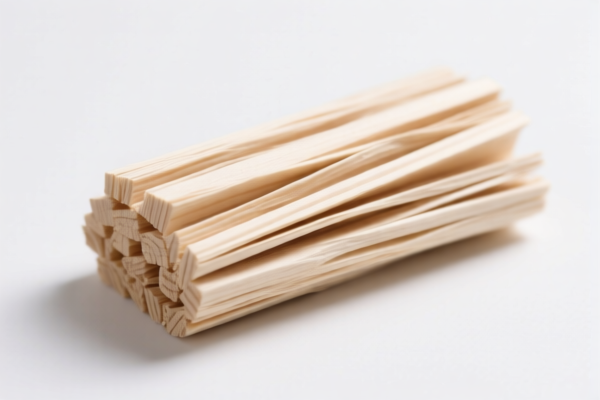
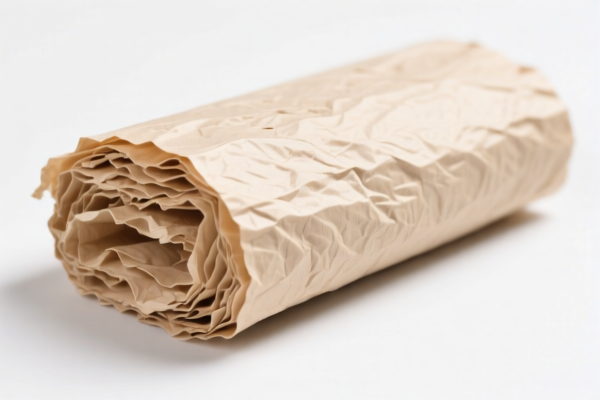
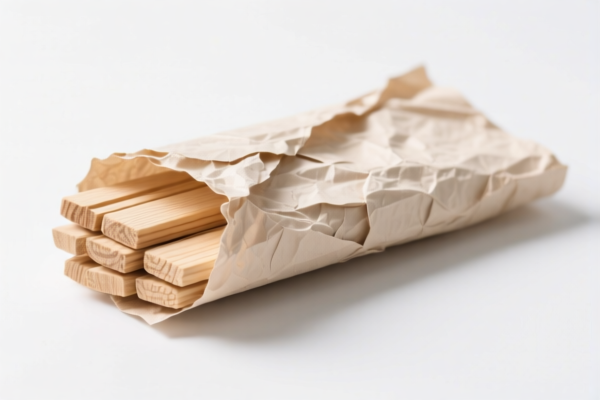
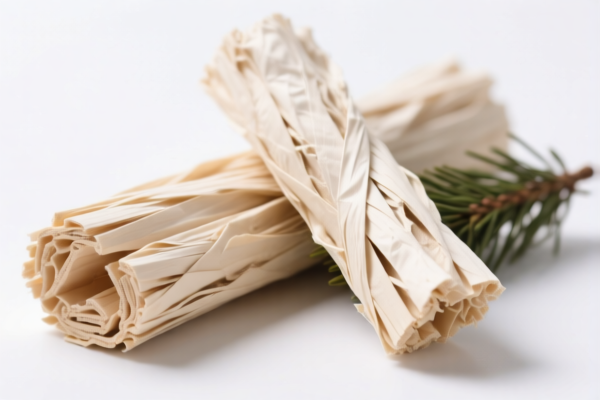
AI分析
Based on the Harmonized System (HS) classification for "bleached sulfite wood pulp non-coniferous," here is the detailed breakdown, tariff analysis, and customs clearance guide.
🌲 Bleached Sulfite Wood Pulp (Non-Coniferous)
🌐 HS Code Reference & Customs Guide | 2026 Latest Tariff Analysis | Professional Clearance Strategy
📌 I. Product Definition: Do You Really Understand "Bleached Sulfite Pulp"?
Bleached sulfite wood pulp is a chemical pulp produced by treating wood chips with acid salts (sulfites) to dissolve lignin, followed by bleaching to achieve high whiteness. "Non-coniferous" (hardwood) pulp is typically derived from trees like eucalyptus, birch, acacia, or poplar. It is characterized by short fibers, high density, and excellent surface strength, making it ideal for coated papers, newsprint, and packaging.
In international trade, this product is strictly regulated under Chapter 47 of the HS Nomenclature.
Key Characteristics: * Process: Chemical Sulfite Process (not Kraft) * State: Bleached (white, high brightness >90% ISO) * Source: Non-Coniferous Hardwoods (Eucalyptus, Birch, etc.) * Form: Usually sold as flakes, chips, or bales of dry pulp.
⚠️ Key Distinction:
- If the pulp is unbleached, it falls under a different subheading (4703.21 or 4703.31).
- If it is Kraft process (not sulfite), it may have different classification nuances depending on country-specific interpretations, but generally falls under 4703.21 for bleached non-coniferous.
- Sulfite vs. Kraft: Sulfite pulp is softer and bleaches more easily but has lower tensile strength than Kraft. Correct identification is crucial to avoid misclassification.
📦 II. HS Code Classification Details (2026 Latest Tariff Alignment)
The global HS code for this product is harmonized up to the 6-digit level. Below are the most common 8-10 digit codes used by major economies.
| HS Code | Product Description | Applicable Scenario | Key Identifier |
|---|---|---|---|
4703.21.00 |
Bleached chemical wood pulp, non-coniferous (Sulfite) | General international trade | The base 6-digit code |
4703.21.10 |
Bleached Sulfite Pulp (Non-Coniferous) - USA | Import into United States | Specific US tariff line |
4703.21.90 |
Other Bleached Chemical Pulp (Non-Coniferous) - USA | If specific sulfite sub-categories exist | Generic US fallback |
4703.21.00 |
Bleached chemical wood pulp, non-coniferous | EU / China / Global | Harmonized System |
4703.21.00.10 |
Bleached Sulfite Pulp - China | Import into China | Specific Chinese sub-heading |
🔍 Priority Reminder:
- All bleached non-coniferous chemical pulp regardless of process (sulfite, kraft, etc.) generally falls under 4703.21.
- Some countries may require further breakdown by process (sulfite vs. kraft) in their national 8-10 digit codes. Always verify with the local customs authority.
💰 III. 2026 Latest Tariff Rate Breakdown (Including Additional Taxes)
✅ Applicable Country: United States (US)
✅ Country of Origin: China (CN)
✅ Effective Date: From November 10, 2025 (Subject to Policy Changes)
🎯 1. 4703.21.10.00 —— Bleached Sulfite Wood Pulp (Non-Coniferous)
| Item | Content |
|---|---|
| Base MFN Tariff | 0% (ad valorem) |
| USITC Additional Duty (Section 301) | +25% (Footnote 9903.88.01) |
| IEEPA Additional Duty (China-specific) | +10% (For Chinese/Hong Kong products, effective from Nov 10, 2025) |
| Total Tariff Rate | 45% |
| Tax Calculation | CIF Value × 45% |
| De Minimis Exemption Eligibility | ❌ Not Eligible (deny_de_minimis) |
| Legal Pathway | IEEPA:9903.01.25 → IEEPA:9903.01.24 → USITC:4703.21.10.00 → FOOTNOTE:9903.88.01 |
📌 Explanation:
- The 25% USITC duty is part of the ongoing trade dispute tariffs applied to certain Chinese industrial goods, including pulp and paper products.
- The 10% IEEPA duty is a newer layer targeting Chinese-origin materials.
- Total of 45% is considered extremely high, significantly impacting cost structures for US importers.
🎯 2. 4703.21.90.00 —— Other Bleached Chemical Pulp (Non-Coniferous)
| Item | Content |
|---|---|
| Base MFN Tariff | 0% |
| USITC Additional Duty | +25% |
| IEEPA Additional Duty | +10% |
| Total Tariff | 45% |
| Tax Calculation | CIF × 45% |
| De Minimis Exemption | ❌ Not Eligible |
| Legal Pathway | IEEPA:9901.25 → IEEPA:9903.01.24 → USITC:4703.21.90.00 → FOOTNOTE:9903.88.01 |
📌 Note:
- Same as above; applies if no specific "sulfite" sub-code is used or if classified under "other."
- Note: If the pulp is unbleached, the tariff might differ slightly, but bleached sulfite pulp is heavily taxed.
🛠️ IV. Customs Clearance Practical Advice (Avoid Pitfalls)
✅ 1. Documentation Checklist (Non-negotiable)
| Document | Must Provide | Description |
|---|---|---|
| ✅ Product Specification Sheet | ✔️ | Includes wood source (e.g., Eucalyptus), process (Sulfite), brightness (% ISO), viscosity, yield. |
| ✅ Process Description | ✔️ | Explicitly state "Sulfite Process" vs. "Kraft Process." Crucial for classification. |
| ✅ Certificate of Origin (CO) | ✔️ | Required to determine origin-based duties. |
| ✅ Commercial Invoice | ✔️ | Must clearly state "Bleached Sulfite Wood Pulp, Non-Coniferous." |
| ✅ Packing List | ✔️ | Detail weight, dimensions, number of bales/pallets. |
| ✅ Bill of Lading (B/L) | ✔️ | Clean on board, freight prepaid. |
| ✅ Safety Data Sheet (SDS) | ✔️ | Pulp is generally non-hazardous, but required for chemical import declarations. |
✅ 2. Declaration Tips (Key Mnemonic)
🔥 "Correct Classification, Full Disclosure, Avoid Penalty!"
| Scenario | Correct Declaration | Wrong Practice |
|---|---|---|
| Bleached Sulfite Pulp | 4703.21.10.00 |
Misclassify as "Unbleached" (4703.31) to lower duty → Audit Risk! |
| Non-Coniferous vs. Coniferous | Specify "Non-Coniferous" | Claim "Coniferous" if hardwood → Misclassification Penalty |
| Sulfite vs. Kraft | Declare "Sulfite Process" | Omit process type → Customs May Re-classify & Assess Back Taxes |
| Chinese Origin | Declare "China" | Under-declare origin to avoid 301 tariffs → Fraud! |
✅ 3. Special Cases Handling
| Situation | Handling Advice |
|---|---|
| OEM/Contract Pulp | Provide purchase order + technical data sheet to prove "Sulfite" nature. |
| Pulp for Specialty Papers | Still 4703.21; no special exemption for end-use unless under specific FTAs. |
| Import into EU/China | Generally 0% tariff for MFN rates. No additional punitive duties. Much cheaper than US. |
| Import into Vietnam/Mexico | Check FTAs (USMCA, EVFTA) for potential duty-free access if processed further. |
🌍 V. Global Market Comparison (2026 Latest)
| Country/Region | Recommended HS Code | Base Tariff | Additional Duties | Total Cost Impact | Remarks |
|---|---|---|---|---|---|
| 🇺🇸 USA | 4703.21.10.00 |
0% | +35% (25% + 10%) | 35%-45% | High barrier due to trade wars. |
| 🇨🇳 China | 4703.21.00.10 |
0% | None | 0% | Major importer of raw pulp. |
| 🇪🇺 EU | 4703.21.00 |
0% | None | 0% | Liberal trade policy. |
| 🇦🇺 Australia | 4703.21.00 |
0% | None | 0% | Free trade agreement with China. |
| 🇯🇵 Japan | 4703.21.00 |
0% | None | 0% | Stable demand for hardwood pulp. |
📌 Conclusion:
- The US market is the most difficult for Chinese-origin bleached sulfite pulp due to cumulative tariffs.
- Asian markets (China, EU, Japan) offer tariff-free entry, making them more competitive.
- Strategic Recommendation: If exporting to the US, consider shifting production to Vietnam, Mexico, or Thailand to leverage FTAs (USMCA, EVFTA) and avoid Section 301/IEEPA duties.
📌 VI. Common Errors & Pitfalls (Blood Lessons)
❌ Error 1: Misclassifying "Bleached" as "Unbleached"
👉 Consequence: Duty drops from 35% to 0%, but customs audit will recover back taxes + 200% penalty.
❌ Error 2: Omitting "Sulfite" process
👉 Consequence: Customs may classify under generic "Chemical Pulp," leading to delays and requests for re-declaration.
❌ Error 3: Not providing Certificate of Origin
👉 Consequence: Cannot prove origin; may be denied preferential rates or subject to anti-dumping investigations.
❌ Error 4: Declaring "Paper" instead of "Pulp"
👉 Consequence: Pulp is raw material; paper is finished good. Different HS chapters (47 vs. 48). Wrong chapter = Confiscation Risk.
✅ Correct Practice:
"Bleached Sulfite Wood Pulp, Non-Coniferous (Eucalyptus), Brightness 92% ISO, Viscosity 500cP, Origin: China, HS Code: 4703.21.10.00"
🎯 VII. Conclusion: Precise Classification Saves Money!
🎯 Remember the Mnemonic:
🔹 "Sulfite Bleached, Non-Coniferous is 4703.21.10"
🔹 "US Market: 0% Base + 35% Duties = 35% Total"
🔹 "Asia Market: 0% Duty – Choose China/EU for Cost Savings!"
📌 Tips:
If your pulp is originating from Vietnam, Mexico, or Thailand, apply for Form E, USMCA, or EVFTA certificates to qualify for 0% duty in respective markets.
Recommend Advance Ruling from US Customs (CBP) to confirm classification before shipment.
📣 Immediate Action:
📞 Contact Customs Broker + Provide Tech Sheet + Apply for Pre-Ruling
🚀 Let your pulp clear smoothly, save 35% in duties, and boost margins!
✨ Professional Clearance Starts with Accurate Classification!
💼 Every dollar saved in duty is pure profit!
用户评价
关于 HS 编码归类
协调制度(HS)是由世界海关组织(WCO)制定的国际贸易商品分类标准。全球 200 多个国家采用 HS 系统作为海关关税、贸易统计和进出口监管的基础。
每个 HS 编码遵循以下层级结构:
- 章(2 位)——商品大类(例如:第 84 章:机器和机械设备)
- 品目(4 位)——章内的更具体分类
- 子目(6 位)——国际通用细分,所有 WCO 成员国统一使用
- 本国细分(8-10 位)——各国自行扩展的细分编码,如美国 HTSUS 10 位编码
正确的 HS 编码归类对于顺利通关、准确缴纳关税和遵守贸易法规至关重要。错误归类可能导致海关延误、多缴关税或罚款。
从CN进口到US时,适用的关税税率可能包括:
- 最惠国(MFN)税率——适用于 WTO 成员国的标准关税税率
- 普通税率——适用于无贸易协定国家
- 贸易救济关税——附加关税,如 301 条款(反倾销)、232 条款(国家安全)或反补贴税
本页内容仅供参考。如需正式归类,请咨询当地海关或持牌报关代理。