blower motor resistor
CN → US| HS编码 | 关税税率 | 原产国 | 目的国 | 文档 |
|---|---|---|---|---|
| 8533408040 | 35.0% | CN | US | 官方文档 |
| 8533210090 | 35.0% | CN | US | 官方文档 |
| 8516290090 | 38.7% | CN | US | 官方文档 |
| 8414591500 | 35.0% | CN | US | 官方文档 |
| 8516290030 | 38.7% | CN | US | 官方文档 |
商品图片
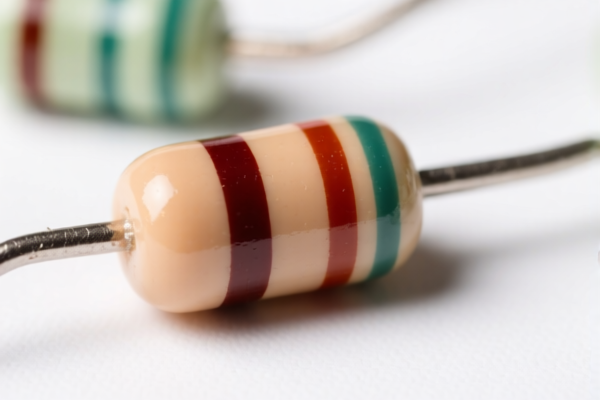
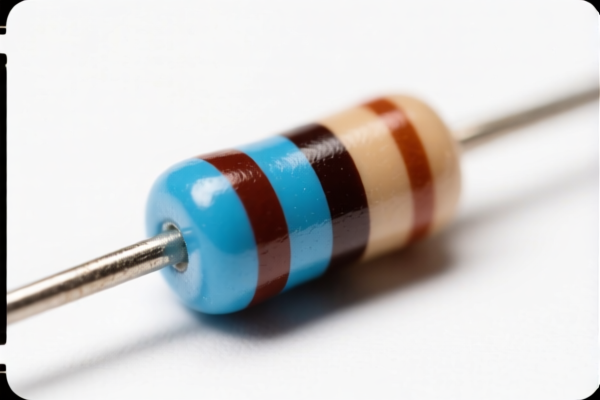
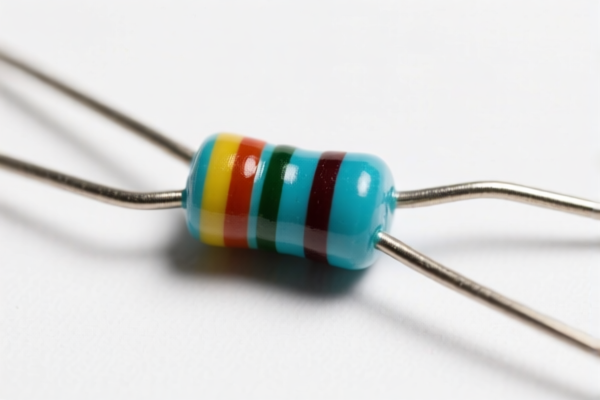
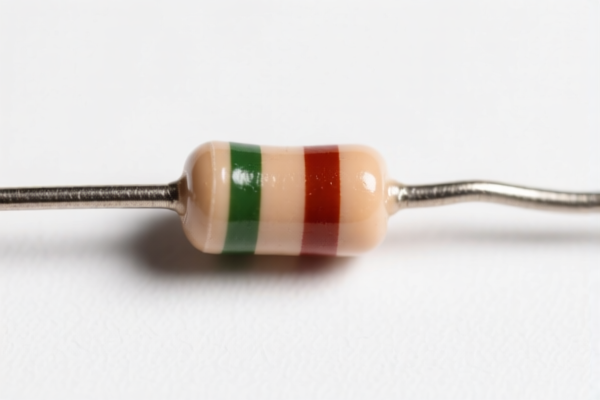
AI分析
⚡ Blower Motor Resistor (Automotive HVAC Component)
🌐 HS Code Reference & Customs Clearance Guide | 2026 Latest Tariff Analysis | Professional Strategy for US Imports
📌 I. Product Definition & Classification: What is a "Blower Motor Resistor"?
A Blower Motor Resistor is a critical automotive component used in Heating, Ventilation, and Air Conditioning (HVAC) systems. Its primary function is to regulate the speed of the blower motor, thereby controlling airflow volume in the vehicle cabin.
In international trade, this component is often ambiguous because it intersects between electrical resistors and heating/ventilation equipment. Depending on how the Customs authority interprets its "chief function" (control vs. heating), it can fall into different HS Code categories, leading to vastly different tax implications.
⚠️ Key Distinction Point:
- Is it viewed purely as a passive electrical component (resistor)? → Section 85 (Electrical Machinery)
- Is it viewed as an active heating element or part of a fan system? → Section 84/85 (Machinery/Heaters)
📦 II. HS Code Classification Details (Based on Provided Data)
Below are the five potential HS Codes identified in the reference data, along with their specific logical justifications and tax rates.
| HS Code | Product Description & Logic | Total Tax Rate | Tax Breakdown |
|---|---|---|---|
| 8533.21.00.90 | Fixed Resistor Category Classified as a fixed resistor with power handling ≤ 20W. Viewed strictly as an electronic component. |
35.0% | Base: 0% Add-on: 25% (Sec 301) 122 Clause: 10% |
| 8533.40.80.40 | Variable Resistor (Rheostat) Category Classified as a resistor element for airflow control, falling under the "rheostat/variable resistor" category for specific utility. |
35.0% | Base: 0% Add-on: 25% (Sec 301) 122 Clause: 10% |
| 8516.29.00.90 | Electric Space Heater Category Classified as an electric heating appliance. The core function is interpreted as electric heating, fitting the category of electric space heaters. |
38.7% | Base: 3.7% Add-on: 25% (Sec 301) 122 Clause: 10% |
| 8414.59.15.00 | Fan Category Classified under fans. This extends the logic of the code to include blowers/fans used in HVAC systems. |
35.0% | Base: 0% Add-on: 25% (Sec 301) 122 Clause: 10% |
| 8516.29.00.30 | Forced-Air Space Heater Category Classified as a fan-forced electric space heater. Combines the heating aspect of the resistor with the forced-air fan characteristic. |
38.7% | Base: 3.7% Add-on: 25% (Sec 301) 122 Clause: 10% |
🔍 Critical Insight:
- The difference between 35.0% and 38.7% lies in the Base Duty (3.7% vs 0%).
- Codes ending in.90or.30under 8516.29 are treated as Heaters (Higher Base Duty).
- Codes under 8533 (Resistors) and 8414.59 (Fans) have 0% Base Duty but still attract heavy附加 taxes.
💰 III. 2026 Latest Tariff Rate Breakdown (Including Additional Duties)
✅ Applicable Country: United States (US)
✅ Origin: China (CN)
✅ Effective Time: Post-2025 (Current Trade Policy)
🎯 1. Classification as Electrical Component (8533 Series & 8414)
HS Codes: 8533.21.00.90, 8533.40.80.40, 8414.59.15.00
| Item | Detail |
|---|---|
| Base Duty | 0.0% (Ad Valorem) |
| USITC Add-on Duty (Section 301) | +25.0% |
| 122 Clause Duty | +10.0% |
| Total Effective Rate | 35.0% |
| De Minimis Exemption? | ❌ No (Not eligible for $800 de minimis exemption due to high tariff volume/type) |
| Legal Basis Path | USITC:8533.xx.xx.xx / 8414.59.15.00 → FOOTNOTE:301 + 122_CLAUSE |
📌 Explanation:
- These codes are viewed as components (resistors or fans).
- While the base duty is 0%, the 35% combined add-on duty significantly impacts cost.
- This is the most common classification for standalone automotive resistor packs.
🎯 2. Classification as Electric Heater (8516 Series)
HS Codes: 8516.29.00.90, 8516.29.00.30
| Item | Detail |
|---|---|
| Base Duty | 3.7% (Ad Valorem) |
| USITC Add-on Duty (Section 301) | +25.0% |
| 122 Clause Duty | +10.0% |
| Total Effective Rate | 38.7% |
| De Minimis Exemption? | ❌ No |
| Legal Basis Path | USITC:8516.29.00.xx → FOOTNOTE:301 + 122_CLAUSE |
📌 Explanation:
- These codes classify the resistor as a heating apparatus.
- The 3.7% base duty makes the total rate 3.7% higher than the component classification.
- Risk: If Customs determines the "primary purpose" is heating (even if auxiliary), this higher rate applies.
🛠️ IV. Customs Clearance Practical Advice (Avoid Pitfalls)
✅ 1. Documentation Checklist (Mandatory)
| Document | Requirement | Notes |
|---|---|---|
| Product Spec Sheet | ✔️ Must Have | Must clearly state: "Automotive Blower Motor Resistor," Voltage, Wattage (≤20W if claiming 8533), and Function (Speed Control). |
| Circuit Diagram | ✔️ Recommended | Proves it is a passive control component, not a primary heating element. Supports 8533 classification. |
| Commercial Invoice | ✔️ Must Have | Description must be precise: "Automotive HVAC Blower Motor Resistor, Part No. XYZ" NOT just "Resistor" or "Heater." |
| OEM Part Number | ✔️ Recommended | Linking to an OEM number helps prove its specific automotive application, distancing it from general household heaters. |
| Country of Origin | ✔️ Must Have | Clearly marked "Made in China." |
✅ 2. Declaration Strategy (Key Tactics)
🔥 Golden Rule:
"Define by Function, Not Just Form. Emphasize 'Control,' Avoid 'Heating'."
| Scenario | Recommended HS Code | Reasoning |
|---|---|---|
| Standalone Resistor Pack | 8533.21.00.90 |
It is a passive component used for speed control. Lowest base duty (0%). |
| Integrated with Fan Assembly | 8414.59.15.00 |
If sold as a complete blower assembly, classify as a fan. |
| High-Wattage Heating Element | 8516.29.00.90 |
Only if it is a primary heating coil (rare for standard blower resistors). Avoid this unless necessary. |
✅ 3. Special Cases & Risk Management
| Situation | Advice |
|---|---|
| Mixed Containers | If importing resistors along with other electronics, ensure proper segregation in packing list. Do not mix with 8516 heater coils. |
| Pre-Ruling Request | If shipping large volumes, request a US Customs Ruling in advance. Submit photos and specs to lock in the 8533 classification. |
| De Minimis (Section 321) | ⚠️ Caution: While $800 de minimis exists, items subject to Section 301 (25%) and 122 Clause (10%) are often scrutinized heavily. Many brokers reject de minimis for these codes to avoid seizure. Plan for formal entry. |
| 122 Clause Impact | The 10% 122 Clause is a specific retaliatory tariff. It applies to most Chinese goods in this category. Do not assume it is waived. |
🌍 V. Global Market Comparison (2026)
| Country/Region | Recommended HS Code | Est. Total Duty | Notes |
|---|---|---|---|
| 🇺🇸 USA | 8533.21.00.90 |
35.0% | High risk of audit. 3.7% base avoided with correct classification. |
| 🇨🇳 China | 8533.21.00.90 |
~1% | Low import duty, but focus is on export from China. |
| 🇪🇺 EU | 8533.40.90 |
~2.7% | No Section 301 equivalent. Lower overall cost. |
| 🇲🇽 Mexico | 8533.21.00 |
0% (USMCA) | If assembled/manufactured in Mexico, duty-free to US. |
📌 Conclusion for US Importers:
The US is the most challenging market due to Section 301 + 122 Clause tariffs.
- Savings: Choosing8533.21.00.90(0% base) over8516.29.00.90(3.7% base) saves 3.7% on CIF value.
- Risk: Misclassification as a "heater" leads to higher base duty and potential legal disputes over product function.
📌 VI. Common Errors & Pitfalls (Lessons Learned)
❌ Error 1: Describing the item as "Car Heater Resistor"
👉 Consequence: Customs may classify it under 8516 (Heaters) → 38.7% duty instead of 35.0%.
👉 Fix: Use term "Blower Motor Speed Controller" or "Automotive HVAC Resistor."
❌ Error 2: Ignoring the 122 Clause
👉 Consequence: Underpaying by 10%.
👉 Fix: Always budget for the 10% additional tariff in cost calculations.
❌ Error 3: Splitting the shipment to use De Minimis | 👉 Consequence: High risk of seizure for Section 301 items. | 👉 Fix: Use formal entry with accurate HS Code. |
✅ Correct Description Example:
"Automotive HVAC Blower Motor Resistor, Part No. 12345, Voltage 12V, Resistance 0.5 Ohm, for Speed Control of Blower Fan, Made in China"
🎯 VII. Conclusion: Professional Declaration, Cost Optimization
🎯 Key Takeaway:
🔹 "Control vs. Heat" is the deciding factor.
🔹 "Component" (8533) is cheaper than "Heater" (8516) in base duty.
🔹 "35% is the floor, 38.7% is the risk."
🔹 "122 Clause is real: Add 10% to your cost model."
📌 Pro Tip:
If you are importing large volumes, consider supply chain diversification to Vietnam or Mexico to avoid Section 301 and 122 Clauses entirely (Duty-Free under USMCA/ASEAN agreements).
📣 Immediate Action:
📞 Verify your product specs with your supplier.
📦 Label clearly as "Automotive Component - Resistor."
📝 Consult a licensed customs broker for a Pre-Ruling if values exceed $10,000.
✨ Accurate Classification Saves Money!
💼 Don't let a 3.7% base duty difference eat your margin!
用户评价
关于 HS 编码归类
协调制度(HS)是由世界海关组织(WCO)制定的国际贸易商品分类标准。全球 200 多个国家采用 HS 系统作为海关关税、贸易统计和进出口监管的基础。
每个 HS 编码遵循以下层级结构:
- 章(2 位)——商品大类(例如:第 84 章:机器和机械设备)
- 品目(4 位)——章内的更具体分类
- 子目(6 位)——国际通用细分,所有 WCO 成员国统一使用
- 本国细分(8-10 位)——各国自行扩展的细分编码,如美国 HTSUS 10 位编码
正确的 HS 编码归类对于顺利通关、准确缴纳关税和遵守贸易法规至关重要。错误归类可能导致海关延误、多缴关税或罚款。
从CN进口到US时,适用的关税税率可能包括:
- 最惠国(MFN)税率——适用于 WTO 成员国的标准关税税率
- 普通税率——适用于无贸易协定国家
- 贸易救济关税——附加关税,如 301 条款(反倾销)、232 条款(国家安全)或反补贴税
本页内容仅供参考。如需正式归类,请咨询当地海关或持牌报关代理。