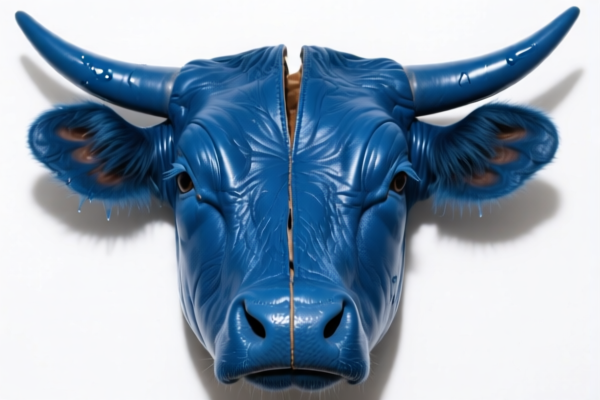
blue wet split cowhide leather
CN → US| HS编码 | 关税税率 | 原产国 | 目的国 | 文档 |
|---|---|---|---|---|
| 4107121020 | 35.0% | CN | US | 官方文档 |
| 4107121040 | 35.0% | CN | US | 官方文档 |
商品图片



AI分析
👞 Blue Wet Split Cowhide Leather
🌐 HS Code Reference & Clearance Guide | 2026 Latest Tariff Analysis | Professional Compliance Strategy
📌 I. Product Definition & Classification: What is "Blue Wet Split Cowhide"?
Blue Wet Split Cowhide Leather is a specific type of processed animal skin, widely used in the footwear, bag, and upholstery industries. To classify it correctly, we must break down the terminology:
- "Cowhide" (Bovine): The raw material comes from cattle (including buffalo).
- "Split": The hide has been mechanically split into layers. The top layer is "grain split," and the bottom layers are "fiber split." In customs terms, unless specified as "full grain," "split" usually implies the grain split layer, which is still considered high-quality leather for uppers or linings.
- "Wet Blue": This refers to the stage of tanning. "Wet blue" leather is leather that has been tanned with chromium salts but not yet dried, dyed, or finished. It is sent to the tannery's "finishing department" in a damp state. Crucially, it is further prepared after tanning or crust.
- "Blue": The color resulting from chromium tanning (chrome-tanned leather appears blueish-green in its wet state).
⚠️ Key Distinction:
- If the leather is chrome-tanned but not fully finished (i.e., still damp/wet), it falls under Heading 4107 (Leather further prepared after tanning or crusting).
- It is NOT Heading 4104/4105 (Raw/Chrome-tanned dry leather) because it has undergone the "crusting" or further preparation stage typical of wet blue logistics.
- It is NOT Heading 4114 (Chamois-dressed or metallized leather) as it is standard chrome-tanned split.
📦 II. HS Code Classification Details (2026 Latest Tariff Authority)
Based on the description provided in the input, the product falls under Heading 4107. Specifically, it is classified based on the type of leather (Upper vs. Lining) and the surface area.
| HS Code | Product Description | Key Characteristics |
|---|---|---|
4107.12.10.20 |
Upper Leather Grain splits of bovine animals, ≤ 28 sq. ft. (2.6 m²), further prepared after tanning/crusting, wet blue (chrome-tanned). |
Used for shoe uppers, bag exteriors, belts. Higher value, tighter grain. |
4107.12.10.40 |
Lining Leather Grain splits of bovine animals, ≤ 28 sq. ft. (2.6 m²), further prepared after tanning/crusting, wet blue (chrome-tanned). |
Used for shoe linings, bag interiors. Softer, more absorbent grain. |
🔍 Critical Note:
- The term "Wet Blue" implies it is chrome-tanned and not fully dried/finished. This places it squarely in 4107.12 (Of Bovines, Grain Splits, ≤ 28 sq. ft.).
- You must determine if the split is intended for Upper or Lining use to select between.20and.40.
- If the split is fiber split (bottom layer) or suede (napped), it may still fall here if it meets the "grain split" definition, but often suede splits might be classified differently if napped. However, "Blue Wet Split" typically refers to the smooth grain split layer used for further finishing.
💰 III. 2026 Latest Tariff Rate Breakdown (USA Import)
✅ Applicable Country: United States (US)
✅ Origin: China (CN) (Assumed based on common trade context for this item; verify if origin differs)
✅ Effective Date: Current rates apply as of 2026.
🎯 1. 4107.12.10.20 & 4107.12.10.40 —— Wet Split Cowhide Leather
| Item | Content |
|---|---|
| Base Duty Rate | 0.0% (Ad Valorem) Note: Leather of heading 4107 often has low base duties for certain splits. |
| Section 301 Additional Duty | +25.0% This is the critical cost driver. Leather products from China are subject to the 301 List 4A/B tariffs. |
| Total Duty Rate | 25.0% Calculated on CIF Value. |
| Tax Detail | 基础关税: 0.0%, 加征关税: 25.0% |
| Legal Basis | HTSUS 4107.12.10.20/40 + USITC Footnote 9903.88.01 (or applicable Section 301 footnote). |
📌 Explanation:
- The base duty is 0%, which is favorable.
- However, the 25% additional tariff is significant. This is a non-negotiable cost for imports from China to the US under current trade policies.
- No De Minimis Exemption: Leather goods valued over $800 (or even under, if classified incorrectly) are not eligible for Section 321 de minimis exemption if they are subject to Section 301 duties. All shipments must pay the 25% duty.
🛠️ IV. Customs Clearance Practical Advice (Pitfall Avoidance Guide)
✅ 1. Required Documentation Checklist
| Document | Required | Explanation |
|---|---|---|
| ✅ Commercial Invoice | ✔️ | Must clearly state: "Wet Blue Split Cowhide Leather," "Chrome Tanned," "Not Fully Finished." |
| ✅ Packing List | ✔️ | Detail weight, volume, and number of hides/pieces. |
| ✅ Bill of Lading/Air Waybill | ✔️ | Standard shipping doc. |
| ✅ Certificate of Origin | ✔️ | If claiming preferential treatment under any FTAs (unlikely for China-US, but required for proof of origin). |
| ✅ Tanning Process Description | ✔️ | Critical! Provide a brief note explaining the "Wet Blue" state to justify HS Code 4107 vs. 4104/4105. |
| ✅ Safety Data Sheet (SDS) | ✔️ | Highly Recommended. Leather tanning involves chemicals (chromium salts). Customs may request SDS to verify it's not hazardous waste. |
✅ 2. Declaration Tips (Key Mnemonics)
🔥 “Wet Blue = 4107, Split = Grain, Upper vs. Lining = 20 vs. 40”
| Scenario | Correct Declaration | Common Mistake |
|---|---|---|
| Wet Blue Split | 4107.12.10.20 (Upper) or .40 (Lining) |
Misclassifying as 4104.42 (Chrome Tanned Dry) → Higher base duty? Or 4106.32 (Crust) → Wrong stage. |
| Fully Finished Leather | 4115 or 4109 |
If it's dry, dyed, and finished, it’s no longer "Wet Blue." |
| Sheepskin Goat Skin | Different Heading | Ensure it's Bovine (Cow/Buffalo). Sheep/goat is heading 4106. |
| Split Suede/Nap | Check Description | If the grain is removed and only suede remains, it might still be 4107 if it's a split, but verify "Grain Split" definition. |
✅ 3. Special Considerations
| Situation | Handling Advice |
|---|---|
| Chromium Content | Ensure the leather meets REACH (EU) or US EPA standards for hexavalent chromium. Customs may flag high chromium levels for environmental compliance. |
| Moisture Content | "Wet Blue" implies high moisture. Ensure packaging is sealed to prevent drying out or mold during transit, which could lead to quality disputes but not necessarily customs rejection. |
| Origin Marking | Must be clearly marked "Made in China" on packaging or hides. Failure to mark can result in penalties. |
🌍 V. Global Market Comparison (2026 Latest)
| Country/Region | Recommended HS Code | Duty Rate (China Origin) | Certification Requirements | Notes |
|---|---|---|---|---|
| 🇺🇸 USA | 4107.12.10.20 / .40 |
25.0% (0% Base + 25% 301) | None specific, but SDS recommended | High cost due to 301 tariffs. |
| 🇨🇳 China | 4107.12.10.20 / .40 |
~8-10% (Import Duty) | CCC (if for specific end-use) | Domestic market has different rates. |
| 🇪🇺 EU | 4107.12.10 (TARIC) |
4.0% | REACH Compliance (Cr(VI) limits) | No Section 301 equivalent, but strict environmental laws. |
| 🇬🇧 UK | 4107.12.10 |
4.0% | UK REACH | Post-Brexit tariffs align closely with EU. |
📌 Conclusion:
- The US is the most expensive market for this product due to the 25% additional tariff.
- EU and UK have lower base duties (4%) but strict environmental compliance (REACH) regarding chromium residues.
- China has moderate import duties for foreign leather.
📌 VI. Common Errors & Pitfall Guide (Lessons Learned)
❌ Error 1: Misclassifying "Wet Blue" as "Finished Leather"
👉 Consequence: Wrong HS Code (e.g., 4114). Customs will demand back taxes and penalties. "Wet Blue" is not finished.
❌ Error 2: Ignoring the "Split" vs. "Full Grain" distinction
👉 Consequence: If it's a full grain hide (not split), it might still be 4107.12, but if it's a fiber split (bottom layer), ensure it's not classified as "other leather" which might have different duty rates. The provided HS Codes are for Grain Splits.
❌ Error 3: Failure to declare Chromium Tanning
👉 Consequence: Environmental flags. Leather with high chromium without declaration can be held for testing.
❌ Error 4: Not specifying "Upper" vs. "Lining"
👉 Consequence: If the description is vague, customs may choose the higher duty rate or request further classification. Always specify end-use if possible.
✅ Correct Declaration Example:
"Wet Blue Chrome-Tanned Split Cowhide Leather, Grain Split, For Shoe Upper Use, HS Code 4107.12.10.20, Origin China, 25% Section 301 Duty Applicable."
🎯 VII. Conclusion: Professional Clearance, Cost Efficiency!
🎯 Remember the Mnemonic:
🔹 "Wet Blue = 4107, Split = Grain, 25% Tariff is the Pain!"
🔹 "Don't Call it Finished, It's Wet, It's Blue, It's Split!"
📌 Tips:
- If you are importing to the US, the 25% additional duty is fixed. Factor this into your pricing.
- For EU/UK, focus on REACH compliance to avoid delays.
- Always provide a Tanning Certificate and SDS to expedite clearance.
📣 Immediate Action:
📞 Contact your freight forwarder with the Tanning Process Description and Origin Certificate.
🚀 Verify HS Code Pre-ruling with US CBP if unsure between Upper/Lining classification to avoid misdeclaration penalties.
✨ Professional clearance starts with precise classification!
💼 Your cost per hide depends on the dots in the HS Code!
用户评价
关于 HS 编码归类
协调制度(HS)是由世界海关组织(WCO)制定的国际贸易商品分类标准。全球 200 多个国家采用 HS 系统作为海关关税、贸易统计和进出口监管的基础。
每个 HS 编码遵循以下层级结构:
- 章(2 位)——商品大类(例如:第 84 章:机器和机械设备)
- 品目(4 位)——章内的更具体分类
- 子目(6 位)——国际通用细分,所有 WCO 成员国统一使用
- 本国细分(8-10 位)——各国自行扩展的细分编码,如美国 HTSUS 10 位编码
正确的 HS 编码归类对于顺利通关、准确缴纳关税和遵守贸易法规至关重要。错误归类可能导致海关延误、多缴关税或罚款。
从CN进口到US时,适用的关税税率可能包括:
- 最惠国(MFN)税率——适用于 WTO 成员国的标准关税税率
- 普通税率——适用于无贸易协定国家
- 贸易救济关税——附加关税,如 301 条款(反倾销)、232 条款(国家安全)或反补贴税
本页内容仅供参考。如需正式归类,请咨询当地海关或持牌报关代理。