book
CN → US| HS编码 | 关税税率 | 原产国 | 目的国 | 文档 |
|---|---|---|---|---|
| 4901990070 | 17.5% | CN | US | 官方文档 |
| 4820102060 | 35.0% | CN | US | 官方文档 |
| 4820104000 | 10.0% | CN | US | 官方文档 |
| 4901990010 | 17.5% | CN | US | 官方文档 |
| 4901990093 | 17.5% | CN | US | 官方文档 |
商品图片
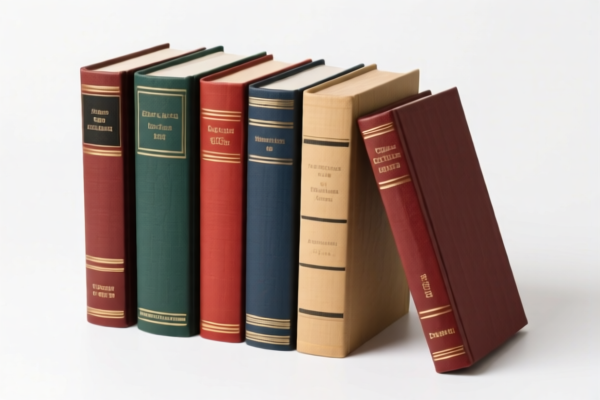
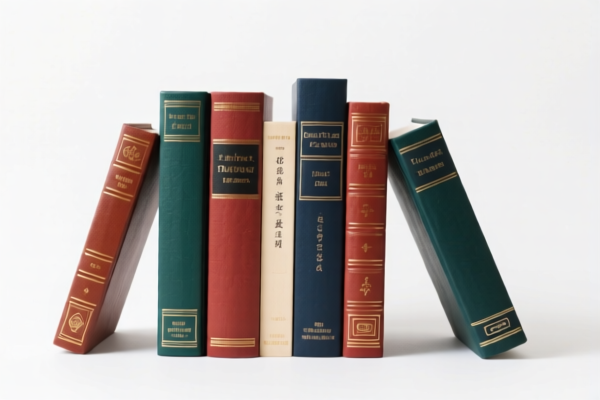
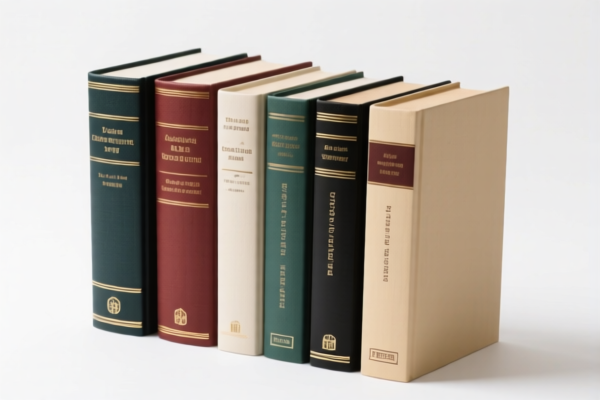
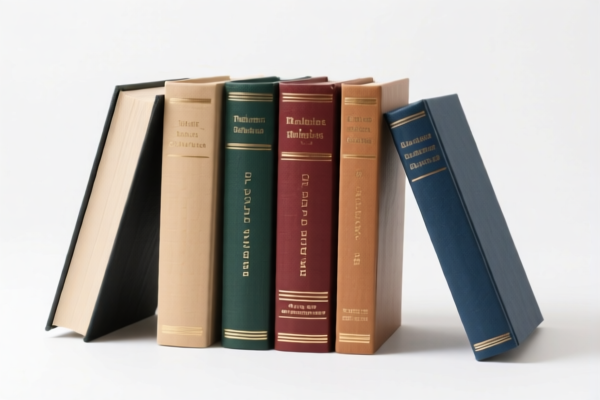
AI分析
📚 BOOK (Printed Books & Notebooks) – HS Code Classification & Customs Clearance Guide | 2026 Updated Tax Rules
🌐 HS Code Reference & Customs Strategy | 2026 Latest Tariff Breakdown | Expert-Level Import Planning
📌 One: Product Definition & Classification – What Exactly Is a "Book"?
A book is a printed or bound collection of pages used for reading, writing, or record-keeping. In international trade, the classification of "BOOK" depends heavily on purpose, material, structure, and intended use. The key distinction lies in whether it’s:
- A printed book (e.g., novels, textbooks, magazines) → 4901.99.00.x0
- A notebook, diary, or ledger (e.g., blank pages for writing) → 4820.10.20.60 / 4820.10.40.00
⚠️ Critical Differentiator:
- Printed content + bound pages → 4901.99.00
- Blank or ruled pages, no printed content → 4820.10.20 / 4820.10.40
📦 Two: HS Code Classification Breakdown (2026 Official Tariff Reference)
| HS Code | Product Description | Key Features | Tax Rate | Applicable Use Case |
|---|---|---|---|---|
4901.99.00.70 |
Printed books (e.g., novels, textbooks, manuals) | Printed content, bound, standard book format | 17.5% | General-purpose printed books |
4820.10.20.60 |
Notebooks, diaries, journals, or similar writing pads | Blank or ruled pages, loose-leaf or bound, for personal use | 35.0% | Non-printed writing pads, no content |
4820.10.40.00 |
Ledgers, notebooks, diaries, or similar items (paper-based) | Ruled/blank paper, used for record-keeping | 10.0% | Low-risk, non-interactive paper notebooks |
4901.99.00.10 |
Printed books (specifically for general reading) | Standard book shape, printed text, typical page count | 17.5% | Common printed books, no special use |
4901.99.00.93 |
Printed books (general category, high compliance) | Matches "Printed books" definition, standard format | 17.5% | Most common classification for books |
🔍 Key Insight:
- 4901.99.00 series = Printed books with content → Lower tax
- 4820.10.20 / 4820.10.40 = Blank writing pads → Higher tax due to "non-content" status
💰 Three: 2026 Latest Tariff Breakdown (With Full Tax Clause Explanation)
✅ Applicable Country: United States (US)
✅ Origin: China (CN)
✅ Effective Date: November 10, 2025 (inclusive)
✅ Legal Basis: USITC Section 301, IEEPA, and 122(a) Clause
🎯 1. 4901.99.00.70 – Printed Books (General Use)
| Item | Detail |
|---|---|
| Base Duty | 0.0% (ad valorem) |
| Section 301 (USITC) Add-on | +7.5% |
| 122(a) Clause (IEEPA) | +10.0% |
| Total Tax Rate | 17.5% |
| Tax Calculation | CIF Value × 17.5% |
| De Minimis Exemption | ❌ Not eligible (denied under 122(a)) |
| Legal Pathway | IEEPA:9903.01.25 → USITC:4901.99.00.70 → FOOTNOTE:9903.88.01 |
📌 Explanation:
- 7.5% USITC = From Section 301 of the Trade Act of 1974 (China-specific tariffs)
- 10% 122(a) = Under the International Emergency Economic Powers Act (IEEPA), targeting Chinese-origin goods
- Total: 17.5% – High but manageable for standard printed books
🎯 2. 4820.10.20.60 – Notebooks, Diaries, Writing Pads (Blank/Non-Printed)
| Item | Detail |
|---|---|
| Base Duty | 0.0% |
| Section 301 (USITC) Add-on | +25.0% |
| 122(a) Clause (IEEPA) | +10.0% |
| Total Tax Rate | 35.0% |
| Tax Calculation | CIF Value × 35.0% |
| De Minimis Exemption | ❌ Not eligible |
| Legal Pathway | IEEPA:9903.01.25 → USITC:4820.10.20.60 → FOOTNOTE:9903.88.01 |
📌 Explanation:
- 25% USITC = Higher due to "non-content" classification under 301 list
- 10% IEEPA = Same as above
- Total: 35% – Extremely high – avoid this classification if your product is printed!
🎯 3. 4820.10.40.00 – Notebooks & Ledgers (Paper-Based, Low-Risk)
| Item | Detail |
|---|---|
| Base Duty | 0.0% |
| Section 301 (USITC) Add-on | 0.0% |
| 122(a) Clause (IEEPA) | +10.0% |
| Total Tax Rate | 10.0% |
| Tax Calculation | CIF Value × 10.0% |
| De Minimis Exemption | ❌ Not eligible |
| Legal Pathway | IEEPA:9903.01.24 → USITC:4820.10.40.00 → FOOTNOTE:9903.88.01 |
📌 Explanation:
- No USITC add-on = Classified as low-risk under 301 list
- 10% IEEPA = Still applies due to China origin
- Total: 10% – Best-case scenario for paper notebooks
🎯 4. 4901.99.00.10 – Printed Books (General Reading)
| Item | Detail |
|---|---|
| Base Duty | 0.0% |
| Section 301 (USITC) | +7.5% |
| 122(a) Clause (IEEPA) | +10.0% |
| Total Tax Rate | 17.5% |
| Tax Calculation | CIF Value × 17.5% |
| De Minimis Exemption | ❌ Not eligible |
| Legal Pathway | IEEPA:9903.01.25 → USITC:4901.99.00.10 → FOOTNOTE:9903.88.01 |
📌 Same as 4901.99.00.70 – Printed content = 17.5%
- Best for novels, textbooks, guides, etc.
🎯 5. 4901.99.00.93 – Printed Books (General Category, High Compliance)
| Item | Detail |
|---|---|
| Base Duty | 0.0% |
| Section 301 (USITC) | +7.5% |
| 122(a) Clause (IEEPA) | +10.0% |
| Total Tax Rate | 17.5% |
| Tax Calculation | CIF Value × 17.5% |
| De Minimis Exemption | ❌ Not eligible |
| Legal Pathway | IEEPA:9903.01.25 → USITC:4901.99.00.93 → FOOTNOTE:9903.88.01 |
📌 Most Common Classification – 17.5%
- Matches "Printed books" in US Harmonized Tariff Schedule
- Ideal for standard book imports
🛠️ Four: Customs Clearance Best Practices (Pro Tips to Avoid Penalties)
✅ 1. Required Documentation (Must-Have Checklist)
| Document | Required? | Why It Matters |
|---|---|---|
| ✅ Commercial Invoice | ✔️ | Must state "Printed Book" or "Notebook" clearly |
| ✅ Product Photos (front/back, spine, pages) | ✔️ | Prove content vs. blank pages |
| ✅ Product Specification Sheet | ✔️ | Detail page count, material (paper), binding type |
| ✅ Certificate of Origin (CO) | ✔️ | Needed for tariff eligibility |
| ✅ Packing List | ✔️ | Show quantity, weight, packaging |
| ✅ Third-Party Test Report (e.g., RoHS, FCC) | ✔️ | Optional but recommended for compliance |
| ✅ Customs Declaration Form (CBP Form 7501) | ✔️ | Must match HS Code |
✅ 2.申报技巧(Key Rules for Accuracy)
🔥 "Content Over Form – Print = Lower Tax!"
| Scenario | Correct HS Code | Wrong Code | Risk |
|---|---|---|---|
| Novel with printed text | 4901.99.00.70 |
4820.10.20.60 |
Tax jumps from 17.5% → 35% |
| Blank notebook (no text) | 4820.10.40.00 |
4901.99.00.10 |
Tax jumps from 10% → 17.5% |
| Textbook with diagrams | 4901.99.00.93 |
4820.10.20.60 |
Tax: 17.5% vs 35% → Loss of 17.5% |
| Diary with ruled pages | 4820.10.40.00 |
4901.99.00.10 |
Avoid – higher tax |
✅ Pro Tip:
- Use "Printed Book" in invoice and description
- Never label a printed book as "notebook" or "diary"
- Use "Blank Notebook" only for non-printed items
✅ 3. Special Cases & Exceptions
| Situation | Recommended Action |
|---|---|
| Custom-printed books (e.g., self-published) | Use 4901.99.00.70 – still printed content |
| E-books (digital) | Not covered – HS Code not applicable |
| Books with embedded USB/QR codes | Still 4901.99.00.x0 if printed content is primary |
| Books in multiple languages | Use 4901.99.00.93 – general category |
| Books for children (with illustrations) | 4901.99.00.70 – no change |
🌍 Five: Global Customs Comparison (2026)
| Country | Recommended HS Code | Tariff | Certification | Notes |
|---|---|---|---|---|
| 🇺🇸 USA | 4901.99.00.70 |
17.5% | None (but de minimis denied) | High risk for misclassification |
| 🇨🇳 China | 4901.99.00.00 |
0% | None | No extra tariffs |
| 🇪🇺 EU | 4901.99.00 |
0% (if CE) | CE, RoHS | No 301/IEEPA tariffs |
| 🇦🇺 Australia | 4901.99.00 |
5% | RCM | No IEEPA |
| 🇯🇵 Japan | 4901.99.00 |
0% | PSE | No extra tariffs |
📌 Conclusion:
- USA is the only market with 301/IEEPA tariffs on books
- China-origin books face 17.5%–35% – must classify carefully
📌 Six: Common Mistakes & How to Avoid Them (Real-World Risks)
❌ Mistake 1: Labeling a printed novel as "notebook"
👉 Result: Tax jumps to 35% → Massive cost overruns
❌ Mistake 2: Using 4820.10.20.60 for a textbook
👉 Result: 35% tax instead of 17.5% → $10,000+ in extra duty
❌ Mistake 3: No product photos or specs
👉 Result: Customs delays, request for clarification, or rejection
❌ Mistake 4: Not verifying origin (China vs. Vietnam/Mexico)
👉 Result: Missing IEEPA exemption (if origin is non-China)
✅ Correct Labeling Example:
"Printed Book, 250 pages, Paperback, Novel – 'The Midnight Library' – ISBN: 978-1-398-50272-8 – Printed Content"
🎯 Seven: Final Verdict – How to Win at Book Import
🎯 Golden Rule:
🔹 "If it's printed, it's a book. If it's blank, it's a notebook. Tax depends on the truth, not the label."
🔹 Best Tax Rate: 10% → Use
4820.10.40.00only for blank, ruled notebooks
🔹 Best for Printed Books: 17.5% → Use4901.99.00.70 / 93
🔹 Avoid at All Costs:4820.10.20.60(35%) – only for non-printed items
📣 Act Now: Secure Your Import Success!
📞 Contact a Certified Customs Broker + Submit product photos + Request HS Code Pre-Ruling
🚀 Get your classification confirmed before shipment – avoid delays, penalties, or rejections
✨ Professional Importing Starts with Perfect Classification!
💼 Your book’s tax rate is not a guess – it’s a calculation. Get it right.
用户评价
关于 HS 编码归类
协调制度(HS)是由世界海关组织(WCO)制定的国际贸易商品分类标准。全球 200 多个国家采用 HS 系统作为海关关税、贸易统计和进出口监管的基础。
每个 HS 编码遵循以下层级结构:
- 章(2 位)——商品大类(例如:第 84 章:机器和机械设备)
- 品目(4 位)——章内的更具体分类
- 子目(6 位)——国际通用细分,所有 WCO 成员国统一使用
- 本国细分(8-10 位)——各国自行扩展的细分编码,如美国 HTSUS 10 位编码
正确的 HS 编码归类对于顺利通关、准确缴纳关税和遵守贸易法规至关重要。错误归类可能导致海关延误、多缴关税或罚款。
从CN进口到US时,适用的关税税率可能包括:
- 最惠国(MFN)税率——适用于 WTO 成员国的标准关税税率
- 普通税率——适用于无贸易协定国家
- 贸易救济关税——附加关税,如 301 条款(反倾销)、232 条款(国家安全)或反补贴税
本页内容仅供参考。如需正式归类,请咨询当地海关或持牌报关代理。