bottle warmer
CN → US| HS编码 | 关税税率 | 原产国 | 目的国 | 文档 |
|---|---|---|---|---|
| 8516908500 | 38.9% | CN | US | 官方文档 |
| 8516909000 | 38.9% | CN | US | 官方文档 |
| 8419815080 | 17.5% | CN | US | 官方文档 |
商品图片
AI分析
🍼 Bottle Warmer (Infant Bottle Heaters)
🌐 HS Code Reference & Customs Clearance Guide | 2026 Latest Tariff Analysis | Strategic Compliance for Exporters
📌 Part 1: Product Definition & Classification: What Exactly Is a "Bottle Warmer"?
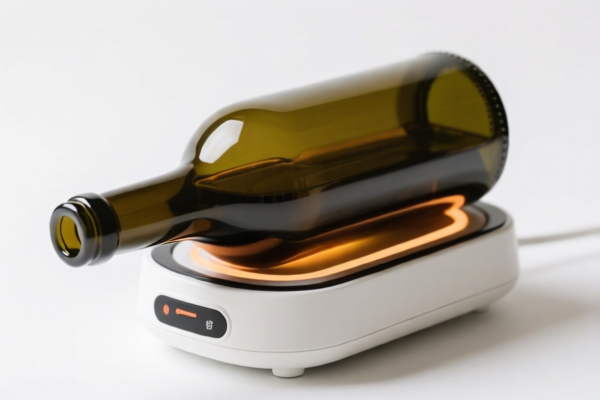
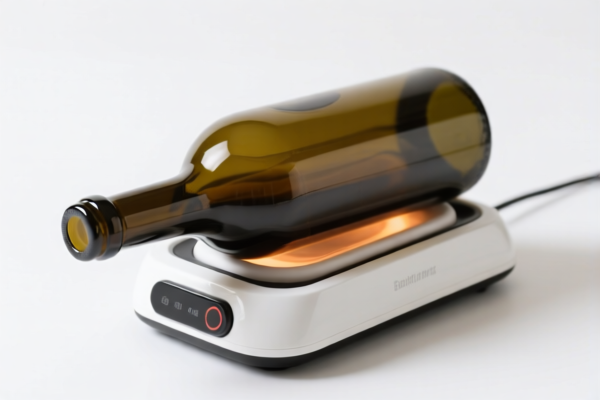
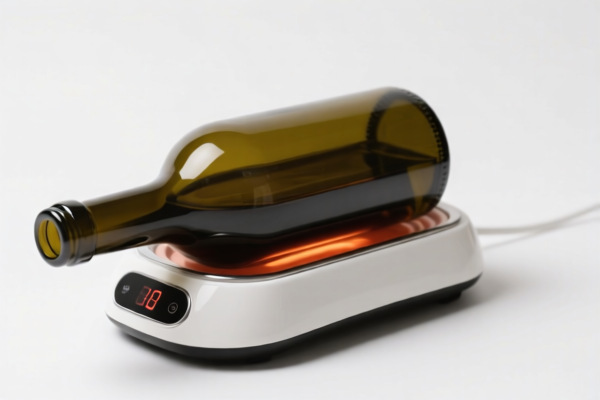
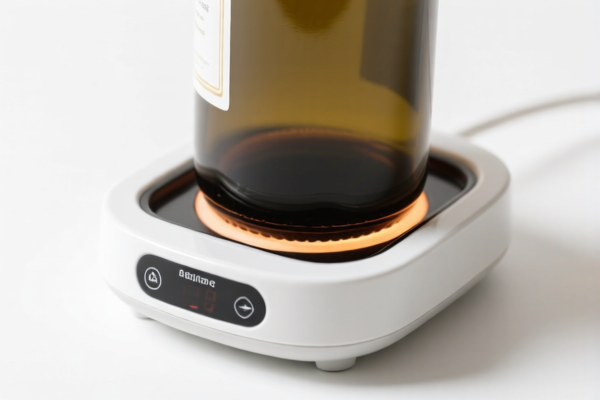
A Bottle Warmer is a specialized household electric appliance designed to gently heat breast milk, formula, or water for infants. In international trade, its classification is critical because it sits at the intersection of "home appliances" and "heating equipment." Misclassification can lead to significantly different tariff liabilities.
In the context of US customs regulations (especially with current trade tensions), Bottle Warmers are primarily categorized under Chapter 85 (Electrical Machinery and Equipment) or Chapter 84 (Machinery for Heating Liquid/Food). The distinction hinges on whether it is viewed strictly as an electrical heater (similar to a water heater) or a food preparation device.
⚠️ Key Classification Distinction:
- If viewed as an electric heater for general household use (like a small electric kettle or heater) → HS Code 8516
- If viewed as a device for heating food/liquid specifically for culinary/preparation purposes → HS Code 8419
📦 Part 2: HS Code Classification Details (2026 Latest Tariff Authority Reference)
Based on the provided data, there are three potential HS Codes. Below is the detailed breakdown for each.
| HS Code | Product Description | Applicability Scenario | Key Classification Logic |
|---|---|---|---|
8516.90.85.00 |
Part of Electric Domestic Heaters | General household electric heating appliances | Classified as a part/accessory to electric heaters (like electric water heaters or space heaters). Focuses on the heating element/function. |
8516.90.90.00 |
Parts of Other Electric Heaters | Similar to above, but for unspecified electric heaters | Broad category for electric heating devices not specifically listed elsewhere. Used when the device is seen purely as an electrical heating unit. |
8419.81.50.80 |
Machinery for Heating Food/Liquid | Food preparation, infant feeding equipment | Classified under machinery for processing food/liquid. Focuses on the purpose (heating milk/formula for consumption). |
🔍 Critical Insight:
- 8516 Series: Views the product as an "Electric Heater". This is the most common classification for simple electric bottle warmers.
- 8419 Series: Views the product as a "Food/Liquid Heater". This may be preferred if the device has specific timing/temperature controls for food safety, but it often carries lower base tariffs.
💰 Part 3: 2026 Latest Tariff Rate Breakdown (Including Add-Ons & Policy Surcharges)
✅ Applicable Country: United States (US)
✅ Country of Origin: China (CN)
✅ Effective Date: Current Trade Policies (Section 301 & IEEPA)
🎯 1. 8516.90.85.00 & 8516.90.90.00 – Electric Heater Parts/Units
| Item | Content |
|---|---|
| Base Tariff | 3.9% |
| Section 301 Add-on | +25.0% |
| IEEPA 122 Clause Add-on | +10.0% |
| Total Effective Tax Rate | 38.9% |
| Tax Calculation | CIF Value × 38.9% |
| De Minimis Exemption | ❌ Not Applicable (High risk of detention/audit) |
| Legal Basis Path | HTSUS:8516.90.85.00 → USITC Footnote 9903.88.01 → IEEPA:9903.01.24 |
📌 Explanation:
- Base 3.9%: Standard Most Favored Nation (MFN) rate for parts of electric heaters.
- Section 301 (+25%): Retaliatory tariff on Chinese electrical machinery parts.
- IEEPA (+10%): Additional surcharge under the International Emergency Economic Powers Act targeting specific Chinese goods.
- Total 38.9%: This is a high-cost category. Importers must factor this into their landed cost.
🎯 2. 8419.81.50.80 – Machinery for Heating Food/Liquid
| Item | Content |
|---|---|
| Base Tariff | 0.0% |
| Section 301 Add-on | +7.5% |
| IEEPA 122 Clause Add-on | +10.0% |
| Total Effective Tax Rate | 17.5% |
| Tax Calculation | CIF Value × 17.5% |
| De Minimis Exemption | ❌ Not Applicable (Still subject to scrutiny) |
| Legal Basis Path | HTSUS:8419.81.50.80 → USITC Footnote 9903.88.01 → IEEPA:9903.01.24 |
📌 Explanation:
- Base 0.0%: Machinery for processing food/liquid often enjoys lower base tariffs.
- Section 301 (+7.5%): Lower surcharge compared to electrical parts.
- IEEPA (+10%): Same surcharge as above.
- Total 17.5%: This is a significant cost saving (~21.4% lower) compared to the 8516 classification.⚠️ Risk Alert:
Choosing8419over8516is a classification strategy. However, CBP (Customs and Border Protection) may challenge this if the device lacks specific "food processing" features (e.g., sterilization, rapid boiling). It must be justified as a "heating device for liquid consumption" rather than just an "electric heater."
🛠️ Part 4: Customs Clearance Practical Advice (Battle-Proven Strategies)
✅ 1. Document Preparation Checklist (Non-Negotiable)
| Document | Required? | Description |
|---|---|---|
| ✅ Product Specification Sheet | ✔️ | Must detail: Voltage, Wattage, Heating Method (Indirect/Water Bath), Temperature Range. |
| ✅ Product Photos | ✔️ | Clear images of the device, control panel, and any labeling (UL/CE/FCC marks). |
| ✅ Commercial Invoice | ✔️ | Must explicitly state: "Electric Bottle Warmer for Infant Feeding" or "Heating Device for Milk/Liquid." |
| ✅ Packing List | ✔️ | Separate components if shipped disassembled (base unit, warming tray, etc.). |
| ✅ Test Reports | ✔️ | UL, ETL, or CSA certification for US market compliance is mandatory for clearance. |
| ✅ Country of Origin Certificate | ✔️ | Crucial for applying the correct Section 301/IEEPA rates. |
✅ 2. Declaration Tactics (Key Mnemonics)
🔥 "Function Defines Duty: Heater vs. Heater-For-Food!"
| Scenario | Recommended HS Code | Reasoning |
|---|---|---|
| Simple Electric Heating Pad/Base | 8516.90.85.00 / 8516.90.90.00 |
Viewed as a standard electric heater. Higher duty (38.9%). |
| Device with Specific Temp Control for Milk/Formula | 8419.81.50.80 |
Viewed as a specialized heating device for liquid consumption. Lower duty (17.5%). |
| Sterilizer + Warmer Combo | 8419.81.50.80 |
If sterilization is a primary function, it leans towards food processing machinery. |
📌 Warning:
- Do not simply label it as "Heater." Be specific: "Infant Bottle Warmer, Electric, with Thermostat Control."
- If using8419, ensure your product description emphasizes "Heating Liquid for Consumption" rather than just "Heating."
✅ 3. Special Cases & Handling
| Situation | Handling Advice |
|---|---|
| OEM/Private Label | Ensure the supplier’s invoice matches your HS code claim. Discrepancies trigger audits. |
| Combined Shipment (Warmers + Accessories) | Declare separately if accessories (e.g., cleaning brushes) are included. Don’t lump them into the heater HS code unless negligible value. |
| Origin: Not China | If manufactured in Vietnam/Malaysia, IEEPA and Section 301 may not apply. Verify Country of Origin carefully to avoid penalties for false declaration. |
| Disputes with CBP | If CBP insists on 8516, be prepared to provide technical docs showing the device is specifically designed for food-safe liquid heating, not general heating. |
🌍 Part 5: Global Market Comparison (2026 Update)
| Market | Recommended HS Code | Est. Total Duty (CN Origin) | Notes |
|---|---|---|---|
| 🇺🇸 USA | 8419.81.50.80 |
17.5% | Opt for this if defensible. Otherwise 8516 (38.9%). |
| 🇨🇳 China | 8419.81.50.80 |
Low (~5-10%) | No Section 301/IEEPA. Import into China is cheap. |
| 🇪🇺 EU | 8516.90.00 |
0-4% | No major retaliatory tariffs. CE Certification required. |
| 🇬🇧 UK | 8419.81.90 |
0-4% | Post-Brexit rules apply. Check UK Tariff Calculator. |
| 🇨🇦 Canada | 8419.89.90 |
0-5% | Generally favorable. No Section 301. |
📌 Conclusion:
The USA is the only major market with punitive tariffs on Chinese electrical goods.
Strategy: For US export, aggressively justify8419.81.50.80to save ~21% in duties. If rejected, budget for8516at 38.9%.
📌 Part 6: Common Errors & Pitfalls (Lessons Learned)
❌ Mistake 1: Declaring all components under 8516 without considering 8419.
👉 Result: Overpayment of ~21.4% in duties.
Fix: Review technical specs. If it’s for "food/liquid heating," 8419 is more accurate.
❌ Mistake 2: Ignoring IEEPA 122 Clause.
👉 Result: CBP adds the 10% retroactively with penalties.
Fix: Always include the IEEPA surcharge in your landed cost calculation for China-origin goods.
❌ Mistake 3: Missing Certification (UL/ETL).
👉 Result: Goods held at port until safety certification is provided.
Fix: Ensure the product has valid US safety marks before shipping.
✅ Correct Approach:
"Electric Bottle Warmer, Model XYZ, 120V/60Hz, with Digital Thermostat, for Heating Infant Formula and Breast Milk. UL Listed. Origin: China."
🎯 Part 7: Conclusion: Precision in Classification Saves Money!
🎯 Key Takeaways:
🔹 "It’s not just a heater; it’s a liquid heater."
🔹 8419 = 17.5% Tax vs. 8516 = 38.9% Tax.
🔹 Justification is Key: You must prove it’s for liquid/food heating, not just general electric heating.
🔹 Always Account for IEEPA + Section 301: Don’t forget the hidden costs.
📌 Pro Tip:
If your volume is high, consider applying for a CBP Binding Ruling before shipping. This legally binds CBP to your chosen HS code, providing certainty and avoiding surprise audits.
📣 Immediate Action:
📞 Consult a Licensed Customs Broker: Provide them with your product manual and photos.
📄 Update Your Commercial Invoice: Use precise language: "Heating Device for Liquid Consumption."
🚀 Optimize Your Supply Chain: Calculate the 21.4% difference. Is re-engineering the product description feasible?
✨ Professional Customs Compliance Starts with Accurate HS Codes!
💼 Every Percentage Point Saved is Pure Profit!
用户评价
关于 HS 编码归类
协调制度(HS)是由世界海关组织(WCO)制定的国际贸易商品分类标准。全球 200 多个国家采用 HS 系统作为海关关税、贸易统计和进出口监管的基础。
每个 HS 编码遵循以下层级结构:
- 章(2 位)——商品大类(例如:第 84 章:机器和机械设备)
- 品目(4 位)——章内的更具体分类
- 子目(6 位)——国际通用细分,所有 WCO 成员国统一使用
- 本国细分(8-10 位)——各国自行扩展的细分编码,如美国 HTSUS 10 位编码
正确的 HS 编码归类对于顺利通关、准确缴纳关税和遵守贸易法规至关重要。错误归类可能导致海关延误、多缴关税或罚款。
从CN进口到US时,适用的关税税率可能包括:
- 最惠国(MFN)税率——适用于 WTO 成员国的标准关税税率
- 普通税率——适用于无贸易协定国家
- 贸易救济关税——附加关税,如 301 条款(反倾销)、232 条款(国家安全)或反补贴税
本页内容仅供参考。如需正式归类,请咨询当地海关或持牌报关代理。