bowl spoon
CN → US| HS编码 | 关税税率 | 原产国 | 目的国 | 文档 |
|---|---|---|---|---|
| 6911108010 | 38.3% | CN | US | 官方文档 |
| 6911103510 | 43.5% | CN | US | 官方文档 |
| 3924102000 | 24.0% | CN | US | 官方文档 |
| 3924104000 | 13.4% | CN | US | 官方文档 |
| 7323999030 | 88.4% | CN | US | 官方文档 |
| 7323930060 | 62.0% | CN | US | 官方文档 |
商品图片
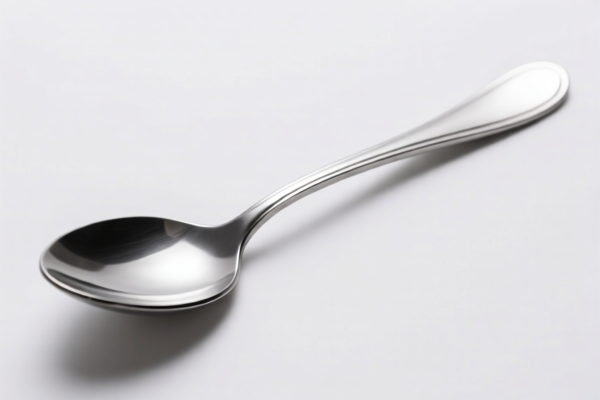

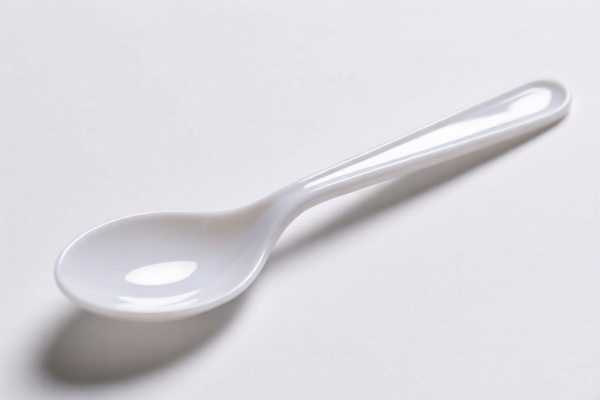

AI分析
🍽️ Bowl & Spoon (Tableware for Food Contact)
🌐 HS Code Reference & Clearance Guide | 2024 Latest Tariff Rates | Professional Compliance Strategy
📌 I. Product Definition & Classification: Do You Know Your "Bowl & Spoon"?
In international trade, bowl and spoon sets are classified based on material composition and food contact safety standards. Misclassification can lead to severe penalties, as different materials trigger vastly different tariff structures under U.S. Section 301 and Section 122 actions.
Key Material Categories: - Ceramic/Porcelain: Traditional, heat-resistant, often used for formal dining. - Plastic/Non-Metal: Lightweight, durable, common in fast food and outdoor use. - Metal (Iron/Steel/Stainless): Robust, industrial-grade, often used in commercial kitchens.
⚠️ Critical Distinction:
- Ceramic/Porcelain items fall under Chapter 69 and face high tariffs due to "122 clauses" and base duties.
- Plastic items fall under Chapter 39 with variable tax rates based on composition.
- Metal items fall under Chapter 73, where steel, aluminum, or copper content drastically increases tariffs (up to 88.4%).
📦 II. HS Code Classification Details (2024 Latest Tariff Reference)
| HS Code | Product Description | Material Type | Key Characteristics |
|---|---|---|---|
6911.10.80.10 |
Ceramic or food-contact safe tableware (bowls, spoons) | Ceramic | High heat resistance, often glazed; subject to 38.3% total tax |
6911.10.35.10 |
Porcelain tableware (bowls, spoons) | Porcelain | Finer ceramic variant; higher base tariff (26.0%) → 43.5% total |
3924.10.20.00 |
Plastic or non-metal tableware (bowls, spoons) | Plastic/Non-Metal | Broad category; includes mixed materials; 24.0% total tax |
3924.10.40.00 |
Plastic tableware (bowls, spoons) | Pure Plastic | Specific to 100% plastic; lowest plastic tax (13.4%) |
7323.99.90.30 |
Iron or steel tableware (bowls, spoons) | Iron/Steel | High-risk classification; steel/aluminum/copper content adds 50% surcharge → 88.4% total |
7323.93.00.60 |
Stainless steel or metal tableware (bowls, spoons) | Stainless Steel | Specialized metal; 62.0% total tax; steel surcharge applies |
🔍 Important Note:
- All metal items (especially steel, aluminum, copper) are subject to Section 122 and Section 301 surcharges, pushing total rates to 62–88.4%.
- Plastic items with non-plastic components may be reclassified to higher tax brackets.
- Ceramic/Porcelain items are not subject to the 50% metal surcharge but still face high base tariffs.
💰 III. 2024 Latest Tariff Rate Breakdown (Including Base, Added, and Section 122 Taxes)
✅ Applicable Country: United States (US)
✅ Origin: China (CN)
✅ Effective Date: As per 2024 USITC rulings (Section 301 + Section 122)
🎯 1. 6911.10.80.10 — Ceramic Tableware
| Item | Content |
|---|---|
| Base Tariff | 20.8% |
| Added Tariff (Section 301) | +7.5% |
| Section 122 Tariff | +10% |
| Total Tariff | 38.3% |
| Tax Calculation | CIF Value × 38.3% |
| De Minimis Exemption | ❌ Not Eligible (Section 122 applies) |
| Legal Reference | HTSUS:6911.10.80.10 → Section 301:7.5% → Section 122:10% |
📌 Explanation:
- Ceramic tableware is not exempt from Section 122 due to its use in food contact and potential trade imbalances.
- Total 38.3% applies even if the item is "simple" in design.
🎯 2. 6911.10.35.10 — Porcelain Tableware
| Item | Content |
|---|---|
| Base Tariff | 26.0% |
| Added Tariff (Section 301) | +7.5% |
| Section 122 Tariff | +10% |
| Total Tariff | 43.5% |
| Tax Calculation | CIF Value × 43.5% |
| De Minimis Exemption | ❌ Not Eligible |
| Legal Reference | HTSUS:6911.10.35.10 → Section 301:7.5% → Section 122:10% |
📌 Note:
- Porcelain is treated more strictly than ceramic due to higher perceived value and trade impact.
- 43.5% is a significant cost driver for high-end dinnerware.
🎯 3. 3924.10.20.00 — Plastic or Non-Metal Tableware
| Item | Content |
|---|---|
| Base Tariff | 6.5% |
| Added Tariff (Section 301) | +7.5% |
| Section 122 Tariff | +10% |
| Total Tariff | 24.0% |
| Tax Calculation | CIF Value × 24.0% |
| De Minimis Exemption | ❌ Not Eligible |
| Legal Reference | HTSUS:3924.10.20.00 → Section 301:7.5% → Section 122:10% |
📌 Explanation:
- Mixed-material items (plastic + non-metal) fall into this category.
- 24.0% is moderate but still significant for low-margin products.
🎯 4. 3924.10.40.00 — Plastic Tableware
| Item | Content |
|---|---|
| Base Tariff | 3.4% |
| Added Tariff (Section 301) | 0.0% |
| Section 122 Tariff | +10% |
| Total Tariff | 13.4% |
| Tax Calculation | CIF Value × 13.4% |
| De Minimis Exemption | ❌ Not Eligible |
| Legal Reference | HTSUS:3924.10.40.00 → Section 122:10% |
📌 Note:
- Only pure plastic items qualify for the 0% Section 301 surcharge.
- This is the most cost-effective classification for plastic tableware.
🎯 5. 7323.99.90.30 — Iron or Steel Tableware
| Item | Content |
|---|---|
| Base Tariff | 3.4% |
| Added Tariff (Section 301) | +25.0% |
| Section 122 Tariff | +10% |
| Steel/Aluminum/Copper Surcharge | +50% |
| Total Tariff | 88.4% |
| Tax Calculation | CIF Value × 88.4% |
| De Minimis Exemption | ❌ Not Eligible |
| Legal Reference | HTSUS:7323.99.90.30 → Section 301:25% → Section 122:10% → Metal Surcharge:50% |
📌 Critical Warning:
- Steel, aluminum, or copper content triggers the 50% metal surcharge, making this the highest tariff bracket.
- 88.4% is a major barrier for metal tableware exports.
🎯 6. 7323.93.00.60 — Stainless Steel Tableware
| Item | Content |
|---|---|
| Base Tariff | 2.0% |
| Added Tariff (Section 301) | 0.0% |
| Section 122 Tariff | +10% |
| Steel/Aluminum/Copper Surcharge | +50% |
| Total Tariff | 62.0% |
| Tax Calculation | CIF Value × 62.0% |
| De Minimis Exemption | ❌ Not Eligible |
| Legal Reference | HTSUS:7323.93.00.60 → Section 122:10% → Metal Surcharge:50% |
📌 Note:
- Stainless steel is treated differently from plain steel, but still faces the 50% metal surcharge.
- 62.0% is still prohibitively high for most exporters.
🛠️ IV. Customs Clearance Practical Advice (Avoid Pitfalls)
✅ 1. Document Preparation Checklist (Mandatory)
| Document | Required | Details |
|---|---|---|
| Product Specification | ✔️ | Include material, dimensions, capacity, food safety certification (FDA, LFGB) |
| Material Composition Certificate | ✔️ | Prove % of plastic, ceramic, metal, etc. |
| Product Photos (Clear & Labeled) | ✔️ | Show full set, branding, and material texture |
| Third-Party Lab Report | ✔️ | FDA compliance, food contact safety, heavy metal tests |
| Commercial Invoice | ✔️ | Clearly state "Bowl & Spoon Set", HS Code, and origin |
| Packing List | ✔️ | Detail quantity, weight, and packaging type |
| Certificate of Origin | ✔️ | For non-China products (if applicable) |
✅ 2. Declaration Tips (Critical for Success)
🔥 "Material Determines Tax, Precision Saves Cost!"
| Scenario | Correct Declaration | Wrong Approach |
|---|---|---|
| Pure Plastic Bowls | 3924.10.40.00 |
Misdeclare as "Ceramic" → 38.3% tax |
| Mixed Plastic + Non-Metal | 3924.10.20.00 |
Declare as "Plastic only" → 24.0% vs 13.4% |
| Stainless Steel Set | 7323.93.00.60 |
Declare as "Iron/Steel" → 88.4% tax |
| Ceramic Set | 6911.10.80.10 |
Declare as "Porcelain" → 43.5% vs 38.3% |
| OEM Custom Set | Provide design drawings | Assume generic classification |
✅ 3. Special Cases Handling
| Case | Recommendation |
|---|---|
| OEM/Bulk Orders | Submit design specs and customer agreements to avoid "custom" penalties |
| Bowl + Spoon as Separate Items | Declare each separately if possible; avoids mixed-material confusion |
| Food Contact Certification | Always provide FDA/LFGB reports; missing docs = delay + fines |
| Metal Containing Items | Avoid unless absolutely necessary; 62–88.4% tax is prohibitive |
| Plastic with Metal Inserts | May be classified as metal → 62–88.4% tax; declare as plastic only if <5% metal |
🌍 V. Global Market Comparison (2024 Latest)
| Country/Region | Recommended HS Code | Tariff | Certification | Notes |
|---|---|---|---|---|
| 🇺🇸 USA | 3924.10.40.00 |
13.4% (plastic) | FDA + RoHS | Avoid metal/ceramic due to high tax |
| 🇨🇳 China | 3924.10.40.00 |
0% | CCC + RoHS | No Section 301/122 taxes |
| 🇪🇺 EU | 3924.10.40.00 |
0% (if CE) | CE + LFGB | No Section 301/122 taxes |
| 🇯🇵 Japan | 3924.10.40.00 |
0% | PSE + JIS | No Section 301/122 taxes |
| 🇦🇺 Australia | 3924.10.40.00 |
5% | RCM | No Section 301/122 taxes |
📌 Conclusion:
- USA is the only major market with high tariffs on tableware (especially metal and ceramic).
- Plastic items remain the most profitable for export to the US.
- Metal and ceramic items should be re-evaluated for cost-effectiveness.
📌 VI. Common Mistakes & Avoidance Strategies (Lessons Learned)
❌ Mistake 1: Declaring "plastic" bowls as "ceramic" to avoid metal tax
👉 Consequence: 38.3% tax vs. 13.4% → Loss of 24.9% margin
❌ Mistake 2: Failing to declare "metal content" in mixed-material items
👉 Consequence: 62–88.4% tax → Severe penalty
❌ Mistake 3: Missing FDA/LFGB certification
👉 Consequence: Delayed clearance, fines, or return
❌ Mistake 4: Using generic terms like "Tableware" without HS Code
👉 Consequence: Manual inspection, higher risk of misclassification
✅ Correct Approach:
"Plastic Bowl & Spoon Set, 100% PP Material, FDA-Compliant, BPA-Free, Model XYZ, 2024 Edition"
🎯 VII. Conclusion: Precise Classification, Lower Costs, Faster Clearance!
🎯 Remember:
🔹 "Material is King: Plastic = 13.4%, Ceramic = 38.3%, Metal = 62–88.4%"
🔹 "HS Code = Tax Fate: One mistake = Thousands lost"
📌 Pro Tip:
If your products are originally from Vietnam, Mexico, Thailand, or Malaysia, you may qualify for Section 122 exemptions, reducing taxes to 0–5%.
Recommendation: Apply for Advance Rulings to avoid surprises.
📣 Take Action Now:
📞 Contact a Customs Broker + Submit Product Docs + Request HS Code Pre-Ruling
🚀 Ensure your Bowl & Spoon sets clear customs smoothly, boost profits, and scale globally!
✨ Professional Customs Clearance Starts with Accurate Classification!
💼 Every Dollar Saved Starts with the Right HS Code!
用户评价
关于 HS 编码归类
协调制度(HS)是由世界海关组织(WCO)制定的国际贸易商品分类标准。全球 200 多个国家采用 HS 系统作为海关关税、贸易统计和进出口监管的基础。
每个 HS 编码遵循以下层级结构:
- 章(2 位)——商品大类(例如:第 84 章:机器和机械设备)
- 品目(4 位)——章内的更具体分类
- 子目(6 位)——国际通用细分,所有 WCO 成员国统一使用
- 本国细分(8-10 位)——各国自行扩展的细分编码,如美国 HTSUS 10 位编码
正确的 HS 编码归类对于顺利通关、准确缴纳关税和遵守贸易法规至关重要。错误归类可能导致海关延误、多缴关税或罚款。
从CN进口到US时,适用的关税税率可能包括:
- 最惠国(MFN)税率——适用于 WTO 成员国的标准关税税率
- 普通税率——适用于无贸易协定国家
- 贸易救济关税——附加关税,如 301 条款(反倾销)、232 条款(国家安全)或反补贴税
本页内容仅供参考。如需正式归类,请咨询当地海关或持牌报关代理。