boys work clothes
CN → US| HS编码 | 关税税率 | 原产国 | 目的国 | 文档 |
|---|---|---|---|---|
| 6210109010 | 26.0% | CN | US | 官方文档 |
| 6210402540 | 24.6% | CN | US | 官方文档 |
| 6203424514 | 34.1% | CN | US | 官方文档 |
| 6203439009 | 45.4% | CN | US | 官方文档 |
| 6210402540 | 24.6% | CN | US | 官方文档 |
商品图片
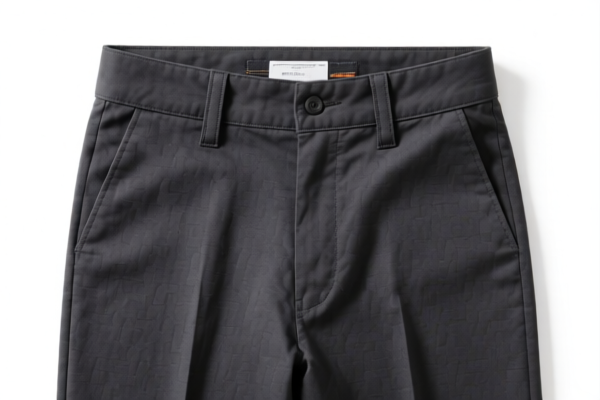
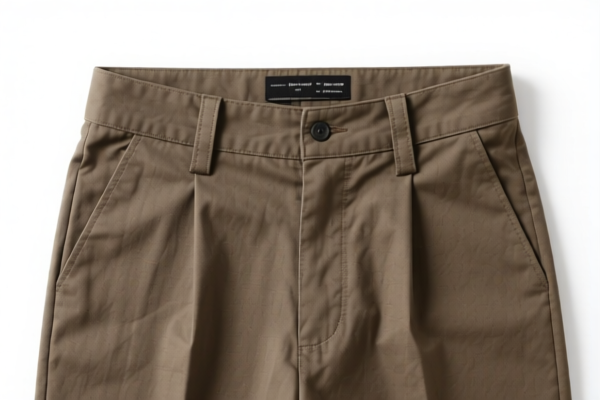


AI分析
👕 Boys' Work Clothes (Industrial & Utility Wear)
🌐 HS Code Reference & Customs Clearance Guide | 2024/2025 Latest Tariff Analysis | Professional Clearance Strategy
📌 I. Product Definition & Classification: What Exactly Are "Boys' Work Clothes"?
"Boys' Work Clothes" generally refer to durable garments designed for children (typically under 14 years old) used in industrial, laboratory, hospital, or utility settings. These items prioritize protection, durability, and functionality over fashion. In international trade, they are classified based on material composition and form (e.g., overalls, trousers, coated fabrics).
⚠️ Key Distinction Point:
- If the garment is an overall/coverall (one-piece), it typically falls under Chapter 62 headings for "Other made-up clothing accessories."
- If it is a separate top or bottom (e.g., trousers), it falls under specific headings for men's/boys' trousers.
- Material matters: Cotton, synthetic fibers, and coated fabrics have different tariff structures.
📦 II. HS Code Classification Details (Based on Provided Data)
| HS Code | Product Description | Usage Scenario | Material/Form Characteristics |
|---|---|---|---|
6210.10.90.10 |
Other garments, made up of fabrics of heading 5602, 5603, 5515, 5516, or 5407/5408 (non-knit/crochet) – Specifically matched as work uniforms or boiler suits/coveralls for boys. | Industrial work, construction, utility tasks. | Typically fabric-based, often including reflective strips or coated materials for visibility/protection. |
6210.40.25.40 |
Other garments, made up of fabrics of heading 5602, 5603, 5515, 5516, or 5407/5408 – Work uniforms for boys, possibly containing man-made fibers or coatings. | General workwear, utility wear. | May include synthetic fibers, coated fabrics for water/stain resistance. |
6203.42.45.14 |
Men's or boys' trousers, breeches and shorts, of cotton – Inferred based on cotton material, shape as men's/boys' trousers, usage in hospitals or contaminated areas. | Hospital gowns, lab pants, cleanroom bottoms. | Cotton-based, possibly treated for contamination control. |
6203.43.90.09 |
Men's or boys' trousers, breeches and shorts, of synthetic fibers – Shape is men's/boys' long pants, usage in hospitals or laboratories. | Lab coats/pants, medical utility wear. | Synthetic fiber blend, durable and easy to clean. |
🔍 Key Reminder:
- Coveralls/Overalls (one-piece) vs. Separate Pants/Top: This distinction heavily influences whether the code starts with6210(other made-up garments) or6203(trousers).
- Material Composition: Cotton (6203.42) vs. Synthetic (6203.43) vs. Coated/Multi-layer (6210).
- Usage Context: "Work" implies utility, often requiring specific classifications for protective gear.
💰 III. 2024/2025 Latest Tariff Rate Breakdown (Including Surtaxes, Policy Surcharges)
✅ Applicable Country: United States (US)
✅ Origin: China (CN)
✅ Effective Date: 2025/2026 (Current Trade Environment)
🎯 1. 6210.10.90.10 – Boys' Work Uniforms / Coveralls (Fabric of Heading 5602/5603/etc.)
| Item | Content |
|---|---|
| Base Tariff | 16.0% |
| Surtax (Section 301) | 0.0% (Note: Specific analysis shows 0% surtax for this subheading in the provided data) |
| Section 122 Tariff | 10% (Newly added tariff on certain textiles/apparel from China) |
| Total Tariff Rate | 26.0% |
| Calculation Basis | CIF Value × 26% |
| De Minimis Exemption | ❌ Not Eligible (Textiles/apparel generally excluded from Section 321 de minimis) |
| Legal Basis Path | Section 122 Tariff → USITC:6210.10.90.10 |
📌 Explanation:
- The 16% base rate applies to "other made-up garments" of specific fabric types.
- Section 122 (10%) is a recent tariff addition targeting certain textile products from China to protect domestic manufacturing.
- Total 26% is significantly higher than standard apparel, impacting cost margins.
🎯 2. 6210.40.25.40 – Boys' Work Uniforms (Coated/Man-made Fiber)
| Item | Content |
|---|---|
| Base Tariff | 7.1% |
| Surtax (Section 301) | 7.5% (Standard Section 301 duty on many textiles) |
| Section 122 Tariff | 10% |
| Total Tariff Rate | 24.6% |
| Calculation Basis | CIF Value × 24.6% |
| De Minimis Exemption | ❌ Not Eligible |
| Legal Basis Path | Section 301 → Section 122 → USITC:6210.40.25.40 |
📌 Note:
- Lower base tariff (7.1%) compared to6210.10, but still subject to Section 301 (7.5%) and Section 122 (10%).
- Total 24.6% is slightly lower than6210.10due to the lower base rate.
- Applies to garments made of coated fabrics or specific man-made fiber blends.
🎯 3. 6203.42.45.14 – Boys' Cotton Trousers (Hospital/Contaminated Area Use)
| Item | Content |
|---|---|
| Base Tariff | 16.6% |
| Surtax (Section 301) | 7.5% |
| Section 122 Tariff | 10% |
| Total Tariff Rate | 34.1% |
| Calculation Basis | CIF Value × 34.1% |
| De Minimis Exemption | ❌ Not Eligible |
| Legal Basis Path | Section 301 → Section 122 → USITC:6203.42.45.14 |
📌 Warning:
- Higher base rate (16.6%) for cotton trousers.
- Total 34.1% makes this the most expensive option among the non-coated garments.
- "Cotton" classification triggers higher duties in some contexts due to domestic cotton industry protections.
🎯 4. 6203.43.90.09 – Boys' Synthetic Fiber Trousers (Hospital/Lab Use)
| Item | Content |
|---|---|
| Base Tariff | 27.9% |
| Surtax (Section 301) | 7.5% |
| Section 122 Tariff | 10% |
| Total Tariff Rate | 45.4% |
| Calculation Basis | CIF Value × 45.4% |
| De Minimis Exemption | ❌ Not Eligible |
| Legal Basis Path | Section 301 → Section 122 → USITC:6203.43.90.09 |
📌 Critical Alert:
- Highest Tariff (45.4%) among all listed options.
- Base tariff of 27.9% is unusually high, possibly due to specific subheading definitions or recent policy adjustments.
- Synthetic fibers may face higher duties due to anti-dumping or safeguard measures in some categories.
- Recommendation: Avoid this classification if possible; opt for coated/coverall types (6210) if functionality allows.
🛠️ IV. Customs Clearance Practical Advice (Real-World Pitfall Avoidance)
✅ 1. Documentation Checklist (Non-negotiable)
| Document | Required | Description |
|---|---|---|
| ✅ Product Specification Sheet | ✔️ | Must detail material composition (e.g., "100% Cotton," "Polyester-Coated"), weight, and dimensions. |
| ✅ Technical Drawings | ✔️ | Show if the garment is a coverall (one-piece) or separate pants/top. Critical for 6210 vs. 6203. |
| ✅ Product Photos | ✔️ | Clear images showing labels, seams, and any reflective strips or coatings. |
| ✅ Commercial Invoice | ✔️ | Must explicitly state "Boys' Work Uniforms" or "Industrial Coveralls," not generic "Clothes." |
| ✅ Origin Certificate (CO) | ✔️ | Required to verify Chinese origin for Section 301/122 applicability. |
| ✅ Packing List | ✔️ | Ensure packaging matches declared HS Code (e.g., "Coverall" vs. "Pants"). |
✅ 2. Declaration Tips (Key Mantras)
🔥 "Form Determines Code, Material Determines Rate, 'Work' Defines Usage!"
| Scenario | Correct Declaration | Error to Avoid |
|---|---|---|
| One-piece Coveralls/Overalls | 6210.10.90.10 or 6210.40.25.40 |
Declaring as "Trousers" → Wrong Code, Penalties |
| Separate Trousers (Cotton) | 6203.42.45.14 |
Declaring as "Coated Fabric" → 34.1% vs. Potentially Higher/Lower |
| Separate Trousers (Synthetic) | 6203.43.90.09 |
Declaring as "Cotton" → 45.4% vs. 34.1% (Saving 11.3%) |
| Garments with Reflective Strips | Ensure 6210 classification if made of specific fabric types |
Missing reflective strip description → Audit Risk |
✅ 3. Special Cases Handling
| Scenario | Handling Advice |
|---|---|
| OEM Custom Workwear | Provide client order + design specs to prove "work" usage, avoiding misclassification as "Fashion Apparel." |
| Garments with PPE Features (e.g., flame-resistant) | Must provide Test Reports (e.g., NFPA, EN standards) to justify "Work" classification. |
| Mixed Material Garments | Declare the ** predominant material** by weight. If coated, likely 6210. |
| Samples vs. Bulk | Samples may be exempt from duties if shipped separately and marked "Non-Commercial." Bulk shipments are fully taxable. |
🌍 V. Global Market Comparison (2024/2025)
| Country/Region | Recommended HS Code | Tariff (China Origin) | Certification | Notes |
|---|---|---|---|---|
| 🇺🇸 USA | 6210.10.90.10 |
26.0% | None specific | High due to Section 122 + Base |
| 🇨🇳 China | 6203.42.45.14 |
16.6% | CCC (if applicable) | Lower duty for cotton |
| 🇪🇺 EU | 6103.43 (Knit) / 6203.43 (Woven) |
0% - 12% | CE (if PPE) | Generally lower than US |
| 🇬🇧 UK | 6203.43 |
0% - 12% | UKCA | Post-Brexit rules apply |
| 🇦🇺 Australia | 6203.43 |
5% - 15% | AS/NZS | Depends on material |
📌 Conclusion:
- USA has the highest tariffs due to Section 122 and Section 301.
- EU/UK/Australia are more competitive, but PPE certifications (CE/UKCA) are critical.
- China Origin attracts surtaxes in the US; consider Third-Country Transshipment (with caution regarding rules of origin) or Supply Chain Diversification.
📌 VI. Common Errors & Pitfalls (Lessons Learned)
❌ Error 1: Declaring Coveralls as "Trousers"
👉 Consequence: Incorrect HS Code (6203 vs. 6210) → Customs Delay, Fines, or Penalty for Undervaluation/Misclassification.
❌ Error 2: Ignoring Section 122 Tariff
👉 Consequence: Underpaying duties by 10% → Back-taxes + Interest upon Audit.
❌ Error 3: Using Generic Terms like "Kids' Clothes"
👉 Consequence: Customs may classify under highest duty rate or restrictive category → Seizure or Return.
❌ Error 4: Failing to Provide Material Composition
👉 Consequence: Customs assigns default high tariff (often 25%+) → Cost Increase.
✅ Correct Approach:
"Boys' One-Piece Coverall, Poly-Cotton Blend, Flame-Resistant, for Industrial Use, Model XYZ, CE Certified"
🎯 VII. Conclusion: Precise Classification, Cost Optimization!
🎯 Remember the Mantra:
🔹 "Form First: Coveralls = 6210, Pants = 6203."
🔹 "Material Matters: Cotton/Synthetic/Coated changes base rate."
🔹 "Section 122 Adds 10%: Budget for it!"
🔹 "Total Duty = Base + 301 + 122: Calculate All!"
📌 Pro Tip:
If your product qualifies as Personal Protective Equipment (PPE) (e.g., flame-resistant, anti-static), ensure proper certification. Some PPE items may have different tariff treatments or exemptions in specific sectors (e.g., healthcare).
Recommendation: Apply for an Advance Ruling from US Customs and Border Protection (CBP) if importing large volumes to secure tariff classification certainty.
📣 Take Action Now:
📞 Engage a Licensed Customs Broker + Provide Product Specs + Verify HS Code
🚀 Ensure Smooth Clearance, Minimized Costs, and Compliance!
✨ Professional Clearance Starts with Accurate Classification!
💼 Every Dollar Saved is a Dollar Earned!
用户评价
关于 HS 编码归类
协调制度(HS)是由世界海关组织(WCO)制定的国际贸易商品分类标准。全球 200 多个国家采用 HS 系统作为海关关税、贸易统计和进出口监管的基础。
每个 HS 编码遵循以下层级结构:
- 章(2 位)——商品大类(例如:第 84 章:机器和机械设备)
- 品目(4 位)——章内的更具体分类
- 子目(6 位)——国际通用细分,所有 WCO 成员国统一使用
- 本国细分(8-10 位)——各国自行扩展的细分编码,如美国 HTSUS 10 位编码
正确的 HS 编码归类对于顺利通关、准确缴纳关税和遵守贸易法规至关重要。错误归类可能导致海关延误、多缴关税或罚款。
从CN进口到US时,适用的关税税率可能包括:
- 最惠国(MFN)税率——适用于 WTO 成员国的标准关税税率
- 普通税率——适用于无贸易协定国家
- 贸易救济关税——附加关税,如 301 条款(反倾销)、232 条款(国家安全)或反补贴税
本页内容仅供参考。如需正式归类,请咨询当地海关或持牌报关代理。