breast milk storage bags
CN → US| HS编码 | 关税税率 | 原产国 | 目的国 | 文档 |
|---|---|---|---|---|
| 3924905650 | 20.9% | CN | US | 官方文档 |
| 3923210095 | 38.0% | CN | US | 官方文档 |
| 3923290000 | 38.0% | CN | US | 官方文档 |
| 7612905000 | 35.0% | CN | US | 官方文档 |
| 3924900500 | 20.6% | CN | US | 官方文档 |
商品图片
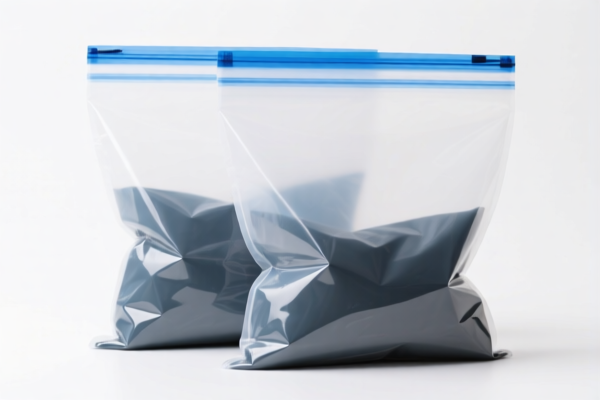
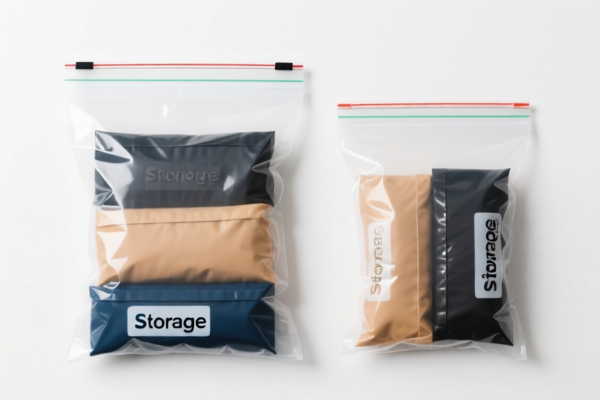
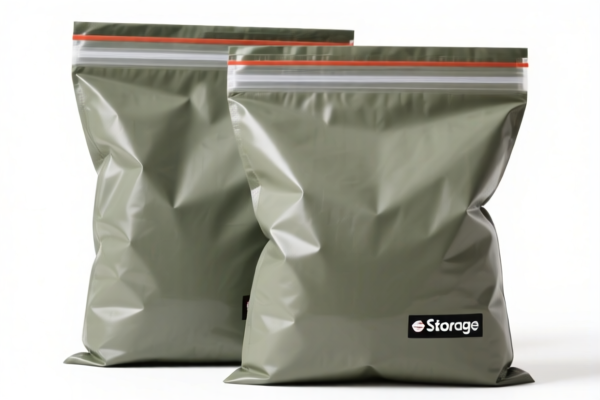
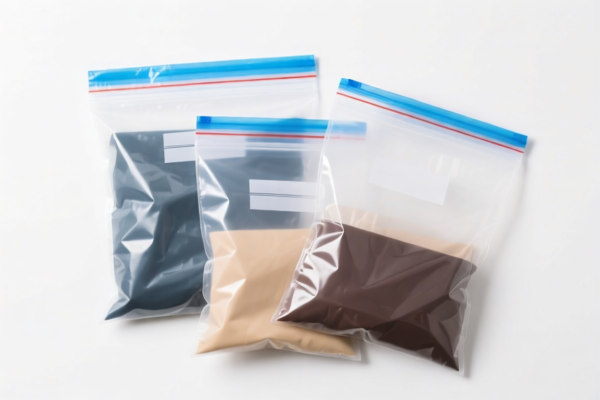
AI分析
🍼 Breast Milk Storage Bags (Milk Savers & Freezer Bags)
🌐 HS Code Classification & Customs Clearance Guide | 2026 Latest Tariff Analysis | Professional Clearance Strategy for US Imports
📌 Part 1: Product Definition & Classification Logic
Breast Milk Storage Bags are single-use, sterile plastic containers designed for the collection, storage, and freezing of human milk. In international trade, they are classified based on Material, Form, and Specific Use.
The core confusion lies in whether they are "General Plastic Bags" (Chapter 39, Heading 3923) or "Household/Toilet Articles" (Chapter 39, Heading 3924). Since they are specifically designed for hygiene and food contact within a household context, the classification often leans towards specific household items, but general plastic bags remain a strong alternative depending on the exact polymer type and sealing mechanism.
⚠️ Key Distinction Point:
- If the bag is primarily viewed as a general-purpose plastic sack (e.g., for bulk storage or industrial use, though rare for milk bags), it falls under 3923.
- If the bag is viewed as a finished household article designed specifically for kitchen/hygiene use (even if plastic), it may fall under 3924.
- Material Impact: The tax rate varies significantly if the material is inferred as general plastic vs. PE (Polyethylene) vs. Aluminum composite (rare for standard bags, but possible in multi-layer structures).
📦 Part 2: HS Code Classification Details (2026 Latest Tariff Reference)
Based on the product characteristics and current US Harmonized Tariff Schedule (HTSUS) logic for similar imported goods from China:
| HS Code | Product Description | Applicability Scenario | Key Classification Logic |
|---|---|---|---|
3924.90.56.50 |
Other plastic tableware, kitchenware, and toilet articles | Household/Hygiene Use: Bags used for storing milk in home settings. | Inferred as Plastic, categorized under "Other" household items. No conflict with material. |
3923.21.00.95 |
Sacks and bags, of polymers of ethylene (PE) | PE Material Specific: If the bag is made of Polyethylene (common for flexibility). | Form: Sack/Bag. Material: PE. Logic consistent with "bags and other articles". |
3923.29.00.00 |
Sacks and bags, of plastics, not of polymers of ethylene | General Plastic Bag: If the plastic is not specifically PE (e.g., PP or mixed). | Form: Cone-shaped/Flat bag. Material: Plastic. Typically disposable. |
7612.90.50.00 |
Aluminum containers (other) | Misclassification Alert: If the bag has an aluminum layer or is mistaken for metal. | Inferred as plastic, but if classified as "container" and material is unclear/conflicting, it may be grouped under "Other" aluminum containers erroneously. |
3924.90.05.00 |
Plastic tableware and kitchenware, other | Kitchen Use: Specifically for milk storage (kitchen/hygiene item). | Use: Milk Storage. Material: Plastic. Fits "consumables" in household/plastic category. |
🔍 Critical Reminder:
- Primary Classification: Most breast milk bags are Plastic (PE/PP). Therefore, 3923 (Bags of plastics) or 3924 (Plastic tableware/kitchenware) are the correct chapters.
- Aluminum (7612) is unlikely unless it is a specialized foil bag with significant aluminum content, which is rare for standard milk bags. Misclassifying plastic as aluminum leads to errors.
- 3924 vs 3923: The US CBP often classifies specialized food storage bags (like freezer bags) under 3923 if they are simple sacks, but 3924 if they are considered "tableware/kitchen articles" due to their specific hygiene/kitchen design. The tax rates differ significantly due to Section 301 and IEEPA tariffs.
💰 Part 3: 2026 Latest Tariff Rate Breakdown (Detailed Tax Clauses)
✅ Applicable Country: United States (US)
✅ Origin: China (CN)
✅ Effective Date: November 10, 2025 onwards (includes subsequent imports)
🎯 1. 3924.90.56.50 – Plastic Tableware/Kitchenware (Other)
| Item | Content |
|---|---|
| Base Tariff | 3.4% |
| Section 301 Surcharge | 7.5% |
| IEEPA Surcharge (122 Clause) | 10% |
| Total Tariff Rate | 20.9% |
| Tax Calculation | CIF Value × 20.9% |
| De Minimis Exemption? | ❌ No (deny_de_minimis) |
| Legal Basis Path | HTSUS:3924.90.56.50 → USITC:Footnote 301 → IEEPA:122 |
📌 Explanation:
- This classification benefits from a slightly lower Section 301 rate (7.5%) compared to general plastic bags.
- However, the IEEPA 10% surcharge still applies to Chinese goods.
- Total: 20.9%. This is a moderate-high tariff for plastic goods.
🎯 2. 3923.21.00.95 – Sacks/Bags of Polymers of Ethylene (PE)
| Item | Content |
|---|---|
| Base Tariff | 3.0% |
| Section 301 Surcharge | 25.0% |
| IEEPA Surcharge (122 Clause) | 10% |
| Total Tariff Rate | 38.0% |
| Tax Calculation | CIF Value × 38.0% |
| De Minimis Exemption? | ❌ No (deny_de_minimis) |
| Legal Basis Path | HTSUS:3923.21.00.95 → USITC:Footnote 301 → IEEPA:122 |
📌 Explanation:
- If classified as "PE Bags" under 3923, it faces the maximum standard Section 301 rate of 25%.
- This is significantly more expensive than the 3924 classification.
- Total: 38.0%. This is a very high tariff. Many importers prefer 3924 to save ~17% in duties.
🎯 3. 3923.29.00.00 – Sacks/Bags of Plastics (Other)
| Item | Content |
|---|---|
| Base Tariff | 3.0% |
| Section 301 Surcharge | 25.0% |
| IEEPA Surcharge (122 Clause) | 10% |
| Total Tariff Rate | 38.0% |
| Tax Calculation | CIF Value × 38.0% |
| De Minimis Exemption? | ❌ No (deny_de_minimis) |
| Legal Basis Path | HTSUS:3923.29.00.00 → USITC:Footnote 301 → IEEPA:122 |
📌 Explanation:
- Same tariff structure as 3923.21.
- Total: 38.0%. High tariff risk.
🎯 4. 7612.90.50.00 – Aluminum Containers (Other)
| Item | Content |
|---|---|
| Base Tariff | 0.0% |
| Section 301 Surcharge | 25.0% |
| IEEPA Surcharge (122 Clause) | 10% |
| Total Tariff Rate | 35.0% |
| Tax Calculation | CIF Value × 35.0% |
| De Minimis Exemption? | ❌ No (deny_de_minimis) |
| Legal Basis Path | HTSUS:7612.90.50.00 → USITC:Footnote 301 → IEEPA:122 |
📌 Explanation:
- Although the base rate is 0%, the 25% Section 301 makes it expensive.
- Total: 35.0%.
- ⚠️ Risk: Misclassifying plastic bags as aluminum containers can lead to customs audits and penalties if material evidence is missing.
🎯 5. 3924.90.05.00 – Plastic Tableware/Kitchenware (Other)
| Item | Content |
|---|---|
| Base Tariff | 3.1% |
| Section 301 Surcharge | 7.5% |
| IEEPA Surcharge (122 Clause) | 10% |
| Total Tariff Rate | 20.6% |
| Tax Calculation | CIF Value × 20.6% |
| De Minimis Exemption? | ❌ No (deny_de_minimis) |
| Legal Basis Path | HTSUS:3924.90.05.00 → USITC:Footnote 301 → IEEPA:122 |
📌 Explanation:
- This is the lowest tariff option among the valid classifications.
- Total: 20.6%.
- Strategy: If the product can be justified as "kitchenware/tableware" rather than a "bag," this is the optimal HS code.
🛠️ Part 4: Customs Clearance Practical Advice (Real-World Pitfall Guide)
✅ 1. Preparation Checklist (Mandatory)
| Document | Required? | Description |
|---|---|---|
| ✅ Product Specification Sheet | ✔️ | Must specify material (PE, PP, etc.), thickness, and volume. |
| ✅ Product Photos (Clear & Detailed) | ✔️ | Show the bag, zipper/seal, and any "BPA-Free" labels. |
| ✅ Commercial Invoice | ✔️ | Clearly state "Breast Milk Storage Bags" or "Freezer Bags for Human Milk." Avoid vague terms like "Plastic Sacks." |
| ✅ Certificate of Origin (CO) | ✔️ | Required for origin determination (China vs. Non-China). |
| ✅ Packing List | ✔️ | Detail the number of bags per carton. |
| ✅ Third-Party Test Report | ✔️ | FDA Compliance or LFGB (if EU origin) is crucial to prove food-safe material, especially for 3924 classification. |
✅ 2. Declaration Tips (Critical Mnemonics)
🔥 “Material Matters, Use Defines Code, 3924 Saves Dollars!”
| Scenario | Correct Declaration | Wrong Declaration | Consequence |
|---|---|---|---|
| PE Bags for Milk | 3924.90.05.00 or 3924.90.56.50 |
3923.21.00.95 |
Savings: ~17% lower duty (20.6% vs 38.0%). |
| General Plastic Bags | 3923.21.00.95 |
3924.90.05.00 |
Risk: Customs may reject if "household use" is not proven. |
| Aluminum-Lined Bags | 7612.90.50.00 |
3923... |
Audit Risk: If material is mostly plastic, misclassification leads to fines. |
| Vague Description | "Plastic Sacks" | "Breast Milk Bags" | Delay: CBP may reclassify or hold shipment for more info. |
📌 Key Strategy:
- To achieve the 20.6%–20.9% rate, emphasize the "Kitchen/Household Article" aspect in your documentation.
- Provide evidence that the bags are finished goods designed for specific human contact (food safety), not just raw packaging material.
- Avoid using the term "Bag" as the primary description if possible; use "Storage Container" or "Household Article" to support 3924 classification, but ensure it matches the physical form (it is still a bag, so 3923 is also defensible).
✅ 3. Special Cases
| Case | Handling Advice |
|---|---|
| BPA-Free Certification | Provide FDA-compliant test reports. This supports 3924 (food-grade) classification. |
| Bulk vs. Retail | Bulk bags (1000+/box) might be seen as industrial (3923). Retail-ready packs support 3924. |
| Material Mix | If the bag is PE but has a printed aluminum layer, consult a customs broker. Pure plastic is safer for 3923/3924. |
| Pre-Ruling | Apply for an Advance Ruling from CBP. This locks in the HS code and protects against future audits. |
🌍 Part 5: Global Market Comparison (2026 Latest)
| Country/Region | Recommended HS Code | Tariff (CN Origin) | Notes |
|---|---|---|---|
| 🇺🇸 USA | 3924.90.05.00 |
20.6% | Best rate for food-grade plastic household items. |
| 🇺🇸 USA | 3923.21.00.95 |
38.0% | High tariff for general plastic bags. |
| 🇨🇳 China | 3924.90.05.00 |
5% | Import into China is cheap. |
| 🇪🇺 EU | 3924.90 |
0%–4% | No Section 301 equivalent, but VAT applies. |
| 🇬🇧 UK | 3924.90 |
0%–4% | Post-Brexit tariffs may vary, generally low. |
📌 Conclusion:
- USA is the most expensive market due to Section 301 and IEEPA tariffs.
- Classifying under 3924 (Household/Kitchenware) is critical to save ~17% in duties compared to 3923 (General Bags).
- Always ensure the product description highlights "Food-Grade," "BPA-Free," and "Household Use" to support 3924.
📌 Part 6: Common Mistakes & Pitfalls (Lessons Learned)
❌ Mistake 1: Declaring as "Plastic Bags" (3923) without justification.
👉 Consequence: 38.0% tariff. Loss of ~17% profit margin.
❌ Mistake 2: Using "Aluminum" in the description when it's 99% Plastic.
👉 Consequence: Customs audit, penalties, and potential 35.0% tariff with legal risk.
❌ Mistake 3: Ignoring FDA/Compliance Docs.
👉 Consequence: Shipment held for "Food Safety" verification, leading to delays and storage fees.
❌ Mistake 4: Splitting the shipment into "Bags" and "Caps/Lids" separately.
👉 Consequence: If sold together, declare as a set. Splitting may trigger different tax rates and administrative burdens.
✅ Correct Practice:
"Breast Milk Storage Bags, BPA-Free, Polyethylene, Food-Grade, for Household Use, Model XYZ, FDA Compliant"
HS Code:3924.90.05.00
🎯 Part 7: Conclusion: Professional Declaration, Cost Optimization
🎯 Remember the Mantra:
🔹 "Food-Grade + Household = 3924 (20.6%)"
🔹 "General Bag = 3923 (38.0%)"
🔹 "Difference is 17%! Don't leave money on the table!"
📌 Pro Tip:
If you are importing in large volumes, apply for a CBP Advance Ruling with sample photos and specs. This provides legal certainty and protects your business from retroactive tariff changes.
📣 Immediate Action:
📞 Contact a licensed customs broker.
📸 Provide clear photos and material test reports.
🚀 Optimize your HS Code to save 17% in duties!
✨ Professional Clearance, Starting with Accurate Classification!
💼 Every cent of tariff saved is pure profit!
用户评价
关于 HS 编码归类
协调制度(HS)是由世界海关组织(WCO)制定的国际贸易商品分类标准。全球 200 多个国家采用 HS 系统作为海关关税、贸易统计和进出口监管的基础。
每个 HS 编码遵循以下层级结构:
- 章(2 位)——商品大类(例如:第 84 章:机器和机械设备)
- 品目(4 位)——章内的更具体分类
- 子目(6 位)——国际通用细分,所有 WCO 成员国统一使用
- 本国细分(8-10 位)——各国自行扩展的细分编码,如美国 HTSUS 10 位编码
正确的 HS 编码归类对于顺利通关、准确缴纳关税和遵守贸易法规至关重要。错误归类可能导致海关延误、多缴关税或罚款。
从CN进口到US时,适用的关税税率可能包括:
- 最惠国(MFN)税率——适用于 WTO 成员国的标准关税税率
- 普通税率——适用于无贸易协定国家
- 贸易救济关税——附加关税,如 301 条款(反倾销)、232 条款(国家安全)或反补贴税
本页内容仅供参考。如需正式归类,请咨询当地海关或持牌报关代理。