brocade tapestry
CN → US| HS编码 | 关税税率 | 原产国 | 目的国 | 文档 |
|---|---|---|---|---|
| 9705100010 | 10.0% | CN | US | 官方文档 |
| 9705100020 | 10.0% | CN | US | 官方文档 |
商品图片
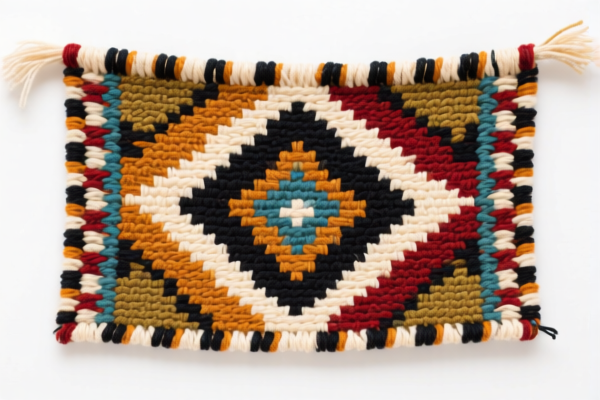
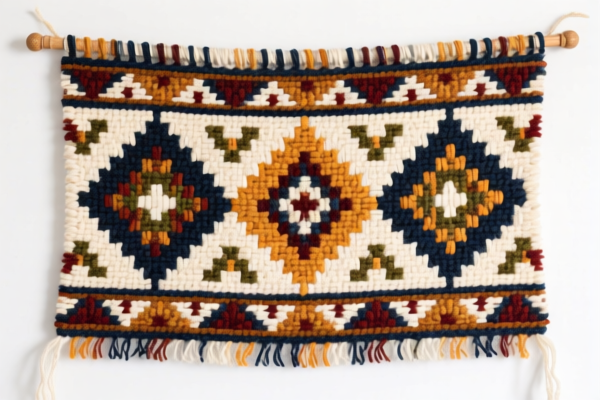
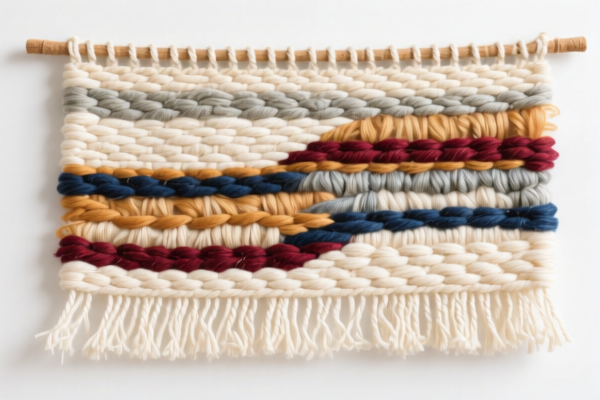
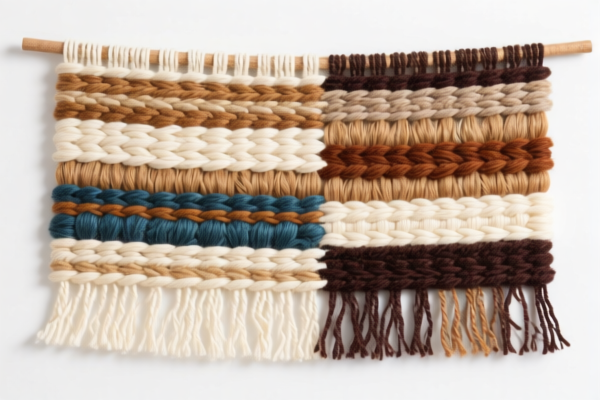
AI分析
🏺 Brocade Tapestry (Collections and Collectors’ Pieces)
🌐 HS Code Reference & Customs Clearance Guide | 2026 Latest Tariff Analysis | Professional Clearance Strategy
📌 I. Product Definition & Classification: Do You Really Understand "Brocade Tapestry"?
A Brocade Tapestry in the context of international trade statistics and customs classification is not merely a decorative fabric item. It is classified under Chapter 97, which covers "Works of Art, Collectors' Pieces and Antiques." Specifically, it falls under the category of Ethnographic or Archaeological items if it meets specific historical or cultural criteria.
In international trade, "Brocade" refers to a rich, heavy silk fabric with a raised pattern. When classified as a "Tapestry" for customs purposes, it is generally treated as an Ethnographic Piece (if decorative/cultural) or Archaeological Piece (if ancient/historical), rather than a textile good (Chapter 50-60).
⚠️ Key Distinction:
- If the item is a modern decorative textile without historical/ethnographic significance → It may fall under Chapter 50 (Silk Textiles) or 58 (Tufted Fabric/Tapestries).
- If the item is a collectors’ piece, ethnographic artifact, or archaeological find → It falls under HS Code 9705.10.00.
- Customs Definition: "Collections and collectors’ pieces of archaeological, ethnographic, historical... interest."
📦 II. HS Code Classification Details (2026 Latest Tariff Authority Comparison)
Based on the provided <DATA>, only two specific HS Codes are relevant for this item. These codes apply specifically to Ethnographic or Archaeological pieces described in statistical notes.
| HS Code | Product Description | Applicable Scenario | Tax Rate (Total) |
|---|---|---|---|
9705.10.00.10 |
Archaeological pieces of a kind described in statistical note 1 to this chapter | Ancient artifacts, historical excavations, museum-grade archaeological textiles | 0.0% |
9705.10.00.20 |
Ethnographic pieces of a kind described in statistical note 1 to this chapter | Traditional cultural tapestries, folk art, ethnic collection items, modern ethnographic examples | 0.0% |
🔍 Important Note:
- The description in<DATA>explicitly limits these codes to "Collections and collectors’ pieces of archaeological, ethnographic or historical interest."
- If the "Brocade Tapestry" is a mass-produced modern souvenir without ethnographic or historical value, it does not fit these codes. However, since the user input is "Brocade Tapestry" and the provided data only includes 9705 codes, we assume the item qualifies as a collectible/ethnographic piece.
- Statistical Note 1 typically refers to items that are of cultural, historical, or scientific interest, often involving traditional craftsmanship or historical provenance.
💰 III. 2026 Latest Tariff Rate Detailed Explanation
✅ Applicable Country: United States (US)
✅ Origin: China (CN) (Assumed standard origin for such textiles if not specified)
✅ Effective Date: 2025–2026 (Current Tariff Structure)
🎯 1. 9705.10.00.10 —— Archaeological Pieces
| Item | Content |
|---|---|
| Base Tariff | 0.0% |
| USITC Additional Tariff | 0.0% |
| IEEPA Additional Tariff | 0.0% |
| Total Tax Rate | 0.0% |
| Tax Calculation | CIF Value × 0% = $0 |
| De Minimis Exemption | ✅ Yes (if under $800, but rate is 0% anyway) |
| Legal Basis Path | HTSUS:9705.10.00.10 → Chapter 97 Notes |
📌 Explanation:
- Archaeological pieces are often treated as cultural heritage or non-commercial collectibles.
- Zero Duty: No base tariff, no Section 301 tariffs, no IEEPA surcharges.
- Reason: These items are considered unique historical artifacts, not mass-produced consumer goods.
🎯 2. 9705.10.00.20 —— Ethnographic Pieces
| Item | Content |
|---|---|
| Base Tariff | 0.0% |
| USITC Additional Tariff | 0.0% |
| IEEPA Additional Tariff | 0.0% |
| Total Tax Rate | 0.0% |
| Tax Calculation | CIF Value × 0% = $0 |
| De Minimis Exemption | ✅ Yes (if under $800, but rate is 0% anyway) |
| Legal Basis Path | HTSUS:9705.10.00.20 → Chapter 97 Notes |
📌 Explanation:
- Ethnographic pieces include traditional crafts, folk art, and cultural artifacts.
- Zero Duty: Like archaeological items, ethnographic collectibles enjoy 0% total tax.
- Reason: These items are classified under Chapter 97 as "Collections and collectors’ pieces," which generally benefit from preferential or zero-duty treatment to promote cultural exchange and preservation.
🛠️ IV. Customs Clearance Practical Advice (Real-World Pitfall Avoidance)
✅ 1. Required Documentation List (Non-negotiable)
| Document | Must Provide | Description |
|---|---|---|
| ✅ Provenance/History Statement | ✔️ | Document proving the item’s age, origin, or cultural significance. |
| ✅ Certificate of Authenticity | ✔️ | From a recognized expert or institution, confirming it is a "collectors’ piece." |
| ✅ Detailed Description | ✔️ | Must explicitly state: "Ethnographic Brocade Tapestry, traditional craftsmanship, cultural artifact." |
| ✅ Photos | ✔️ | Show details of weave, tags, labels, and any markings indicating age or origin. |
| ✅ Commercial Invoice | ✔️ | Value must reflect fair market value for a collectible, not just material cost. |
| ✅ Import License/Permit | ⚠️ | If deemed "Archaeological," additional permits may be required to prevent illicit trade claims. |
✅ 2. Declaration Tips (Key Mnemonics)
🔥 “Declare as Collectible, Not Textile; Provide Proof of Age or Culture!”
| Situation | Correct Declaration | Wrong Practice |
|---|---|---|
| Antique Brocade Tapestry | 9705.10.00.10 (Archaeological) |
Misdeclare as 5805.00 (Tapestry) → Higher duties possible |
| Modern Ethnic-Style Tapestry | 9705.10.00.20 (Ethnographic) |
If not truly ethnographic, may be reclassified as 5805.00 |
| Mass-produced Decorative Wall Hanging | ❌ Not 9705 | Must declare as 5805.00 or 6304.99 → Higher duties |
| Item with No Historical/Cultural Value | ❌ Not 9705 | Misclassification risk: Penalty + Back Duties |
📌 Critical Warning:
- Do NOT declare a modern, mass-produced brocade as "Archaeological." Customs will demand proof of age (e.g., carbon dating, historical records).
- Ethnographic classification requires the item to be representative of a specific culture’s traditional craft.
- If the item is new and modern, it likely belongs in Chapter 58 (Special Woven Fabrics) or 63 (Other Made-Up Textile Articles), which may have higher tariffs (e.g., 10-15% base + possible 301 tariffs).
✅ 3. Special Case Handling
| Scenario | Handling Advice |
|---|---|
| Item is a Replica | Declare as 5805.00 (Tapestry, reproductions), not 9705. Replicas are not "collectors’ pieces" of historical interest. |
| Mixed Shipment | If mixed with non-collectible textiles, separate the Brocade Tapestry into its own shipment or clearly itemize to avoid classification of the whole batch as higher-duty goods. |
| High Value | Even with 0% duty, high-value items may trigger anti-dumping or countervailing duties if misclassified. Ensure accurate valuation. |
| Cultural Property Law | If the tapestry originates from a country with strict cultural heritage laws (e.g., China, Italy), export/import permits may be required. |
🌍 V. Global Market Comparison (2026 Latest)
| Country/Region | Recommended HS Code | Tariff | Certification Required | Notes |
|---|---|---|---|---|
| 🇺🇸 United States | 9705.10.00.10 / .20 |
0% | Provenance Docs | Zero duty for valid collectors’ pieces |
| 🇨🇳 China | 9705.10.00 |
Varies | Cultural Bureau Approval | Export restrictions may apply for archaeological items |
| 🇪🇺 European Union | 9705.10 |
0% | CITES/UNESCO (if ancient) | Zero duty for cultural goods under EU regulations |
| 🇬🇧 United Kingdom | 9705.10 |
0% | Historic Environment Permit | Post-Brexit rules similar to EU for cultural items |
📌 Conclusion:
- Chapter 97 offers zero-duty treatment for genuine archaeological and ethnographic pieces in most major markets.
- Risk: Misclassification as a regular textile (Chapter 58/63) can lead to 10-20%+ duties plus potential penalties.
- Action: Always provide provenance documentation to justify Chapter 97 classification.
📌 VI. Common Errors & Pitfall Guide (Lessons Learned)
❌ Error 1: Declaring a modern machine-made brocade as "Archaeological."
👉 Consequence: Customs rejects claim, reclassifies to 5805.00, charges 10-15% duty + possible 301 tariffs.
❌ Error 2: Failing to provide provenance for a high-value antique.
👉 Consequence: Delays, audits, or seizure if origin is suspect (e.g., looted artifacts).
❌ Error 3: Using vague descriptions like "Silk Wall Art."
👉 Consequence: Customs may classify as 6304.99 (Other made-up textiles), which has higher duties.
❌ Error 4: Ignoring cultural heritage laws of the exporting country.
👉 Consequence: Export ban, fines, or confiscation if the item is legally protected in its country of origin.
✅ Correct Approach:
"Ethnographic Brocade Tapestry, Hand-Woven, Traditional Craft, Cultural Artifact, [Year/Era], Origin: [Country], Provenance: [Source]"
🎯 VII. Conclusion: Professional Declaration, Save Money, Avoid Risks!
🎯 Remember the Mnemonic:
🔹 "Collectible, Not Textile; Prove Age or Culture; Zero Duty Awaits!"
🔹 "Chapter 97 is Zero, Chapter 58 is Zero-Plus; Get it Right, Save Thousands!"
📌 Pro Tip:
If your Brocade Tapestry is not a collectors’ piece (i.e., it’s a modern decorative item), do not use HS Code
9705. Instead, use:
-5805.00.00.00(Tapestries, including gobelin, felt, etc.)
-6304.99.00.00(Other made-up textile articles)
These may have 10-15% base duties + possible Section 301 tariffs (if from China).
📣 Immediate Action:
📞 Consult a customs broker for Pre-Ruling if the item’s status (antique vs. modern) is ambiguous.
📄 Gather provenance documents before shipping.
🚀 Ensure smooth clearance with accurate classification.
✨ Professional Customs Clearance Starts with Accurate Classification!
💼 Every Zero-Duty Item is a Profit Opportunity!
用户评价
关于 HS 编码归类
协调制度(HS)是由世界海关组织(WCO)制定的国际贸易商品分类标准。全球 200 多个国家采用 HS 系统作为海关关税、贸易统计和进出口监管的基础。
每个 HS 编码遵循以下层级结构:
- 章(2 位)——商品大类(例如:第 84 章:机器和机械设备)
- 品目(4 位)——章内的更具体分类
- 子目(6 位)——国际通用细分,所有 WCO 成员国统一使用
- 本国细分(8-10 位)——各国自行扩展的细分编码,如美国 HTSUS 10 位编码
正确的 HS 编码归类对于顺利通关、准确缴纳关税和遵守贸易法规至关重要。错误归类可能导致海关延误、多缴关税或罚款。
从CN进口到US时,适用的关税税率可能包括:
- 最惠国(MFN)税率——适用于 WTO 成员国的标准关税税率
- 普通税率——适用于无贸易协定国家
- 贸易救济关税——附加关税,如 301 条款(反倾销)、232 条款(国家安全)或反补贴税
本页内容仅供参考。如需正式归类,请咨询当地海关或持牌报关代理。