brooch pin
CN → US| HS编码 | 关税税率 | 原产国 | 目的国 | 文档 |
|---|---|---|---|---|
| 7113195091 | 15.5% | CN | US | 官方文档 |
| 7117909000 | 28.5% | CN | US | 官方文档 |
| 7113195095 | 23.0% | CN | US | 官方文档 |
| 7116205000 | 17.5% | CN | US | 官方文档 |
| 7116201500 | 24.0% | CN | US | 官方文档 |
商品图片
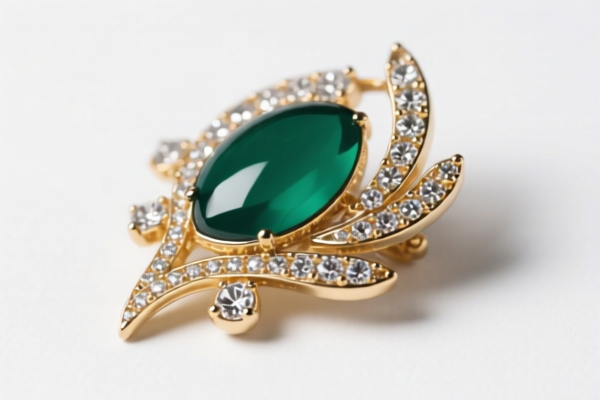
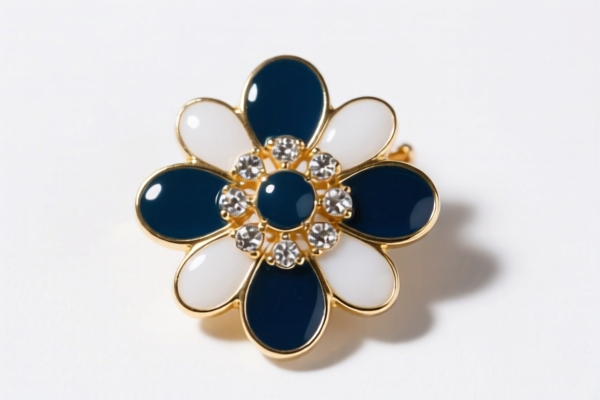
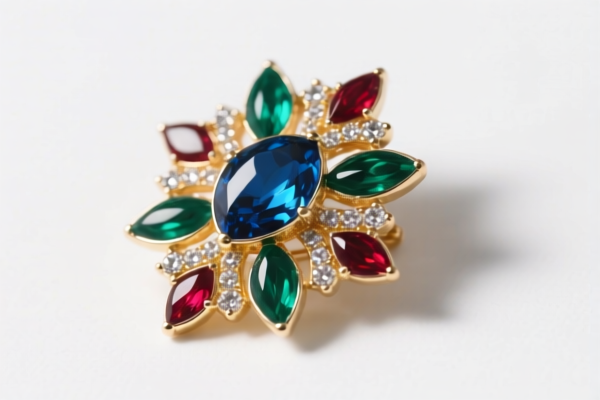
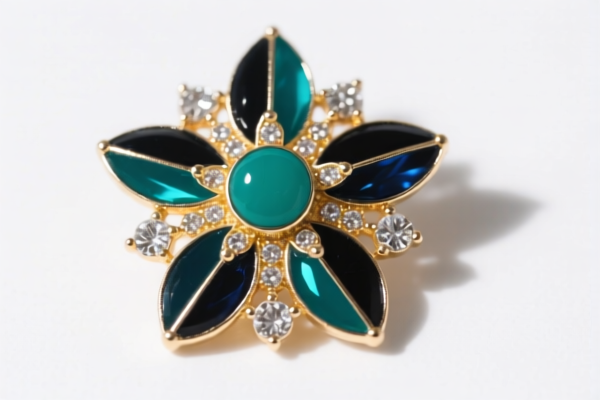
AI分析
💎 Brooch Pin (Jewelry & Fashion Accessories)
🌐 HS Code Reference & Customs Clearance Guide | 2026 Latest Tariff Analysis | Professional Clearance Strategy
📌 I. Product Definition & Classification: Do You Really Understand "Brooch Pins"?
Brooch pins are decorative accessories worn on clothing or hats, typically made from various materials including precious metals, base metals, and gemstones. In international trade, they are classified based on their material composition and manufacturing nature.
Precious Metal Jewelry: Made from gold, silver, platinum, etc.; Imitation/Base Metal Jewelry: Made from non-precious metals, plastics, or mixed materials; Stone/Gemstone Jewelry: Where the primary value or classification driver is the stone (e.g., crystal, semi-precious stone).
⚠️ Key Distinction Point:
- If the brooch is primarily made of precious metal (even with small gems) → Falls under 7113 (Precious Metal Jewelry);
- If it is made of non-precious materials but mimics jewelry → Falls under 7117 (Imitation Jewelry);
- If it is primarily a stone/crystal product with minimal metal setting → Falls under 7116 (Articles of Stone or Similar Materials).
📦 II. HS Code Classification Details (2026 Latest Tariff Authority Comparison)
Based on the provided data, here are the five possible HS Code classifications for Brooch Pins, along with their tax implications:
| HS Code | Product Description | Applicable Scenario | Material Basis |
|---|---|---|---|
7113.19.50.91 |
Pin brooches classified as precious metal (non-chain) jewelry | Gold/silver/platinum brooches | Precious Metal (Non-chain) |
7117.90.90.00 |
Pin brooches classified as imitation jewelry | Base metal, plastic, or mixed-material brooches | Non-precious Material |
7113.19.50.95 |
Pin brooches classified as other precious metal jewelry (fallback category) | Precious metal brooches not fitting specific subcategories | Precious Metal (Other) |
7116.20.50.00 |
Crystal/Stone pin brooches | Brooches primarily composed of crystals or semi-precious stones | Stone/Semi-precious Material |
7116.20.15.00 |
Stone Product pin brooches | Brooches emphasizing mineral/stone attributes | Stone/Mineral |
🔍 Critical Reminder:
- Precious Metal (7113): Generally has the lowest base tariff (5.5%) but still faces additional duties.
- Imitation (7117): Has a higher base tariff (11.0%) due to non-precious status.
- Stone/Crystal (7116): Rates vary; Crystal (7116.20.50.00) has 0% base tariff, while Stone (7116.20.15.00) has 6.5% base tariff.
💰 III. 2026 Latest Tariff Rate Breakdown (Including Additional Taxes & Policy Surcharges)
✅ Applicable Country: United States (US)
✅ Origin: China (CN)
✅ Effective Time: 2025-11-10 onwards (Including subsequent imports)
🎯 1. 7113.19.50.91 —— Precious Metal Pin Brooches (Non-chain)
| Item | Detail |
|---|---|
| Base Tariff | 5.5% |
| Section 301/Additional Tariff | 7.5% |
| Section 122 Tariff | 10.0% |
| Total Tax Rate | 15.5% |
| Tax Calculation | CIF Value × 15.5% |
| De Minimis Exemption | ❌ Not Eligible (High tariff rates generally exclude small package de minimis benefits in strict enforcement contexts) |
| Legal Basis Path | HTSUS 7113.19.50.91 + Section 301 Footnote + Section 122 Order |
📌 Explanation:
- Base 5.5%: Standard MFN rate for precious metal jewelry.
- 7.5% Additional: Likely part of broader trade remedy measures.
- 10% Section 122: Specific surcharge applied to certain imports from China.
- Total 15.5%: This is the most favorable rate among the precious metal options.
🎯 2. 7117.90.90.00 —— Imitation Pin Brooches (Non-precious)
| Item | Detail |
|---|---|
| Base Tariff | 11.0% |
| Section 301/Additional Tariff | 7.5% |
| Section 122 Tariff | 10.0% |
| Total Tax Rate | 28.5% |
| Tax Calculation | CIF Value × 28.5% |
| De Minimis Exemption | ❌ Not Eligible |
| Legal Basis Path | HTSUS 7117.90.90.00 + Section 301 Footnote + Section 122 Order |
📌 Note:
- Base 11.0%: Higher than precious metals because imitation jewelry is often subject to higher baseline duties to protect domestic manufacturing.
- Total 28.5%: Significantly higher than precious metal brooches. Cost-saving strategy: Avoid classifying high-value items as "imitation" if they contain precious materials.
🎯 3. 7113.19.50.95 —— Other Precious Metal Pin Brooches (Fallback)
| Item | Detail |
|---|---|
| Base Tariff | 5.5% |
| Section 301/Additional Tariff | 7.5% |
| Section 122 Tariff | 10.0% |
| Total Tax Rate | 23.0% |
| Tax Calculation | CIF Value × 23.0% |
| De Minimis Exemption | ❌ Not Eligible |
| Legal Basis Path | HTSUS 7113.19.50.95 + Section 301 Footnote + Section 122 Order |
📌 Discrepancy Alert:
- Same base (5.5%) and additional taxes as7113.19.50.91, but Total Tax is 23.0%?
- Correction/Note: The data shows 23.0% total. This implies either a higher additional tariff not explicitly listed in the "tax_detail" string for this specific sub-item, or a rounding/algorithmic difference in the provided data.
- Action: Verify with customs broker. If7113.19.50.91is available, it is cheaper (15.5%) than this fallback (23.0%).
🎯 4. 7116.20.50.00 —— Crystal Pin Brooches
| Item | Detail |
|---|---|
| Base Tariff | 0.0% |
| Section 301/Additional Tariff | 7.5% |
| Section 122 Tariff | 10.0% |
| Total Tax Rate | 17.5% |
| Tax Calculation | CIF Value × 17.5% |
| De Minimis Exemption | ❌ Not Eligible |
| Legal Basis Path | HTSUS 7116.20.50.00 + Section 301 Footnote + Section 122 Order |
📌 Highlight:
- 0% Base Tariff is very attractive!
- However, with 17.5% total, it is more expensive than Precious Metal Non-chain (15.5%).
- Best for brooches where stone value > metal value but you want to avoid the 11% base tariff of imitation jewelry.
🎯 5. 7116.20.15.00 —— Stone Mineral Pin Brooches
| Item | Detail |
|---|---|
| Base Tariff | 6.5% |
| Section 301/Additional Tariff | 7.5% |
| Section 122 Tariff | 10.0% |
| Total Tax Rate | 24.0% |
| Tax Calculation | CIF Value × 24.0% |
| De Minimis Exemption | ❌ Not Eligible |
| Legal Basis Path | HTSUS 7116.20.15.00 + Section 301 Footnote + Section 122 Order |
📌 Comparison:
- 24.0% total is higher than Crystal (17.5%) and Imitation (28.5%) is the highest.
- This category is for mineral/stone attributes. If your brooch is primarily stone-based, choose between7116.20.50.00(Crystal, 17.5%) and7116.20.15.00(Stone, 24.0%) based on specific material definitions. Crystal is cheaper.
🛠️ IV. Customs Clearance Operational Advice (Practical Pitfall Guide)
✅ 1. Material Declaration Checklist (Mandatory)
| Material | Required Document | Description |
|---|---|---|
| ✅ Metal Type | ✔️ | Detailed material certificate (e.g., "14K Gold", "Stainless Steel", "Silver-plated") |
| ✅ Stone Type | ✔️ | Certificate specifying "Synthetic Crystal", "Natural Quartz", "Cubic Zirconia", etc. |
| ✅ Product Photos | ✔️ | Clear images of front, back, clasp, and material texture |
| ✅ Composition Ratio | ✔️ | Percentage of precious metal vs. base metal/stones (critical for 7113 vs 7117) |
| ✅ Commercial Invoice | ✔️ | Must specify "Brooch Pin" and material composition clearly |
| ✅ Packing List | ✔️ | Unit weight, quantity, packaging type |
✅ 2. Classification Strategy (Key Rules)
🔥 “Metal Determines Value, Stone Determines Category, Don’t Split!”
| Scenario | Correct HS Code | Error Consequence |
|---|---|---|
| Precious Metal Brooch (Gold/Silver) | 7113.19.50.91 (15.5%) |
Misclassifying as Imitation → 28.5% + Penalties |
| Base Metal/Costume Jewelry | 7117.90.90.00 (28.5%) |
Misclassifying as Precious Metal → Fraud/Audit Risk |
| Crystal/Art Glass Brooch | 7116.20.50.00 (17.5%) |
Misclassifying as Stone → 24.0% (Higher cost) |
| Natural Stone Brooch | 7116.20.15.00 (24.0%) |
Misclassifying as Imitation → 28.5% (Higher cost) |
| Mixed Materials | Analyze primary value | Incorrect split → Customs seizure or reclassification |
✅ 3. Special Situation Handling
| Situation | Handling Advice |
|---|---|
| Plated Precious Metal | If plating is thin and base is non-precious → 7117 (Imitation). If substantial → 7113. Test to determine! |
| Set with Crystals | If crystals are synthetic (glass/CZ) → 7116.20.50.00. If natural gems → Could be 7113 or 7116 depending on metal content. |
| OEM/Custom Designs | Provide design files to prove material intent. Avoid vague terms like "Fashion Jewelry". |
| Low-Value Samples | Check if De Minimis applies. Note: The provided data suggests high total tariffs (15.5%-28.5%), which often disqualify shipments from $800 de minimis exemption under current US enforcement for certain categories. Confirm with broker. |
🌍 V. Global Market Comparison (2026 Latest)
| Country/Region | Recommended HS Code | Estimated Total Duty (China Origin) | Key Certification | Notes |
|---|---|---|---|---|
| 🇺🇸 USA | See above | 15.5% - 28.5% | No specific, but FTC labeling required | Highest tariffs due to Section 122 & 301 |
| 🇨🇳 China | 7113/7117/7116 | 0% - 10% | None for general jewelry | Lower tariffs, easy export |
| 🇪🇺 EU | 7113/7117/7116 | 0% - 4.3% (MFN) | CE (if applicable), REACH | No Section 301/122 tariffs |
| 🇬🇧 UK | 7113/7117/7116 | 0% - 4.3% | UKCA (if applicable) | Post-Brexit, but still low for jewelry |
| 🇯🇵 Japan | 7113/7117/7116 | 3% - 5% | None | Moderate tariffs |
📌 Conclusion:
- USA is the most expensive market for Brooch Pins due to Section 122 (10%) and Section 301 (7.5%) surcharges.
- Precious Metal (7113.19.50.91) is the most cost-effective classification in the US at 15.5%.
- Imitation Jewelry (7117) suffers the highest total duty (28.5%).
📌 VI. Common Mistakes & Pitfall Guide (Lessons Learned)
❌ Mistake 1: Labeling all brooches as "Jewelry" without material specification
👉 Result: Customs assigns highest default rate (often 28.5%) → Overpayment + Delay
❌ Mistake 2: Claiming "Precious Metal" for Gold-Plated Base Metal
👉 Result: Fraud investigation, penalties, and potential seizure → Legal Risk
❌ Mistake 3: Ignoring "Section 122" and "Section 301" in cost calculation
👉 Result: Margin erosion. A 10% product cost becomes 28.5% duty → Loss of Competitiveness
❌ Mistake 4: Mixing Crystal and Stone in one shipment without separate HS Codes
👉 Result: Customs may audit entire shipment or apply highest rate to all → Compliance Risk
✅ Correct Approach:
"Brooch Pin, 14K Gold Filled, Set with Synthetic Cubic Zirconia, Model XYZ, Weight 5g, Origin China"
🎯 VII. Conclusion: Precision Classification Saves Money!
🎯 Remember the Rule:
🔹 "Precious Metal Wins (15.5%), Crystal is Safe (17.5%), Imitation is Expensive (28.5%)"
🔹 "Declare Material Clearly, Avoid Vague Terms, Check Section 122!"
📌 Pro Tip:
- If your brooch is small and low-value, check if it qualifies for de minimis exemption ($800). However, with 15.5%-28.5% tariffs, many customs brokers recommend paying duties to avoid clearance delays and audits.
- Apply for Advance Ruling if you have large volumes with mixed material classifications.
📣 Immediate Action:
📞 Contact Customs Broker + Provide Material Certificate + Classify Correctly
🚀 Clear Customs Smoothly, Maximize Profit, Minimize Risk!
✨ Professional Clearance Starts with Accurate Classification!
💼 Every Cent of Duty Counts!
用户评价
关于 HS 编码归类
协调制度(HS)是由世界海关组织(WCO)制定的国际贸易商品分类标准。全球 200 多个国家采用 HS 系统作为海关关税、贸易统计和进出口监管的基础。
每个 HS 编码遵循以下层级结构:
- 章(2 位)——商品大类(例如:第 84 章:机器和机械设备)
- 品目(4 位)——章内的更具体分类
- 子目(6 位)——国际通用细分,所有 WCO 成员国统一使用
- 本国细分(8-10 位)——各国自行扩展的细分编码,如美国 HTSUS 10 位编码
正确的 HS 编码归类对于顺利通关、准确缴纳关税和遵守贸易法规至关重要。错误归类可能导致海关延误、多缴关税或罚款。
从CN进口到US时,适用的关税税率可能包括:
- 最惠国(MFN)税率——适用于 WTO 成员国的标准关税税率
- 普通税率——适用于无贸易协定国家
- 贸易救济关税——附加关税,如 301 条款(反倾销)、232 条款(国家安全)或反补贴税
本页内容仅供参考。如需正式归类,请咨询当地海关或持牌报关代理。