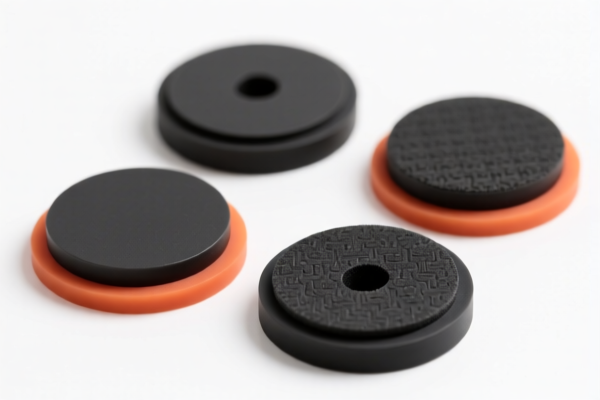
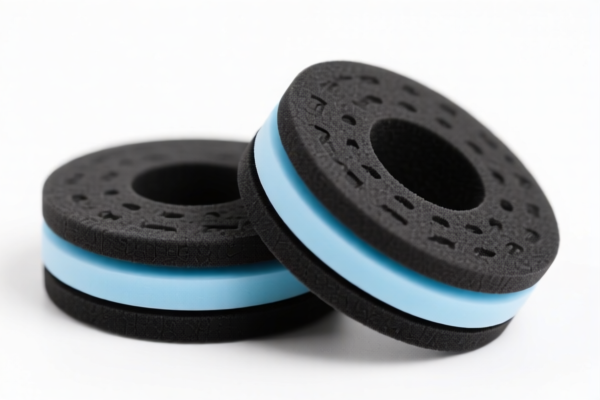
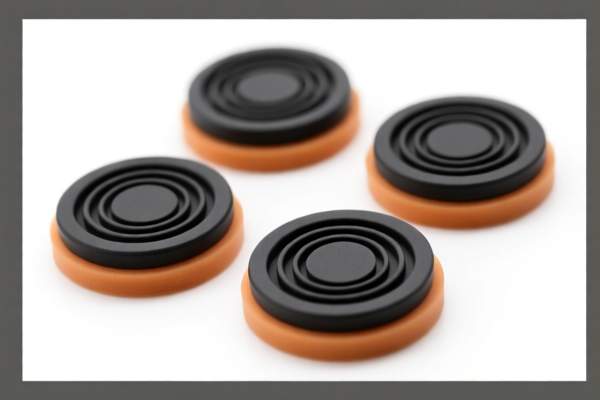
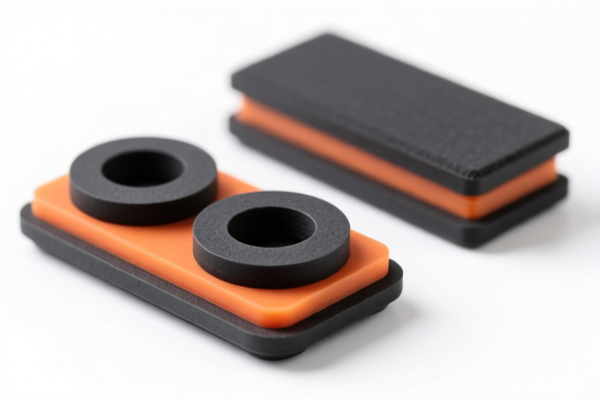
buffer separator pad
CN → US| HS编码 | 关税税率 | 原产国 | 目的国 | 文档 |
|---|---|---|---|---|
| 3926904590 | 38.5% | CN | US | 官方文档 |
| 3926909989 | 22.8% | CN | US | 官方文档 |
| 4016996050 | 37.5% | CN | US | 官方文档 |
| 4016995500 | 37.5% | CN | US | 官方文档 |
| 4016996050 | 37.5% | CN | US | 官方文档 |
商品图片
AI分析
🛡️ Buffer Separator Pad (Cushioning/Shock Absorption Components)
🌐 HS Code Reference & Clearance Guide | 2026 Latest Tariff Analysis | Professional Customs Strategy
📌 Part 1: Product Definition & Classification Logic
Buffer Separator Pads are critical components used for shock absorption, vibration damping, noise reduction, and spacing/separation in machinery, electronics, construction, and automotive applications. In international trade, their classification depends strictly on material composition (Plastic vs. Rubber) and specific function.
⚠️ Key Distinction Point:
- If made of Plastic/Synthetic Polymers (e.g., PE, PP, PVC foam, Silicone resin): Classified under Chapter 39.
- If made of Vulcanized Rubber (e.g., Natural Rubber, SBR, Nitrile): Classified under Chapter 40.
📦 Part 2: HS Code Classification Matrix (Based on Provided Data)
| HS Code | Material Basis | Summary / Logic from Data | Total Tax Rate |
|---|---|---|---|
| 3926.90.45.90 | Plastic | "Buffer pad belongs to gaskets/seals category; inferred as plastic/rubber-like product, classified under other plastic products." | 38.5% |
| 3926.90.99.89 | Plastic/Synthetic | "Based on usage and common sense, inferred material is plastic, rubber, or synthetic material; fits 'other articles of plastic and other materials'." | 22.8% |
| 4016.99.60.50 | Vulcanized Rubber | "Buffer pad belongs to rubber products; inferred material is vulcanized rubber; fits 'other vulcanized rubber articles' (catch-all)." | 37.5% |
| 4016.99.55.00 | Vulcanized Rubber | "Usage fits vibration control definition; inferred material is rubber-based; classified under other vulcanized rubber articles." | 37.5% |
| 4016.99.60.50 | Silicone (Vulcanized) | "Silicone buffer pad material is silicone (a type of vulcanized rubber); form is buffer pad; fits 'other vulcanized rubber articles'." | 37.5% |
🔍 Critical Insight:
- Plastic Pads (Ch. 39): Generally considered "other plastic articles." The key is proving the material is not primarily rubber.
- Rubber Pads (Ch. 40): Includes both general rubber pads and Silicone (which US Customs treats as vulcanized rubber for Chapter 40 purposes).
- Tax Discrepancy: Note the significant tax difference between HS3926.90.99.89(22.8%) and3926.90.45.90(38.5%). Material proof is crucial.
💰 Part 3: 2026 Latest Tariff Rate Breakdown (Including Additional Duties)
✅ Applicable Country: United States (US)
✅ Origin: China (CN)
✅ Effective Date: Post-2025/2026 Trade Policy Context (Section 301 & IEEPA)
🎯 1. Plastic-Based Buffer Pads (Chapter 39)
Option A: HS 3926.90.45.90
- Logical Basis: Classified specifically under "Other plastic articles, n.e.s. in 3926" with a focus on gaskets/seals.
- Tax Detail:
- Base Duty: 3.5%
- Section 301 Additional Duty: 25.0%
- IEEPA 122-Clause Duty: 10.0%
- Total Effective Rate: 38.5%
- ⚠️ Warning: This is a high-cost classification. Requires strict proof that the item is not primarily rubber.
Option B: HS 3926.90.99.89
- Logical Basis: A broader "Other" category for plastic articles. Often used if the specific "45.90" description doesn't perfectly fit the product's industrial use.
- Tax Detail:
- Base Duty: 5.3%
- Section 301 Additional Duty: 7.5%
- IEEPA 122-Clause Duty: 10.0%
- Total Effective Rate: 22.8%
- 💡 Strategy: This rate is significantly lower (15.7% savings). However, Customs may challenge this if the product is explicitly a "gasket." You must argue it is a general "buffer/shock absorber," not a fluid-tight seal.
🎯 2. Rubber & Silicone-Based Buffer Pads (Chapter 40)
Options C/D/E: HS 4016.99.55.00 / 4016.99.60.50
- Logical Basis: Includes general vulcanized rubber pads and Silicone pads (Silicone is chemically distinct but often grouped with rubber in Chapter 40 for duty purposes if vulcanized).
- Tax Detail:
- Base Duty: 2.5%
- Section 301 Additional Duty: 25.0%
- IEEPA 122-Clause Duty: 10.0%
- Total Effective Rate: 37.5%
- Note: Whether classified as "vibration control" (55.00) or "other articles" (60.50), the total tax rate is identical (37.5%). The difference is only in the internal HS subheading description.
🛠️ Part 4: Customs Clearance Practical Advice
✅ 1. Documentation Checklist (Must-Haves)
| Document | Requirement | Why It Matters |
|---|---|---|
| Material Spec Sheet | ✔️ Critical | Must explicitly state: "100% Silicone," "Vulcanized Nitrile Rubber," or "Expanded Polyethylene (EPE)." Ambiguity leads to misclassification. |
| Product Photos | ✔️ Critical | Show texture, flexibility, and any labeling. Rubber looks different from plastic foam. |
| Technical Data Sheet (TDS) | ✔️ | Demonstrates properties (durometer, temperature resistance). High durometer (>60 Shore A) often points to Rubber (Ch 40); low durometer/foam points to Plastic (Ch 39). |
| Commercial Invoice | ✔️ | Must match HS Code description. Do NOT just write "Pad." Write "Rubber Shock Absorber Pad" or "Plastic Buffer Separator." |
| Declaration of Origin | ✔️ | Essential for calculating Section 301/IEEPA duties. |
✅ 2. Strategic Classification Advice
🟢 Strategy 1: Aim for HS 3926.90.99.89 (22.8% Tax)
- When to use: If the pad is Plastic/Polymer (e.g., PE, PP, EVA foam, UHMWPE) and NOT primarily used as a fluid-tight gasket.
- Argument: "This is a general-purpose buffer/shock absorber for machinery alignment, not a dynamic seal for fluids. It does not meet the strict definition of 'gasket' under 3926.90.45."
- Risk: CBP may reject this if the product is explicitly marketed as a "gasket" or "seal."
🟡 Strategy 2: Use HS 4016.99.xxxx (37.5% Tax) for Rubber/Silicone
- When to use: If the pad is Silicone or Vulcanized Rubber.
- Argument: Silicone is frequently classified under Chapter 40. Ensure your TDS states "Vulcanized" or "Cross-linked."
- Risk: Low. This is the standard classification for rubber/silicone buffers. No significant tax savings vs. Plastic Ch 39 "High" rate.
🔴 Strategy 3: Avoid HS 3926.90.45.90 (38.5% Tax)
- Why: It carries the highest Section 301 duty (25%) and is narrowly defined. Only use if forced by CBP, otherwise, try to move to 3926.90.99.89 (if plastic) or Ch 40 (if rubber).
✅ 3. Common Pitfalls & Avoidance
| Mistake | Consequence | Solution |
|---|---|---|
| Calling all pads "Rubber" | If they are Plastic/EVA, you might be flagged for misdeclaration, but more importantly, you might miss the chance to argue for the lower-tax "Other Plastic" category. | Be precise: Use "Thermoplastic Elastomer (TPE)" if it's borderline, but understand TPEs can be Ch 39 or 40 depending on composition. |
| Calling all pads "Plastic" | If they are Silicone, CBP will classify under Ch 40 (37.5%) and may penalize for incorrect description. | If it's Silicone, declare as "Silicone Rubber Pad" under Ch 40. |
| Ignoring IEEPA 10% | All listed HS codes above include a 10% IEEPA surcharge for Chinese goods. | Factor this into your Landed Cost calculation. It is unavoidable for CN origin. |
| Missing "Vulcanization" Proof | For Rubber/Ch 40, non-vulcanized materials might fall under different chapters (e.g., Ch 35 or 39). | Provide lab tests showing vulcanization/cross-linking. |
🌍 Part 5: Global Comparison (Quick Reference)
| Market | Recommended HS Code | Est. Total Duty (CN Origin) | Note |
|---|---|---|---|
| 🇺🇸 USA | 3926.90.99.89 |
22.8% | Best for Plastic Buffers. |
| 🇺🇸 USA | 4016.99.60.50 |
37.5% | Standard for Rubber/Silicone. |
| 🇺🇸 USA | 3926.90.45.90 |
38.5% | Avoid if possible (Gasket classification). |
| 🇪🇺 EU | 3926.90 / 4016.99 | Varies (0-5%) | No Section 301/IEEPA. Check EU-specific rules. |
| 🇨🇳 China | 3926.90 / 4016.99 | ~5-7% | Import duty only. No US-style tariffs. |
📌 Conclusion:
- For Plastic buffer pads, fight for 3926.90.99.89 to save ~15% vs. the gasket classification.
- For Rubber/Silicone, accept 4016.99.60.50 at 37.5%.
- Always include IEEPA 10% in your cost model for China-origin goods.
📌 Part 6: Final Recommendations for Importers
- Get a Pre-Ruling: If your product is borderline (e.g., TPE, Silicone-Plastic blends), request a CBP Binding Ruling before shipment.
- Label Accurately: On the commercial invoice, use the HS-specific description.
- Good: "Plastic Buffer Separator Pad, Model XYZ, Made of PE Foam"
- Bad: "Padding" or "Rubber Pad" (if it's plastic).
- Check Material Composition: If you can switch from a "Gasket" application to a "General Shock Absorber" application, you may qualify for the lower-tax HS 3926.90.99.89.
✨ Professional clearance starts with precise classification!
💼 Your margin depends on these percentage points!
用户评价
关于 HS 编码归类
协调制度(HS)是由世界海关组织(WCO)制定的国际贸易商品分类标准。全球 200 多个国家采用 HS 系统作为海关关税、贸易统计和进出口监管的基础。
每个 HS 编码遵循以下层级结构:
- 章(2 位)——商品大类(例如:第 84 章:机器和机械设备)
- 品目(4 位)——章内的更具体分类
- 子目(6 位)——国际通用细分,所有 WCO 成员国统一使用
- 本国细分(8-10 位)——各国自行扩展的细分编码,如美国 HTSUS 10 位编码
正确的 HS 编码归类对于顺利通关、准确缴纳关税和遵守贸易法规至关重要。错误归类可能导致海关延误、多缴关税或罚款。
从CN进口到US时,适用的关税税率可能包括:
- 最惠国(MFN)税率——适用于 WTO 成员国的标准关税税率
- 普通税率——适用于无贸易协定国家
- 贸易救济关税——附加关税,如 301 条款(反倾销)、232 条款(国家安全)或反补贴税
本页内容仅供参考。如需正式归类,请咨询当地海关或持牌报关代理。