bulk unroasted soybeans
CN → US| HS编码 | 关税税率 | 原产国 | 目的国 | 文档 |
|---|---|---|---|---|
| 1201900005 | 35.0% | CN | US | 官方文档 |
| 1201900090 | 35.0% | CN | US | 官方文档 |
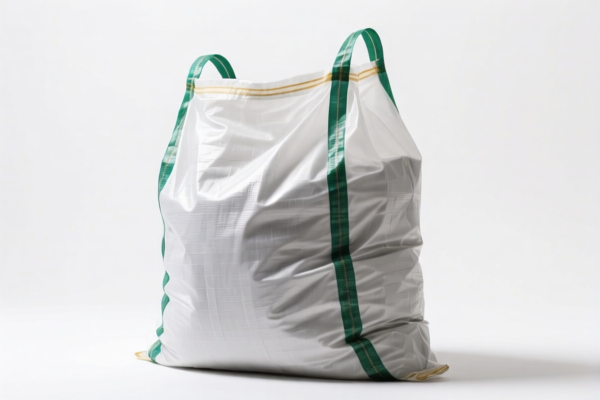
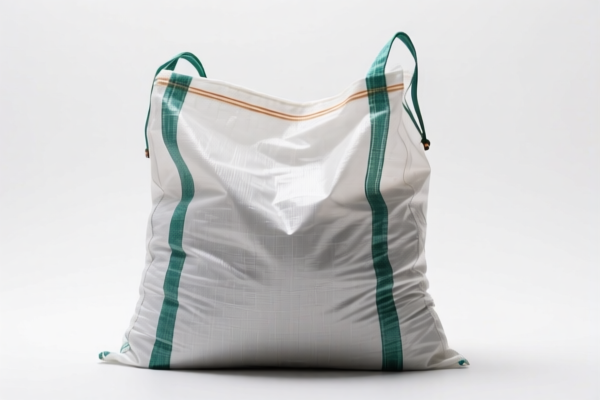
商品图片


AI分析
🌱 Bulk Unroasted Soybeans (Soybeans, Whether or Not Broken)
🌐 HS Code Reference & Customs Clearance Guide | 2026 Latest Tariff Analysis | Professional Entry Strategy
📌 I. Product Definition and Classification: Are You Clear on "Soybeans"?
Unroasted soybeans are one of the most critical agricultural commodities in global trade, primarily used as feedstock for oil extraction and animal feed. In international trade, they are generally classified under Heading 1201. However, precise classification depends on whether the beans are broken or not, and if "Other" varieties fall into specific sub-categories.
The data provided indicates two specific classifications under 1201.90 ("Other Seeds of a kind used as oil stock"). It is crucial to distinguish between these two HS Codes based on the specific sub-description provided in your dataset.
⚠️ Key Distinction Point:
- If the commodity is described specifically as "Other Seeds of a kind used as oil stock" within the context of HS 1201.90, it falls under 1201.90.00.05.
- If the commodity is described as "Other Other: Other" within the same heading, it falls under 1201.90.00.90.
- Note: Both codes currently carry the same total tax rate in the provided dataset, but precise legal description matters for customs audits.
📦 II. HS Code Classification Details (2026 Latest Tariff Authority Cross-Reference)
| HS Code | Product Description | Applicable Scenario | Tax Implication (Based on Data) |
|---|---|---|---|
1201.90.00.05 |
Other Seeds of a kind used as oil stock | General bulk unroasted soybeans classified under "Other Seeds" for oil use | 25.0% Total Tax |
1201.90.00.90 |
Other Other: Other | Soybeans falling under residual "Other" categories within Heading 1201.90 | 25.0% Total Tax |
🔍 Critical Reminder:
- Raw Material vs. Processed: This classification applies strictly to unroasted soybeans. Roasted, cooked, or processed soy products (e.g., soy milk, tofu, soybean oil) fall under different HS Codes (e.g., Chapter 21 or 15).
- "Whether or Not Broken": The phrase in the description includes whole beans, split beans, or broken fragments. As long as they are unroasted and used as oil stock/feed, they generally remain in 1201.90.
- No Exemptions in Data: The provided data does not list any de minimis exemptions or reduced rates for these specific codes.
💰 III. 2026 Latest Tariff Rate Breakdown (Including Additional Duties)
✅ Applicable Country: USA (US) (Implied by the "25% Additional Tariff" structure typical of US-China trade data)
✅ Origin: China (CN) (Implied by the specific tariff structure)
✅ Effective Date: Based on the 25% additional tariff referenced.
🎯 1. 1201.90.00.05 —— Other Seeds of a kind used as oil stock
| Item | Content |
|---|---|
| Base Tariff Rate | 0.0% (ad valorem) |
| Section 301 Additional Tariff | +25.0% |
| Total Tax Rate | 25.0% |
| Tax Calculation | CIF Value × 25% |
| De Minimis Exemption | ❌ Not Applicable (Agricultural commodities are rarely exempt under Section 301) |
| Legal Basis | HTSUS:1201.90.00.05 + Section 301 Footnote |
📌 Explanation:
- The 0% Base Rate reflects the standard Most Favored Nation (MFN) rate for soybeans.
- The 25% Additional Tariff is the critical cost driver, stemming from U.S. trade actions against Chinese agricultural imports.
- Total Cost Impact: For every $100,000 of soybeans, expect $25,000 in additional duties.
🎯 2. 1201.90.00.90 —— Other Other: Other
| Item | Content |
|---|---|
| Base Tariff Rate | 0.0% |
| Section 301 Additional Tariff | +25.0% |
| Total Tax Rate | 25.0% |
| Tax Calculation | CIF Value × 25% |
| De Minimis Exemption | ❌ Not Applicable |
| Legal Basis | HTSUS:1201.90.00.90 + Section 301 Footnote |
📌 Note:
- The tax burden is identical to code .05.
- The distinction lies in the sub-heading granularity. Customs may scrutinize the "Other Other" label more closely, requiring robust documentation to prove the beans are indeed soybeans and not another oil-seed crop.
🛠️ IV. Customs Clearance Practical Advice (Battle-Proven Pitfall Avoidance)
✅ 1. Required Documentation Checklist (Non-negotiable)
| Document | Mandatory? | Explanation |
|---|---|---|
| ✅ Phytosanitary Certificate | ✔️ YES | Issued by the exporting country's agricultural authority. Proves the soybeans are free from pests/diseases. |
| ✅ Commercial Invoice | ✔️ YES | Must clearly state "Unroasted Soybeans," quantity, weight, and HS Code (1201.90.00.05 or .90). |
| ✅ Bill of Lading (B/L) | ✔️ YES | Must match invoice details. Freight forwarder must confirm "General Cargo" (not hazardous). |
| ✅ Certificate of Origin | ✔️ YES | To prove origin (e.g., China). Essential for confirming applicability of the 25% additional tariff. |
| ✅ Fumigation Certificate | ✔️ YES | Often required alongside Phytosanitary Certificate to show treatment against insects. |
| ✅ SOYBEAN ORIGIN DECLARATION | ✔️ YES | Specific declaration that the product is Soya beans and Unroasted. |
✅ 2. Declaration Tips (Key Mantras)
🔥 “Unroasted is Key, Phytosanitary is King, HS Code Precision is Wealth!”
| Scenario | Correct Declaration | Wrong Approach |
|---|---|---|
| Raw Soybeans | "Soybeans, unroasted, whether or not broken" | "Soybeans" (Too vague) or "Food for humans" (Incorrect intent) |
| Broken Beans | Include "broken" in description | Hide the fact; customs X-rays will show size |
| Mixed with Debris | Declare net weight of pure soybeans | Gross weight including stones/straw (Can lead to penalties) |
| Transshipment | Declare final origin (China) | Try to hide origin (High risk of fraud allegations) |
✅ 3. Special Circumstances Handling
| Situation | Handling Advice |
|---|---|
| Moisture Content | Ensure moisture is within acceptable limits (usually <13-14%). High moisture can lead to rejection for mold/spoilage. |
| Protein/Oil Content | While not affecting HS code, high-quality beans may have different market value. Declare accurately to avoid value disputes. |
| GMO Status | If importing into certain countries/regions, GMO declaration may be required. Check destination regulations. |
| Port of Entry | Some ports have strict agricultural inspections. Pre-clearance with the specific port's agricultural office is advised. |
🌍 V. Global Market Comparison (2026 Latest)
| Country/Region | Recommended HS Code | Tariff (China Origin) | Certification Requirements | Notes |
|---|---|---|---|---|
| 🇺🇸 USA | 1201.90.00.05 / .90 |
25% | Phytosanitary, USDA Inspection | 25% tariff is significant; plan margin accordingly. |
| 🇨🇳 China | 1201.00.00.00 |
3% - 9% | None for import (if domestic) | China is a major importer; rates vary by type. |
| 🇪🇺 EU | 1201.10.00 / 1201.90.00 |
0% - 2% | Phytosanitary, Non-GMO Declaration (if applicable) | Strict on GMOs. "Other" seeds may face higher scrutiny. |
| 🇯🇵 Japan | 1201.00 |
3% - 4% | Phytosanitary, Fumigation | High quality standards; foreign matter limits are strict. |
📌 Conclusion:
- USA Market: The 25% additional tariff is the biggest hurdle. Importers must calculate landed cost carefully.
- EU/Japan: Focus shifts from tariff to regulatory compliance (GMO, residues, quality).
- China: Tariffs are low, but volume and logistics dominate.
📌 VI. Common Errors & Pitfall Guide (Lessons Learned)
❌ Error 1: Declaring "Soybeans" without specifying "Unroasted"
👉 Consequence: Customs may suspect processed goods, leading to misclassification or seizure.
✅ Fix: Always use "Unroasted Soybeans."
❌ Error 2: Omitting "Whether or Not Broken" in Description
👉 Consequence: Minor discrepancy, but can cause delays in automated clearance systems.
✅ Fix: Use the full legal description: "Soybeans, whether or not broken."
❌ Error 3: Confusing HS Code 1201 (Soybeans) with 1207 (Other Oil Seeds)
👉 Consequence: Incorrect classification. Soybeans are explicitly in 1201. Other seeds (e.g., sunflower) are in 1207.
✅ Fix: Verify botanical name: Glycine max.
❌ Error 4: Ignoring Phytosanitary Certificate
👉 Consequence: Refusal of Entry or destruction of cargo.
✅ Fix: Ensure certificate is issued by the National Plant Protection Organization (NPPO) of the exporting country.
🎯 VII. Conclusion: Precision in Ag-Trade Saves Money!
🎯 Remember the Mantra:
🔹 "Unroasted, Broken, Oil Stock – 1201 is the lock."
🔹 "25% Tariff Hits US Market – Check Your Margin, Don't Get Caught."
🔹 "Phytosanitary Paper is Your Ticket – No Cert, No Entry!"
📌 Pro Tip:
- For US Imports: Consider if beans are sourced from non-China origins (e.g., Brazil, USA domestic) to avoid the 25% additional tariff.
- Apply for Advance Ruling if unsure about the "Other Other" classification for unique bean varieties.
📣 Immediate Action:
📞 Contact your customs broker with the exact Phytosanitary Certificate and Invoice.
🚀 Verify HS Code: Use1201.90.00.05or1201.90.00.90based on the specific sub-description.
💡 Budget for 25% Duty if originating from China to the US.
✨ Professional Clearance Starts with Accurate Classification!
💼 Your Cargo is Agricultural Gold – Handle with Care and Precision!
用户评价
关于 HS 编码归类
协调制度(HS)是由世界海关组织(WCO)制定的国际贸易商品分类标准。全球 200 多个国家采用 HS 系统作为海关关税、贸易统计和进出口监管的基础。
每个 HS 编码遵循以下层级结构:
- 章(2 位)——商品大类(例如:第 84 章:机器和机械设备)
- 品目(4 位)——章内的更具体分类
- 子目(6 位)——国际通用细分,所有 WCO 成员国统一使用
- 本国细分(8-10 位)——各国自行扩展的细分编码,如美国 HTSUS 10 位编码
正确的 HS 编码归类对于顺利通关、准确缴纳关税和遵守贸易法规至关重要。错误归类可能导致海关延误、多缴关税或罚款。
从CN进口到US时,适用的关税税率可能包括:
- 最惠国(MFN)税率——适用于 WTO 成员国的标准关税税率
- 普通税率——适用于无贸易协定国家
- 贸易救济关税——附加关税,如 301 条款(反倾销)、232 条款(国家安全)或反补贴税
本页内容仅供参考。如需正式归类,请咨询当地海关或持牌报关代理。