button cover
CN → US| HS编码 | 关税税率 | 原产国 | 目的国 | 文档 |
|---|---|---|---|---|
| 8536509031 | 35.0% | CN | US | 官方文档 |
| 8536509033 | 35.0% | CN | US | 官方文档 |
| 8538908160 | 38.5% | CN | US | 官方文档 |
| 8538908180 | 38.5% | CN | US | 官方文档 |
| 3926902500 | 24.0% | CN | US | 官方文档 |
商品图片
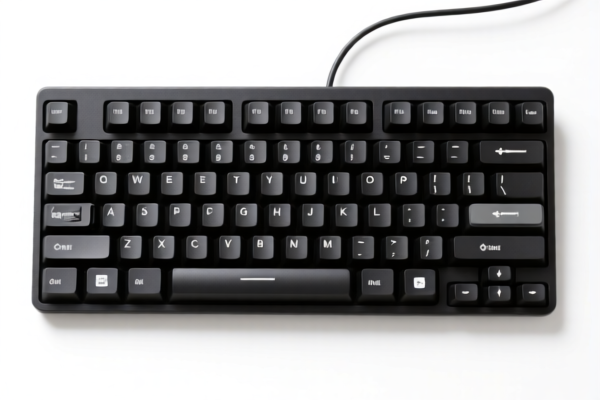
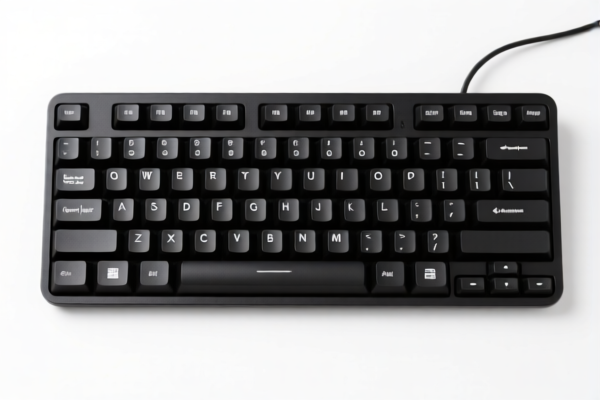
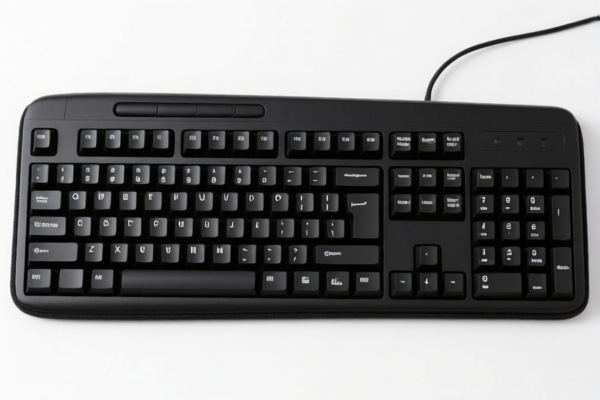
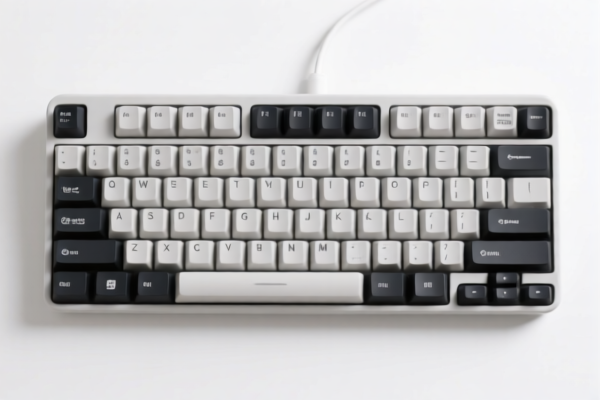
AI分析
🔘 Button Cover (Switch Cap / Pushbutton Housing)
🌐 HS Code Reference & Clearance Guide | 2026 Latest Tariff Analysis | Professional Customs Strategy
📌 I. Product Definition & Classification: What Exactly Is a "Button Cover"?
A Button Cover (also known as a Pushbutton Cap, Switch Actuator, or Button Housing) is a critical component of electrical control systems. It serves as the interface between the user and the electrical switch mechanism. In international trade, its classification depends heavily on its material composition and functional role:
- As an Electrical Component Part: If the cover is integral to the switch’s operation (e.g., it transmits force to the internal mechanism) and is classified under Chapter 85 (Electrical machinery and equipment), it is treated as a part of a switch.
- As a Plastic Component: If the cover is primarily valued for its material (plastic) and considered a generic molded part, it may fall under Chapter 39 (Plastics and articles thereof), specifically classified as a handle, knob, or other plastic article.
⚠️ Key Distinction:
- If the item is specifically designed as a part of a switch and listed in Heading 8536 or 8538 → Electrical Parts
- If the item is a generic plastic cap/handle not specific to a switch mechanism → Plastic Articles
- Misclassification can lead to significant tariff differences (e.g., 22.8% vs. 38.5% or 45% with附加税s).
📦 II. HS Code Classification Details (2026 Latest Tariff Alignment)
Based on the provided data, here are the five potential HS Codes for "Button Cover," along with their logical justifications and tax implications.
| HS Code | Product Description & Logical Justification | Tax Rate (Total) | Tax Breakdown |
|---|---|---|---|
| 8536.50.90.31 | Button Cover as a Component: Classified as a component related to push-button switches. Fits the principle of parts matching the main apparatus. | 35.0% | Base: 0% Add-on: 25% Section 301 (122): 10% |
| 8536.50.90.33 | Button Cover as an Accessory: Classified as an附属 component (accessory) to switches. Follows the logic of button-type assemblies under "other switches." | 35.0% | Base: 0% Add-on: 25% Section 301 (122): 10% |
| 8538.90.81.60 | Button Cover as Control Panel Part: Classified as a part of switching equipment, specifically as a component of control panels or boards. | 38.5% | Base: 3.5% Add-on: 25% Section 301 (122): 10% |
| 8538.90.81.80 | Button Cover as Other Part: Classified as a "other" part category. Material conflict is absent, fitting the residual/fallback category for electrical parts. | 38.5% | Base: 3.5% Add-on: 25% Section 301 (122): 10% |
| 3926.90.25.00 | Button Cover as Plastic Article: Inferred material is plastic. Classified under "other plastic articles" as handles or knobs. | 24.0% | Base: 6.5% Add-on: 7.5% Section 301 (122): 10% |
| 3926.90.99.89 | Button Cover as Generic Plastic Part: Inferred material is plastic. Classified as a residual category for other plastic articles/parts. | 22.8% | Base: 5.3% Add-on: 7.5% Section 301 (122): 10% |
🔍 Critical Insight:
- Electrical Parts (8536/8538) carry higher total tariffs (35-38.5%) due to a 25% add-on tariff and 10% Section 301 tariff, with base rates of 0-3.5%.
- Plastic Parts (3926) carry lower total tariffs (22.8-24%) with a 7.5% add-on tariff and 10% Section 301 tariff, with base rates of 5.3-6.5%.
- Why the difference? The "Add-on Tariff" (likely USITC Section 301 or similar trade remedy) is significantly higher for electrical components (25%) than for plastic articles (7.5%).
💰 III. Detailed Tariff Rate Analysis (2026 Latest Rules)
✅ Applicable Country: USA (US)
✅ Origin: China (CN)
✅ Effective Date: Post-2025 (based on 122 Clause and add-on structures)
🎯 1. Electrical Part Classifications (HS 8536 & 8538)
These codes treat the button cover as an integral part of an electrical switch or control panel.
| Item | Content |
|---|---|
| Base Tariff | 0% (for 8536.50.90.31/33) or 3.5% (for 8538.90.81.60/80) |
| Add-on Tariff | +25% (Trade remedy tariff, likely Section 301) |
| Section 122 Tariff | +10% (Specific clause for this product type) |
| Total Rate | 35.0% or 38.5% |
| Calculation | CIF Value × Total Rate |
| De Minimis Exemption | ❌ Not Eligible |
| Legal Path | USITC:8536.50.90 / USITC:8538.90.81 → Add-on:25% → Clause122:10% |
📌 Explanation:
- The 25% add-on tariff is the dominant cost driver for electrical components.
- The 10% Section 122 tariff is a specific levy applied to this category.
- Total impact: High. For a $10,000 shipment, duties could range from $3,500 to $3,850.
🎯 2. Plastic Part Classifications (HS 3926)
These codes treat the button cover as a generic plastic molded part, prioritizing material over function.
| Item | Content |
|---|---|
| Base Tariff | 6.5% (for 3926.90.25.00) or 5.3% (for 3926.90.99.89) |
| Add-on Tariff | +7.5% (Lower than electrical parts) |
| Section 122 Tariff | +10% (Same clause applies) |
| Total Rate | 24.0% or 22.8% |
| Calculation | CIF Value × Total Rate |
| De Minimis Exemption | ❌ Not Eligible |
| Legal Path | USITC:3926.90.99 → Add-on:7.5% → Clause122:10% |
📌 Explanation:
- The 7.5% add-on tariff is significantly lower than the 25% for electrical parts.
- Total impact: Moderate. For a $10,000 shipment, duties could range from $2,280 to $2,400.
- Savings: Potential savings of $1,100-$1,570 per $10k shipment by classifying as plastic vs. electrical.
🛠️ IV. Customs Clearance Operational Advice (Practical Pitfall Avoidance)
✅ 1. Documentation Checklist (Must-Have)
| Document | Mandatory? | Purpose |
|---|---|---|
| Product Specification Sheet | ✅ Yes | Detail dimensions, material (e.g., PC, ABS), and color |
| Material Certificate | ✅ Yes | Prove plastic composition (e.g., UL94 rating, flammability) |
| Function Diagram | ✅ Yes | Show if it’s just a cap or if it interacts with electrical contacts |
| Photos (Clear & Detailed) | ✅ Yes | Show the button cover installed on the switch vs. isolated |
| Commercial Invoice | ✅ Yes | Describe as "Plastic Button Cover for Switch" or "Switch Part" |
| Packing List | ✅ Yes | Ensure quantity matches invoice |
✅ 2. Classification Strategy (Key Tactics)
🔥 "Material First, Function Second" for Savings!
| Scenario | Recommended HS Code | Reasoning |
|---|---|---|
| Generic Plastic Caps | 3926.90.99.89 (22.8%) | If the cover is a simple molded plastic piece with no electrical function, classify as plastic. |
| Specific Switch Parts | 8536.50.90.31 (35.0%) | If the cover is uniquely shaped for a specific switch model and listed as a "part," classify as electrical. |
| Control Panel Components | 8538.90.81.60 (38.5%) | If sold as part of a control panel assembly, use this code. |
⚠️ Warning:
- Do not classify a clearly electrical part as plastic just to save tax. Customs may audit and reclassify, leading to penalties + back taxes.
- Use 3926 only if the product is a generic plastic component not exclusive to electrical function.
✅ 3. Special Cases
| Situation | Handling Advice |
|---|---|
| OEM Custom Parts | Provide customer drawings to prove specificity. If custom for electrical use, lean toward 8536/8538. |
| Mixed Shipments | Separate plastic-only parts from electrical assemblies. Don’t mix to avoid ambiguity. |
| Material Change | If the cover is metal, 3926 is invalid. Must use 8536/8538 or 8548. |
| De Minimis (Section 321) | ❌ Not Eligible. All listed codes are subject to full duty due to origin and product type. |
🌍 V. Global Market Comparison (2026 Latest)
| Country/Region | Recommended HS Code | Tariff Rate | Notes |
|---|---|---|---|
| 🇺🇸 USA | 3926.90.99.89 | 22.8% | Lowest rate if classified as plastic. If electrical, 35-38.5%. |
| 🇨🇳 China | 8536.50.90.31 | ~5-10% | Lower base rates, no add-on tariffs. |
| 🇪🇺 EU | 8536.50.90 | ~0-2.5% | Low base duty, but strict CE/ROHS compliance. |
| 🇬🇧 UK | 8536.50.90 | ~2.5% | Post-Brexit tariff alignment with EU. |
| 🇦🇺 Australia | 8536.50.90 | ~5% | General Rate of Duty (GRD). |
📌 Conclusion:
- USA is the highest-cost market for Button Covers due to add-on tariffs.
- Strategic Tip: If the product is a generic plastic cover, insist on 3926.90.99.89 for the lowest duty (22.8%). If it’s a specialized electrical part, accept the 35%+ rate but ensure all documentation supports the electrical function.
📌 VI. Common Mistakes & Pitfalls (Lessons Learned)
❌ Mistake 1: Classifying a specialized electrical switch part as "Plastic Knob" (3926) to save tax.
👉 Result: Customs audit → Reclassification to 8536 → Back taxes + 25% add-on penalty.
❌ Mistake 2: Using vague descriptions like "Button Part" on the invoice.
👉 Result: Delayed clearance, manual inspection, potential misclassification.
❌ Mistake 3: Assuming De Minimis applies.
👉 Result: Shipments <$800 still subject to duty if from China (due to Section 301/122 exclusions).
✅ Correct Approach:
"Plastic Button Cover, Model XYZ, Material: ABS, Color: Black, For Use in Industrial Switch Panels"
HS Code: 3926.90.99.89 (if generic plastic) OR 8536.50.90.31 (if electrical part).
🎯 VII. Conclusion: Professional Classification, Cost Efficiency!
🎯 Remember the Rule:
🔹 "If it’s plastic, go 3926 (22.8%). If it’s electrical, go 8536 (35-38.5%)."
🔹 "Justify the classification with material specs and function diagrams."
🔹 "Avoid vague terms to prevent customs delays."
📌 Pro Tip:
If you can design the product to be a generic plastic component (e.g., a simple cap that fits multiple switches), classify it under 3926.90.99.89 to save ~12-15% in duties. If it’s a custom electrical part, prepare for the higher tariff but ensure compliance with Section 122 requirements.
📣 Action Step:
📞 Consult with a licensed customs broker to confirm classification based on product drawings.
📄 Request a Binding Ruling (Pre-Clearance) from U.S. Customs to lock in the HS Code and avoid future disputes.
🚀 Optimize your supply chain, reduce duty costs, and ensure smooth customs clearance!
✨ Precision in Classification, Profit in Your Pocket!
💼 Your duty savings start with the right HS Code!
用户评价
关于 HS 编码归类
协调制度(HS)是由世界海关组织(WCO)制定的国际贸易商品分类标准。全球 200 多个国家采用 HS 系统作为海关关税、贸易统计和进出口监管的基础。
每个 HS 编码遵循以下层级结构:
- 章(2 位)——商品大类(例如:第 84 章:机器和机械设备)
- 品目(4 位)——章内的更具体分类
- 子目(6 位)——国际通用细分,所有 WCO 成员国统一使用
- 本国细分(8-10 位)——各国自行扩展的细分编码,如美国 HTSUS 10 位编码
正确的 HS 编码归类对于顺利通关、准确缴纳关税和遵守贸易法规至关重要。错误归类可能导致海关延误、多缴关税或罚款。
从CN进口到US时,适用的关税税率可能包括:
- 最惠国(MFN)税率——适用于 WTO 成员国的标准关税税率
- 普通税率——适用于无贸易协定国家
- 贸易救济关税——附加关税,如 301 条款(反倾销)、232 条款(国家安全)或反补贴税
本页内容仅供参考。如需正式归类,请咨询当地海关或持牌报关代理。