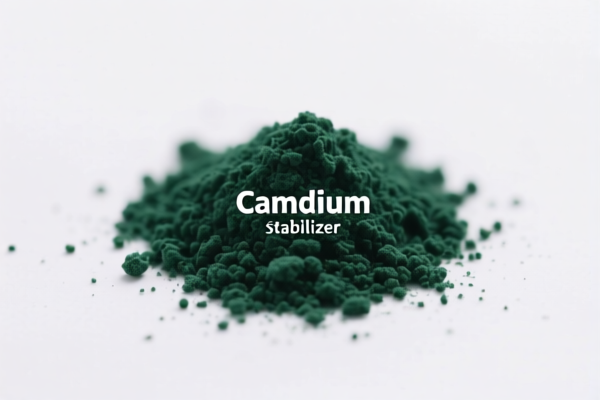
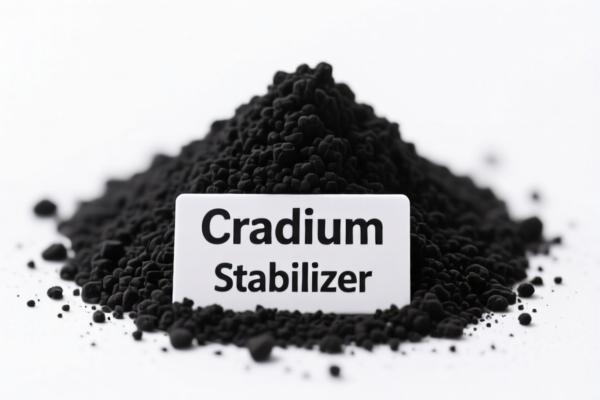
carbon black stabilizer for tires
CN → US| HS编码 | 关税税率 | 原产国 | 目的国 | 文档 |
|---|---|---|---|---|
| 3812399000 | 40.0% | CN | US | 官方文档 |
| 3812396000 | 41.5% | CN | US | 官方文档 |
| 2803000010 | 35.0% | CN | US | 官方文档 |
| 2803000050 | 35.0% | CN | US | 官方文档 |
| 4005100000 | 35.0% | CN | US | 官方文档 |
| 4005990000 | 35.0% | CN | US | 官方文档 |
商品图片

AI分析
🛞 Carbon Black Stabilizer for Tires (Rubber Compounding Additives)
🌐 HS Code Reference & Customs Clearance Guide | 2026 Latest Tariff Analysis | Professional Clearance Strategy for Rubber Industry
📌 Part 1: Product Definition & Classification: What Exactly Are We Importing?
"Carbon black stabilizer for tires" is not a single legal entity in customs terminology but rather a functional description of rubber compounding ingredients. In international trade, these are primarily classified into two distinct categories based on their chemical nature and primary function:
1. Carbon Black (The Reinforcing Agent)
Often mistakenly called a "stabilizer" by non-experts, Carbon Black is the primary reinforcing filler in tire rubber. It provides strength, abrasion resistance, and UV protection. While it has some stabilizing effect against UV degradation, its primary function is reinforcement.
2. Anti-Oxidizing/Compound Stabilizers (The True Stabilizers)
These are chemical preparations (usually based on aromatic or modified aromatic antioxidants) added to rubber to prevent aging, oxidation, and degradation during storage and use. They are distinct from the filler (Carbon Black).
⚠️ Critical Distinction:
- If the product is pure Carbon Black powder → It is classified under Chapter 28 as "Carbon (carbon blacks...)".
- If the product is a chemical mixture/paste designed to stabilize rubber (not primarily for reinforcement) → It is classified under Chapter 38 as "Prepared rubber accelerators... antioxidizing preparations...".
- If the product is Rubber already compounded with Carbon Black → It is classified under Chapter 40 as "Compounded rubber... compounded with carbon black or silica".
📦 Part 2: HS Code Classification Details (2026 Latest Tariff Authority)
Based on the provided <DATA>, here is the precise mapping for items related to "Carbon Black Stabilizer for Tires":
| HS Code | Product Description | Application in Tires | Tax Rate (China Origin → US) |
|---|---|---|---|
2803.00.00.10 |
Carbon Black (Carbon black and other forms of carbon not elsewhere specified or included) | Primary reinforcing filler. Provides tensile strength and UV stability. | 25.0% (Base: 0% + Section 301: 25%) |
3812.39.60.00 |
Prepared Stabilizers: Containing any aromatic or modified aromatic antioxidant or other stabilizer | Anti-aging agent. Prevents rubber from cracking due to oxygen/ozone exposure. | 0.0% (Base: 0% + Section 301: 0%) |
3812.39.90.00 |
Prepared Stabilizers: Other (Not containing aromatic/modified aromatic stabilizer) | Non-aromatic stabilizers or accelerators. | 30.0% (Base: 5% + Section 301: 25%) |
4005.10.00.00 |
Compounded Rubber: Compounded with carbon black or silica | Pre-mixed rubber bakes or sheets ready for tire manufacturing. | 25.0% (Base: 0% + Section 301: 25%) |
4005.99.00.00 |
Compounded Rubber: Other (Unvulcanized) | Other pre-compounded rubber forms not specifically carbon-black based. | 25.0% (Base: 0% + Section 301: 25%) |
🔍 Key Insight:
- The term "Stabilizer" in the query usually points to Chapter 38 (Chemical Preparations).
- However, if the "stabilizer" is actually Carbon Black (common in tire manufacturing contexts), it falls under Chapter 28.
- Crucial Tax Difference:2803.00.00.10(Carbon Black) has a 25% tariff, while3812.39.60.00(Aromatic Stabilizer) has a 0% tariff. Misclassification here leads to massive cost differences.
💰 Part 3: 2026 Latest Tariff Rate Breakdown (Detailed Policy)
✅ Applicable Country: United States (US)
✅ Origin: China (CN)
✅ Effective Time: Post-2025 Trade Policies (Section 301)
🎯 1. 2803.00.00.10 —— Carbon Black (The "Filler/Stabilizer")
| Item | Detail |
|---|---|
| Basic Tariff | 0.0% |
| Section 301 Additional Tariff | +25.0% |
| Total Tax Rate | 25.0% |
| Tax Calculation | CIF Value × 25% |
| De Minimis Exemption | ❌ Not Eligible (Denied under Section 301) |
| Legal Basis | USITC:2803.00.00.10 → USITC:2803.00.00 → Footnote: 9903.88.01 |
📌 Explanation:
- Carbon black is considered a raw material for manufacturing. Despite being a "stabilizer" against UV, it is chemically classified as Carbon.
- The 25% tariff is mandatory for Chinese-origin carbon black.
🎯 2. 3812.39.60.00 —— Aromatic Antioxidants/Stabilizers (The "True Stabilizer")
| Item | Detail |
|---|---|
| Basic Tariff | 0.0% |
| Section 301 Additional Tariff | 0.0% |
| Total Tax Rate | 0.0% |
| Tax Calculation | None |
| De Minimis Exemption | ✅ Eligible (If < $800, though Section 301 usually applies to commercial imports) |
| Legal Basis | USITC:3812.39.60.00 → Special Program Indicator (SPI): 0 |
📌 Explanation:
- This is the most favorable HS code for chemical stabilizers.
- Why 0%? Because specific aromatic antioxidants are exempted or have zero base rate + zero additional tariff in this specific subheading.
- Warning: If the stabilizer is non-aromatic, it falls under3812.39.90.00with a 30% tax rate. You must know the chemical composition!
🎯 3. 3812.39.90.00 —— Non-Aromatic Stabilizers
| Item | Detail |
|---|---|
| Basic Tariff | 5.0% |
| Section 301 Additional Tariff | +25.0% |
| Total Tax Rate | 30.0% |
| Legal Basis | USITC:3812.39.90.00 |
🎯 4. 4005.10.00.00 —— Pre-Compounded Rubber with Carbon Black
| Item | Detail |
|---|---|
| Basic Tariff | 0.0% |
| Section 301 Additional Tariff | +25.0% |
| Total Tax Rate | 25.0% |
| Legal Basis | USITC:4005.10.00.00 |
🛠️ Part 4: Customs Clearance Practical Advice (Pitfall Avoidance Guide)
✅ 1. Documentation Checklist (Non-Negotiable)
| Document | Requirement | Notes |
|---|---|---|
| ✅ MSDS (Material Safety Data Sheet) | ✔️ Mandatory | Must specify exact chemical composition (Aromatic vs. Non-aromatic). |
| ✅ Product Specification Sheet | ✔️ Mandatory | Clearly state: "Carbon Black (ECP/FSD/ACF...)" OR "Antioxidant 6PPD/Quinoline". |
| ✅ Commercial Invoice | ✔️ Mandatory | Description must match HS Code exactly. Do NOT use vague terms like "Stabilizer Mix". |
| ✅ Certificate of Origin | ✔️ Required | To prove origin for Section 301 application. |
| ✅ Formula/Composition Proof | ✔️ Critical | If claiming 0% for 3812.39.60.00, Customs may demand proof of aromatic content. |
✅ 2. Classification Strategy (Key Mnemonic)
🔥 "Know Your Chemistry: Black is Carbon (25%), Aromatic is Zero (0%), Other is 30%!"
| Scenario | Correct HS Code | Risk |
|---|---|---|
| You are importing Carbon Black Powder for tires | 2803.00.00.10 |
Low risk, but high tax (25%). |
| You are importing Antioxidant 6PPD (Aromatic) | 3812.39.60.00 |
Zero Tax! Must prove aromatic nature. |
| You are importing Non-Aromatic Stabilizer | 3812.39.90.00 |
High Tax (30%). |
| You are importing Pre-mixed Rubber with Carbon Black | 4005.10.00.00 |
High Tax (25%). |
⚠️ Common Mistake:
Declaring "Carbon Black" as "Stabilizer" under3812.39.60.00to avoid the 25% tariff.
Consequence: Customs will reject this, assess a 25% duty + penalties + back taxes. Do not mix Chapter 28 (Carbon) with Chapter 38 (Chemicals).
✅ 3. Special Cases
| Case | Handling Advice |
|---|---|
| Blend of Carbon Black + Stabilizer | Usually classified as Rubber Compounds (4005.10.00.00) if rubber base is present, or separate lines if pure additives. If it's a physical mix of black + chemical, consult a broker. Often treated as 4005 if rubbery. |
| Nano-Carbon Black | Still 2803.00.00.10. The physical form (nano) does not change the chemical classification. |
| Aromatic vs. Non-Aromatic Stabilizers | This is the biggest tax trap. If your stabilizer contains phenolic or amine-based aromatic antioxidants, it is 3812.39.60.00 (0%). If it is phosphite or thioester (non-aromatic), it is 3812.39.90.00 (30%). Get a lab test if unsure. |
🌍 Part 5: Global Market Comparison (2026)
| Country/Region | Recommended HS Code | Tariff (China Origin) | Notes |
|---|---|---|---|
| 🇺🇸 USA | 3812.39.60.00 |
0% | Best for Aromatic Stabilizers. |
| 🇺🇸 USA | 2803.00.00.10 |
25% | Standard for Carbon Black. |
| 🇨🇳 China | 2803.00.00.10 |
~0-5% | Import duty low, VAT applies. |
| 🇪🇺 EU | 2803.00.00 |
0% | Carbon Black often duty-free in EU. |
| 🇪🇺 EU | 3812.39 |
0% | Stabilizers often duty-free in EU. |
📌 Conclusion:
- USA is the most expensive market due to Section 301 tariffs.
- EU and China are more favorable for these raw materials.
- If you are shipping from China to the US, optimize your HS Code by ensuring stabilizers are classified under3812.39.60.00(if aromatic) to save 30%.
📌 Part 6: Common Errors & Pitfalls (Lessons Learned)
❌ Error 1: Calling Carbon Black "Stabilizer" to get 0% tariff
👉 Result: Customs reclassifies to 2803.00.00.10, charges 25% + penalties.
✅ Fix: Be honest. Declare "Carbon Black" for 2803.00.00.10.
❌ Error 2: Confusing Aromatic and Non-Aromatic Stabilizers
👉 Result: Declaring non-aromatic (3812.39.90.00) as aromatic (3812.39.60.00) to save tax.
✅ Fix: Provide MSDS showing chemical structure. If in doubt, pay the 30% to avoid audit.
❌ Error 3: Pre-mixed rubber declared as separate chemicals
👉 Result: If rubber is already compounded with carbon black, it must be 4005.10.00.00. Splitting it is fraud.
✅ Fix: Import as "Pre-compounded Rubber" if already mixed.
🎯 Part 7: Conclusion: Precision Saves Money!
🎯 Remember the Mantra:
🔹 "Carbon Black = 25% (Chapter 28)"
🔹 "Aromatic Stabilizer = 0% (Chapter 38, .60)"
🔹 "Non-Aromatic Stabilizer = 30% (Chapter 38, .90)"
📌 Pro Tip:
Before shipping, request the chemical composition analysis from your supplier. If the stabilizer is aromatic, insist on the correct HS Code 3812.39.60.00 to enjoy 0% duty. This simple step can save you 30% on the CIF value.
📣 Immediate Action:
📞 Contact your customs broker with the MSDS.
🚀 Ask: "Is this stabilizer aromatic? Can we classify under 3812.39.60.00?"
💰 Maximize your margin by minimizing duty!
✨ Professional clearance starts with accurate chemical classification!
💼 Don't let tariff confusion eat your tire manufacturing profits!
用户评价
关于 HS 编码归类
协调制度(HS)是由世界海关组织(WCO)制定的国际贸易商品分类标准。全球 200 多个国家采用 HS 系统作为海关关税、贸易统计和进出口监管的基础。
每个 HS 编码遵循以下层级结构:
- 章(2 位)——商品大类(例如:第 84 章:机器和机械设备)
- 品目(4 位)——章内的更具体分类
- 子目(6 位)——国际通用细分,所有 WCO 成员国统一使用
- 本国细分(8-10 位)——各国自行扩展的细分编码,如美国 HTSUS 10 位编码
正确的 HS 编码归类对于顺利通关、准确缴纳关税和遵守贸易法规至关重要。错误归类可能导致海关延误、多缴关税或罚款。
从CN进口到US时,适用的关税税率可能包括:
- 最惠国(MFN)税率——适用于 WTO 成员国的标准关税税率
- 普通税率——适用于无贸易协定国家
- 贸易救济关税——附加关税,如 301 条款(反倾销)、232 条款(国家安全)或反补贴税
本页内容仅供参考。如需正式归类,请咨询当地海关或持牌报关代理。