carbon paper horizontal
CN → US| HS编码 | 关税税率 | 原产国 | 目的国 | 文档 |
|---|---|---|---|---|
| 4816200000 | 35.0% | CN | US | 官方文档 |
| 4816900100 | 35.0% | CN | US | 官方文档 |
| 4809202000 | 35.0% | CN | US | 官方文档 |
| 4809204000 | 35.0% | CN | US | 官方文档 |
| 4811492100 | 35.0% | CN | US | 官方文档 |
商品图片
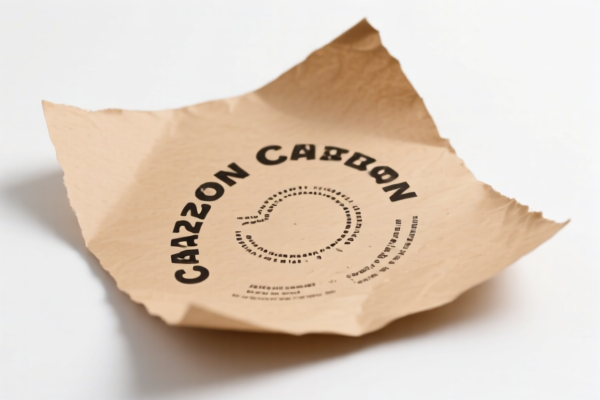

AI分析
📄 Carbon Paper (Horizontal/Sheet Format)
🌐 HS Code Reference & Customs Clearance Guide | 2026 Latest Tariff Analysis | Professional Entry Strategy
📌 I. Product Definition & Classification: What Exactly is "Carbon Paper"?
Carbon paper, in the context of modern trade, typically refers to pressure-sensitive copying sheets used to transfer ink from a document to a carbonless sheet or another surface. The term "Horizontal" or the provided data context suggests we are dealing with standard sheets, rolls, or specific coated papers used for writing or printing duplication.
In international trade, classification depends heavily on the material composition (paper-based, coated vs. uncoated) and form (rolls, sheets, booklets).
⚠️ Key Distinction:
- If it is a simple paper sheet coated with wax/ink for copying → Falls under Chapter 48 (Paper & Paperboard). - If it is a complex self-copying system with carbonless chemistry integrated into multiple plies → Still generally Chapter 48, but specific subheadings apply based on whether it is "wet" (traditional carbon) or "dry" (carbonless). - Note: The term "Horizontal" in the user prompt likely refers to sheet format (as opposed to vertical rolls) or specific applications. The provided<DATA>focuses on Chapter 48 headings.
📦 II. HS Code Classification Details (2026 Latest Tariff Reference)
Based on the provided <DATA>, here are the exact HS codes for "Carbon Paper" (复写纸), including traditional and self-copying varieties. All listed codes attract a total tariff of 35.0% due to US-China trade tensions.
| HS Code | Product Description | Application & Attributes | Key Characteristics |
|---|---|---|---|
4816.20.00.00 |
Carbon Paper, Copy Paper, Self-copy Paper | General use carbon paper; material and usage fully match. | Traditional wet carbon paper or standard self-copy sheets. |
4816.90.01.00 |
Other Paper & Paperboard Products | Carbon paper; usage and form fully match. | Used when the specific form doesn't fit 4816.20 but is still paper-based copying media. |
4809.20.20.00 |
Carbon Paper and Other Copying Papers | Material and usage fully consistent. | Specifically designated for "Copy Paper" in Chapter 48.09. |
4809.20.40.00 |
Self-copying Paper | Self-copying carbon paper; usage and material attributes consistent. | Carbonless copy paper (NCR) – No wet carbon needed, uses microcapsules. |
4811.49.21.00 |
Paper Coated or Surface-Colored | Coated or surface-colored paper, roll or sheet format carbon paper. | Refers to the manufacturing process (coated/surface-colored) if it fits specific technical criteria under 4811. |
🔍 Critical Clarification:
-4816.20.00.00is the most common heading for traditional Carbon Paper.
-4809.20.40.00is specifically for Self-Copying Paper (Carbonless/NCR).
-4811.49.21.00applies if the paper is coated or surface-colored and falls under specific technical definitions in 4811.
- All codes above result in a 35% total tariff for US imports from China.
💰 III. 2026 Latest Tariff Rate Breakdown (Including Surtaxes & Policy Surcharges)
✅ Applicable Country: United States (US)
✅ Origin: China (CN)
✅ Effective Date: From 2025/2026 onward (Current Trade Framework)
🎯 1. General Rate for All Carbon Paper Codes Listed
| Item | Content |
|---|---|
| Base Tariff | 0.0% (Most paper products have low base MFN rates) |
| Section 301 Surcharge | +25.0% (List 4a items) |
| Section 122 / IEEPA Surtax | +10.0% (Specific provisions for certain paper/copying products or general China surcharges depending on exact ruling) |
| Total Tariff Rate | 35.0% |
| Tax Calculation | CIF Value × 35% |
| De Minimis Exemption | ❌ Not Eligible (Deny de minimis for high-tariff goods) |
| Legal Basis Path | USITC:4816.20.00.00 → FOOTNOTE:301 → IEEPA/122 Provisions |
📌 Explanation:
- "Base Tariff 0.0%": Under normal Most Favored Nation (MFN) treatment, basic paper products often have low or zero duties.
- "301 Surcharge 25%": This is the standard Section 301 tariff on many Chinese manufactured goods, including paper products.
- "122 Clause / IEEPA 10%": This additional layer brings the total to 35%. This reflects ongoing trade restrictions and national security tariffs on Chinese imports.
- Total 35%: This is a high tariff burden. Importers must factor this into landed cost calculations.
🛠️ IV. Customs Clearance Practical Advice (Real-World Pitfall Guide)
✅ 1. Required Documentation Checklist (No Exceptions)
| Document | Mandatory? | Description |
|---|---|---|
| ✅ Product Specification Sheet | ✔️ | Must state: Type (Wet/Carbonless), Material (Wood Pulp/Synthetic), Coating Details. |
| ✅ Commercial Invoice | ✔️ | Must clearly state "Carbon Paper" or "Self-Copying Paper". Avoid vague terms like "Stationery". |
| ✅ Packing List | ✔️ | Detail rolls, sheets, or booklets. Ensure weight matches HS code assumptions. |
| ✅ Material Safety Data Sheet (MSDS) | ✔️ | Required if the carbon paper contains chemical coatings or solvents (for 4811.49). |
| ✅ Certificate of Origin | ✔️ | Essential to prove CN origin and apply correct 301/122 tariffs. |
| ✅ Photo of Product & Packaging | ✔️ | Show label, product form (roll vs. sheet), and any "Carbonless" markings. |
✅ 2. Declaration Tips (Key Mantra)
🔥 "Material Matters, Form Determines Code, Be Specific, Avoid Ambiguity!"
| Scenario | Correct Declaration | Common Error |
|---|---|---|
| Traditional Wet Carbon Paper | 4816.20.00.00 – "Carbon Paper, Wax-Coated" |
Vague "Copy Paper" → Risk of misclassification |
| Self-Copying (NCR) Paper | 4809.20.40.00 – "Carbonless Copy Paper, Self-Contained" |
Declaring as "Standard Paper" → Wrong tariff application |
| Coated Paper Rolls (Industrial) | 4811.49.21.00 – "Surface-Coated Paper, Roll Format" |
Using 4816.20 → May trigger scrutiny on coating process |
| Mixed Shipments | Separate HS Codes for each type | Combining all into one generic code → Audit risk |
✅ 3. Special Case Handling
| Scenario | Handling Advice |
|---|---|
| "Horizontal" Format | If "Horizontal" implies Sheet Format (not rolls), ensure documentation states "Sheet, Non-Roll" to support 4816.20 or 4809. |
| Pre-Cut Booklets | If sold as "Carbonless Booklets", still classify by material (usually 4809.20.40.00), not as "stationery sets". |
| Industrial vs. Office | Industrial self-copy paper for receipts may fall under 4811.49 if coated; office use typically 4809 or 4816. |
| Origin Tracing | Ensure the paper pulp origin is clear. If processed in CN, it is CN origin regardless of pulp source. |
🌍 V. Global Market Comparison (2026 Latest)
| Country/Region | Recommended HS Code | Tariff (China Origin) | Certification | Notes |
|---|---|---|---|---|
| 🇺🇸 USA | 4816.20.00.00 or 4809.20.40.00 |
35.0% (Base 0% + 301 25% + 122 10%) | No special certs, but MSDS if coated | High tariff; consider supply chain shift. |
| 🇨🇳 China | 4816.20.00.00 |
0-5% (Internal trade) | CCC (if applicable) | Domestic market not affected by US tariffs. |
| 🇪🇺 EU | 4816.20.00 |
0-6% (General) | REACH (if chemical coatings) | No 301 equivalent; lower tariff barrier. |
| 🇬🇧 UK | 4816.20.00 |
0-5% | UKCA (if coated) | Post-Brexit rules; generally lower tariffs. |
📌 Conclusion:
- USA is the most expensive market for Chinese carbon paper due to 35% total tariffs.
- EU and UK offer significantly better tariff conditions (~0-6%).
- Strategy: Consider sourcing from Vietnam, Thailand, or Mexico to avoid US tariffs (subject to US origin rules).
📌 VI. Common Mistakes & Pitfall Guide (Lessons Learned)
❌ Mistake 1: Declaring "Carbonless Paper" as "Copy Paper" without specifying type.
👉 Consequence: Customs may apply the wrong subheading, leading to back taxes + penalties.
❌ Mistake 2: Ignoring the Coating aspect.
👉 Consequence: If the paper is surface-coated (4811), declaring as 4816.20 (4816) is incorrect. 4811.49.21.00 may apply, but still 35% tariff.
❌ Mistake 3: Assuming "De Minimis" applies.
👉 Consequence: De Minimis is denied for these HS codes. All shipments, even small ones, will be assessed duties.
❌ Mistake 4: Using vague terms like "Stationery" or "Office Supplies".
👉 Consequence: Customs may delay clearance for classification review, causing storage fees.
✅ Correct Practice:
"Self-Copying Paper, Carbonless, A4 Sheet Format, HS Code 4809.20.40.00, Origin: China"
🎯 VII. Conclusion: Precise Classification Saves Money!
🎯 Remember the Mantra:
🔹 "Wet Carbon = 4816, Self-Copy = 4809, Coated = 4811."
🔹 "All Chinese Paper Copies Face 35% Total Duty!"
🔹 "Be Specific in Description, Avoid Vague 'Stationery' Labels."
📌 Tips:
- If your carbon paper is originally manufactured in China but shipped from a third country (e.g., Vietnam), it may still be subject to Rules of Origin scrutiny. Ensure substantial transformation occurred.
- For large volumes, consider Advance Ruling from US CBP to confirm the exact HS code and tariff liability.
- Explore duty drawback programs if the carbon paper is re-exported.
📣 Immediate Action:
📞 Contact a licensed customs broker + Provide product specs + Verify 301/122 applicability
🚀 Ensure smooth customs clearance, avoid delays, and manage costs effectively!
✨ Professional clearance starts with accurate classification!
💼 Every percentage point of tariff affects your bottom line!
用户评价
关于 HS 编码归类
协调制度(HS)是由世界海关组织(WCO)制定的国际贸易商品分类标准。全球 200 多个国家采用 HS 系统作为海关关税、贸易统计和进出口监管的基础。
每个 HS 编码遵循以下层级结构:
- 章(2 位)——商品大类(例如:第 84 章:机器和机械设备)
- 品目(4 位)——章内的更具体分类
- 子目(6 位)——国际通用细分,所有 WCO 成员国统一使用
- 本国细分(8-10 位)——各国自行扩展的细分编码,如美国 HTSUS 10 位编码
正确的 HS 编码归类对于顺利通关、准确缴纳关税和遵守贸易法规至关重要。错误归类可能导致海关延误、多缴关税或罚款。
从CN进口到US时,适用的关税税率可能包括:
- 最惠国(MFN)税率——适用于 WTO 成员国的标准关税税率
- 普通税率——适用于无贸易协定国家
- 贸易救济关税——附加关税,如 301 条款(反倾销)、232 条款(国家安全)或反补贴税
本页内容仅供参考。如需正式归类,请咨询当地海关或持牌报关代理。