carbon paper spiral bound
CN → US| HS编码 | 关税税率 | 原产国 | 目的国 | 文档 |
|---|---|---|---|---|
| 4809202000 | 35.0% | CN | US | 官方文档 |
| 4811493000 | 35.0% | CN | US | 官方文档 |
| 4816200000 | 35.0% | CN | US | 官方文档 |
| 4816900100 | 35.0% | CN | US | 官方文档 |
| 4809204000 | 35.0% | CN | US | 官方文档 |
商品图片
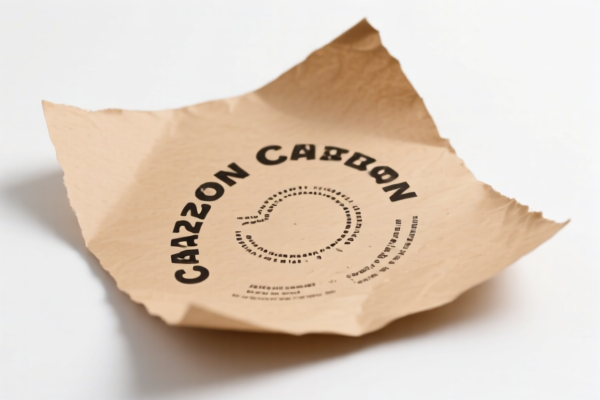


AI分析
📄 Carbon Paper (Spiral Bound)
🌐 HS Code Reference & Customs Clearance Guide | 2026 Latest Tariff Analysis | Professional Clearance Strategy
📌 I. Product Definition & Classification: Do You Truly Understand "Carbon Paper"?
Carbon paper, especially in spiral-bound formats, is a specialized stationery item primarily used for creating duplicate copies of documents without electronic printing. In international trade, its classification depends heavily on its physical state (bound vs. loose sheets) and chemical composition (coated, self-carbon, etc.).
Key Distinction:
- Loose Sheets/ Rolls: Often classified under specific carbon paper headings (e.g., 4809 or 4816).
- Spiral Bound/Assembled: May be considered "printed matter" or "other paper articles," potentially shifting classification to 4816 or 4811 depending on manufacturing details.
⚠️ Critical Classification Point:
- If the carbon paper is loose sheets intended for use with manual typewriters or self-copying systems → Likely 4809 or 4816.20.
- If it is spiral-bound, pre-assembled, or coated for specific adhesion/usage → May fall under 4811.49 or 4816.90.
- "Spiral Bound" implies a manufacturing process that may change the "article" status from simple paper to an "assembled article," which can impact duty rates if not declared correctly.
📦 II. HS Code Classification Details (2026 Latest Tariff Authority Mapping)
Based on the provided data, here are the valid HS Codes for "Carbon Paper" and "Related Paper Products," including spiral-bound variants if they meet the functional description.
| HS Code | Product Description | Application Scenario | Spiral Bound Applicability |
|---|---|---|---|
4809.20.20.00 |
Carbon paper, material and use fully matched | Standard loose carbon paper sheets | ❌ Unlikely (Loose sheets only) |
4811.49.30.00 |
Coated/Colored paper products, fits adhesive paper attributes | Adhesive-backed carbon paper or coated pads | ⚠️ Possible (If spiral-bound pads use adhesive coating) |
4816.20.00.00 |
Carbon paper, use and form fully matched | Self-carbon paper or specific carbon forms | ✅ Highly Likely (Covers specific forms, including bound) |
4816.90.01.00 |
Carbon paper, use and form fully matched | Other carbon paper articles (including bound) | ✅ Best Fit for Spiral Bound (General "other" category) |
4809.20.40.00 |
Self-carbon paper, use and material attributes consistent | Self-copying paper (no external carbon sheet needed) | ❌ No (Self-carbon is different from traditional carbon paper) |
🔍 Key Insight for Spiral Bound:
-4816.20.00.00and4816.90.01.00are the most probable codes for spiral-bound carbon paper because they cover "carbon paper" in various forms, including prepared articles.
-4811.49.30.00applies if the product is marketed as an "adhesive paper" (e.g., carbon pads with glue strips).
- Avoid4809codes unless the product is strictly loose, unbound sheets.
💰 III. 2026 Latest Tariff Rate Breakdown (Including Surcharges & Policy Add-ons)
✅ Applicable Country: United States (US)
✅ Origin: China (CN)
✅ Effective Date: November 10, 2025 onwards
All listed HS Codes share the same tariff structure due to their classification under Chinese-origin stationery/paper products subject to trade measures.
🎯 1. 4809.20.20.00 / 4809.20.40.00 —— Carbon Paper (Loose/Self-Carbon)
| Item | Content |
|---|---|
| Base Rate | 0% (ad valorem) |
| USITC Surcharge | +25% (Section 301 Duties) |
| IEEPA Surcharge | +10% (China/HK specific, effective Nov 10, 2025) |
| Total Rate | 35% |
| Tax Calculation | CIF Value × 35% |
| De Minimis Eligible? | ❌ No (deny_de_minimis) |
| Legal Path | IEEPA:9903.01.25 → USITC:4809.20.x0.00 → FOOTNOTE:9903.88.01 |
📌 Explanation:
- The 25% Section 301 duty applies to most Chinese-origin paper products.
- The 10% IEEPA duty is a recent addition for specific Chinese goods.
- Total 35% is a significant cost driver. Ensure accurate classification to avoid misdeclaration penalties.
🎯 2. 4816.20.00.00 / 4816.90.01.00 —— Carbon Paper (Forms/Spiral Bound)
| Item | Content |
|---|---|
| Base Rate | 0% |
| USITC Surcharge | +25% |
| IEEPA Surcharge | +10% |
| Total Rate | 35% |
| Tax Calculation | CIF × 35% |
| De Minimis Eligible? | ❌ No |
| Legal Path | IEEPA:9903.01.25 → USITC:4816.20/90.x0.00 → FOOTNOTE:9903.88.01 |
📌 Note:
- Same rate as above.
- Spiral-bound carbon paper is often considered a "finished article," which may attract scrutiny. Declare as "Carbon Paper, Spiral Bound, for Duplicate Writing" to align with4816codes.
🎯 3. 4811.49.30.00 —— Coated/Adhesive Paper
| Item | Content |
|---|---|
| Base Rate | 0% |
| USITC Surcharge | +25% |
| IEEPA Surcharge | +10% |
| Total Rate | 35% |
| Tax Calculation | CIF × 35% |
| De Minimis Eligible? | ❌ No |
| Legal Path | IEEPA:9903.01.25 → USITC:4811.49.30.00 → FOOTNOTE:9903.88.01 |
📌 Caution:
- Only use if the product is explicitly an adhesive-backed pad.
- Misclassifying standard carbon paper as "adhesive" can lead to audits.
🛠️ IV. Customs Clearance Practical Advice (Battle-Tested Pitfall Avoidance)
✅ 1. Required Documentation Checklist (Non-Negotiable)
| Document | Mandatory | Explanation |
|---|---|---|
| ✅ Product Specification Sheet | ✔️ | Must specify: "Spiral Bound," "Carbon Coated," "Use for Duplicates" |
| ✅ Product Photos (Front & Back) | ✔️ | Show spiral binding clearly; show coating if visible |
| ✅ Commercial Invoice | ✔️ | Describe as: "Carbon Paper, Spiral Bound, Paper Basis, for Manual Typing" |
| ✅ Packing List | ✔️ | Detail number of sheets per pad, weight, dimensions |
| ✅ Declaration of No Adhesive (if applicable) | ✔️ | If not using 4811, declare "No Adhesive" to avoid misclassification |
| ✅ Origin Certificate | ✔️ | Essential for Section 301 duty assessment |
✅ 2. Declaration Tips (Key Mantra)
🔥 “Bound is Article, Not Just Paper; Name it Right, Avoid the Fire!”
| Scenario | Correct Declaration | Wrong Practice |
|---|---|---|
| Spiral-Bound Carbon Paper | 4816.20.00.00 or 4816.90.01.00 |
❌ 4809.20.20.00 (Loose sheets only) |
| Self-Carbon Paper | 4809.20.40.00 |
❌ 4816.x0 (Different technology) |
| Carbon Pad with Glue | 4811.49.30.00 |
❌ 4816.x0 (No adhesive) |
| Loose Carbon Sheets | 4809.20.20.00 |
❌ 4816.x0 (Wrong form) |
✅ 3. Special Cases & Mitigation
| Situation | Handling Advice |
|---|---|
| OEM Custom Sizes | Provide customer specs; clarify if "standard" or "custom" to avoid "other" high-duty traps |
| Mixed Shipments | Separate invoice lines for loose vs. bound carbon paper |
| Sample Shipments | Even samples are subject to 35% duty; declare accurately to prevent delays |
| Recycled Paper Basis | Declare material origin (virgin vs. recycled) if required by specific country rules |
🌍 V. Global Market Comparison (2026 Latest)
| Country/Region | Recommended HS Code | Duty Rate (China Origin) | Certification Required | Notes |
|---|---|---|---|---|
| 🇺🇸 USA | 4816.20.00.00 / 4816.90.01.00 |
35% (25% Sec 301 + 10% IEEPA) | None (General) | Highest cost due to surcharges |
| 🇨🇳 China | 4816.20.00.00 |
5% | None | Low duty for domestic production |
| 🇪🇺 EU | 4816.20.00.00 |
0% | CE (if applicable) | No anti-dumping on paper |
| 🇬🇧 UK | 4816.20.00.00 |
0% | None | Post-Brexit tariff alignment with EU |
| 🇦🇺 Australia | 4816.20.00.00 |
5% | N/A | Moderate duty |
📌 Conclusion:
- USA is the most expensive market for carbon paper due to layered tariffs.
- Consider supply chain diversification (e.g., Vietnam, Mexico) if exporting large volumes to the US to mitigate the 35% duty.
- Ensure accurate description to avoid penalties for misclassification.
📌 VI. Common Errors & Pitfall Guide (Blood-Lesson Tips)
❌ Error 1: Declaring spiral-bound carbon paper as 4809.20.20.00 (Loose sheets)
👉 Consequence: Customs may reject as "incorrect form," causing delays, fines, or re-inspection.
❌ Error 2: Omitting "Spiral Bound" in the description
👉 Consequence: Customs may assume loose sheets and apply wrong HS code, leading to potential audit findings.
❌ Error 3: Using "Copy Paper" as the generic name
👉 Consequence: Confusion with office copy paper (4802.55), which may have different duties.
✅ Correct Practice:
"Carbon Paper, Spiral Bound, Paper Basis, Coated, for Duplicate Writing, Not Self-Carbon, Model XYZ, 100 Sheets per Pad"
🎯 VII. Conclusion: Precision Classification Saves Costs!
🎯 Remember the Mantra:
🔹 “Bound is Article, Not Just Paper”
🔹 “35% Duty is Real, Declare Right, Avoid the Deal!”
🔹 “Spiral Bound? Use 4816, Not 4809!”
📌 Pro Tip:
If your carbon paper is originally from Vietnam, Mexico, or Thailand, you may qualify for IEEPA Exemptions, reducing the total duty to 0%~5%.
✅ Recommendation: Apply for a Pre-Ruling (Advance Ruling) with US Customs (CBP) to confirm the HS Code and duty rate before shipping.
📣 Immediate Action:
📞 Contact a professional customs broker + Provide product photos + Request HS Code Pre-Ruling
🚀 Ensure smooth clearance, minimize costs, and protect your profit margins!
✨ Professional Clearance Starts with Precise Classification!
💼 Every Dollar Saved in Duties is Profit in Your Pocket!
用户评价
关于 HS 编码归类
协调制度(HS)是由世界海关组织(WCO)制定的国际贸易商品分类标准。全球 200 多个国家采用 HS 系统作为海关关税、贸易统计和进出口监管的基础。
每个 HS 编码遵循以下层级结构:
- 章(2 位)——商品大类(例如:第 84 章:机器和机械设备)
- 品目(4 位)——章内的更具体分类
- 子目(6 位)——国际通用细分,所有 WCO 成员国统一使用
- 本国细分(8-10 位)——各国自行扩展的细分编码,如美国 HTSUS 10 位编码
正确的 HS 编码归类对于顺利通关、准确缴纳关税和遵守贸易法规至关重要。错误归类可能导致海关延误、多缴关税或罚款。
从CN进口到US时,适用的关税税率可能包括:
- 最惠国(MFN)税率——适用于 WTO 成员国的标准关税税率
- 普通税率——适用于无贸易协定国家
- 贸易救济关税——附加关税,如 301 条款(反倾销)、232 条款(国家安全)或反补贴税
本页内容仅供参考。如需正式归类,请咨询当地海关或持牌报关代理。