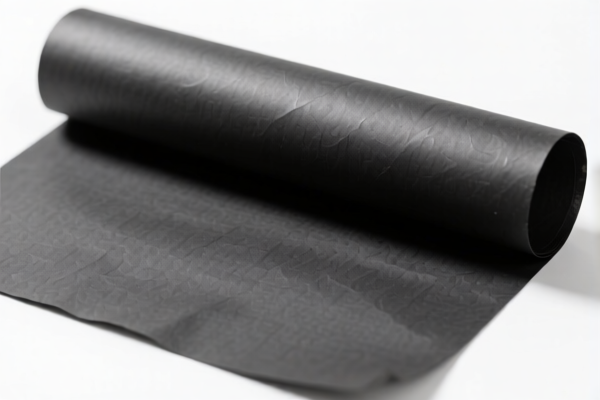
carbon paste coating material
CN → US| HS编码 | 关税税率 | 原产国 | 目的国 | 文档 |
|---|---|---|---|---|
| 3824994900 | 41.5% | CN | US | 官方文档 |
| 3824999397 | 40.0% | CN | US | 官方文档 |
商品图片



AI分析
🧪 Carbon Paste Coating Material (Foundry Binders)
🌐 HS Code Classification & Customs Clearance Guide | 2026 Updated Tariff Analysis | Specialized Foundry Chemistry
📌 I. Product Definition & Classification: What is "Carbon Paste Coating Material"?
In the foundry and casting industry, Carbon Paste Coating Material typically refers to preparation binders for foundry molds or cores that utilize carbon-based or hydrocarbon-derived components. These materials are crucial for binding sand particles together to create precise molds and cores for metal casting.
According to the provided data, this product falls under the broader category of "Chemical products and preparations... not elsewhere specified," specifically targeting mixtures derived from petroleum, shale oil, or natural gas.
⚠️ Key Distinction:
- If the product is a prepared binder for molds/cores containing hydrocarbons → It falls under Chapter 38.
- Specific sub-categories depend on whether it is a specific petroleum-derived mixture or a general "other" chemical preparation.
📦 II. HS Code Classification Details (2026 Latest Tariff Authority)
Based on the provided <DATA>, there are two specific HS Codes applicable to this product, depending on the precise formulation and whether it fits the "petroleum-derived mixture" definition strictly.
| HS Code | Product Description | Applicable Scenario | Tax Rate (Total) |
|---|---|---|---|
3824.99.49.00 |
Other: Mixtures that are in whole or in part of hydrocarbons derived in whole or in part from petroleum, shale oil or natural gas | Standard carbon paste binders primarily composed of petroleum-derived hydrocarbons used in foundries | 31.5% (Base: 6.5% + Additional: 25.0%) |
3824.99.93.97 |
Other: Other: Other: Other: Other: Other | General carbon paste binders that do NOT strictly fit the "petroleum-derived hydrocarbon mixture" definition or are classified as "other" chemical preparations | 30.0% (Base: 5.0% + Additional: 25.0%) |
🔍 Critical Analysis:
- The difference between the two codes lies in the chemical composition specificity.
-3824.99.49.00is more specific to hydrocarbon mixtures from petroleum/shale/natural gas. If your carbon paste is heavily reliant on these sources, this code is likely the primary classification.
-3824.99.93.97is a "catch-all" for other chemical preparations in this chapter. It has a slightly lower base tax (5.0% vs 6.5%) but the same additional tariff, resulting in a 1.5% lower total tax.
- Note: Both codes include a 25.0% Additional Tariff, indicating a high-risk category for customs scrutiny, likely due to trade policies (e.g., Section 301 or similar trade barriers on chemical products from specific origins).
💰 III. 2026 Latest Tariff Rate Details (Detailed Breakdown)
✅ Applicable Scope: Based on the provided tax structure, which includes "Additional Tariff" (加征关税), this analysis assumes import into the United States from China (or a similar jurisdiction subject to additional tariffs on chemical preparations).
✅ Effective Date: Current tariff structures apply as of 2026.
🎯 1. 3824.99.49.00 — Hydrocarbon-Derived Carbon Paste Binders
| Item | Detail |
|---|---|
| Base Tariff | 6.5% (ad valorem) |
| Additional Tariff | +25.0% |
| Total Tax Rate | 31.5% |
| Tax Calculation | CIF Value × 31.5% |
| De Minimis Exemption | ❌ Not Applicable (High-value industrial chemicals are not eligible for de minimis exemptions in most trade contexts) |
| Legal Basis | HS Code 3824.99.49.00 + Additional Tariff Policy (e.g., USITC Section 301) |
📌 Explanation:
- The 6.5% base rate reflects the standard WTO/NMF duty for "other prepared binders for foundry molds."
- The +25.0% additional tariff is a punitive trade measure, likely targeting Chinese-origin chemical preparations. This significantly increases the landed cost.
- Total 31.5% is a high cost factor. Importers must budget accordingly.
🎯 2. 3824.99.93.97 — Other Carbon Paste Binders (General)
| Item | Detail |
|---|---|
| Base Tariff | 5.0% (ad valorem) |
| Additional Tariff | +25.0% |
| Total Tax Rate | 30.0% |
| Tax Calculation | CIF Value × 30.0% |
| De Minimis Exemption | ❌ Not Applicable |
| Legal Basis | HS Code 3824.99.93.97 + Additional Tariff Policy |
📌 Note:
- This code is a "residual" category. If your product can be argued to be a "chemical preparation" not strictly defined as a "hydrocarbon mixture," you might argue for this code.
- The 1.5% savings (31.5% vs 30.0%) is marginal but can be significant for large volumes.
- Risk: Misclassification to avoid the higher base rate can lead to audits, penalties, and back-taxes if customs disputes the "hydrocarbon" nature of your product.
🛠️ IV. Customs Clearance Operational Advice (Best Practices)
✅ 1. Documentation Checklist (Essential)
| Document | Required | Explanation |
|---|---|---|
| Product Specification Sheet | ✔️ | Must detail chemical composition, especially hydrocarbon content. |
| Safety Data Sheet (SDS) | ✔️ | Critical for chemical imports. Must classify hazard class correctly. |
| Commercial Invoice | ✔️ | Clearly state "Prepared Binder for Foundry Molds/Cores." |
| Packing List | ✔️ | Detail net/gross weight and packaging type. |
| Certificate of Origin | ✔️ | Confirm country of origin (critical for additional tariff applicability). |
| MSDS/HAZMAT Declaration | ✔️ | Some carbon pastes may be flammable or hazardous. |
✅ 2. Classification Strategy (Key Tips)
🔥 "Know Your Chemistry: Hydrocarbon Content is Key!"
| Scenario | Recommended HS Code | Reason |
|---|---|---|
| High petroleum/shale oil content | 3824.99.49.00 |
Fits the specific "hydrocarbon derived" description. |
| Synthetic/resin-based with low hydrocarbon | 3824.99.93.97 |
Classified as "other" chemical preparation. |
| Unknown composition | ❌ Do Not Guess | Request lab analysis to determine hydrocarbon ratio. |
📌 Crucial Advice:
- Do not arbitrarily choose the lower-tax code (3824.99.93.97) if your product clearly contains significant petroleum-derived hydrocarbons. Customs may audit and impose penalties.
- Provide lab test reports proving the chemical composition to support your chosen HS Code.
✅ 3. Special Situations & Risk Mitigation
| Situation | Handling Advice |
|---|---|
| High-Value Shipments | Consider Advance Rulings from customs to pre-approve HS Code classification and avoid disputes at border. |
| Chemical Safety | Ensure compliance with DOT/HMTA regulations if the paste is flammable. Incorrect classification can lead to reclassification as a hazardous material, increasing handling costs. |
| Origin Shifting | If possible, consider sourcing from countries not subject to additional tariffs (e.g., Vietnam, Mexico, EU) to avoid the 25% surcharge. Check FTAs (Free Trade Agreements). |
| Labeling | Ensure labels are in English and include hazard warnings as per OSHA/CLP standards. |
🌍 V. Global Market Comparison (2026)
| Country/Region | Recommended HS Code | Base Tariff | Additional Tariff (if applicable) | Total Est. Tax | Notes |
|---|---|---|---|---|---|
| 🇺🇸 USA | 3824.99.49.00 / 3824.99.93.97 |
6.5% / 5.0% | +25.0% | 31.5% / 30.0% | High additional tariffs on Chinese origin. |
| 🇨🇳 China | 3824.99.49.00 / 3824.99.93.97 |
~6.5% / ~5.0% | 0% | ~6.5% / ~5.0% | No additional tariffs for domestic imports. |
| 🇪🇺 EU | 3824.99.99 |
~6.5% | 0% | ~6.5% | No significant additional tariffs. |
| 🇬🇧 UK | 3824.99.99 |
~6.5% | 0% | ~6.5% | Post-Brexit tariff regime similar to EU. |
📌 Conclusion:
- The USA is the most challenging market due to the 25% additional tariff, making the effective tax rate 30-31.5%.
- EU and UK tariffs are significantly lower (~6.5%), assuming no recent retaliatory tariffs.
- China has standard rates without additional surcharges.
📌 VI. Common Mistakes & Pitfalls (Lessons Learned)
❌ Mistake 1: Classifying as "Chemical Fertilizer" or "Industrial Solvent"
👉 Consequence: Wrong HS Code, potential fraud charges, high penalties.
✅ Fix: Clearly state "Foundry Binder" or "Mold Core Binder."
❌ Mistake 2: Ignoring the "Hydrocarbon" content
👉 Consequence: Misclassification between 3824.99.49.00 and 3824.99.93.97.
✅ Fix: Provide chemical analysis reports.
❌ Mistake 3: Assuming De Minimis Exemption applies
👉 Consequence: Seizure of goods if value exceeds threshold or if not eligible.
✅ Fix: Chemical products are often excluded from de minimis. Declare all duties.
❌ Mistake 4: Not checking Origin-Specific Tariffs
👉 Consequence: Paying unnecessary tariffs if origin is misdeclared.
✅ Fix: Ensure Certificate of Origin matches the shipment.
🎯 VII. Conclusion: Professional Declaration for Cost Efficiency
🎯 Key Takeaway:
🔹 "Carbon Paste = Foundry Binder = Chapter 38"
🔹 "Hydrocarbon Content Dictates Code:49vs97"
🔹 "USA Tariff = Base + 25% Additional = High Cost!"
📌 Actionable Advice:
1. Analyze Chemical Composition: Determine if the product is primarily petroleum-derived hydrocarbons.
2. Choose Correct HS Code: Use 3824.99.49.00 for hydrocarbon mixtures; 3824.99.93.97 for other preparations.
3. Budget for High Duties: In the US, expect 30-31.5% total tax.
4. Consult Experts: For large shipments, seek a Binding Tariff Ruling to lock in the classification.
✨ Precision in Classification = Savings in Customs!
💼 Don't let hidden tariffs eat your profits. Declare accurately, clear smoothly.
用户评价
关于 HS 编码归类
协调制度(HS)是由世界海关组织(WCO)制定的国际贸易商品分类标准。全球 200 多个国家采用 HS 系统作为海关关税、贸易统计和进出口监管的基础。
每个 HS 编码遵循以下层级结构:
- 章(2 位)——商品大类(例如:第 84 章:机器和机械设备)
- 品目(4 位)——章内的更具体分类
- 子目(6 位)——国际通用细分,所有 WCO 成员国统一使用
- 本国细分(8-10 位)——各国自行扩展的细分编码,如美国 HTSUS 10 位编码
正确的 HS 编码归类对于顺利通关、准确缴纳关税和遵守贸易法规至关重要。错误归类可能导致海关延误、多缴关税或罚款。
从CN进口到US时,适用的关税税率可能包括:
- 最惠国(MFN)税率——适用于 WTO 成员国的标准关税税率
- 普通税率——适用于无贸易协定国家
- 贸易救济关税——附加关税,如 301 条款(反倾销)、232 条款(国家安全)或反补贴税
本页内容仅供参考。如需正式归类,请咨询当地海关或持牌报关代理。