carving knife
CN → US| HS编码 | 关税税率 | 原产国 | 目的国 | 文档 |
|---|---|---|---|---|
| 8208906000 | 35.0% | CN | US | 官方文档 |
| 8208200090 | 35.0% | CN | US | 官方文档 |
| 8205303000 | 40.7% | CN | US | 官方文档 |
| 8205306000 | 40.0% | CN | US | 官方文档 |
| 8207903080 | 40.0% | CN | US | 官方文档 |
商品图片
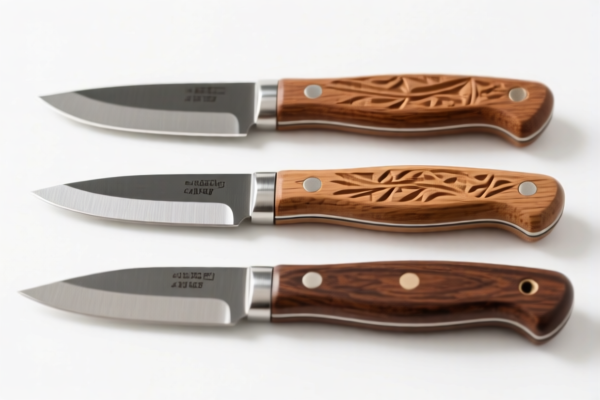
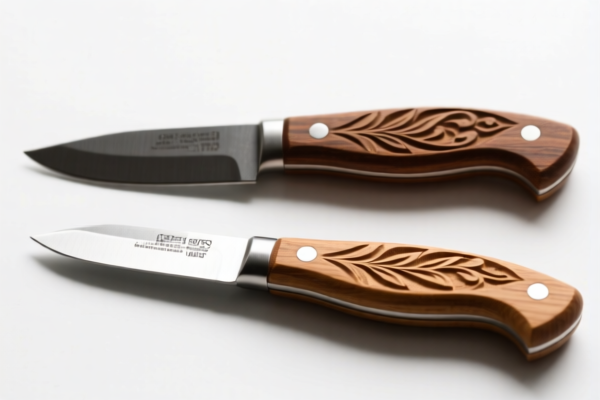
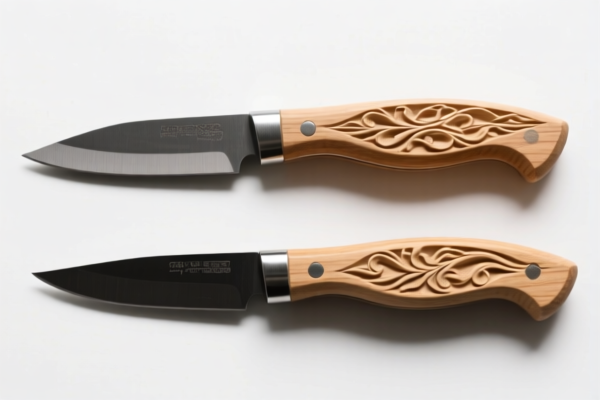
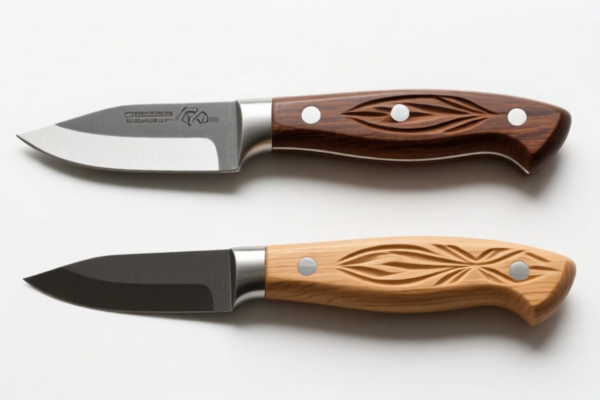
AI分析
🔪 Carving Knife (Hand Tools / Metal Cutting Tools)
🌐 HS Code Reference & Customs Clearance Guide | 2026 Latest Tariff Analysis | Professional Clearance Strategy
📌 I. Product Definition & Classification: What Exactly is a "Carving Knife"?
A Carving Knife is a manual cutting tool primarily used for shaping, sculpting, or slicing materials such as wood, meat, or soft metals. In international trade, its classification depends heavily on material composition (specifically whether it contains iron/steel) and specific use case (woodworking vs. general purpose).
Based on the 2026 tariff data, these knives generally fall under Chapter 82 (Tools, Implements, and Parts of Base Metal).
⚠️ Key Distinction:
- If the knife is purely for woodworking/machining and made of specific alloys, it may fall under 8205 or 8208.
- If it is a general-purpose metal cutting tool or part of a machine system, it may fall under 8207.
- Crucial Point: Most of these classifications attract high additional tariffs (25%–35%) due to trade restrictions.
📦 II. HS Code Classification Details (2026 Latest Tariff Authority对照)
| HS Code | Product Description | Application Scenario | Material/Type |
|---|---|---|---|
8205.30.30.00 |
Chisels, gouges, and similar carving tools | General carving, woodcraft, sculpture | Metal (High Tax) |
8205.30.60.00 |
Carving tools for woodworking | Wood processing, carpentry, detailed carving | Metal (High Tax) |
8207.90.30.80 |
Interchangeable tools for power tools (incl. carving) | Power carving, industrial processing | Metal Element (High Tax) |
8208.90.60.00 |
Other knives and cutting blades (Fallback Category) | General metal carving, non-specified use | Metal (Medium Tax) |
8208.20.00.90 |
Knives for wood-working machines | Industrial woodworking machines, CNC knives | Metal (Medium Tax) |
🔍 Critical Note:
- HS 8205 and 8207 codes are associated with 40.0%–40.7% total tax rates.
- HS 8208 codes offer a slightly lower rate of 35.0% but still include substantial surcharges.
- All these codes assume the product is made of base metal (steel, iron, or alloy). If the knife is ceramic or plastic, these codes do not apply.
💰 III. 2026 Latest Tariff Rate Breakdown (Including Surcharges & Policies)
✅ Applicable Country: United States (US)
✅ Origin: China (CN)
✅ Effective Date: Ongoing (2025-2026 Trade Policies)
🎯 1. 8205.30.30.00 & 8205.30.60.00 —— Carving Tools (Woodworking/General)
| Item | Content |
|---|---|
| Base Tariff | 5.0% – 5.7% (Ad Valorem) |
| Section 301 Surcharge | +25.0% (USITC Footnote) |
| IEEPA Surcharge | +10.0% (Targeting China/HK) |
| Total Tax Rate | 40.0% – 40.7% |
| Tax Calculation | CIF Value × Total Rate |
| De Minimis Exemption | ❌ Not Eligible (Denied) |
| Legal Basis Path | USITC:8205.30 → SECTION_301:25% → IEEPA:10% |
📌 Explanation:
- These codes are classified as manual tools for shaping.
- The 25% Section 301 tariff applies to most Chinese-made tools.
- The 10% IEEPA tariff is an additional layer for goods from China.
- Total Impact: A $1,000 shipment incurs ~$407 in taxes. This is extremely high.
🎯 2. 8207.90.30.80 —— Interchangeable Tools for Power Tools
| Item | Content |
|---|---|
| Base Tariff | 5.0% |
| Section 301 Surcharge | +25.0% |
| IEEPA Surcharge | +10.0% |
| Total Tax Rate | 40.0% |
| Tax Calculation | CIF Value × 40% |
| De Minimis Exemption | ❌ Not Eligible |
| Legal Basis Path | USITC:8207.90 → SECTION_301:25% → IEEPA:10% |
📌 Note:
- Even if used in a power drill or rotary tool, it attracts the same high rate as manual tools.
- Classification hinges on whether it’s an "interchangeable tool" rather than a standalone knife.
🎯 3. 8208.90.60.00 & 8208.20.00.90 —— Other Knives / Wood-Working Machine Knives
| Item | Content |
|---|---|
| Base Tariff | 0.0% |
| Section 301 Surcharge | +25.0% |
| IEEPA Surcharge | +10.0% |
| Total Tax Rate | 35.0% |
| Tax Calculation | CIF Value × 35% |
| De Minimis Exemption | ❌ Not Eligible |
| Legal Basis Path | USITC:8208 → SECTION_301:25% → IEEPA:10% |
📌 Advantage:
- The base tariff is 0%, making this the most cost-effective option among the listed codes.
- Suitable for industrial machine blades (8208.20) or general fallback categories (8208.90).
- Recommendation: If your product can be reasonably described as a "blade for woodworking machines" or a "generic metal cutting tool," aim for this classification to save 5-5.7% compared to 8205/8207 codes.
🛠️ IV. Customs Clearance Practical Advice (Real-World Pitfall Guide)
✅ 1. Required Documentation Checklist (Non-Negotiable)
| Document | Must Provide? | Details |
|---|---|---|
| ✅ Product Specification Sheet | ✔️ | Material (Steel type), dimensions, hardness, handle material |
| ✅ Product Photos | ✔️ | Clear view of the blade, handle, and any branding. Must show it’s a knife/tool, not a weapon. |
| ✅ Commercial Invoice | ✔️ | Must clearly state: "Carving Knife for Woodworking/General Use" (Avoid "Weapon" or "Surgical" terms) |
| ✅ Origin Certificate | ✔️ | Proof of China origin (if applicable) to trigger correct surcharges |
| ✅ HS Code Pre-Ruling (Optional but Recommended) | ✔️ | To confirm 8208 vs 8205 classification |
✅ 2. Declaration Strategy (Key Tactics)
🔥 “Describe Function, Not Just Form”
| Scenario | Recommended Declaration | Risk |
|---|---|---|
| Handheld Wood Carving Tool | "Hand-held Wood Carving Tool, Steel Blade, Wooden Handle" | Risk of 8205 (40.7%) if deemed specific to woodworking. |
| Industrial Machine Blade | "Cutting Blade for Woodworking Machine, High-Speed Steel" | Target 8208.20 (35.0%) – Lower tax! |
| General Metal Cutting Knife | "Metal Cutting Blade, Non-Specific Purpose, Fallback Category" | Target 8208.90 (35.0%) – Lower tax! |
| Power Tool Accessory | "Interchangeable Rotary Bit/Carving Tool for Power Drill" | Risk of 8207 (40.0%) if considered a tool, not a blade. |
⚠️ Avoid:
- Using vague terms like "Art Supply" without material details.
- Declaring as "Knife" without specifying "Carving" or "Woodworking" – this may trigger anti-dumping or stricter scrutiny.
✅ 3. Special Cases
| Situation | Handling Advice |
|---|---|
| Ceramic or Plastic Carving Tools | Do NOT use 8205/8207/8208. These are base metal codes. Use Chapter 39 (Plastic) or 69 (Ceramic). Tariffs will be completely different. |
| Kitchen Carving Knives | If for food service, consider 8211 (Knives with cutting blades). Tax rates may vary. Ensure no "surgical" or "military" connotations. |
| Set of Carving Tools | Declare as a "Set." The primary use determines the HS Code. Usually, the knife dominates the classification. |
| OEM Custom Blades | Provide customer design specs. If it’s a standard blade, use 8208. If it’s a custom shaped tool, 8205 may be forced. |
🌍 V. Global Market Comparison (2026)
| Country/Region | Recommended HS Code | Estimated Total Tax | Notes |
|---|---|---|---|
| 🇺🇸 USA | 8208.20.00.90 or 8208.90.60.00 |
35.0% | Best option among listed codes. Avoid 8205 (40.7%). |
| 🇨🇳 China | 8208.20.00.90 |
~5-10% (Domestic) | No Section 301 or IEEPA. Lower costs. |
| 🇪🇺 EU | Varies | Varies | May apply anti-dumping duties on steel tools. Check local rules. |
| 🇨🇦 Canada | 8208.20.00.90 |
~35%+ | Similar US surcharges may apply depending on trade agreements. |
📌 Conclusion:
- USA is the critical market with high surcharges.
- Minimizing tax requires smart classification: Aim for 8208 (Machine Blades/General) rather than 8205 (Specific Hand Tools) to save 5-5.7%.
📌 VI. Common Mistakes & Pitfalls (Lessons Learned)
❌ Mistake 1: Declaring a Wood Carving Chisel as 8205.30.30.00 when it could be 8208.20.00.90 (Machine Blade equivalent)
👉 Consequence: Overpaying 0.7%–5.7% unnecessarily.
❌ Mistake 2: Ignoring the IEEPA 10% surcharge
👉 Consequence: Budget failure. Many importers forget this adds to the 25% Section 301.
❌ Mistake 3: Declaring a Plastic-Handled Knife as Base Metal Tool
👉 Consequence: Customs may reclassify or demand detailed material breakdown.
❌ Mistake 4: Using "Carving Knife" for Food Service Items
👉 Consequence: Confusion with 8211 (Kitchen Knives). Ensure correct chapter to avoid penalties.
✅ Correct Approach:
“Carving Blade, High-Speed Steel, for Woodworking Machinery, Model XYZ, Made in China”
→ Target HS Code:8208.20.00.90→ Tax: 35.0%
🎯 VII. Conclusion: Smart Classification Saves Money!
🎯 Key Takeaway:
🔹 "Machine Blades (8208) = 35% | Hand Tools (8205) = 40.7% | Power Tools (8207) = 40.0%"
🔹 "Base Tariff 0% + 35% Surcharge is cheaper than 5.7% Base + 35% Surcharge!"
🔹 "Always verify if your knife can be classified as a machine blade or general cutting tool to save up to 5.7%."
📌 Pro Tip:
If your carving knife is not made of steel (e.g., ceramic, diamond-tipped), DO NOT USE THESE CODES.
- Ceramic: Chapter 69
- Diamond-Tipped: Chapter 82 but different subheading
- Plastic Handle Only: Still Base Metal if blade is steel.
📣 Immediate Action:
📞 Consult a Customs Broker to verify if your specific product fits
8208.20or8208.90.
🚀 Optimize your supply chain by designing products to fit the lower-tariff classification.
💼 Your profit margin depends on accurate HS Code selection!
✨ Professional Clearance Starts with Precise Classification!
💼 Every percentage point saved is pure profit!
用户评价
关于 HS 编码归类
协调制度(HS)是由世界海关组织(WCO)制定的国际贸易商品分类标准。全球 200 多个国家采用 HS 系统作为海关关税、贸易统计和进出口监管的基础。
每个 HS 编码遵循以下层级结构:
- 章(2 位)——商品大类(例如:第 84 章:机器和机械设备)
- 品目(4 位)——章内的更具体分类
- 子目(6 位)——国际通用细分,所有 WCO 成员国统一使用
- 本国细分(8-10 位)——各国自行扩展的细分编码,如美国 HTSUS 10 位编码
正确的 HS 编码归类对于顺利通关、准确缴纳关税和遵守贸易法规至关重要。错误归类可能导致海关延误、多缴关税或罚款。
从CN进口到US时,适用的关税税率可能包括:
- 最惠国(MFN)税率——适用于 WTO 成员国的标准关税税率
- 普通税率——适用于无贸易协定国家
- 贸易救济关税——附加关税,如 301 条款(反倾销)、232 条款(国家安全)或反补贴税
本页内容仅供参考。如需正式归类,请咨询当地海关或持牌报关代理。