case for tablet
CN → US| HS编码 | 关税税率 | 原产国 | 目的国 | 文档 |
|---|---|---|---|---|
| 4016990500 | 20.9% | CN | US | 官方文档 |
| 4016996050 | 37.5% | CN | US | 官方文档 |
| 4202929400 | 52.6% | CN | US | 官方文档 |
| 4202929700 | 52.6% | CN | US | 官方文档 |
商品图片
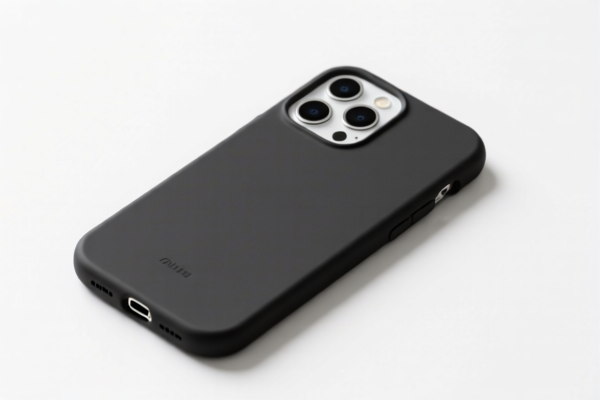
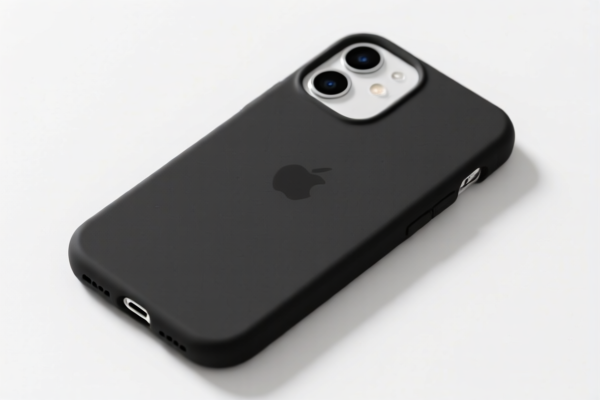
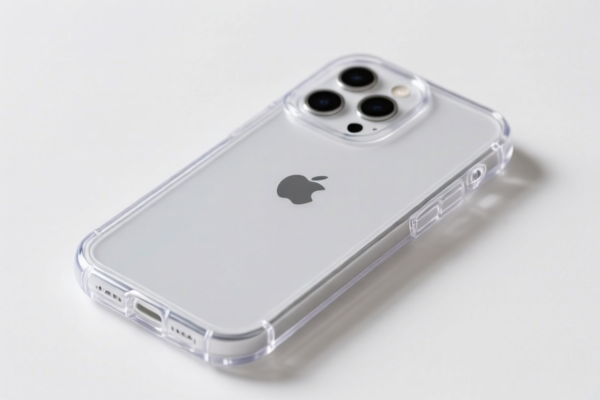
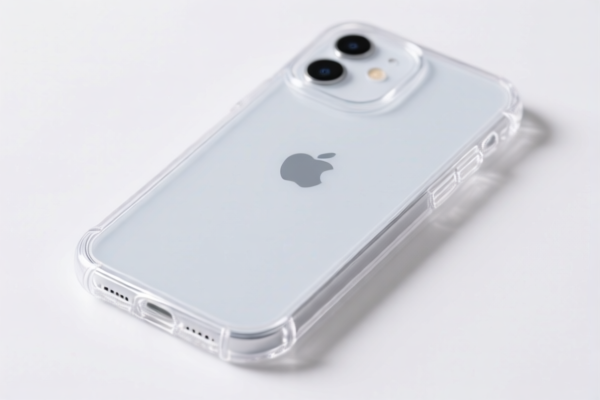
AI分析
📱 Tablet Cases (Protective Containers for Digital Devices)
🌐 HS Code Reference & Customs Clearance Guide | 2026 Latest Tariff Analysis | Strategic Entry Strategy for "Tablet Cases" 📌 Part I: Product Definition & Classification: Do You Really Understand "Tablet Cases"?
In international trade, a "tablet case" is broadly categorized under Chapter 42 (Articles of Leather; Saddle Harness) or Chapter 40 (Articles of Rubber), depending on the material composition. However, for consumer electronics accessories, the vast majority fall under Chapter 42, specifically as containers designed to protect and transport electronic devices.
Crucial Distinction: * Electronic Components vs. Accessories: A tablet case is not an electronic device. It does not have circuits, batteries, or screens. Therefore, it cannot be classified under Chapter 85 (Electrical Machinery). * Material Priority: * If the outer surface is textile or plastic sheeting (e.g., synthetic leather, neoprene, hard plastic shell) → Chapter 42 is the primary classification. * If the case is made entirely of vulcanized rubber (non-hard) and does not fit the specific "CD/DVD case" description in Chapter 42 → It may fall under Chapter 40.
⚠️ Key Classification Point:
- Most modern tablet cases (leather, PU leather, fabric, plastic hard shells) are classified under 4202.92.
- Pure rubber cases (silicone, raw rubber) are classified under 4016.99.
📦 Part II: HS Code Classification Details (2026 Latest Tariff Authority Comparison)
Based strictly on the provided <DATA> content, here are the four possible HS Codes for "Tablet Cases" and their corresponding tax rates.
| HS Code | Product Description | Material/Feature | Tax Rate (China to US) |
|---|---|---|---|
4202.92.94.00 |
Cases designed to protect and transport compact disks (CD's), CD Rom disks, CD players, cassette players, and/or cassettes | Plastic/Textile Outer Surface Includes electronic accessory cases |
0.0% (Base: 0% + Add-on: 0%) |
4202.92.97.00 |
Trunks, suitcases... similar containers... With outer surface of sheeting of plastics or of textile materials: Other | General Plastic/Textile Cases (Includes most standard tablet cases) |
0.0% (Base: 0% + Add-on: 0%) |
4016.99.05.00 |
Household articles not elsewhere specified or included | Vulcanized Rubber (Non-hard rubber, household use) |
0.0% (Base: 0% + Add-on: 0%) |
4016.99.60.50 |
Other articles of vulcanized rubber other than hard rubber: Other | Pure Vulcanized Rubber (Non-hard rubber, non-household or unspecified) |
27.5% (Base: 2.5% + Add-on: 25%) |
🔍 Critical Interpretation for "Tablet Cases": 1. The "Zero-Tariff" Advantage (
4202.92): If your tablet case is made of PU leather, fabric, nylon, or plastic, it generally falls under 4202.92. Both sub-codes94and97show 0.0% total tax in the provided data. This is the most common and cost-effective classification for consumer electronics accessories. 2. The "Rubber" Trap (4016.99): If your case is made of 100% silicone or rubber: - If it is deemed a "household article" (rare for tech accessories), it might get 0.0% (4016.99.05.00). - However, if it is classified as "Other" rubber articles, it triggers the 27.5% tariff (4016.99.60.50). This is a high-risk classification for pure silicone cases.
💰 Part III: 2026 Latest Tariff Rate Details (Detailed Breakdown)
✅ Applicable Market: United States (US)
✅ Origin: China (CN)
✅ Data Source: Provided<DATA>(2026 Tariff Schedule)
🎯 1. 4202.92.94.00 & 4202.92.97.00 —— Plastic/Textile-Based Tablet Cases
| Item | Content |
|---|---|
| Base Tariff | 0.0% (ad valorem) |
| Section 301 / Additional Tariff | 0.0% |
| Total Tax Rate | 0.0% |
| Tax Calculation | CIF Value × 0% = $0 |
| De Minimis Eligibility | ✅ Yes (Usually eligible for $800 de minimis if shipment value < $800) |
| Legal Basis | Chapter 42 (Articles of Leather); Heading 4202 (Traveling bags, handbags, etc.) |
📌 Explanation: - These codes cover cases with an outer surface of plastic sheeting or textile materials. - This includes PU leather cases, nylon sleeves, hard plastic shells, and fabric folios. - No additional duties are applied in the provided data, making these the most favorable classifications for importers.
🎯 2. 4016.99.05.00 —— Household Rubber Articles (Rare for Tablets)
| Item | Content |
|---|---|
| Base Tariff | 0.0% |
| Additional Tariff | 0.0% |
| Total Tax Rate | 0.0% |
| Condition | Must be strictly classified as a "Household article" |
| Risk | High risk of reclassification if deemed "electronic accessory" |
📌 Explanation: - Applies to vulcanized rubber goods. - For a tablet case to qualify here, it must be interpreted as a general household item, which is legally ambiguous for tech accessories.
🎯 3. 4016.99.60.50 —— Other Vulcanized Rubber Articles (High Risk)
| Item | Content |
|---|---|
| Base Tariff | 2.5% |
| Section 301 / Additional Tariff | 25.0% |
| Total Tax Rate | 27.5% |
| Tax Calculation | CIF Value × 27.5% |
| Risk Level | ⚠️ HIGH |
📌 Explanation: - This code applies to vulcanized rubber articles that do not fit other specific descriptions. - Pure silicone cases are often at risk of falling here if not explicitly categorized as household goods. - 27.5% is a significant cost increase. Importers should avoid this classification if possible by using hybrid materials (e.g., silicone + plastic, or TPU).
🛠️ Part IV: Customs Clearance Practical Advice (Avoid Pitfalls)
✅ 1. Preparation Checklist (Must-Have Documents)
| Document | Required | Purpose |
|---|---|---|
| ✅ Product Spec Sheet | ✔️ | Clearly state material composition (e.g., "Outer: PU Leather, Inner: Microfiber"). Avoid vague terms like "Rubber." |
| ✅ Material Breakdown | ✔️ | Specify % of each material. If >50% textile/plastic, aim for 4202. |
| ✅ Photos (Front/Back/Inside) | ✔️ | Show stitching, zippers, and lining. Helps prove it’s a "container" not just a "cover." |
| ✅ Commercial Invoice | ✔️ | Use precise description: "Protective Case for Tablet Computer, PU Leather, Model XYZ" |
| ✅ Packaging List | ✔️ | Ensure no electronic components are included inside the case. |
✅ 2. Declaration Tips (Key Mnemonics)
🔥 "Material Defines Code, Textile/Plastic = 0%, Pure Rubber = Risk!"
| Scenario | Recommended HS Code | Tax Rate | Why? |
|---|---|---|---|
| PU Leather Case | 4202.92.97.00 |
0.0% | Outer surface is "plastic sheeting" (PU). |
| Fabric/Nylon Sleeve | 4202.92.97.00 |
0.0% | Outer surface is textile. |
| Hard Plastic Shell | 4202.92.94.00 or 97.00 |
0.0% | Plastic sheeting covers the tablet. |
| 100% Silicone Case | 4016.99.60.50 |
27.5% | High risk. Try to blend with plastic/TPU to shift to Ch. 42. |
| Hybrid (Silicone + Plastic) | 4202.92.97.00 |
0.0% | If plastic outer layer dominates, classify under Ch. 42. |
💡 Pro Tip:
If you sell 100% silicone cases, consider adding a plastic inner frame or textile lining that is structurally integral. This helps argue for classification under 4202 (plastic/textile container) rather than 4016 (pure rubber article), saving you 27.5% in tariffs.
✅ 3. Special Cases & Warnings
| Situation | Handling Advice |
|---|---|
| Cases with Smart Features | If the case has Bluetooth or a battery, it cannot be a simple case. It may be classified as an electronic accessory (higher tax). Keep it passive. |
| "Universal" Fits | Declare as "Case for Tablet Computers." Avoid "For iPad Pro 12.9" if it’s generic, as this may lead to scrutiny on design patents. |
| Sample Shipments | Even for samples, use the correct HS Code. Customs audits are random; consistent misclassification can lead to fines. |
| De Minimis ($800) | If shipping individual cases to end-users (B2C), ensure the CIF value is < $800 to qualify for duty-free entry under Section 321 (if eligible). |
🌍 Part V: Global Market Comparison (2026 Snapshot)
| Market | Recommended HS Code | Estimated Duty | Note |
|---|---|---|---|
| 🇺🇸 USA | 4202.92.97.00 |
0.0% | Best outcome for textile/plastic cases. Avoid pure rubber. |
| 🇨🇳 China | 4202.92.97.00 |
~5-10% | Import duties vary; check local China tariff schedule. |
| 🇪🇺 EU | 4202.92.97.00 |
0% | EU often has 0% for many leather/plastic cases. REACH compliance needed. |
| 🇯🇵 Japan | 4202.92.97.00 |
~3-5% | Standard duty for similar containers. |
📌 Conclusion for US Import:
- The "Tablet Case" is a low-tariff product IF classified correctly.
- Avoid4016.99.60.50(27.5%) by ensuring the case has a plastic or textile outer component.
- Target4202.92.97.00for the best 0% tariff outcome.
📌 Part VI: Common Errors & Pitfalls (Lessons Learned)
❌ Error 1: Declaring a PU Leather Case as "Rubber Case" (4016)
👉 Consequence: Unnecessary 2.5-27.5% tax increase. PU is plastic-based, not vulcanized rubber.
❌ Error 2: Declaring a 100% Silicone Case as "Plastic Case" (4202)
👉 Consequence: Customs may reject the classification if material test proves 100% rubber. Risk of 27.5% tax + penalties.
❌ Error 3: Using vague description "Accessory for Tablet"
👉 Consequence: Customs exam delay. Must specify material and function.
✅ Correct Declaration Example:
"Protective Carrying Case for Tablet Computers, Exterior: Polyurethane Leather (Plastic Sheet), Interior: Microfiber Lining, Zipper Closure, Model: TC-01"
🎯 Part VII: Conclusion: Professional Declaration, Save Costs!
🎯 Remember the Rule:
🔹 "Plastic/Textile Outer = 0% Tax (Ch. 42)"
🔹 "Pure Rubber = 27.5% Tax Risk (Ch. 40)"
🔹 "Hybrid Design = Your Friend for Low Tax"
📌 Action Plan:
1. Check Material: Is the outer layer >50% plastic/textile? If yes, use 4202.92.
2. Avoid Pure Rubber: If using silicone, add a plastic frame or textile backing.
3. Declare Precisely: Use "Plastic/Textile Container" terminology.
4. Verify with Customs Broker: Submit material samples for pre-classification if unsure.
📣 Immediate Action:
📞 Contact your customs broker with your material bill of lading to confirm 4202.92.97.00 eligibility.
🚀 Optimize your product design to include plastic/textile elements to save 27.5% in tariffs!
✨ Professional Clearance Starts with Precise Classification!
💼 Every Dollar Saved in Tariffs is Pure Profit!
用户评价
关于 HS 编码归类
协调制度(HS)是由世界海关组织(WCO)制定的国际贸易商品分类标准。全球 200 多个国家采用 HS 系统作为海关关税、贸易统计和进出口监管的基础。
每个 HS 编码遵循以下层级结构:
- 章(2 位)——商品大类(例如:第 84 章:机器和机械设备)
- 品目(4 位)——章内的更具体分类
- 子目(6 位)——国际通用细分,所有 WCO 成员国统一使用
- 本国细分(8-10 位)——各国自行扩展的细分编码,如美国 HTSUS 10 位编码
正确的 HS 编码归类对于顺利通关、准确缴纳关税和遵守贸易法规至关重要。错误归类可能导致海关延误、多缴关税或罚款。
从CN进口到US时,适用的关税税率可能包括:
- 最惠国(MFN)税率——适用于 WTO 成员国的标准关税税率
- 普通税率——适用于无贸易协定国家
- 贸易救济关税——附加关税,如 301 条款(反倾销)、232 条款(国家安全)或反补贴税
本页内容仅供参考。如需正式归类,请咨询当地海关或持牌报关代理。