catalyst mixture
CN → US| HS编码 | 关税税率 | 原产国 | 目的国 | 文档 |
|---|---|---|---|---|
| 3815905000 | 40.0% | CN | US | 官方文档 |
| 3815190000 | 35.0% | CN | US | 官方文档 |
| 2931906000 | 41.5% | CN | US | 官方文档 |
| 2843900000 | 38.7% | CN | US | 官方文档 |
| 2931909052 | 38.7% | CN | US | 官方文档 |
商品图片
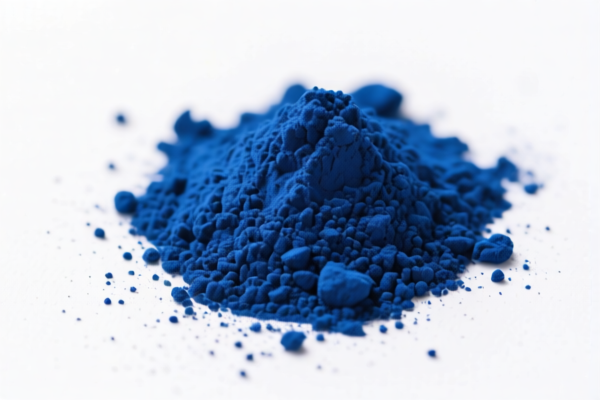
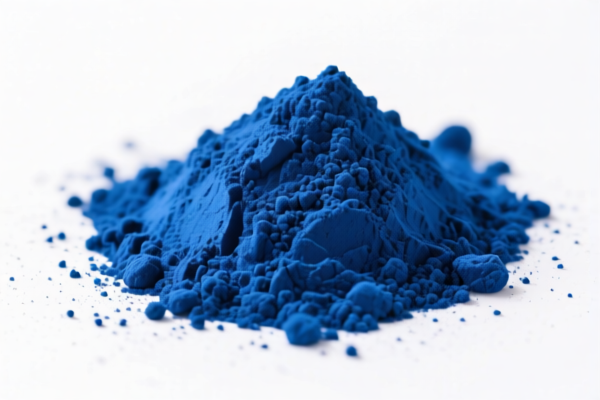
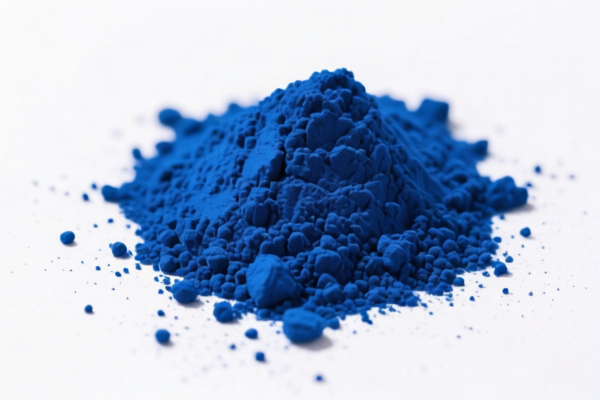
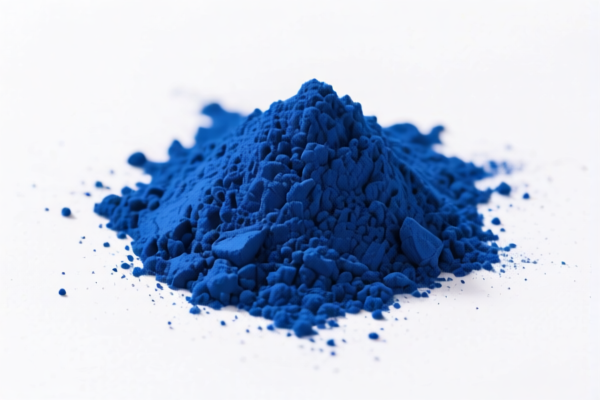
AI分析
🧪 Catalyst Mixture for Polymerization (聚合反应催化剂)
🌐 HS Code Reference & Customs Clearance Guide | 2026 Latest Tariff Analysis | Professional Clearance Strategy
📌 1. Product Definition & Classification: Do You Really Understand "Catalyst Mixtures"?
In the chemical industry, Catalyst Mixtures refer to prepared mixtures of catalysts or promoters, often combined with inert supports or carriers, specifically designed to initiate or accelerate polymerization reactions. Unlike pure chemical compounds, these are complex formulations where the primary function (catalysis) dictates the classification, not just the raw material composition.
In international trade, they are broadly categorized by their chemical nature (organic vs. inorganic, precious metals vs. non-precious metals) and form (preparation/mixture vs. pure substance). Misclassification often leads to significant tariff discrepancies due to the varying Section Notes in the Harmonized System (HS).
⚠️ Key Distinction Point:
- If the mixture is primarily based on organic compounds (e.g., organometallics, aromatic compounds) → Chapter 29 or 3815.19.
- If the mixture is primarily based on inorganic compounds (e.g., noble metal salts, oxides) → Chapter 28 or 3815.90.
- If it is a prepared catalyst not elsewhere specified → 3815.19 or 3815.90.
📦 2. HS Code Classification Details (2026 Latest Tariff Authority Comparison)
| HS Code | Product Description | Application Scenario | Chemical Nature |
|---|---|---|---|
3815.90.50.00 |
Prepared catalysts, matching catalytic preparations, no material conflict | Specialized polymerization aids, custom catalyst blends | 🟡 Preparation (General) |
3815.19.00.00 |
Other preparations of catalysts (Fallback/General) | Standard polymerization catalysts not specified elsewhere | 🟡 Preparation (General) |
2931.90.60.00 |
Other organic/inorganic compounds (Aromatic based) | Catalysts with aromatic organic structures | 🔵 Organic (Aromatic) |
2843.90.00.00 |
Other precious metal compounds | Catalysts containing Palladium, Platinum, Gold, etc. | 🔴 Inorganic (Noble Metal) |
2931.90.90.52 |
Other organic/inorganic compounds (General) | General organic-inorganic hybrid catalysts | 🔵 Organic/Inorganic Hybrid |
🔍 Key Reminder:
- Chapter 38 (Products of the Chemical or Allied Industries) is often preferred for prepared mixtures where the chemical composition is secondary to the function (catalysis).
- Chapters 28 & 29 are used if the product is essentially a pure chemical or a simple compound, even if used as a catalyst.
- Noble Metal Content: If the catalyst contains significant precious metals, customs may prioritize Chapter 28 (2843.90.00.00), regardless of its use as a catalyst.
💰 3. 2026 Latest Tariff Rate Breakdown (Including Additional Duties & Policy Surcharges)
✅ Applicable Country: United States (US)
✅ Country of Origin: China (CN)
✅ Effective Date: November 10, 2025 (for subsequent imports)
🎯 1. 3815.90.50.00 – Prepared Catalyst (General Mixture)
| Item | Details |
|---|---|
| Base Duty Rate | 5.0% (ad valorem) |
| USITC Additional Duty (Section 301) | +25% |
| IEEPA Additional Duty | +10% (Specific to CN/HK products) |
| Total Duty Rate | 40.0% |
| Tax Calculation | CIF Value × 40% |
| De Minimis Exemption | ❌ Not Applicable (deny_de_minimis) |
| Legal Basis Path | IEEPA:9903.01.25 → USITC:3815.90.50.00 → FOOTNOTE:9903.88.01 |
📌 Explanation:
- This code is used for prepared catalysts that do not fit neatly into specific organic/inorganic pure substance codes.
- The 40% total duty is high due to the叠加 (stacking) of the 25% Section 301 tariff and 10% IEEPA surcharge.
- Compliance Tip: Ensure the commercial invoice clearly states "Prepared Catalyst for Polymerization" to justify Chapter 38.
🎯 2. 3815.19.00.00 – Other Catalyst Preparations (Fallback)
| Item | Details |
|---|---|
| Base Duty Rate | 0.0% (ad valorem) |
| USITC Additional Duty (Section 301) | +25% |
| IEEPA Additional Duty | +10% |
| Total Duty Rate | 35.0% |
| Tax Calculation | CIF Value × 35% |
| De Minimis Exemption | ❌ Not Applicable (deny_de_minimis) |
| Legal Basis Path | IEEPA:9903.01.25 → USITC:3815.19.00.00 → FOOTNOTE:9903.88.01 |
📌 Explanation:
- This is the general fallback code for catalyst preparations not specified elsewhere in HS 3815.
- Although the base rate is 0%, the additional duties bring the total to 35%, which is 5% lower than3815.90.50.00.
- Strategy: If your catalyst mixture does not have a specific "matching" code in 3815.90, use this code to save 5%.
🎯 3. 2931.90.60.00 – Other Aromatic Organic Compounds
| Item | Details |
|---|---|
| Base Duty Rate | 6.5% (ad valorem) |
| USITC Additional Duty (Section 301) | +25% |
| IEEPA Additional Duty | +10% |
| Total Duty Rate | 41.5% |
| Tax Calculation | CIF Value × 41.5% |
| De Minimis Exemption | ❌ Not Applicable (deny_de_minimis) |
| Legal Basis Path | IEEPA:9903.01.25 → USITC:2931.90.60.00 → FOOTNOTE:9903.88.01 |
📌 Explanation:
- Used when the catalyst is primarily an aromatic organic compound (e.g., certain organometallic catalysts with aromatic ligands).
- Higher Base Rate: The 6.5% base rate makes this the most expensive option at 41.5%.
- Risk: Misclassifying a general mixture here due to "aromatic" content can lead to higher duties. Only use if the chemical nature is definitively aromatic organic.
🎯 4. 2843.90.00.00 – Other Precious Metal Compounds
| Item | Details |
|---|---|
| Base Duty Rate | 3.7% (ad valorem) |
| USITC Additional Duty (Section 301) | +25% |
| IEEPA Additional Duty | +10% |
| Total Duty Rate | 38.7% |
| Tax Calculation | CIF Value × 38.7% |
| De Minimis Exemption | ❌ Not Applicable (deny_de_minimis) |
| Legal Basis Path | IEEPA:9903.01.25 → USITC:2843.90.00.00 → FOOTNOTE:9903.88.01 |
📌 Explanation:
- Applicable if the catalyst contains precious metals (Pd, Pt, Au, Rh, etc.).
- Lower Base Rate: The 3.7% base rate results in a total of 38.7%.
- Compliance Note: Even if the precious metal content is low, if the product is chemically defined as a "precious metal compound," this code applies. Customs may scrutinize the weight percentage of precious metals.
🎯 5. 2931.90.90.52 – Other Organic/Inorganic Compounds
| Item | Details |
|---|---|
| Base Duty Rate | 3.7% (ad valorem) |
| USITC Additional Duty (Section 301) | +25% |
| IEEPA Additional Duty | +10% |
| Total Duty Rate | 38.7% |
| Tax Calculation | CIF Value × 38.7% |
| De Minimis Exemption | ❌ Not Applicable (deny_de_minimis) |
| Legal Basis Path | IEEPA:9903.01.25 → USITC:2931.90.90.52 → FOOTNOTE:9903.88.01 |
📌 Explanation:
- A general code for organic/inorganic compounds not specified elsewhere in Chapter 29.
- Same Total Rate as Precious Metals (38.7%) due to the low base rate (3.7%).
- Usage: Use this if the catalyst is a hybrid organic-inorganic compound that doesn't fit into specific aromatic or noble metal categories.
🛠️ 4. Customs Clearance Practical Advice (Battle-Tested Pitfall Guide)
✅ 1. Required Documentation Checklist (Non-Negotiable)
| Document | Mandatory | Notes |
|---|---|---|
| ✅ Safety Data Sheet (SDS) | ✔️ | Must clearly state chemical composition, hazardous ingredients, and catalyst function. |
| ✅ Technical Data Sheet (TDS) | ✔️ | Specifies the type of catalyst (e.g., Ziegler-Natta, Metallocene) and application (polymerization). |
| ✅ Commercial Invoice | ✔️ | Must use accurate HS Code and describe as "Prepared Catalyst for Polymerization" or "Precious Metal Compound." |
| ✅ Packing List | ✔️ | Detail net/gross weight, ensuring hazardous material labeling (if applicable). |
| ✅ Certificate of Analysis (CoA) | ✔️ | Proves chemical composition, especially for distinguishing between Chapter 28/29 and 38. |
| ✅ Proof of Origin (CO) | ✔️ | Critical for determining eligibility for any potential exemptions (though limited for China). |
✅ 2. Declaration Strategy (Key Mantras)
🔥 "Function First, Composition Second; Noble Metals Need Care, Mixtures Prefer Chapter 38!"
| Scenario | Correct Declaration | Wrong Practice |
|---|---|---|
| General Catalyst Mixture | 3815.19.00.00 or 3815.90.50.00 |
Misclassifying as pure organic/inorganic → Higher Base Rate |
| Precious Metal Catalyst | 2843.90.00.00 |
Declaring as general mixture → Risk of Penalty for Undervaluation |
| Aromatic Organic Catalyst | 2931.90.60.00 |
Declaring as general preparation → Higher Base Rate |
| Hybrid Organic/Inorganic | 2931.90.90.52 |
Using Chapter 38 codes incorrectly → Compliance Risk |
✅ 3. Special Handling for Different Scenarios
| Scenario | Recommendation |
|---|---|
| OEM Custom Catalyst | Provide Formula Disclosure (if allowed) to justify Chapter 38 classification. |
| High-Value Noble Metal Content | Ensure Weight % is declared. If >50%, Chapter 28 is mandatory. |
| Hazardous Material | If the catalyst is corrosive or flammable, ensure UN Number and Hazard Class are on the PI and PL. |
| Small Samples (De Minimis) | ❌ Not Exempt: All these codes have deny_de_minimis status. Even small shipments are subject to full duties. |
🌍 5. Global Market Clearance Comparison (2026 Latest)
| Country/Region | Recommended HS Code | Duty Rate (CN Origin) | Certification Requirements | Notes |
|---|---|---|---|---|
| 🇺🇸 USA | 3815.19.00.00 / 3815.90.50.00 |
35% - 40% | SDS, TDS, IEEPA Compliant | High additional duties apply. |
| 🇨🇳 China | 3815.19.00.00 |
5% | CCC (if applicable), Safety Label | Low base rate, no additional tariffs. |
| 🇪🇺 EU | 3815.19.00.00 |
0% - 6% | REACH, CLP, SDS | No Section 301 tariffs. REACH registration crucial. |
| 🇦🇺 Australia | 3815.19.00.00 |
5% | NICNAS/AIIC, SDS | No additional tariffs. |
| 🇯🇵 Japan | 3815.19.00.00 |
0% - 3% | JIS, Safety Data | Low base rate, no additional tariffs. |
📌 Conclusion:
- The US is the most challenging market for catalyst mixtures due to the 35-40% total duty.
- EU, Japan, and Australia are more favorable, with 0-6% total duties.
- Supply Chain Strategy: Consider sourcing from non-China origins if targeting the US market to avoid IEEPA/301 tariffs.
📌 6. Common Errors & Pitfalls (Lessons Learned)
❌ Error 1: Classifying a Noble Metal Catalyst as a general mixture (3815.19.00.00)
👉 Consequence: Customs may reclassify to 2843.90.00.00 and penalize for incorrect declaration.
👉 Fix: Check precious metal content. If significant, use Chapter 28.
❌ Error 2: Using Chapter 29 codes for Prepared Mixtures
👉 Consequence: Higher base rates (e.g., 6.5% vs. 0%) → Higher Total Duty.
👉 Fix: Use Chapter 38 for preparations and mixtures where function is key.
❌ Error 3: Ignoring IEEPA 10% Surcharge
👉 Consequence: Underpayment of taxes, leading to audits and penalties.
👉 Fix: Always include the 10% IEEPA duty in cost calculations for CN-origin goods.
❌ Error 4: Vague Product Description ("Chemical Mixture")
👉 Consequence: Customs detention for lack of information.
👉 Fix: Use specific descriptions: "Ziegler-Natta Catalyst, Prepared Mixture, for Polyethylene Production."
✅ Correct Practice:
"Prepared Polymerization Catalyst, Ziegler-Natta Type, Mixture of Metal Salts and Carriers, HS 3815.19.00.00"
🎯 7. Conclusion: Professional Declaration, Cost Optimization!
🎯 Remember the Mantra:
🔹 "Mixtures go to Chapter 38; Pure chemicals go to 28/29."
🔹 "Noble Metals mean Chapter 28; Aromatics mean Chapter 29."
🔹 "US Tariffs are High; Plan for 35-41.5%."
📌 Pro Tip:
If your catalyst is non-China origin (e.g., from Singapore, Netherlands, US), you can avoid IEEPA/301 tariffs, reducing the total duty to the base rate only (0-6.5%).
Consider Advance Ruling with US Customs (CBP) to confirm the HS Code for complex formulations.
📣 Take Action Now:
📞 Consult with a licensed customs broker.
📋 Provide SDS and TDS for accurate classification.
🚀 Ensure compliance to avoid delays and excessive costs!
✨ Precision in Classification is Key to Profitability!
💼 Every percentage point matters in global trade!
用户评价
关于 HS 编码归类
协调制度(HS)是由世界海关组织(WCO)制定的国际贸易商品分类标准。全球 200 多个国家采用 HS 系统作为海关关税、贸易统计和进出口监管的基础。
每个 HS 编码遵循以下层级结构:
- 章(2 位)——商品大类(例如:第 84 章:机器和机械设备)
- 品目(4 位)——章内的更具体分类
- 子目(6 位)——国际通用细分,所有 WCO 成员国统一使用
- 本国细分(8-10 位)——各国自行扩展的细分编码,如美国 HTSUS 10 位编码
正确的 HS 编码归类对于顺利通关、准确缴纳关税和遵守贸易法规至关重要。错误归类可能导致海关延误、多缴关税或罚款。
从CN进口到US时,适用的关税税率可能包括:
- 最惠国(MFN)税率——适用于 WTO 成员国的标准关税税率
- 普通税率——适用于无贸易协定国家
- 贸易救济关税——附加关税,如 301 条款(反倾销)、232 条款(国家安全)或反补贴税
本页内容仅供参考。如需正式归类,请咨询当地海关或持牌报关代理。