cellulose ether construction grade
CN → US商品图片
AI分析
🏗️ Construction Grade Cellulose Ether (CGCE)
🌐 HS Code Reference & Customs Clearance Guide | 2026 Latest Tariff Analysis | Professional-Level Clearance Strategy
📌 I. Product Definition & Classification: What Exactly is "Construction Grade Cellulose Ether"?
Construction Grade Cellulose Ether (CGCE) is a crucial chemical additive used in the construction industry, primarily as a thickening agent, water retention agent, and dispersant. It is widely used in mortar, putty, tile adhesives, cementitious renderings, and self-leveling compounds.
The most common types are: * Hydroxypropyl Methylcellulose (HPMC): The dominant type, offering excellent water retention and workability. * Methylcellulose (MC): Often used in specialized applications. * Carboxymethylcellulose (CMC): Less common in heavy construction but used in some dry mix mortars.
⚠️ Key Distinction Point:
- If the product is a pure cellulose ether (chemical substance) intended for industrial mixing → It is classified as a Chemical Product.
- If the product is already pre-mixed with fillers (like sand, calcium carbonate) to form a ready-to-use mortar → It is classified as a Construction Product (e.g., under Chapter 38 or 25).
Assumption: This guide assumes the input is the pure or granular additive (the chemical raw material), not the pre-mixed mortar.
📦 II. HS Code Classification Details (2026 Latest Tariff Authority Cross-Reference)
| HS Code | Product Description | Application Scenario | Chemical Status |
|---|---|---|---|
3912.12.00.00 |
Cellulose ethers | Pure HPMC/MC granules/powder used as additives in construction mortars | ✅ Raw Chemical |
3824.99.92.00 |
Other prepared binding agents for foundry molds or cores; other chemical products | Pre-mixed cellulose ether blends or specialized construction additives containing other chemicals | ✅ Additive/Blend |
2523.29.00.00 |
Other cement, lime and plaster | If used in conjunction with cement but not pre-mixed | ❌ N/A (For cement only) |
3824.99.99.00 |
Other chemical products (not elsewhere specified) | Generic chemical additives for construction if specific code is ambiguous | ⚠️ Fallback |
🔍 Key Reminder:
- Most Common: The vast majority of pure HPMC (Hydroxypropyl Methylcellulose) for construction is classified under3912.12.00.00.
- Critical Check: If the product is sold as a "ready-mix mortar," it cannot be classified under Chapter 39. It must be classified under Chapter 38 (e.g.,3824.99) or Chapter 25 (cement/plaster).
- Packaging: Granules, powder, or flakes are all eligible for3912.12.00.00as long as they are not pre-mixed.
💰 III. 2026 Latest Tariff Rate Details (Including Surtaxes & Policy Add-ons)
✅ Applicable Country: United States (US)
✅ Origin: China (CN)
✅ Effective Date: November 10, 2025 (and subsequent imports)
🎯 1. 3912.12.00.00 —— Cellulose Ethers (HPMC/MC)
| Item | Content |
|---|---|
| Base Tariff Rate | 0% (ad valorem) |
| USITC Surcharge | +25% (from USITC Footnote 9903.88.01, Section 301 Duties) |
| IEEPA Surcharge | +10% (for Chinese/HK products, effective from Nov 10, 2025) |
| Total Tax Rate | 45% |
| Tax Calculation | CIF Value × 45% |
| De Minimis Eligibility | ❌ Not Allowed (deny_de_minimis) |
| Legal Authority Path | IEEPA:9903.01.25 → IEEPA:9903.01.24 → USITC:3912.12.00.00 → FOOTNOTE:9903.88.01 |
📌 Explanation:
- The 25% USITC surcharge is due to Section 301 of the Trade Act, targeting Chinese chemical inputs.
- The 10% IEEPA surcharge is an additional penalty under the International Emergency Economic Powers Act for Chinese-origin goods.
- Total of 45% is very high. This significantly impacts the cost of construction additives.
- No De Minimis: Small shipments (under $800) do not enjoy tax exemption.
🎯 2. 3824.99.92.00 —— Prepared Binding Agents / Other Chemical Products
| Item | Content |
|---|---|
| Base Tariff Rate | 0% |
| USITC Surcharge | +25% (if specifically listed under Section 301) |
| IEEPA Surcharge | +10% |
| Total Tax Rate | 45% (if subject to 301) |
| Tax Calculation | CIF Value × 45% |
| De Minimis Eligibility | ❌ Not Allowed |
📌 Note:
- If the product is a blend (e.g., HPMC mixed with other polymers), it may fall under3824.99.
- Check if the specific blend is excluded from Section 301. Many chemical blends are still subject to the same surcharges.
🛠️ IV. Customs Clearance Practical Advice (Real-World Pitfall Avoidance Guide)
✅ 1. Required Documentation Checklist (All Are Mandatory)
| Document | Must Provide | Description |
|---|---|---|
| ✅ Product Specification Sheet | ✔️ | Must include chemical name (e.g., HPMC), viscosity, substitution degree, mesh size |
| ✅ Certificate of Analysis (COA) | ✔️ | Lab results confirming it is pure cellulose ether, not a pre-mixed mortar |
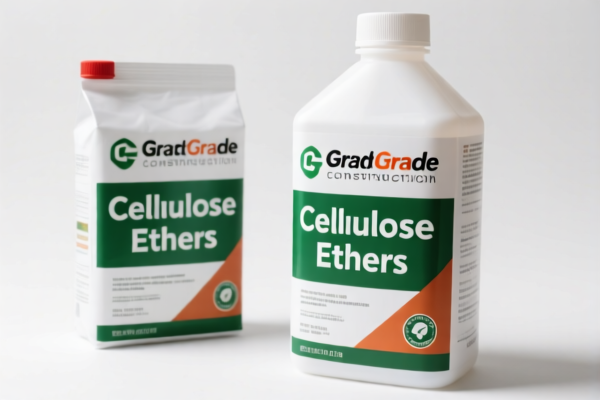
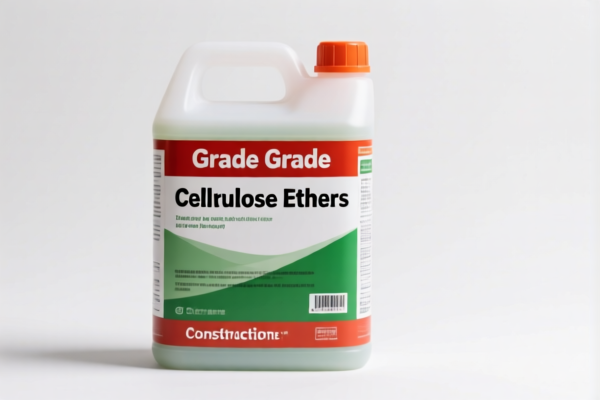
| ✅ Product Photos (Clear Label) | ✔️ | Show packaging, net weight, batch number, and hazard symbols (if any) |
| ✅ Commercial Invoice | ✔️ | Clearly state "Hydroxypropyl Methylcellulose (HPMC) – Chemical Additive" |
| ✅ Packing List | ✔️ | Detail gross/net weight, dimensions |
| ✅ SDS (Safety Data Sheet) | ✔️ | Required for chemical clearance, especially for transport safety |
| ✅ Certificate of Origin (CO) | ✔️ | If claiming any potential exemptions (rare for CN) |
✅ 2. Declaration Tips (Key Mnemonic)
🔥 “Pure Powder is 3912, Pre-mix is 3824, Don’t Mix Up, Or You’ll Pay!”
| Scenario | Correct Declaration | Incorrect Practice |
|---|---|---|
| Pure HPMC Powder/Granules | 3912.12.00.00 |
Misdeclare as "Mortar" → Higher inspection rate |
| HPMC Mixed with Sand/Cement | 3824.99.92.00 or 2523.29 |
Declare as "Chemical" → Smuggling suspicion |
| Liquid HPMC Solution | 3912.19 (Other cellulose ethers) |
Declare as powder → Mismatch |
| Small Sample (De Minimis) | Cannot use | Try to ship under $800 → Seized or taxed |
✅ 3. Special Case Handling
| Case | Handling Advice |
|---|---|
| OEM Branding | If the product is branded for a specific construction company, still declare as "HPMC Chemical Additive." |
| Viscosity Differences | High viscosity vs. low viscosity does not change HS Code. It remains 3912.12.00.00. |
| Blended Products | If mixed with other polymers (e.g., PVA), it may shift to 3824.99. Consult a customs broker to avoid misclassification. |
| Sample Shipments | Even for samples, if value < $800, still subject to 45% tax due to deny_de_minimis rule. |
🌍 V. Global Main Market Clearance Comparison (2026 Latest)
| Country/Region | Recommended HS Code | Tariff (China Origin) | Certification Requirements | Notes |
|---|---|---|---|---|
| 🇺🇸 USA | 3912.12.00.00 |
45% | SDS, MSDS | High tariff due to Section 301 |
| 🇨🇳 China | 3912.12.00.00 |
0% (Imported) | None | No additional surcharges |
| 🇪🇺 EU | 3912.12.00.00 |
0% | REACH Registration | No additional surcharges |
| 🇦🇺 Australia | 3912.12.00.00 |
5% | AICIS Registration | Moderate tariff |
| 🇯🇵 Japan | 3912.12.00.00 |
0% - 2% | JIS Standard | Low tariff |
📌 Conclusion:
- USA is the only major market with punitive surcharges (45%) for Chinese-origin cellulose ethers.
- EU and Japan are favorable for duty purposes, but compliance (REACH, JIS) is key.
- Supply Chain Recommendation: If shipping to the USA, consider sourcing from Vietnam, Thailand, or India to potentially avoid Section 301 duties (if origin rules are met).
📌 VI. Common Errors & Pitfall Guide (Blood & Tears Lessons)
❌ Error 1: Declaring pre-mixed mortar as pure HPMC
👉 Consequence: Customs will reclassify to 3824.99 or 2523.29, potentially imposing different tariffs and delays.
❌ Error 2: Ignoring SDS/MSDS requirements
👉 Consequence: Customs may detain the shipment for safety review, causing significant delays.
❌ Error 3: Assuming De Minimis applies to small samples
👉 Consequence: Shipment seized or billed for 45% tax + penalties.
❌ Error 4: Using vague descriptions like "Thickener" or "Additive"
👉 Consequence: Customs may assign a default higher tariff or require additional inspection.
✅ Correct Approach:
“Hydroxypropyl Methylcellulose (HPMC), Powder, Viscosity XX, Substitution Degree XX, Chemical Additive for Mortar, HS Code 3912.12.00.00”
🎯 VII. Conclusion: Professional Declaration, Save Time, Reduce Costs!
🎯 Remember Mnemonics:
🔹 “Pure Powder is 3912, Pre-mix is 3824, Don’t Mix Up!”
🔹 “China to USA: 45% Tax, De Minimis No, SDS Yes!”
🔹 “HS Code Defines Destiny, Tax Rate Differs by 45 Points!”
📌 Pro Tip:
If your HPMC is sourced from Vietnam, Thailand, or India, you may be eligible for IEEPA exemptions and lower Section 301 duties (0%-5%).
Recommendation: Apply for a Pre-Ruling from CBP (Customs and Border Protection) if you are unsure about the classification of blended products.
📣 Take Action Now:
📞 Contact a Professional Customs Broker + Provide Product Specs + Apply for Pre-Ruling
🚀 Let your Cellulose Ether clear customs smoothly, efficiently, and profitably!
✨ Professional Clearance Starts with Accurate Classification!
💼 Every Cent of Cost Deserves Precision!
用户评价
关于 HS 编码归类
协调制度(HS)是由世界海关组织(WCO)制定的国际贸易商品分类标准。全球 200 多个国家采用 HS 系统作为海关关税、贸易统计和进出口监管的基础。
每个 HS 编码遵循以下层级结构:
- 章(2 位)——商品大类(例如:第 84 章:机器和机械设备)
- 品目(4 位)——章内的更具体分类
- 子目(6 位)——国际通用细分,所有 WCO 成员国统一使用
- 本国细分(8-10 位)——各国自行扩展的细分编码,如美国 HTSUS 10 位编码
正确的 HS 编码归类对于顺利通关、准确缴纳关税和遵守贸易法规至关重要。错误归类可能导致海关延误、多缴关税或罚款。
从CN进口到US时,适用的关税税率可能包括:
- 最惠国(MFN)税率——适用于 WTO 成员国的标准关税税率
- 普通税率——适用于无贸易协定国家
- 贸易救济关税——附加关税,如 301 条款(反倾销)、232 条款(国家安全)或反补贴税
本页内容仅供参考。如需正式归类,请咨询当地海关或持牌报关代理。