cemented carbide cutting inserts
CN → US| HS编码 | 关税税率 | 原产国 | 目的国 | 文档 |
|---|---|---|---|---|
| 8207903085 | 40.0% | CN | US | 官方文档 |
| 8207803000 | 39.8% | CN | US | 官方文档 |
商品图片
AI分析
🔪 Cemented Carbide Cutting Inserts (Interchangeable Tools)
🌐 HS Code Reference & Clearance Guide | 2026 Latest Tariff Analysis | Professional Clearance Strategy
📌 I. Product Definition: What Exactly Are "Cutting Inserts"?
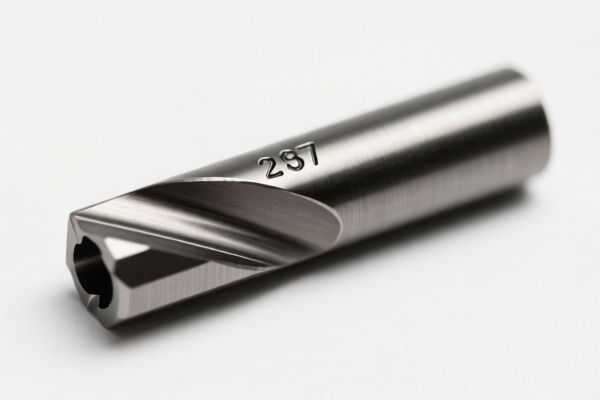
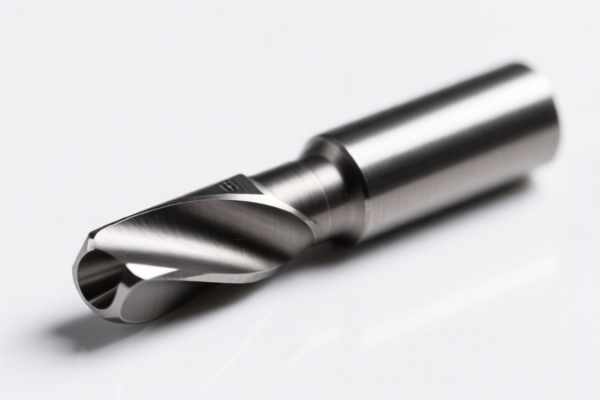
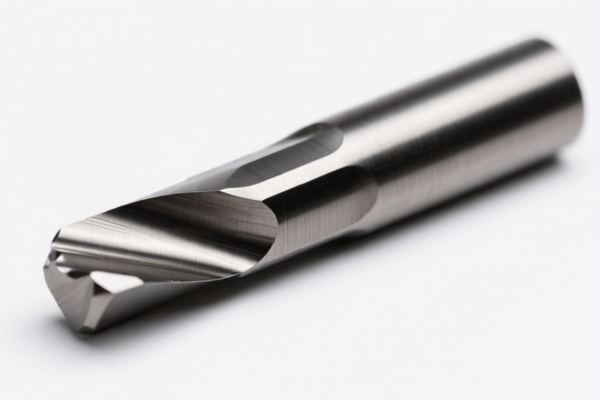
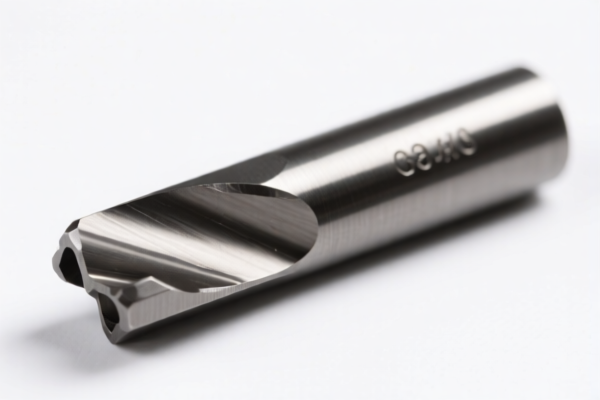
Cemented Carbide Cutting Inserts are replaceable cutting edges made of tungsten carbide (WC) bonded with a metal binder (usually cobalt). They are the "teeth" of modern machining tools, screwed or clamped onto tool holders for use in lathes, milling machines, drilling machines, and other power-operated hand tools.
In international trade, these are classified not as standalone consumer goods, but as interchangeable tools for machine-tools.
⚠️ Critical Distinction for Classification:
The specific HS Code depends entirely on the geometry/application (Turning vs. Other) and the chemical composition (specifically Chromium, Molybdenum, Tungsten, or Vanadium content).
- Turning Tools: Inserts shaped specifically for lathe operations (removing material from a rotating workpiece).
- Other Interchangeable Tools: All other inserts (milling, drilling, boring, grooving, threading) that are not strictly "turning" tools.
Both categories have different tax treatments under US import laws (specifically Section 301 tariffs).
📦 II. HS Code Classification Details (2026 Latest Tariff Authority)
Based on the provided dataset, there are two distinct HS Codes applicable to Cemented Carbide Inserts, depending on their specific function and material composition.
| HS Code | Product Description | Key Criteria | Tax Rate (Total) |
|---|---|---|---|
8207.90.30.85 |
Other Interchangeable Tools (Milling, Drilling, etc.) | • For machine-tools (pressing, stamping, punching, tapping, threading, drilling, boring, broaching, milling, turning, screwdriving). • Excludes dedicated "turning tools" (which go to 8207.80). • Material: Cutting part contains by weight >0.2% Chromium, Molybdenum, or Tungsten, OR >0.1% Vanadium. |
30.0% |
8207.80.30.00 |
Tools for Turning | • Specifically designed for turning operations (lathe inserts). • Material: Cutting part contains by weight >0.2% Chromium, Molybdenum, or Tungsten, OR >0.1% Vanadium. |
0.0% |
🔍 Important Note on "Cemented Carbide":
Cemented carbide is primarily composed of Tungsten Carbide (WC). Therefore, it almost always exceeds the 0.2% Tungsten threshold. This means both codes above are highly likely to apply to standard cemented carbide inserts, but the tax outcome differs drastically (0% vs. 30%) based solely on whether the insert is for Turning or Other applications.
💰 III. 2026 Latest Tariff Rate Breakdown (Including Additional Duties)
✅ Applicable Country: United States (US)
✅ Origin: China (CN) (Note: If origin is non-China, Section 301 duties may not apply, but check specific trade agreements)
✅ Effective Date: Current rates apply for imports subject to USITC rulings.
🎯 1. 8207.90.30.85 —— Other Interchangeable Tools (Milling/Drilling/Threading Inserts)
| Item | Detail |
|---|---|
| Base Tariff | 5.0% (Standard MFN Rate) |
| Section 301 Surcharge | +25.0% (Additional Duty under Trade Act of 1974, Section 301) |
| Total Tariff Rate | 30.0% |
| Calculation Basis | Ad Valorem on CIF Value |
| De Minimis Exemption | ❌ Not Eligible |
| Legal Path | USITC:8207.90.30.85 → FOOTNOTE:301_Duties |
📌 Explanation:
- "Other interchangeable tools" (e.g., milling inserts, drill bits, threading inserts) are subject to a 5% base duty plus a 25% Section 301 surcharge. - This results in a 30% total tax burden. - This is a high-cost category for importers. Misclassifying these as "Turning Tools" to avoid tax is a high-risk audit trigger.
🎯 2. 8207.80.30.00 —— Tools for Turning (Lathe Inserts)
| Item | Detail |
|---|---|
| Base Tariff | 0.0% (Duty-Free for this subheading) |
| Section 301 Surcharge | 0.0% (Exempt or not listed for this specific subheading in the provided data) |
| Total Tariff Rate | 0.0% |
| Calculation Basis | N/A |
| De Minimis Exemption | N/A (Already 0%) |
| Legal Path | USITC:8207.80.30.00 |
📌 Explanation:
- Inserts specifically designed for turning (e.g., diamond-shaped, square, round inserts for lathes) are classified under 8207.80. - According to the provided data, this code has a 0% total tax rate. - This is a massive cost advantage for lathe inserts compared to milling inserts.
🛠️ IV. Clearance Practical Advice (Real-World Pitfall Guide)
✅ 1. Preparation Checklist (Must-Have Documents)
| Document | Requirement | Reason |
|---|---|---|
| ✅ Product Catalog / Spec Sheet | ✔️ Must show Geometry (e.g., CNMG, DNMG, TNGP) | Geometry determines if it's a "Turning" tool (8207.80) or "Other" (8207.90). |
| ✅ Material Certificate | ✔️ Must specify % Composition (W, Cr, Mo, V) | Confirms it meets the >0.2% W/Cr/Mo threshold for these specific codes. |
| ✅ Application Description | ✔️ Clearly state "For Use in Lathe" or "For Use in Milling Machine" | Crucial for correct HS code assignment. |
| ✅ Commercial Invoice | ✔️ List items as "Cemented Carbide Turning Inserts" or "Milling Inserts" | Name must match the physical product and intended use. |
| ✅ Packing List | ✔️ Separate line items if mixed (Turning vs. Milling) | Avoids confusion and potential reclassification by CBP. |
✅ 2. Classification Strategy (Key Mantra)
🔥 “Turning is Free (0%), Other is Expensive (30%)!”
| Scenario | Correct HS Code | Tax Rate | Risk Level |
|---|---|---|---|
| Lathe Inserts (e.g., CNMG, SNMG) | 8207.80.30.00 |
0.0% | ✅ Low (if clearly for turning) |
| Milling Inserts (e.g., R24.5, APMT) | 8207.90.30.85 |
30.0% | ⚠️ High (High duty cost) |
| Drill Inserts / Threading Inserts | 8207.90.30.85 |
30.0% | ⚠️ High (High duty cost) |
| Mixed Bundle (Lathe + Milling) | Split Declaration | 0% & 30% | ⚠️ High (If mixed incorrectly) |
📌 Critical Warning:
- Do NOT try to misclassify milling inserts as "turning tools" to save 30%. CBP uses geometry and application data to verify.
- If you import a box containing both lathe inserts and milling inserts, you must separate them on the commercial invoice and packing list.
- Example:
- 1,000 pcs of CNMG (Turning) →8207.80.30.00→ 0% tax
- 1,000 pcs of R24.5 (Milling) →8207.90.30.85→ 30% tax
✅ 3. Special Considerations
| Situation | Advice |
|---|---|
| OEM Custom Inserts | Provide custom design drawings showing the cutting edge geometry. If it looks like a lathe insert, argue for 8207.80. |
| High-Vanadium Grades | Ensure the material cert shows <0.1% Vanadium if you want to avoid the "over 0.1% V" trigger? No, the code requires >0.1% V or >0.2% W/Cr/Mo. Since carbide is Tungsten-heavy, this condition is almost always met. |
| Used or Re-ground Inserts | Generally, new inserts are covered. Used inserts may fall under different headings (e.g., 8207.60 for tips/dies). Clarify with CBP. |
🌍 V. Global Market Comparison (2026)
| Country/Region | Recommended HS Code | Tariff (China Origin) | Notes |
|---|---|---|---|
| 🇺🇸 United States | 8207.80.30.00 (Turning) / 8207.90.30.85 (Other) |
0% / 30% | Harsh disparity. Turning tools are duty-free; others are heavily taxed. |
| 🇪🇺 European Union | 8207.20 / 8207.50 |
~0% - 3.7% | VAT applies. No Section 301-style surcharges. More uniform taxation. |
| 🇨🇳 China | 8207.20 / 8207.50 |
0% - 5% | Import duties are generally lower. No additional surcharges for US-style conflicts. |
| 🇬🇧 United Kingdom | 8207.20 / 8207.50 |
~0% - 3.7% | Post-Brexit tariffs align closely with EU historically, but verify UK Specific Tariff. |
| 🇮🇳 India | 8207.20 / 8207.50 |
~0% - 7.5% | Basic Customs Duty (BCD) + Social Welfare Surcharge. |
📌 Conclusion:
- The US market is unique in its punitive 30% tariff on "Other" cutting tools (Section 301).
- For exporters, optimizing the ratio of Turning vs. Non-Turning tools in your shipment can significantly impact landed cost.
- Turning inserts are the most tax-efficient category for US import.
📌 VI. Common Mistakes & Pitfalls (Lessons Learned)
❌ Mistake 1: Classifying all carbide inserts as 8207.80 (Turning) to pay 0% tax.
👉 Consequence: CBP audits reveal milling inserts in the shipment → Back taxes (30%) + Penalties + Interest.
❌ Mistake 2: Mixing "Turning" and "Milling" inserts in one SKU without separate declaration.
👉 Consequence: CBP may classify the entire shipment under the highest rate (30%) or demand full separation before release → Delays.
❌ Mistake 3: Ignoring the "Material Composition" clause.
👉 Consequence: If the insert contains NO Chromium, Molybdenum, Tungsten, or Vanadium (extremely rare for carbide), it might fall under a different, potentially lower or higher, duty rate. But for cemented carbide, the 0.2% W threshold is standard.
❌ Mistake 4: Using generic names like "Cutting Tools" on the Invoice.
👉 Consequence: CBP will issue a Request for Information (RFI) → Shipment Holded until detailed geometry is provided.
✅ Correct Approach:
"Cemented Carbide Turning Inserts, Model CNMG 120408, For Lathe Use" →
8207.80.30.00
"Cemented Carbide Milling Inserts, Model R24.5-04, For Milling Machine Use" →8207.90.30.85
🎯 VII. Conclusion: Precision Matters in Tool Classification
🎯 Remember the Golden Rule:
🔹 "Turning = 0%, Other = 30%. Know Your Geometry!"
🔹 "One Misclassified Milling Insert Can Cost You 30% of Your Shipment Value."
📌 Pro Tip:
If you are importing large volumes of mixed tools, consider separating your supply chain:
- Ship Turning Inserts from one supplier (0% duty).
- Ship Milling/Drilling Inserts from another, or budget for the 30% duty.
- Apply for a CBP Binding Ruling before your first large shipment if you are unsure about a new insert geometry.
📣 Immediate Action:
📞 Verify the Geometry Code (e.g., CNMG vs. APMT) of every insert in your inventory.
📋 Update your Commercial Invoices to explicitly state the application (Lathe vs. Milling).
🚀 Save 30% by getting the HS Code Right!
✨ Professional Classification Saves Money!
💼 Your Profit Margin Depends on the Decimal Point of Your HS Code!
用户评价
关于 HS 编码归类
协调制度(HS)是由世界海关组织(WCO)制定的国际贸易商品分类标准。全球 200 多个国家采用 HS 系统作为海关关税、贸易统计和进出口监管的基础。
每个 HS 编码遵循以下层级结构:
- 章(2 位)——商品大类(例如:第 84 章:机器和机械设备)
- 品目(4 位)——章内的更具体分类
- 子目(6 位)——国际通用细分,所有 WCO 成员国统一使用
- 本国细分(8-10 位)——各国自行扩展的细分编码,如美国 HTSUS 10 位编码
正确的 HS 编码归类对于顺利通关、准确缴纳关税和遵守贸易法规至关重要。错误归类可能导致海关延误、多缴关税或罚款。
从CN进口到US时,适用的关税税率可能包括:
- 最惠国(MFN)税率——适用于 WTO 成员国的标准关税税率
- 普通税率——适用于无贸易协定国家
- 贸易救济关税——附加关税,如 301 条款(反倾销)、232 条款(国家安全)或反补贴税
本页内容仅供参考。如需正式归类,请咨询当地海关或持牌报关代理。