ceramic fiber bottle
CN → US商品图片
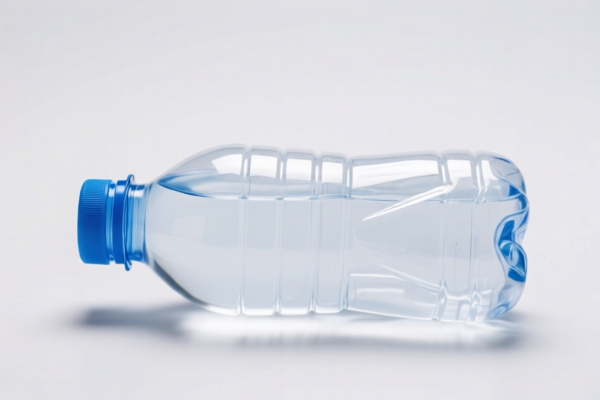
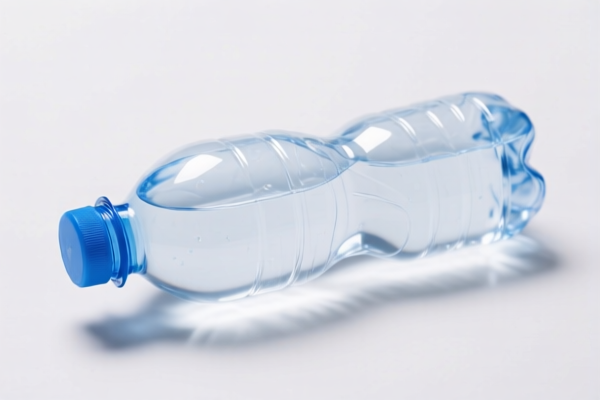
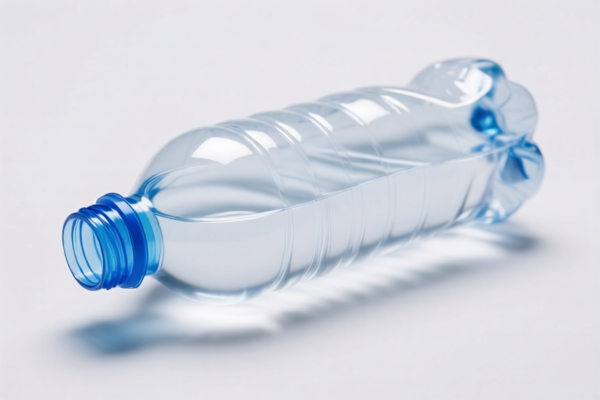
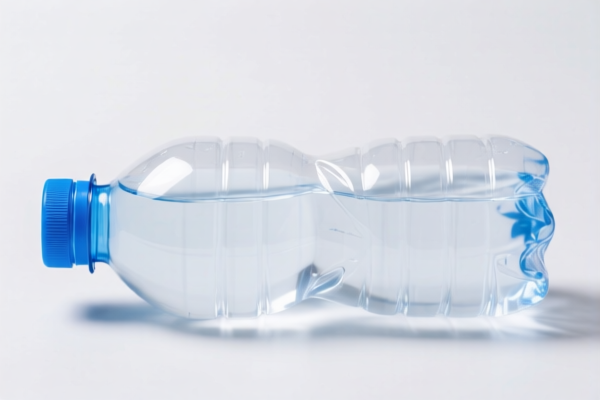
AI分析
🏺 Ceramic Fiber Bottle (Insulating Ceramic Fiber Vessel)
🌐 HS Code Reference & Customs Clearance Guide | 2026 Latest Tariff Analysis | Professional-Level Clearance Strategy
📌 Part 1: Product Definition & Classification: Do You Really Understand "Ceramic Fiber Bottle"?
A "Ceramic Fiber Bottle" typically refers to a refractory container or vessel made from ceramic fiber materials (such as alumina-silica fibers), used primarily for high-temperature insulation, laboratory testing, or industrial thermal protection. It is NOT a common household drinking vessel. In international trade, it is critical to distinguish between:
- Ceramic Fiber Insulation Products: Made from woven or felted ceramic fibers, often shaped into bottles, cups, or containers for holding molten metals or serving as insulating molds.
- Traditional Ceramic Vessels: Made from fired clay, porcelain, or stoneware, which do not contain fiber reinforcement.
⚠️ Key Distinction Point:
- If the material is fibrous, lightweight, and used for high-temp insulation → Classify under Chapter 68 (Articles of Stone, Plaster, Cement, Asbestos, Mica or Similar Materials).
- If the material is hard, fired clay/porcelain → Classify under Chapter 69 (Ceramic Products).
- Note: Most "Ceramic Fiber" products fall under Chapter 68 due to the fiber content, even if shaped like a bottle.
📦 Part 2: HS Code Classification Details (2026 Latest Tariff Authority Comparison)
| HS Code | Product Description | Application Scenario | Material Structure |
|---|---|---|---|
6804.22.00.00 |
Millstones, grindstones, grinding wheels and similar articles, for grinding, sharpening, polishing, cutting or for similar works, with working surfaces of agglomerated natural or artificial abrasives, or of porcelain | Lab-grade abrasive tools, not bottles. Often confused if used for polishing. | ❌ Not a bottle |
6806.10.00.00 |
Expanded clay aggregate | Insulation fillers, not shaped bottles. | ❌ Not a bottle |
6806.20.00.00 |
Diatomite and naturally occurring siliceous fossils | Insulation materials, not shaped vessels. | ❌ Not a bottle |
6815.99.60.00 |
Other articles of stone or of other mineral substances (not elsewhere specified) | Ceramic fiber bottles for high-temp insulation, industrial use | ✅ High-Temp Fiber/Vessel |
6911.10.00.00 |
Tableware and kitchenware, of porcelain or china, whether or not decorated, with a value of not exceeding $5 per item | Household porcelain bottles (if for water/tea) | ✅ Household Porcelain |
6914.10.00.00 |
Other ceramic articles of porcelain or china | Non-tableware ceramic items (e.g., lab crucibles, industrial insulators) | ✅ Industrial Ceramic |
9619.00.00.00 |
Sanitary towels and tampons, napkins and napkin pads for babies and similar sanitary articles, of any material | Incorrectly used for "bottle" if misinterpreted as disposable fiber pad | ❌ Not applicable |
🔍 Critical Reminder:
- "Ceramic Fiber" is technically a mineral fiber product. According to the Harmonized System (HS), products made of mineral fibers (excluding asbestos) are generally classified under Chapter 68, specifically 6815 or 6806 depending on form.
- If the "bottle" is a refractory vessel (e.g., used in metallurgy for holding slag or metal), it often falls under 6815.99.60.00 (Other articles of stone or other mineral substances).
- If it is a household ceramic bottle (e.g., for wine or oil) made of traditional fired clay/porcelain, it falls under Chapter 69 (e.g., 6911 or 6914).
- Assumption for this guide: The product is an industrial/laboratory insulating ceramic fiber vessel.
💰 Part 3: 2026 Latest Tariff Rate Details (Including Additional Taxes, Policy Surcharges)
✅ Applicable Country: United States (US)
✅ Origin: China (CN)
✅ Effective Date: November 10, 2025 onwards (including subsequent imports)
🎯 1. 6815.99.60.00 —— Ceramic Fiber/Refractory Vessels (Industrial/High-Temp Use)
| Item | Content |
|---|---|
| Base Tariff Rate | 5.3% (ad valorem) |
| USITC Additional Tariff | +25% (Under USITC Footnote 9903.88.01 for Section 301 goods) |
| IEEPA Additional Tariff | +10% (For China/Hong Kong origin products, from Nov 10, 2025) |
| Total Tariff Rate | 40.3% |
| Tax Calculation | CIF Value × 40.3% |
| De Minimis Eligibility | ❌ Not Eligible (deny_de_minimis) |
| Legal Basis Path | IEEPA:9903.01.25 → IEEPA:9903.01.24 → USITC:6815.99.60.00 → FOOTNOTE:9903.88.01 |
📌 Explanation:
- The 25% USITC tariff applies to most industrial mineral products from China under the Section 301 trade remedy.
- The 10% IEEPA tariff is an additional sanction imposed on Chinese-origin goods.
- Total Rate: 40.3%. This is a high-cost category. Importers must budget accordingly.
🎯 2. 6914.10.00.00 —— Other Ceramic Articles (If Classified as Non-Tableware Ceramic, e.g., Lab Crucibles)
| Item | Content |
|---|---|
| Base Tariff Rate | 5.5% (ad valorem) |
| USITC Additional Tariff | +25% (Under USITC Footnote 9903.88.01) |
| IEEPA Additional Tariff | +10% (For China origin) |
| Total Tariff Rate | 40.5% |
| Tax Calculation | CIF Value × 40.5% |
| De Minimis Eligibility | ❌ Not Eligible (deny_de_minimis) |
| Legal Basis Path | IEEPA:9901.25 → IEEPA:9903.01.24 → USITC:6914.10.00.00 → FOOTNOTE:9903.88.01 |
📌 Note:
- If customs classifies the item as a "ceramic article" rather than a "fiber article," the rate is nearly identical.
- Classification Dispute Risk: If you declare it as "fiber" (68xx) but customs sees "ceramic" (69xx), the rates are similar, but the description and compliance requirements differ.
🛠️ Part 4: Customs Clearance Practical Advice (Battle-Tested Pitfall Avoidance)
✅ 1. Required Documentation Checklist (Non-Negotiable)
| Document | Must Provide | Description |
|---|---|---|
| ✅ Product Specifications | ✔️ | Material composition (e.g., 70% alumina fiber, 30% silica), density, max temp rating |
| ✅ Material Safety Data Sheet (MSDS) | ✔️ | Especially if the fiber is considered hazardous (e.g., respirable fibers) |
| ✅ Product Photos (Clear Labels) | ✔️ | Show shape, use case (industrial/lab), and any certifications |
| ✅ Third-Party Test Report | ✔️ | ASTM, ISO, or CE reports for thermal insulation properties |
| ✅ Commercial Invoice | ✔️ | Clearly state "Ceramic Fiber Insulating Vessel for Industrial Use" |
| ✅ Certificate of Origin (CO) | ✔️ | If applicable for non-China origins to seek exemptions |
| ✅ Packing List | ✔️ | Detail weights, dimensions, and packaging type |
✅ 2. Declaration Tips (Key Mantra)
🔥 “Fiber is Mineral, Not Pottery; Name it Right, Avoid Delight!”
| Scenario | Correct Declaration | Wrong Practice |
|---|---|---|
| Industrial Insulating Bottle | 6815.99.60.00 - "Ceramic Fiber Insulating Vessel" |
Declaring as "Pottery" → Misclassification |
| Household Ceramic Bottle | 6911.10.00.00 - "Porcelain Bottle for Drinking" |
Declaring as "Industrial Fiber" → Over-Declaration |
| Lab Crucible (Ceramic) | 6914.10.00.00 - "Ceramic Crucible" |
Declaring as "General Ceramic" → Vague Description |
| Raw Ceramic Fiber Batts | 6806.20.00.00 or 6815.99 |
Declaring as "Finished Bottle" → Shape Mismatch |
✅ 3. Special Case Handling
| Scenario | Handling Advice |
|---|---|
| Respirable Fiber Warning | If the fiber is < 3 microns, it may be considered hazardous. Provide MSDS and warn of handling risks. |
| Lab vs. Industrial Use | If used for medical/lab purposes, ensure compliance with FDA/ISO standards if applicable. |
| Mixed Shipments | If shipping with regular ceramics, declare separately to avoid confusion. |
| Origin Exemption | If the product is manufactured in Vietnam, Mexico, or Thailand, apply for IEEPA Exemption (rate drops to 5-10%). |
🌍 Part 5: Global Major Market Clearance Comparison (2026 Latest)
| Country/Region | Recommended HS Code | Tariff | Certification Requirements | Notes |
|---|---|---|---|---|
| 🇺🇸 US | 6815.99.60.00 |
40.3% (China) | None specific, but MSDS required | High tariff due to Section 301 & IEEPA |
| 🇨🇳 China | 6815.99.60.00 |
5-10% | None | Low tariff, high demand for industrial materials |
| 🇪🇺 EU | 6815.99.60.00 |
6.5% (China) | REACH, CE (if applicable) | No additional sanctions, but strict chemical rules |
| 🇦🇺 Australia | 6815.99.60.00 |
5% | RCM, Work Health & Safety (WHS) | Fiber handling regulations apply |
| 🇯🇵 Japan | 6815.99.60.00 |
5-10% | JIS Standards | Strict on asbestos contamination (ensure no asbestos) |
📌 Conclusion:
- US is the most costly market for Chinese-origin ceramic fiber products due to multiple tariffs.
- EU and Japan are more accessible, but require strict chemical/fiber safety compliance.
- Consider Sourcing from Non-China Origins (e.g., Vietnam, India) to mitigate US tariffs.
📌 Part 6: Common Errors & Pitfall Guide (Lessons Learned from Tears)
❌ Error 1: Declaring "Ceramic Fiber Bottle" as "Porcelain Cup"
👉 Consequence: Misclassification → Refusal of Entry or Seizure due to material mismatch.
❌ Error 2: Failing to provide MSDS for fiber products
👉 Consequence: Customs Hold → Delays of 2-4 weeks while safety data is verified.
❌ Error 3: Ignoring "Respirable Fiber" Regulations
👉 Consequence: Health & Safety Violations → Fines and potential bans on entry if fibers are considered hazardous.
❌ Error 4: Using Generic Description "Ceramic Item"
👉 Consequence: Audit Risk → Customs may reclassify and assess higher duties + penalties.
✅ Correct Practice:
“Insulating Ceramic Fiber Vessel, Alumina-Silica Fiber, Max Temp 1200°C, For Industrial Metallurgical Use, Model XYZ, MSDS Provided”
🎯 Part 7: Conclusion: Precise Classification Saves Costs!
🎯 Remember the Mantra:
🔹 “Fiber is Mineral, Not Pottery; Name it Right, Avoid Delight!”
🔹 “HS Code Determines Fate; 40% vs 5%, Declare Once, Save Thousands!”
📌 Pro Tip:
If your ceramic fiber bottle is originally made in Vietnam, India, or Turkey, you can apply for IEEPA Exemption in the US, reducing tariffs from ~40% to ~5-10%.
Recommend applying for an Advance Ruling (Pre-classification) to avoid customs disputes.
📣 Immediate Action:
📞 Contact a Professional Customs Broker + Provide Product Specs + Apply for HS Code Pre-classification
🚀 Let your Ceramic Fiber Bottle Clear Customs Smoothly, Efficiently Export, and Maximize Profits!
✨ Professional Customs Clearance Starts with Accurate Classification!
💼 Every Cent of Your Cost Deserves to be Precisely Calculated!
用户评价
关于 HS 编码归类
协调制度(HS)是由世界海关组织(WCO)制定的国际贸易商品分类标准。全球 200 多个国家采用 HS 系统作为海关关税、贸易统计和进出口监管的基础。
每个 HS 编码遵循以下层级结构:
- 章(2 位)——商品大类(例如:第 84 章:机器和机械设备)
- 品目(4 位)——章内的更具体分类
- 子目(6 位)——国际通用细分,所有 WCO 成员国统一使用
- 本国细分(8-10 位)——各国自行扩展的细分编码,如美国 HTSUS 10 位编码
正确的 HS 编码归类对于顺利通关、准确缴纳关税和遵守贸易法规至关重要。错误归类可能导致海关延误、多缴关税或罚款。
从CN进口到US时,适用的关税税率可能包括:
- 最惠国(MFN)税率——适用于 WTO 成员国的标准关税税率
- 普通税率——适用于无贸易协定国家
- 贸易救济关税——附加关税,如 301 条款(反倾销)、232 条款(国家安全)或反补贴税
本页内容仅供参考。如需正式归类,请咨询当地海关或持牌报关代理。