charging cable set
CN → US| HS编码 | 关税税率 | 原产国 | 目的国 | 文档 |
|---|---|---|---|---|
| 8544429090 | 87.6% | CN | US | 官方文档 |
| 8544422000 | 85.0% | CN | US | 官方文档 |
| 3926909989 | 22.8% | CN | US | 官方文档 |
| 8536904000 | 35.0% | CN | US | 官方文档 |
| 8544429010 | 87.6% | CN | US | 官方文档 |
商品图片
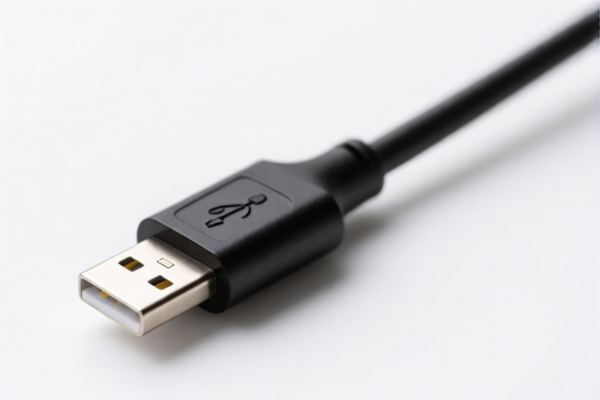
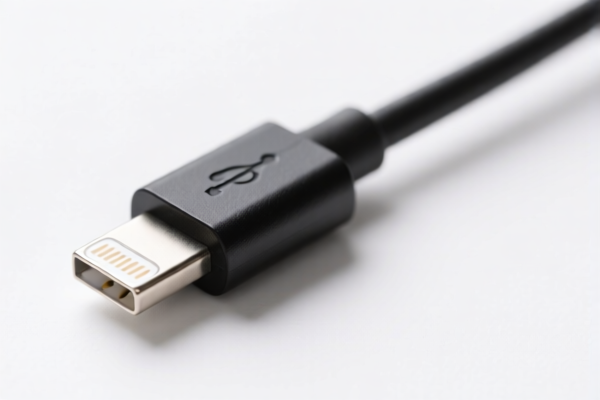
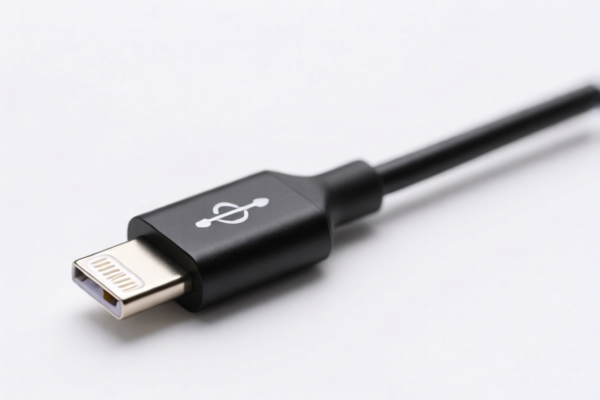
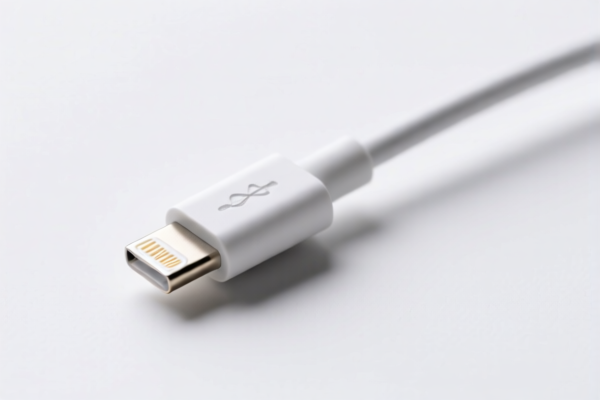
AI分析
🔌 Charging Cable Set (Power & Data Transfer Cables)
🌐 HS Code Reference & Customs Clearance Guide | 2026 Latest Tariff Analysis | Professional-Level Clearance Strategy
📌 I. Product Definition & Classification: What Exactly is a "Charging Cable Set"?
In international trade, a Charging Cable Set is primarily classified as an insulated electric conductor, used for transmitting power or data between electronic devices. However, its exact HS Code classification depends heavily on its primary function, construction, and intended use.
Misclassification is a common pitfall because these cables can fall under different chapters depending on whether they are seen as simple conductors (8544), connectors (8536), or plastic accessories (3926).
⚠️ Key Distinction Points:
- If it is a wire with connectors used for electricity transmission (≤ 1000V) → Chapter 8544 (High Tax Risk)
- If it is a connector/jack part of a circuit → Chapter 8536
- If it is purely a plastic casing/accessory → Chapter 3926 (Low Tax Risk, but risky if misapplied)
📦 II. HS Code Classification Details (2026 Latest Tariff Authority Comparison)
Based on the provided data, here are the 5 possible HS Codes for Charging Cable Sets:
| HS Code | Product Description | Applicable Scenario | Total Tax Rate | Tax Details |
|---|---|---|---|---|
8544.42.90.90 |
Insulated electric conductors, ≤ 1000V, with connectors | Standard USB/Power cables used for charging devices | 87.6% | Base: 2.6%, Section 301: 25%, Section 122: 10%, Aluminum/Copper/Add-on: 50% |
8544.42.20.00 |
Insulated conductors for telecom/electronic equipment | Data cables or specific telecom power cables | 85.0% | Base: 0.0%, Section 301: 25%, Section 122: 10% |
3926.90.99.89 |
Plastic parts (e.g., outer jacket/casing only) | Declared as plastic accessories rather than electrical components | 22.8% | Base: 5.3%, Section 301: 7.5%, Section 122: 10% |
8536.90.40.00 |
Electrical connection equipment (connectors/jacks) | Cables classified primarily by their connector type for circuit connection | 35.0% | Base: 0.0%, Section 301: 25%, Section 122: 10% |
8544.42.90.10 |
Electric conductors with ends prepared for connection (Extension Cords) | Cables defined as "extension" or "extension cords" with pre-formed plugs | 87.6% | Base: 2.6%, Section 301: 25%, Section 122: 10%, Aluminum/Copper/Add-on: 50% |
🔍 Critical Reminder:
-8544codes (90.90 & 90.10) carry the HIGHEST tax burden (87.6%) due to the "Aluminum/Copper/Add-on" 50% tariff. This applies to most standard charging cables containing metal cores.
-3926is the LOWEST tax (22.8%), but customs authorities frequently reject this classification for complete functional cables, deeming it a "wrong declaration" if the electrical function is primary.
-8544.42.20.00(85.0%) is slightly better than the 87.6% bracket but still very high.
💰 III. 2026 Latest Tariff Rate Details (Including Surcharges & Policy Add-ons)
✅ Applicable Country: United States (US)
✅ Origin: China (CN)
✅ Effective Date: 2025/2026 (Current Trade War Context)
🎯 1. 8544.42.90.90 & 8544.42.90.10 —— Insulated Conductors (Standard & Extension)
| Item | Detail |
|---|---|
| Base Tariff | 2.6% |
| Section 301 Surcharge | +25.0% |
| Section 122 Surcharge | +10.0% |
| Aluminum/Copper/Add-on Surcharge | +50.0% |
| Total Tax Rate | 87.6% |
| Calculation | CIF Value × 87.6% |
| De Minimis Exemption | ❌ NOT Eligible |
| Legal Path | Base Tariff → USITC Footnote → IEEPA 301 → Section 122 → Metal Add-on |
📌 Explanation:
- The 50% "Aluminum/Copper/Add-on" tariff is the killer here. Most charging cables contain copper conductors. If customs determines the cable is primarily a "metal product" or falls under specific metal goods lists, this 50% is added on top.
- Total 87.6% makes importing these cables into the US extremely costly.
🎯 2. 8544.42.20.00 —— Telecom/Electronic Equipment Conductors
| Item | Detail |
|---|---|
| Base Tariff | 0.0% |
| Section 301 Surcharge | +25.0% |
| Section 122 Surcharge | +10.0% |
| Total Tax Rate | 85.0% |
| Calculation | CIF Value × 85.0% |
| De Minimis Exemption | ❌ NOT Eligible |
📌 Explanation:
- No base tariff, but still hits 25% + 10% = 35% in surcharges.
- Note: The data does not list the 50% metal add-on here, but in practice, customs may still apply it if the product is deemed similar to8544.42.90. Use with caution.
🎯 3. 3926.90.99.89 —— Plastic Products (Outer Coverings)
| Item | Detail |
|---|---|
| Base Tariff | 5.3% |
| Section 301 Surcharge | +7.5% |
| Section 122 Surcharge | +10.0% |
| Total Tax Rate | 22.8% |
| Calculation | CIF Value × 22.8% |
| De Minimis Exemption | ❌ NOT Eligible |
📌 Explanation:
- Lowest Tax Option.
- Risk: Only applicable if the product is declared as plastic accessories or if the electrical component is negligible. For a functional "Charging Cable Set," customs will likely argue it belongs in Chapter 85. High risk of audit/reclassification.
🎯 4. 8536.90.40.00 —— Electrical Connection Equipment
| Item | Detail |
|---|---|
| Base Tariff | 0.0% |
| Section 301 Surcharge | +25.0% |
| Section 122 Surcharge | +10.0% |
| Total Tax Rate | 35.0% |
| Calculation | CIF Value × 35.0% |
| De Minimis Exemption | ❌ NOT Eligible |
📌 Explanation:
- Applies if the cable is viewed as a connector/jack system rather than a wire.
- Significantly cheaper than8544but requires strong justification that the connector is the primary value/function.
🛠️ IV. Customs Clearance Practical Advice (Real-World Pitfall Guide)
✅ 1. Required Documentation List
| Document | Must Provide? | Purpose |
|---|---|---|
| ✅ Product Specifications | ✔️ | Detail voltage (≤1000V), current, length, connector types (USB-C, Lightning, etc.) |
| ✅ Structure Diagram | ✔️ | Show insulation layers, conductor material (copper/aluminum), and connector housing |
| ✅ Product Photos | ✔️ | Clear shots of ends, labels, and packaging |
| ✅ Commercial Invoice | ✔️ | Must accurately describe the item (e.g., "USB Charging Cable" vs. "Extension Cord") |
| ✅ Certificate of Origin | ✔️ | Essential for proving China origin to apply correct surcharges |
✅ 2. Classification Strategy (Key Mnemonics)
🔥 "Function First, Metal Second, Plastic Last!"
| Scenario | Recommended HS Code | Reasoning |
|---|---|---|
| Standard USB Cable | 8544.42.90.90 |
It’s an insulated conductor. High tax (87.6%) due to metal content. |
| Extension Cord | 8544.42.90.10 |
Treated as an extension, same high tax (87.6%). |
| Data/Telecom Cable | 8544.42.20.00 |
Slightly lower tax (85.0%), but still high. |
| Connector-Heavy | 8536.90.40.00 |
If connectors are the main value driver, use this (35.0%). |
| Plastic Housing Only | 3926.90.99.89 |
Avoid for full cables. Only use for pure plastic parts. |
✅ 3. Special Case Handling
| Situation | Advice |
|---|---|
| Cables with Copper Core | Expect the 50% metal add-on. Do not try to hide this; it will trigger audits. |
Trying to use 3926 |
Only do this if you are importing only the plastic jackets or non-functional accessories. Full cables declared as plastic will be reclassified and fined. |
| OEM Branded Cables | Ensure the invoice matches the brand and model. Mismatches can lead to holds. |
🌍 V. Global Market Comparison (2026 Context)
| Country/Region | Recommended HS Code | Est. Total Tax | Notes |
|---|---|---|---|
| 🇺🇸 USA | 8544.42.90.90 |
87.6% | Highest risk due to Section 301 + 122 + Metal Add-on. |
| 🇨🇳 China | 8544.42.90.90 |
~13-16% | Lower base tariffs, no Section 301/122. |
| 🇪🇺 EU | 8544.42.90.90 |
~4-6% | No Section 301/122. Standard EU tariff applies. |
| 🇬🇧 UK | 8544.42.90.90 |
~4-6% | Post-Brexit tariffs, generally lower than US. |
📌 Conclusion:
- The US market is exceptionally hostile to Chinese-made charging cables due to layered tariffs (Base + 301 + 122 + Metal).
- Cost Optimization: If possible, consider sourcing from non-China origins (Vietnam, India) to potentially avoid Section 301, though Section 122 may still apply depending on final rules.
📌 VI. Common Mistakes & Pitfall Guide (Lessons Learned)
❌ Mistake 1: Declaring a Copper USB Cable as 3926 (Plastic)
👉 Result: Customs reclassifies to 8544, applies 87.6% tax + penalties. Loss: High.
❌ Mistake 2: Using 8544.42.90.10 (Extension) for a short USB Cable
👉 Result: Same high tax (87.6%). No benefit. Loss: Neutral/Negative.
❌ Mistake 3: Ignoring the "Metal Add-on" in 8544.42.90.90
👉 Result: Budgeting only for 2.6% + 25% + 10% = 37.6%. Actual is 87.6%. Profit Margin Destroyed.
❌ Mistake 4: Splitting a "Cable Set" (Cable + Adapter) into separate line items incorrectly
👉 Result: Each part may be taxed differently. Ensure the "Set" is described correctly as a whole or properly split if allowed.
✅ Correct Action:
"USB-C Charging Cable, 1m, Copper Core, Insulated, 24AWG, with Type-C Connector"
HS Code:8544.42.90.90
Budget: 87.6% Tax.
🎯 VII. Conclusion: Professional Classification for Cost Efficiency
🎯 Key Takeaways:
🔹 "Charging Cables are High Tax Items in the US."
🔹 "87.6% is the standard nightmare rate for copper cables."
🔹 "Do not fake 'Plastic' classification; it is easily detected and punished."
🔹 "Consider8536(35%) only if the connector is the dominant feature."📌 Pro Tip:
For US imports, budget at least 35-87% for taxes. If using8544.42.90.90, ensure your margin can absorb the 50% metal surcharge.
If volumes are high, consult a customs broker for a Pre-Ruling to confirm if your specific cable qualifies for any lower sub-category.
📣 Immediate Action:
📞 Verify your cable's material (Copper vs. Aluminum).
📦 Check if it can be classified as8536(Connector-focused).
🚀 Avoid3926unless it’s not a functional cable.
💼 Get a professional customs pre-ruling for large shipments.
✨ Precision in Classification Saves Millions!
💼 Every percentage point of tariff difference impacts your bottom line.
用户评价
关于 HS 编码归类
协调制度(HS)是由世界海关组织(WCO)制定的国际贸易商品分类标准。全球 200 多个国家采用 HS 系统作为海关关税、贸易统计和进出口监管的基础。
每个 HS 编码遵循以下层级结构:
- 章(2 位)——商品大类(例如:第 84 章:机器和机械设备)
- 品目(4 位)——章内的更具体分类
- 子目(6 位)——国际通用细分,所有 WCO 成员国统一使用
- 本国细分(8-10 位)——各国自行扩展的细分编码,如美国 HTSUS 10 位编码
正确的 HS 编码归类对于顺利通关、准确缴纳关税和遵守贸易法规至关重要。错误归类可能导致海关延误、多缴关税或罚款。
从CN进口到US时,适用的关税税率可能包括:
- 最惠国(MFN)税率——适用于 WTO 成员国的标准关税税率
- 普通税率——适用于无贸易协定国家
- 贸易救济关税——附加关税,如 301 条款(反倾销)、232 条款(国家安全)或反补贴税
本页内容仅供参考。如需正式归类,请咨询当地海关或持牌报关代理。