chemical catalyst
CN → US| HS编码 | 关税税率 | 原产国 | 目的国 | 文档 |
|---|---|---|---|---|
| 7110410050 | 35.0% | CN | US | 官方文档 |
| 7110490050 | 35.0% | CN | US | 官方文档 |
| 3824880000 | 41.5% | CN | US | 官方文档 |
| 2842909050 | 10.0% | CN | US | 官方文档 |
| 3815110000 | 35.0% | CN | US | 官方文档 |
商品图片
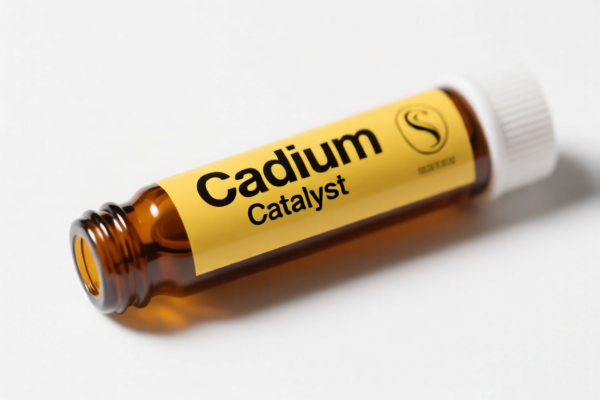
AI分析
🧪 Chemical Catalysts (Industrial & Laboratory Grade)
🌐 HS Code Reference & Customs Clearance Guide | 2026 Latest Tariff Analysis | Professional Entry Strategy for US Market
📌 I. Product Definition & Classification: Are You Sure You Know "Chemical Catalysts"?
Chemical catalysts are substances that accelerate chemical reactions without being consumed in the process. In international trade, they are not a single homogeneous commodity but are classified based on their chemical composition, physical form, and intended application.
Key Distinctions:
- Noble Metal Catalysts: Contain precious metals like Platinum, Iridium, or Ruthenium (typically Group 71).
- Prepared Catalysts: Complex chemical preparations, often organic or inorganic mixtures (typically Group 38 or 28).
- Inorganic Salts: Simple inorganic salts or peroxides used as catalysts (typically Group 28).
⚠️ Critical Classification Point:
- If the catalyst is a noble metal (Pt, Pd, Ir, Ru) in a basic form → HS 7110.
- If it is a complex chemical preparation (e.g., brominated, organic-based, or multi-component) → HS 3824 or HS 3815.
- If it is a simple inorganic salt/peroxide → HS 2842.
📦 II. HS Code Classification Details (2026 Latest Tariff Authority)
Based on the provided data, here are the four potential HS Code classifications for "Chemical Catalysts," depending on the specific material composition:
| HS Code | Product Description | Basis for Classification | Tax Status |
|---|---|---|---|
7110.41.00.50 |
Platinum Catalysts | Material: Contains Platinum (Pt). Form: Powder or primary shapes. | 35.0% |
7110.49.00.50 |
Other Noble Metal Catalysts | Material: Contains other Platinum Group Metals (Iridium, Osmium, Ruthenium). Form: Powder or semi-finished. | 35.0% |
3824.88.00.00 |
Prepared Brominated/Chemical Catalysts | Material: Chemical preparation (likely bromine-based or organic complex). Usage: Chemical industry additives. | 41.5% |
2842.90.90.50 |
Inorganic Salt Catalysts | Material: Inorganic salts or peroxides. Usage: Lab or industrial chemical reactions. | +10.0% |
3815.11.00.00 |
Prepared Catalysts (General) | Material: Chemical preparation (not specified as noble metal). Usage: General catalytic function. | 35.0% |
🔍 Key Insight:
- Platinum/Iridium/Ruthenium based catalysts fall under Chapter 71 (Noble Metals).
- Complex Organic/Inorganic Mixtures fall under Chapter 38 (Miscellaneous Chemical Products).
- Simple Inorganic Salts fall under Chapter 28 (Inorganic Chemicals).
💰 III. 2026 Latest Tariff Rate Breakdown (Including Surcharges)
✅ Applicable Country: United States (US)
✅ Origin: China (CN)
✅ Effective Date: 2025/2026 (Based on current trade policies)
🎯 1. 7110.41.00.50 & 7110.49.00.50 —— Noble Metal Catalysts (Platinum Group)
These codes cover catalysts containing Platinum (7110.41) or other Platinum Group Metals like Iridium/Ruthenium (7110.49).
| Item | Detail |
|---|---|
| Base Duty | 0.0% |
| Section 301 Surcharge | +25.0% |
| Section 122 Duties | +10.0% |
| Total Effective Rate | 35.0% |
| Legal Basis | Base Tariff 0% + 301 Clause (25%) + 122 Clause (10%) |
| De Minimis Exemption | ❌ NOT Eligible |
📌 Explanation:
- Although the base duty for precious metals is 0%, the Section 301 tariff (25%) and Section 122 tariffs (10%) apply strictly to Chinese-origin goods.
- Total: 35%. This is a high-cost category due to the "noble metal" designation triggering trade restrictions.
🎯 2. 3824.88.00.00 —— Prepared Brominated/Chemical Catalysts
This code is used for complex chemical preparations, often containing bromine or other organic/inorganic mixtures that don't fit into simpler categories.
| Item | Detail |
|---|---|
| Base Duty | 6.5% |
| Section 301 Surcharge | +25.0% |
| Section 122 Duties | +10.0% |
| Total Effective Rate | 41.5% |
| Legal Basis | Base Tariff 6.5% + 301 Clause (25%) + 122 Clause (10%) |
| De Minimis Exemption | ❌ NOT Eligible |
📌 Explanation:
- Unlike noble metals, these have a base tariff of 6.5%.
- When combined with the 25% and 10% surcharges, the total hits 41.5%.
- This is often the fallback for organic-based or brominated flame-retardant catalysts.
🎯 3. 2842.90.90.50 —— Inorganic Salt/Peroxide Catalysts
This code applies to simple inorganic salts (e.g., peroxides, sulfates) used as catalysts. It is the most tax-efficient option if the product fits this description.
| Item | Detail |
|---|---|
| Base Duty | 0.0% (Implied from "+10.0%" total) |
| Section 301 Surcharge | 0.0% |
| Section 122 Duties | +10.0% |
| Total Effective Rate | +10.0% |
| Legal Basis | 122 Clause (10%) only |
| De Minimis Exemption | ❌ NOT Eligible |
📌 Explanation:
- Significantly lower tax burden (10%).
- Applicable only if the catalyst is a pure inorganic salt or peroxide, not a complex mixture or noble metal.
- Strategy: If your catalyst is a simple inorganic salt, ensure your MSDS and technical data clearly state "Inorganic Salt" to qualify for this rate.
🎯 4. 3815.11.00.00 —— Prepared Catalysts (General Chemical)
This is the general "basket" code for prepared catalysts that are not noble metals (not Ch 71) and not simple salts (not Ch 28). It covers most industrial catalytic preparations.
| Item | Detail |
|---|---|
| Base Duty | 0.0% |
| Section 301 Surcharge | +25.0% |
| Section 122 Duties | +10.0% |
| Total Effective Rate | 35.0% |
| Legal Basis | Base Tariff 0% + 301 Clause (25%) + 122 Clause (10%) |
| De Minimis Exemption | ❌ NOT Eligible |
📌 Explanation:
- No base duty, but the same surcharges as noble metals.
- Used when the catalyst is a chemical preparation (e.g., supported catalysts, complex organometallics) that doesn't fall under the "brominated" or "inorganic salt" categories.
🛠️ IV. Customs Clearance Practical Advice (Pitfall Avoidance)
✅ 1. Documentation Checklist (Mandatory)
| Document | Required? | Description |
|---|---|---|
| ✅ Material Safety Data Sheet (MSDS/SDS) | ✔️ Critical | Must clearly list active ingredients (e.g., "Platinum: 5%", "Bromine-based compound"). |
| ✅ Technical Specification Sheet | ✔️ | Details the chemical form (powder, liquid, pellet) and molecular structure. |
| ✅ Product Photo (Label + Container) | ✔️ | Clear view of the label, batch number, and hazard symbols. |
| ✅ Commercial Invoice | ✔️ | Must specify "Chemical Catalyst" and the HS Code. |
| ✅ Certificate of Origin (CO) | ✔️ | Required to determine if 301/122 tariffs apply. |
✅ 2. Declaration Strategy (Key Mantra)
🔥 "Identify the Metal, Choose the Code; Simple Salt is Cheapest, Complex Mix is Highest!"
| Scenario | Correct HS Code | Tax Rate | Risk if Misclassified |
|---|---|---|---|
| Platinum-based | 7110.41.00.50 |
35% | If declared as 3815, still 35%, but audit risk high. |
| Iridium/Ruthenium-based | 7110.49.00.50 |
35% | Same as above. |
| Brominated/Organic Prep | 3824.88.00.00 |
41.5% | Highest tax rate. Justify with SDS showing bromine/organic content. |
| Inorganic Salt/Peroxide | 2842.90.90.50 |
10% | Biggest Savings! Ensure it is NOT a noble metal. |
| General Prepared Catalyst | 3815.11.00.00 |
35% | Safe fallback if composition is complex but not noble. |
✅ 3. Special Considerations
| Situation | Advice |
|---|---|
| Mixed Catalysts | If the catalyst contains both noble metals and organic binders, it is still usually classified under 7110 if the noble metal is the primary value driver. |
| Lab Scale vs. Industrial | Does not matter. Classification is based on composition, not quantity. Both are subject to 301/122 tariffs. |
| Unsupported vs. Supported | Unsupported (pure metal) → 7110. Supported (metal on alumina/silica) → Often 7110 or 3815 depending on specific USITC rulings. Verify! |
| De Minimis ($800) | ❌ NO DE MINIMIS EXEMPTION. All categories listed above are explicitly not eligible for the $800 de minimis rule. All shipments require formal entry and duty payment. |
🌍 V. Global Market Comparison (2026)
| Market | Typical HS Code | Base Duty | Surcharge (China) | Total Est. | Note |
|---|---|---|---|---|---|
| 🇺🇸 USA | 7110.49.00.50 |
0% | +35% (301+122) | 35% | High barrier for noble metals. |
| 🇺🇸 USA | 2842.90.90.50 |
0% | +10% (122 only) | 10% | Best rate if inorganic salt. |
| 🇪🇺 EU | 3815/7110 | 0-6.5% | 0% | 0-6.5% | No US-style 301 tariffs. |
| 🇨🇳 China | 3815/7110 | 5-13% | 0% | 5-13% | Lower than US rates. |
📌 Conclusion:
- The US market is the most expensive for chemical catalysts due to Section 301 and 122 tariffs.
- Inorganic salt catalysts (2842.90.90.50) offer a significant cost advantage (10%) compared to noble metals or complex preparations (35-41.5%).
- No de minimis exemption means all shipments, no matter the size, are subject to duty.
📌 VI. Common Errors & Pitfall Guide (Lessons Learned)
❌ Error 1: Declaring a Platinum Catalyst as 3815.11.00.00 to save time.
👉 Result: Customs may reclassify it as 7110.41.00.50 (35%). Same tax, but delayed clearance + penalties.
❌ Error 2: Claiming De Minimis for small lab samples.
👉 Result: Rejected. All these codes are excluded from $800 de minimis. You must file a formal entry.
❌ Error 3: Not specifying Noble Metal Content in MSDS.
👉 Result: Customs may default to the highest tax rate (41.5% for 3824) due to ambiguity.
❌ Error 4: Misidentifying Inorganic Salts as "Prepared Catalysts."
👉 Result: Paying 35% instead of 10%. If it’s a simple salt, fight for 2842.90.90.50.
✅ Correct Action:
Always provide a detailed MSDS highlighting the active chemical species. If it’s a simple inorganic salt, emphasize "Inorganic Salt" over "Catalyst" in the description to aim for
2842.
🎯 VII. Conclusion: Precision Classification = Cost Savings
🎯 Remember the Mantra:
🔹 "Noble Metals = 35%; Complex Mixes = 35-41.5%; Inorganic Salts = 10%."
🔹 "No De Minimis. No Exceptions. Documents are Key."
📌 Pro Tip:
If your catalyst is not made in China (e.g., sourced from EU, Japan, or US), Section 301 and 122 tariffs may not apply. Check the Country of Origin carefully! A non-China origin could reduce your total tax from 35% to just 0-6.5%.
📣 Immediate Action:
📞 Contact a Licensed Customs Broker to verify your specific catalyst composition.
🚀 Submit an Advance Ruling if your product is complex.
💡 Optimize your HS Code to target2842.90.90.50if possible, to save 25% in duties.
✨ Professional Clearance, Start with Accurate Classification!
💼 Every Percentage Point Counts in Chemical Trade!
用户评价
关于 HS 编码归类
协调制度(HS)是由世界海关组织(WCO)制定的国际贸易商品分类标准。全球 200 多个国家采用 HS 系统作为海关关税、贸易统计和进出口监管的基础。
每个 HS 编码遵循以下层级结构:
- 章(2 位)——商品大类(例如:第 84 章:机器和机械设备)
- 品目(4 位)——章内的更具体分类
- 子目(6 位)——国际通用细分,所有 WCO 成员国统一使用
- 本国细分(8-10 位)——各国自行扩展的细分编码,如美国 HTSUS 10 位编码
正确的 HS 编码归类对于顺利通关、准确缴纳关税和遵守贸易法规至关重要。错误归类可能导致海关延误、多缴关税或罚款。
从CN进口到US时,适用的关税税率可能包括:
- 最惠国(MFN)税率——适用于 WTO 成员国的标准关税税率
- 普通税率——适用于无贸易协定国家
- 贸易救济关税——附加关税,如 301 条款(反倾销)、232 条款(国家安全)或反补贴税
本页内容仅供参考。如需正式归类,请咨询当地海关或持牌报关代理。