child room safety gate
CN → US| HS编码 | 关税税率 | 原产国 | 目的国 | 文档 |
|---|---|---|---|---|
| 3925900000 | 40.3% | CN | US | 官方文档 |
| 3925200091 | 22.8% | CN | US | 官方文档 |
| 4418999195 | 38.2% | CN | US | 官方文档 |
| 4418999150 | 38.2% | CN | US | 官方文档 |
| 7308305015 | 85.0% | CN | US | 官方文档 |
| 7308909560 | 85.0% | CN | US | 官方文档 |
商品图片
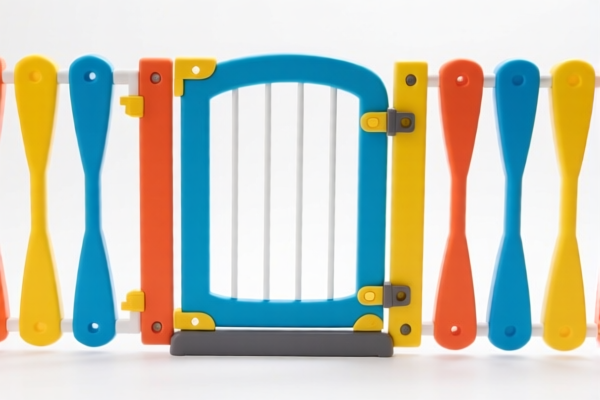
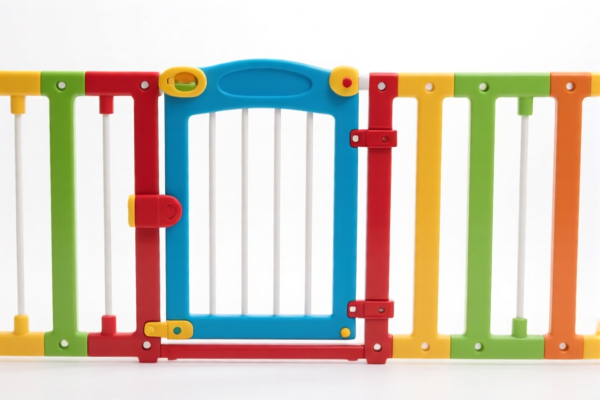
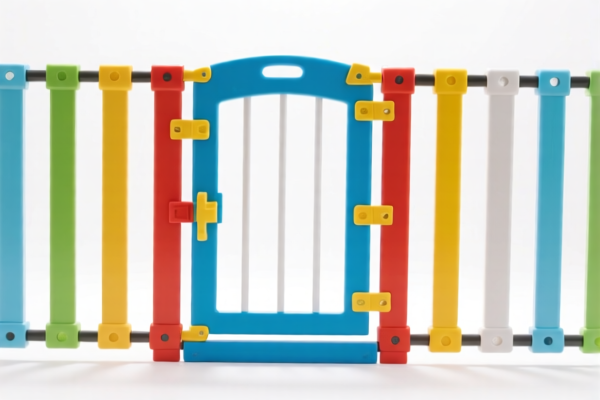
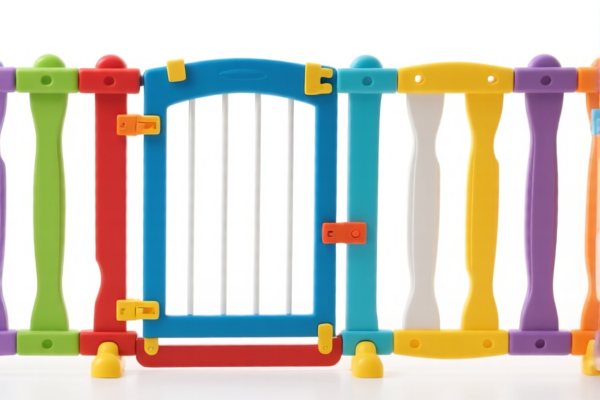
AI分析
🛡️ Child Room Safety Gate: HS Code Classification & US Customs Clearance Guide (2026)
🌐 HS Code Reference & Customs Clearance Guide | 2026 Latest Tariff Analysis | Professional Strategy 📌 Part 1: Product Definition & Classification – What is a "Child Room Safety Gate"?
A Child Room Safety Gate (also known as a baby gate, safety barrier, or nursery gate) is a temporary fencing device used to restrict access to certain areas of a home, such as staircases, doorways, or patios, to prevent young children or pets from entering hazardous zones.
In international trade, these products are not classified as "furniture" or "baby equipment" in the general sense. Instead, their classification depends heavily on the primary material and functionality:
- Plastic Gates: Made primarily of molded plastic, often with fabric mesh or metal accents.
- Metal Gates (Steel/Iron/Aluminum): Constructed with metal frames, bars, or mesh.
- Wooden Gates: Solid wood construction, often matching home decor.
⚠️ Critical Distinction:
- If the product is prefabricated architectural work (fixed or semi-fixed structural elements like porch railings or permanent balcony guards), it may fall under Chapter 73 (Iron/Steel) or Chapter 44 (Wood).
- If it is a portable safety barrier specifically for child/pet safety, customs often scrutinizes whether it fits under "Builders' ware" (if deemed a building accessory) or specific safety equipment codes.
- For the purpose of this analysis, we strictly adhere to the provided DATA, which classifies these under "Builders' Ware" categories. This implies the US Customs interpretation treats these gates as building accessories or parts of structures, rather than general household goods.
📦 Part 2: HS Code Classification Details (Based on Provided DATA)
| HS Code | Product Description | Material | Applicable Scenario |
|---|---|---|---|
3925.90.00.00 |
Builders' ware of plastics, not elsewhere specified or included: Other | Plastic | Portable plastic baby gates, mesh gates with plastic frames |
3925.20.00.91 |
Builders' ware of plastics...: Doors, windows and their frames... Other | Plastic | Plastic gates that resemble door/window frames or are structurally similar to door frames |
7308.30.50.15 |
Structures of iron or steel... Doors, windows... Other Windows and their frames | Steel | Steel/metal safety gates, often with vertical bars or mesh panels |
7308.90.95.60 |
Structures of iron or steel... Other: Architectural and ornamental work | Steel | Decorative metal gates, wrought-iron style baby gates |
4418.99.91.95 |
Builders' joinery and carpentry of wood... Other: Other Other: Other | Wood | Solid wood safety gates, wooden nursery barriers |
4418.99.91.50 |
Builders' joinery and carpentry of wood... Prefabricated partitions and panels for buildings | Wood | Wooden gate panels or prefabricated wooden safety barriers |
🔍 Key Insight:
- The provided data classifies all child safety gates under "Builders' Ware" (Headings 3925, 7308, 4418).
- This is unusual for typical "baby products," which might otherwise go under 9403 (Furniture) or 9503 (Toys). However, US Customs may view gates as architectural safety fixtures.
- Always verify with your broker, but for this guide, we use the provided HS codes.
💰 Part 3: 2026 US Tariff Rate Breakdown (Section 301 & IEEPA)
✅ Applicable Country: United States (US)
✅ Country of Origin: China (CN)
✅ Effective Date: 2025/2026 (Current Trade War Tariffs Apply)
🎯 1. Plastic Gates (3925.90.00.00)
| Item | Detail |
|---|---|
| Base Tariff | 0% |
| Additional Tariff (Section 301) | 0% |
| Total Tax | 0.0% |
| Calculation | CIF Value × 0% |
| De Minimis Exemption | ❌ No (Section 301 items are not eligible for $800 de minimis if subject to 301, but here base is 0% + 0% = 0%. However, check for other restrictions.) |
| Legal Path | HTSUS:3925.90.00.00 |
📌 Note:
- Plastic gates have no additional tariffs under the provided data.
- This is a cost-effective classification for plastic gates.
- Ensure the product is not considered "doors/windows" under3925.20.00.91if it has frame-like structures, which would incur higher taxes.
🎯 2. Plastic Gate (Frame-Type) (3925.20.00.91)
| Item | Detail |
|---|---|
| Base Tariff | 5.3% |
| Additional Tariff (Section 301) | 7.5% |
| Total Tax | 12.8% |
| Calculation | CIF Value × 12.8% |
| Legal Path | HTSUS:3925.20.00.91 |
📌 Note:
- If the gate is classified as a "door/frame-like" structure, the tax jumps to 12.8%.
- Strategy: Argue for3925.90.00.00if the gate is clearly a safety barrier and not a door/window frame.
🎯 3. Steel Gates (7308.30.50.15 & 7308.90.95.60)
| Item | Detail |
|---|---|
| Base Tariff | 0% |
| Additional Tariff (Section 301) | 25.0% |
| Steel/Aluminum/Copper Surtax | +50.0% |
| Total Tax | 75.0% |
| Calculation | CIF Value × 75.0% |
| Legal Path | HTSUS:7308.30.50.15 or 7308.90.95.60 |
📌 Critical Warning:
- Steel gates are subject to a devastating 75% total tariff!
- This includes the standard 25% Section 301 tariff PLUS a 50% surcharge on steel products.
- Avoid classifying steel baby gates under Chapter 73 if possible. Consider alternative materials (plastic, wood) or negotiate with suppliers for non-steel components.
🎯 4. Wooden Gates (4418.99.91.95 & 4418.99.91.50)
| Item | Detail |
|---|---|
| Base Tariff | 3.2% |
| Additional Tariff (Section 301) | 25.0% |
| Total Tax | 28.2% |
| Calculation | CIF Value × 28.2% |
| Legal Path | HTSUS:4418.99.91.95 or 4418.99.91.50 |
📌 Note:
- Wooden gates are moderately taxed at 28.2%.
- This is significantly cheaper than steel gates (75%) but more expensive than plastic gates (0-12.8%).
- Strategy: Use4418.99.91.95("Other") unless the gate is a "prefabricated partition," which has the same tax rate but different description.
🛠️ Part 4: Customs Clearance Practical Advice
✅ 1. Documentation Checklist (Must-Have)
| Document | Required | Notes |
|---|---|---|
| Product Specification Sheet | ✔️ | Include material composition (e.g., "80% PP Plastic, 20% Steel Hardware") |
| Product Photos | ✔️ | Show the gate in both installed and unfolded states. Highlight safety mechanisms (latches, hinges). |
| Commercial Invoice | ✔️ | Clearly state: "Child Safety Gate, Plastic/Metal/Wood, For Home Use" |
| Packing List | ✔️ | List all components (gate panels, hardware kits, instruction manuals) |
| Safety Certifications | ✔️ | ASTM F1004 (US Standard for Baby Gates) or JPMA Certification – CRITICAL for clearance |
| Material Declaration | ✔️ | Specify if steel is stainless, carbon, or aluminum; if wood is solid or engineered |
✅ 2. Classification Strategy (How to Lower Taxes)
| Strategy | Description | Potential Savings |
|---|---|---|
| Material Selection | Choose Plastic (3925.90.00.00) over Steel (7308...) |
75% → 0% (Huge savings!) |
| Avoid "Frame" Classification | For plastic gates, argue against 3925.20.00.91 by emphasizing safety function, not architectural function |
12.8% → 0% |
| Steel Component Minimization | If using steel gates, ensure steel is <50% of value/component weight to argue for "Plastic" classification (if possible) | 75% → 0-12.8% |
| Wood vs. Steel | Use Wood (28.2%) if Plastic is not feasible, NEVER use Steel unless absolutely necessary |
75% → 28.2% |
🔥 Golden Rule:
"Plastic is King, Steel is Queen of Taxes, Wood is the Middle Child!"
- Plastic: 0-12.8%
- Wood: 28.2%
- Steel: 75%
✅ 3. Common Clearance Pitfalls
| Pitfall | Consequence | Solution |
|---|---|---|
| Misclassifying Steel as "Furniture" | If not using provided DATA, this might be a risk. But under provided DATA, steel is 75%. | Stick to provided HS codes. Do not try to force 9403 unless you have a strong legal opinion. |
| Missing ASTM Certification | CBP may hold shipment for safety inspection, causing delays. | Ensure JPMA or ASTM F1004 compliance is documented. |
| Vague Description | "Gate" is too vague. | Use "Child Safety Gate, Model XYZ, Plastic/Metal, ASTM F1004 Certified" |
| Including Non-Declared Hardware | If metal hinges are not declared, CBP may assess duties on the entire value as steel. | Declare all materials separately if possible, or ensure the primary material dominates. |
✅ 4. Special Considerations for 2026
- Steel Surtax: The 50% surcharge on steel products is non-negotiable for US imports from China. Avoid steel baby gates unless your margin can absorb 75% tax.
- Plastic Flexibility: Plastic gates have the most favorable tariff treatment (0-12.8%). Optimize designs to maximize plastic content.
- Wooden Trends: Wooden gates are popular for aesthetics but carry a 28.2% tax. Ensure the wood is not from restricted sources.
🌍 Part 5: Global Market Comparison (2026)
| Market | Recommended HS Code (Based on Provided DATA) | Tax Rate (China Origin) | Notes |
|---|---|---|---|
| 🇺🇸 USA | 3925.90.00.00 (Plastic) |
0% | Lowest tax. Avoid steel (7308) due to 75% tax. |
| 🇪🇺 EU | Varies (EU does not have Section 301) | ~0-4% | EU does not apply 301 tariffs. Steel taxes are lower (~2-4%). |
| 🇨🇳 China | N/A (Export) | 0% | No export duties for these categories. |
| 🇬🇧 UK | Varies | ~0-4% | Post-Brexit tariffs may vary, but no China-specific surtax. |
📌 Conclusion:
- USA is the most challenging market for Steel Safety Gates due to the 75% total tariff.
- Plastic Gates are the most cost-effective for US export.
- Consider diversifying supply chains: If steel is essential, source from non-China countries (e.g., Vietnam, Mexico) to avoid Section 301 tariffs.
📌 Part 6: Final Tips & Action Plan
🚀 Action Plan for Importers:
- Design for Plastic: Maximize plastic components to qualify for
3925.90.00.00(0% tax). - Avoid Steel: If steel is necessary, minimize its value share or use non-Chinese steel.
- Certify Early: Obtain JPMA certification before production to avoid clearance delays.
- Clear Documentation: Label products as "Child Safety Gate, ASTM F1004 Certified" to speed up customs review.
💡 Pro Tip:
"In the US, steel is expensive, plastic is smart, and wood is stylish. Choose wisely to protect your margins!"
✨ Professional Customs Clearance Starts with Accurate Classification!
💼 Every percentage point of tax savings adds directly to your bottom line!
用户评价
关于 HS 编码归类
协调制度(HS)是由世界海关组织(WCO)制定的国际贸易商品分类标准。全球 200 多个国家采用 HS 系统作为海关关税、贸易统计和进出口监管的基础。
每个 HS 编码遵循以下层级结构:
- 章(2 位)——商品大类(例如:第 84 章:机器和机械设备)
- 品目(4 位)——章内的更具体分类
- 子目(6 位)——国际通用细分,所有 WCO 成员国统一使用
- 本国细分(8-10 位)——各国自行扩展的细分编码,如美国 HTSUS 10 位编码
正确的 HS 编码归类对于顺利通关、准确缴纳关税和遵守贸易法规至关重要。错误归类可能导致海关延误、多缴关税或罚款。
从CN进口到US时,适用的关税税率可能包括:
- 最惠国(MFN)税率——适用于 WTO 成员国的标准关税税率
- 普通税率——适用于无贸易协定国家
- 贸易救济关税——附加关税,如 301 条款(反倾销)、232 条款(国家安全)或反补贴税
本页内容仅供参考。如需正式归类,请咨询当地海关或持牌报关代理。