chlorinated adhesive release agent
CN → US| HS编码 | 关税税率 | 原产国 | 目的国 | 文档 |
|---|---|---|---|---|
| 3824995000 | 41.5% | CN | US | 官方文档 |
| 3824995500 | 38.7% | CN | US | 官方文档 |
| 3824890000 | 41.5% | CN | US | 官方文档 |
| 3824999397 | 40.0% | CN | US | 官方文档 |
| 3824995000 | 41.5% | CN | US | 官方文档 |
商品图片
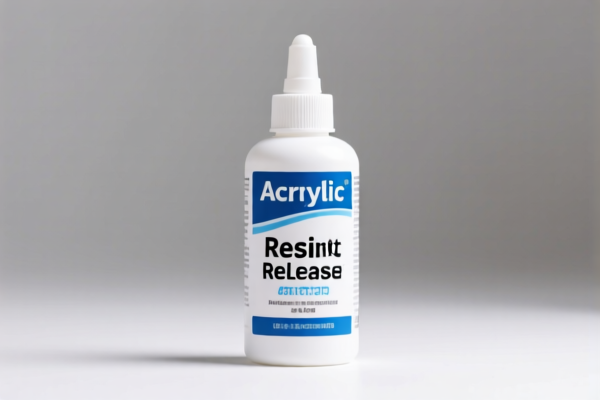
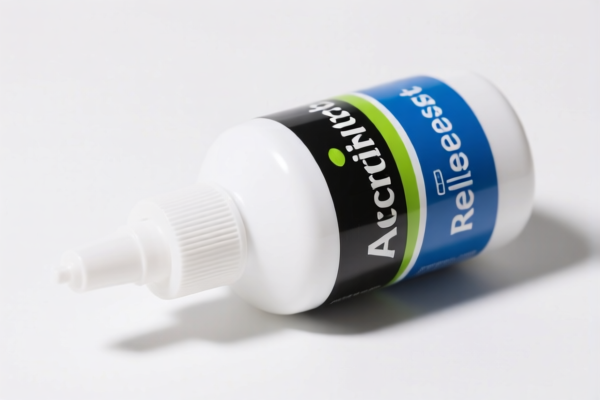
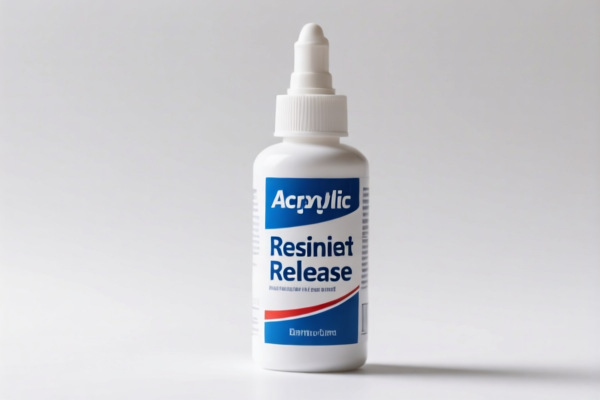
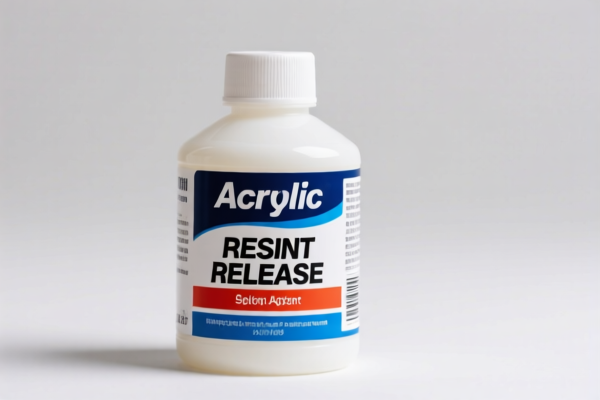
AI分析
🧪 Chlorinated Adhesive Release Agent
🌐 HS Code Reference & Customs Clearance Guide | 2026 Latest Tariff Analysis | Professional Entry Strategy
📌 I. Product Definition & Classification: Do You Truly Understand "Chlorinated Release Agents"?
Chlorinated Adhesive Release Agents (often polymeric release coatings containing chlorinated polyolefins like CPO or chlorinated polyethylene) are critical chemical additives used in the manufacture of pressure-sensitive adhesives, self-adhesive labels, medical tapes, and industrial films. They prevent adhesives from bonding permanently to the backing liner until intended.
In international trade, they are generally categorized based on their chemical composition and state. The most common classification falls under Chapter 39 (Plastics) or Chapter 29 (Organic Chemicals), depending on whether it is a bulk chemical or a formulated plastic resin.
⚠️ Key Distinction Point:
- If the product is a pure chemical substance (e.g., chlorinated polyethylene resin) → Often falls under Chapter 29.
- If the product is a pre-formulated plastic resin or masterbatch intended for processing into films/fibers → Typically falls under Chapter 39.
- Most commercial "Release Agents" in granular/pellet form are classified as plastics (Chapter 39) unless they are raw chemicals sold for further chemical synthesis.
📦 II. HS Code Classification Details (2026 Latest Tariff Authority Cross-Reference)
| HS Code | Product Description | Application Scenario | Chemical Nature |
|---|---|---|---|
3901.10.00.00 |
Polyethylene, primary form | If the agent is a modified polyethylene (CPO is a chlorinated polyolefin derivative) | ✅ Chlorinated Polyolefin |
3907.91.00.00 |
Other polyacetals, other polyethers, and their derivatives; polycarbonates... | If classified as a specialized polyester or polycarbonate derivative containing chlorine | ✅ Specific Polymer |
3916.20.90.00 |
Monofilament, strip, etc., of plastics... | If sold as fibers or specific shaped plastics | ✅ Processed Plastic |
3926.90.97.00 |
Other articles of plastics and articles of other materials of heading 3901 to 3914 | Most Common: For formulated release agent pellets/granules not elsewhere specified | ✅ Formulated Resin |
2904.20.00.00 |
Sulphonated hydrocarbons; salts thereof; esters and other derivatives | If specifically a sulfonated chlorinated compound (rare for general release agents) | ❌ Unlikely for standard CPO |
3824.99.92.00 |
Prepared binders for foundry molds...; chemical products... | If it is a liquid formulation or mixture not fitting plastic resin definitions | ✅ Mixture/Additive |
🔍 Critical Reminder:
- Most "Chlorinated Release Agents" in solid/pellet form are classified under3926.90.97.00(Other articles of plastics) or3901.10.00.00(if specifically Polyethylene-based).
- Liquid release agents may fall under3824.99.92.00(Prepared chemical products).
- Do not classify under adhesives (Chapter 35); release agents are anti-adhesive, not adhesives.
- If the product is a mixture of chlorinated polymers and other additives, and cannot be identified by the basic polymer, it often defaults to3926.90.97.00(Other plastics articles).
💰 III. 2026 Latest Tariff Rate Details (Including Surtaxes & Policy Add-ons)
✅ Applicable Country: United States (US)
✅ Country of Origin: China (CN)
✅ Effective Date: November 10, 2025 (and onwards)
🎯 1. 3926.90.97.00 —— Other Articles of Plastics (Most Common for Formulated Release Agents)
| Item | Content |
|---|---|
| Base Rate | 5.3% (ad valorem) |
| USITC Surcharge | +25% (under USITC Footnote 83, Section 301) |
| IEEPA Surcharge | +10% (针对中国/香港产品,自2025年11月10日起) |
| Total Rate | 40.3% |
| Tax Calculation | CIF Value × 40.3% |
| De Minimis Exemption | ❌ Not Eligible (deny_de_minimis) |
| Legal Path | IEEPA:9903.01.24 → USITC:3926.90.97.00 → FOOTNOTE:83 |
📌 Explanation:
- "USITC 25%" comes from the Section 301 tariffs on specific plastic articles and chemical products.
- "IEEPA 10%" is the new additional tariff under the International Emergency Economic Powers Act for Chinese-origin plastics.
- Total 40.3% is a high tariff, significantly impacting cost.
- No de minimis exemption: Small shipments still pay the full tariff.
🎯 2. 3901.10.00.00 —— Polyethylene, Primary Form (If Classified as Raw PE)
| Item | Content |
|---|---|
| Base Rate | 0% |
| USITC Surcharge | +25% (Section 301 applies to many plastics) |
| IEEPA Surcharge | +10% |
| Total Rate | 35% |
| Tax Calculation | CIF × 35% |
| De Minimis Exemption | ❌ Not Eligible |
| Legal Path | IEEPA:9901.25 → USITC:3901.10.00.00 → FOOTNOTE:83 |
📌 Note:
- Even if base rate is 0%, the 35% effective rate is still very high.
- Chlorinated polyethylene (CPE) is often subclassified here or under3901.90. Check specific chemical structure.
🎯 3. 3824.99.92.00 —— Prepared Chemical Products (For Liquid/Formulated Mixtures)
| Item | Content |
|---|---|
| Base Rate | 5.3% |
| USITC Surcharge | +25% |
| IEEPA Surcharge | +10% |
| Total Rate | 40.3% |
| Tax Calculation | CIF × 40.3% |
| De Minimis Exemption | ❌ Not Eligible |
🛠️ IV. Customs Clearance Practical Advice (Combat Pitfalls Guide)
✅ 1. Required Documentation Checklist (Missing = Delay)
| Document | Must Provide | Description |
|---|---|---|
| ✅ Product Specification Sheet | ✔️ | Must include: Chemical name (e.g., Chlorinated Polyolefin), CAS number, % composition, physical form (pellet/liquid). |
| ✅ Safety Data Sheet (SDS) | ✔️ | Must comply with GHS/OSHA standards. Classify hazards correctly. |
| ✅ Composition Declaration | ✔️ | Detailed breakdown of ingredients. Essential for HS Code determination. |
| ✅ Commercial Invoice | ✔️ | Must state: "Chlorinated Polyolefin Release Agent, Granular, Model XYZ". Avoid vague terms like "Chemical". |
| ✅ Certificate of Origin (CO) | ✔️ | To verify Country of Origin (CN). |
| ✅ Non-Pressurized Container Declaration | ✔️ | If liquid, confirm it’s not hazardous goods unless declared. |
| ✅ Test Report | ✔️ | FCC/REACH if applicable. For plastics, may need RoHS compliance. |
✅ 2. Declaration Tips (Key Mantra)
🔥 "Specify the Polymer, Not the Function! Name is Key, Tax is Clear!"
| Scenario | Correct Declaration | Wrong Approach |
|---|---|---|
| Pellet/Formulated Resin | "Chlorinated Polyolefin Plastic Resin for Release Coatings" | "Release Agent" → May be questioned for classification |
| Liquid Mixture | "Prepared Chemical Release Agent, Non-Hazardous" | "Adhesive Additive" → May mislead to Chapter 35 |
| Raw Chemical | "Chlorinated Polyethylene, Primary Form" | "Plastic Granules" → Too vague |
| Mixture with Other Polymers | "Polymer Blend for Release Agent, Not Elsewhere Specified" | "Other Plastics" → Must specify "Other" (3926) |
📌 Crucial Advice:
- Do NOT declare as "Adhesive" (Chapter 35). Release agents are anti-adhesives.
- If the product is a blend, and the primary function cannot be determined by the basic polymer, use3926.90.97.00.
- Provide CAS numbers to prove chemical identity.
✅ 3. Special Cases Handling
| Case | Handling Suggestion |
|---|---|
| Liquid vs. Solid | Solid → Chapter 39; Liquid → Chapter 38 or 39 depending on formulation. |
| Hazardous Goods | If classified as hazardous (e.g., flammable), additional IMDG/IATA rules apply. Check SDS Class. |
| OEM Custom Product | Provide customer PO + technical data sheet to prove it’s a specialized plastic. |
| Samples | Declare as "Sample for Testing", but still subject to tariff if value exceeds threshold. |
🌍 V. Global Market Comparison (2026 Latest)
| Country/Region | Recommended HS Code | Tariff | Certification | Note |
|---|---|---|---|---|
| 🇺🇸 USA | 3926.90.97.00 |
40.3% (CN) | FDA/REACH (if contact) | High tariff due to Section 301 + IEEPA |
| 🇨🇳 China | 3926.90.97.00 |
6.5% | CCC (if applicable) | No surcharges |
| 🇪🇺 EU | 3926.90.97.00 |
6.5% | REACH Registration | No anti-dumping |
| 🇦🇺 Australia | 3926.90.97.00 |
5% | AICIS | Low tariff |
| 🇯🇵 Japan | 3926.90.97.00 |
7.3% | PSE (if electrical) | Moderate tariff |
📌 Conclusion:
- USA is the highest cost market for Chinese-origin release agents due to 40.3% effective tariff.
- EU and Japan have stable, lower tariffs but strict REACH/PSE chemical regulations.
- Consider supply chain diversification (e.g., Vietnam, Thailand) to mitigate US tariffs if volume is large.
📌 VI. Common Errors & Pitfalls (Blood & Tears Lessons)
❌ Error 1: Declaring as "Adhesive" (HS 3506)
👉 Consequence: Customs may reclassify to 3926/3824 + penalty for misdeclaration. Release agents are not adhesives.
❌ Error 2: Vague Description "Chemical Agent"
👉 Consequence: Customs request additional info, delay clearance, or impose highest duty rate.
❌ Error 3: Ignoring IEEPA 10% Surtax
👉 Consequence: Unexpected 40.3% tax bill instead of expected 25-30%. Budget accordingly!
❌ Error 4: Failing to Provide CAS Number
👉 Consequence: Customs cannot determine if it’s a basic chemical (Ch 29) or plastic (Ch 39), leading to audit.
✅ Correct Practice:
"Chlorinated Polyolefin (CPO) Release Agent Pellets, Non-Hazardous, Model XYZ, CAS No. 9007-XXXX-X, For Self-Adhesive Liners"
🎯 VII. Conclusion: Precise Declaration Saves Thousands!
🎯 Remember the Mantra:
🔹 "Not an Adhesive, It’s a Release Agent!"
🔹 "Solid = Chapter 39, Liquid = Chapter 38/39"
🔹 "Total Tax 40.3% in US, Plan Ahead!"
📌 Pro Tip:
If your release agents are originating from Vietnam, Mexico, or Thailand, you may qualify for IEEPA Exemption, reducing tax to 0-5%.
Recommendation: Apply for Advance Ruling with US CBP if unsure about classification.
📣 Immediate Action:
📞 Contact Professional Customs Broker + Provide SDS + Apply for HS Code Advance Ruling
🚀 Ensure smooth customs clearance, minimize costs, and maximize profit margins!
✨ Professional Clearance Starts with Accurate Classification!
💼 Every Dollar Saved is a Dollar Earned!
用户评价
关于 HS 编码归类
协调制度(HS)是由世界海关组织(WCO)制定的国际贸易商品分类标准。全球 200 多个国家采用 HS 系统作为海关关税、贸易统计和进出口监管的基础。
每个 HS 编码遵循以下层级结构:
- 章(2 位)——商品大类(例如:第 84 章:机器和机械设备)
- 品目(4 位)——章内的更具体分类
- 子目(6 位)——国际通用细分,所有 WCO 成员国统一使用
- 本国细分(8-10 位)——各国自行扩展的细分编码,如美国 HTSUS 10 位编码
正确的 HS 编码归类对于顺利通关、准确缴纳关税和遵守贸易法规至关重要。错误归类可能导致海关延误、多缴关税或罚款。
从CN进口到US时,适用的关税税率可能包括:
- 最惠国(MFN)税率——适用于 WTO 成员国的标准关税税率
- 普通税率——适用于无贸易协定国家
- 贸易救济关税——附加关税,如 301 条款(反倾销)、232 条款(国家安全)或反补贴税
本页内容仅供参考。如需正式归类,请咨询当地海关或持牌报关代理。