chlorinated paraffin sealant
CN → US| HS编码 | 关税税率 | 原产国 | 目的国 | 文档 |
|---|---|---|---|---|
| 8487900040 | 38.9% | CN | US | 官方文档 |
| 8487900080 | 88.9% | CN | US | 官方文档 |
| 3506915000 | 37.1% | CN | US | 官方文档 |
| 3506990000 | 37.1% | CN | US | 官方文档 |
商品图片
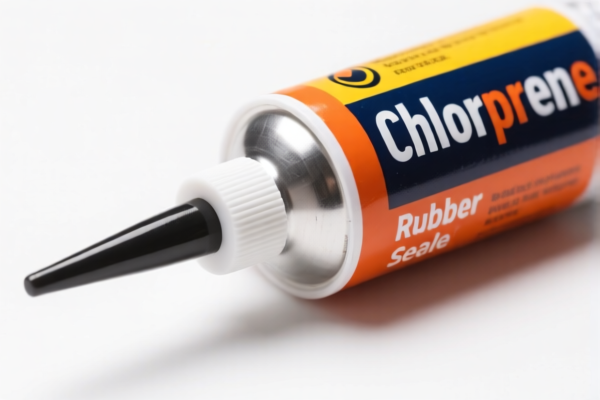
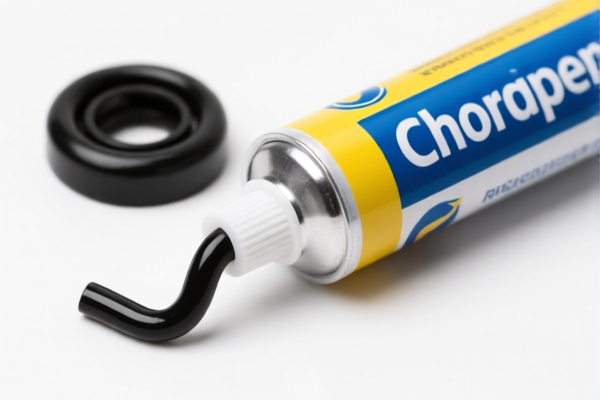
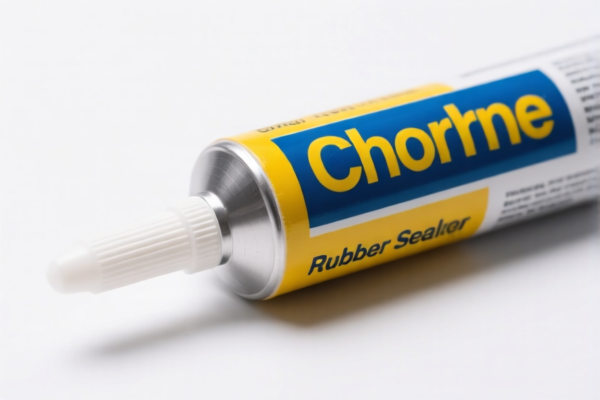
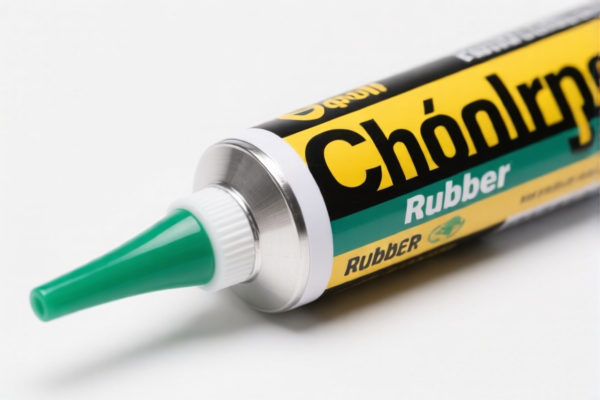
AI分析
🛡️ Chlorinated Paraffin Sealant (CP Sealant)
🌐 HS Code Reference & Customs Clearance Guide | 2026 Latest Tariff Analysis | Professional-Level Strategy
📌 I. Product Definition & Classification: What is a "Chlorinated Paraffin Sealant"?
Chlorinated Paraffins (CP) are synthetic chemical compounds derived from paraffin wax by chlorination. When used as a sealant, they are typically formulated as: 1. Prepared Adhesives/Glues: Liquid or paste forms intended to bond or seal materials. 2. Chemical Sealants: Rubber-based or polymer-based compounds used for sealing gaps, joints, or surfaces in industrial applications.
⚠️ Critical Distinction:
- If the product is a pure chemical intermediate (not prepared for retail or specific end-use sealing) → It may fall under Chapter 29 (Organic Chemicals).
- If the product is formulated, mixed, or put up for retail sale as a glue, adhesive, or sealant → It falls under Chapter 35 (Prepared Glues & Adhesives).
- If the product is a mechanical seal component (e.g., an O-ring or lip seal) → It falls under Chapter 84 or 40 (Machinery Parts or Rubber Articles).📌 Key Question for Classification:
Is your "sealant" a chemical substance applied by hand/brush/spray (Glue/Adhesive/Sealant) OR a physical part inserted into machinery?
- Chemical Application → Look at HS 3506.
- Mechanical Part → Look at HS 8487.
📦 II. HS Code Classification Details (2026 Latest Tariff Alignment)
Based on the provided data, we analyze two distinct pathways depending on the physical form and function of the product.
| HS Code | Product Description | Applicable Scenario | Key Determinant |
|---|---|---|---|
3506.91.50.00 |
Prepared glues & adhesives: Other: Adhesives based on polymers (Headings 3901–3913) or rubber: Other | Chemical Sealants/Glues: CP-based adhesives, liquid sealants, retail-packaged bonding agents | Form: Liquid/Paste; Function: Bonding/Sealing via chemical adhesion |
3506.99.00.00 |
Prepared glues & adhesives: Other: Other | General Adhesives: CP-based products not covered by 3506.91 (e.g., non-polymer/rubber based, or non-retail bulk) | Form: Liquid/Paste; Function: General Adhesive/Sealant (Non-Polymer/Rubber Base) |
8487.90.00.40 |
Machinery parts (non-electrical): Other: Oil seals, other than those of Chapter 40 | Mechanical Oil Seals: Physical CP-rubber composite seals used in pumps, engines, or hydraulic systems | Form: Solid Part; Function: Mechanical barrier against oil leakage |
8487.90.00.80 |
Machinery parts (non-electrical): Other: Other | Other Machinery Parts: Non-standard mechanical components made of CP composites | Form: Solid Part; Function: Generic machinery component |
🔍 重点提醒 (Critical Notes):
- Chemical Sealants (3506): If your product is a tube of "Chlorinated Paraffin Sealant" used for construction or manufacturing bonding, it is NOT a machinery part. It is an adhesive.
- Mechanical Seals (8487): If your product is a pre-formed rubber/plastic seal ring (O-ring, lip seal) made with CP rubber, it is a Machinery Part.
- Misclassification Risk: Declaring a liquid sealant as a "machinery part" (8487) will cause customs delays, as HS 8487 explicitly excludes electrical features and requires non-specified machinery parts.
💰 III. 2026 Latest Tariff Rate Breakdown (Including Surtaxes)
✅ Applicable Country: United States (US)
✅ Origin: China (CN)
✅ Effective Time: 2025-11-10 onwards
🎯 1. 3506.91.50.00 —— Chlorinated Paraffin Adhesives (Polymer/Rubber Base)
| Item | Content |
|---|---|
| Basic Tariff | 0.0% (ad valorem) |
| Additional Tariff | 0.0% |
| Total Tariff Rate | 0.0% |
| Tax Calculation | CIF Value × 0% = $0 |
| De Minimis Eligibility | ✅ Yes (if value < $800) |
| Legal Basis | HTSUS: 3506.91.50 → No Footnote 9903 or 9904 surcharge applied |
📌 Explanation:
- This specific subheading for adhesives based on polymers (Headings 3901–3913) or rubber currently enjoys a 0% total tariff in the provided data.
- No Section 301 or IEEPA surcharges are listed for this code in the provided dataset.
- Advantage: This is the most favorable classification if your product is a CP-based adhesive/sealant.
🎯 2. 3506.99.00.00 —— Other Prepared Adhesives (Non-Polymer/Rubber)
| Item | Content |
|---|---|
| Basic Tariff | 2.1% |
| Additional Tariff (Section 301/IEEPA) | +25.0% |
| Total Tariff Rate | 27.1% |
| Tax Calculation | CIF Value × 27.1% |
| De Minimis Eligibility | ❌ No (Deny De Minimis due to >25% surtax) |
| Legal Basis | IEEPA:9903.01.25 → USITC:3506.99.00 → FOOTNOTE:9903.88.01 |
📌 Explanation:
- If your CP sealant is not based on polymers (3901-3913) or rubber, it falls here.
- High Cost: 27.1% total duty.
- De Minimis Blocked: Cannot use Section 321 ($800 exemption) for individual shipments if classified here.
🎯 3. 8487.90.00.40 —— Mechanical Oil Seals (Non-Ch40)
| Item | Content |
|---|---|
| Basic Tariff | 3.9% |
| Additional Tariff (Section 301/IEEPA) | +25.0% |
| Total Tariff Rate | 28.9% |
| Tax Calculation | CIF Value × 28.9% |
| De Minimis Eligibility | ❌ No (Deny De Minimis due to >25% surtax) |
| Legal Basis | IEEPA:9903.01.25 → USITC:8487.90.00.40 |
📌 Explanation:
- If your CP product is a physical seal part (e.g., a rubber O-ring made with CP), it is taxed as a machinery part.
- Note: Even if made of rubber, if it is a "mechanical seal" for machinery, it is not classified under Chapter 40 (Rubber Articles) but under Chapter 84 (Machinery Parts).
🎯 4. 8487.90.00.80 —— Other Machinery Parts (Steel/Aluminum/Copper Components)
| Item | Content |
|---|---|
| Basic Tariff | 3.9% |
| Additional Tariff (Section 301/IEEPA) | +25.0% |
| Steel/Aluminum/Copper Surtax | +50.0% |
| Total Tariff Rate | 78.9% |
| Tax Calculation | CIF Value × 78.9% |
| De Minimis Eligibility | ❌ No |
| Legal Basis | IEEPA:9903.01.25 → USITC:8487.90.00.80 → FOOTNOTE:Steel/Aluminum/Copper |
📌 Explanation:
- Extreme Risk: If your "sealant" part contains steel, aluminum, or copper components (e.g., a metal-reinforced CP seal), it triggers the 50% Steel/Aluminum tariff.
- Total 78.9% is prohibitively high. Avoid this classification if possible.
- Most CP sealants are polymer/rubber-based and do not contain metals, so this code is likely inapplicable unless the product is a complex mechanical assembly.
🛠️ IV. Customs Clearance Practical Advice (Avoid Pitfalls)
✅ 1. Documentation Checklist (Mandatory)
| Document | Must Provide | Explanation |
|---|---|---|
| ✅ Product Technical Data Sheet | ✔️ | Must specify: Chemical Composition (Is it Polymer/Rubber-based? Is it pure CP?), Physical State (Liquid/Solid), Intended Use (Adhesive vs. Mechanical Seal). |
| ✅ Formula/Composition Statement | ✔️ | List % of Chlorinated Paraffins. If >80% polymers (3901-3913), argue for 3506.91.50.00. |
| ✅ Product Photos | ✔️ | Show packaging. If retail-sized (<1kg), note "Retail Sale". |
| ✅ Safety Data Sheet (SDS) | ✔️ | Required for chemical imports. Confirms it is a "Prepared Adhesive" or "Chemical". |
| ✅ Commercial Invoice | ✔️ | Describe as: "Chlorinated Paraffin Based Adhesive, Liquid Form, for Industrial Bonding" (for 3506) OR "Synthetic Rubber Oil Seal, Mechanical Part" (for 8487). |
✅ 2. Classification Strategy (Key Decision Matrix)
| Your Product Type | Recommended HS Code | Why? |
|---|---|---|
| Liquid/Gel CP Sealant in tubes/tins | 3506.91.50.00 |
0% Duty. Classify as adhesive based on polymer/rubber. |
| Bulk CP Adhesive (not retail) | 3506.99.00.00 |
27.1% Duty. If not polymer/rubber based. |
| Rubber O-Ring/Seal Ring (CP material) | 8487.90.00.40 |
28.9% Duty. Classified as machinery part, not Chapter 40. |
| Metal-Reinforced CP Seal | 8487.90.00.80 |
AVOID: 78.9% Duty due to Steel/Al/Cu surtax. |
🔥 Golden Rule:
"Liquid/Paste = Adhesive (3506). Solid Part = Machinery Part (8487)."
Never declare a liquid sealant as a "machinery part" to avoid duties; customs will inspect and reclassify, leading to penalties.
✅ 3. Special Case Handling
| Scenario | Action |
|---|---|
| Is it a "Prepared Glue"? | If yes, it goes to Chapter 35. Check if base is Polymer (3901-3913) → 3506.91.50.00 (0%). |
| Is it an "Oil Seal"? | If it is a mechanical seal for pumps/engines, it goes to Chapter 84. Do not use Chapter 40 (Rubber) for machinery-specific seals. |
| Does it contain Metal? | If yes, check for Steel/Al/Cu content. If >0%, expect 78.9% duty on 8487.90.00.80. |
| De Minimis Shipment (<$800) | Only eligible if HS Code has 0% surtax. 3506.91.50.00 is eligible. 3506.99, 8487.90 are NOT. |
🌍 V. Global Market Comparison (2026)
| Country/Region | Recommended HS Code | Tariff (China Origin) | Key Requirement |
|---|---|---|---|
| 🇺🇸 USA | 3506.91.50.00 |
0.0% (if Polymer/Rubber based) | SDS, Formula Disclosure |
| 🇺🇸 USA | 8487.90.00.40 |
28.9% | Machinery Function Proof |
| 🇪🇺 EU | 3506.91 |
~0-2% | REACH Compliance (CP is restricted) |
| 🇨🇳 China | 3506.91 |
~0-5% | CCC (if electrical) |
📌 Note for USA:
- Chlorinated Paraffins (CP) are subject to EPA/OSHA regulations. Ensure your product meets TSCA requirements.
- High chlorinated paraffins (HCCP) are banned in many applications. Ensure you are using Medium Chlorinated Paraffins (MCCP) or Low Chlorinated Paraffins (LCCP) compliant with US law.
📌 VI. Common Mistakes & Pitfalls (Lessons Learned)
❌ Mistake 1: Declaring CP Sealant as "Rubber Article" (Chapter 40)
👉 Consequence: Incorrect classification. Mechanical seals go to Ch 84. Chemical sealants go to Ch 35.
👉 Result: Customs rejection or penalty.
❌ Mistake 2: Ignoring the "Polymer Base" for Adhesives
👉 Consequence: Classifying 3506.91.50.00 (0%) vs 3506.99.00.00 (27.1%).
👉 Result: If your adhesive is polymer-based, always use 3506.91.50.00 to save 27.1%.
❌ Mistake 3: Overlooking Steel/Aluminum Content in Mechanical Seals
👉 Consequence: Classifying 8487.90.00.80 without declaring metal content.
👉 Result: 50% additional surtax applies, totaling 78.9%.
✅ Correct Action:
Step 1: Determine if product is Chemical (Liquid) or Mechanical (Solid).
Step 2: If Chemical → Check if Polymer/Rubber-based → Use3506.91.50.00(0%).
Step 3: If Mechanical → Check for Metal Content → Use8487.90.00.40(28.9%) if non-metal.
🎯 VII. Conclusion: Professional Classification, Maximize Savings
🎯 Key Takeaway:
Chlorinated Paraffin Sealants are primarily Adhesives (Ch 35) unless they are Mechanical Parts (Ch 84).
- Liquid Sealant? → Aim for3506.91.50.00(0% Duty).
- Mechanical Seal? → Aim for8487.90.00.40(28.9% Duty).
- Avoid3506.99(27.1%) and8487.90.00.80(78.9%) unless necessary.📞 Immediate Action:
1. Confirm chemical composition (Polymer vs. Non-Polymer).
2. Confirm physical form (Liquid vs. Solid Part).
3. Submit SDS and Formula to customs broker for pre-classification.
4. If Liquid + Polymer-Based → Declare as3506.91.50.00for 0% Duty.
✨ Professional Clearance, Precise Classification!
💼 Your Cost, Optimized. Your Compliance, Secured.
用户评价
关于 HS 编码归类
协调制度(HS)是由世界海关组织(WCO)制定的国际贸易商品分类标准。全球 200 多个国家采用 HS 系统作为海关关税、贸易统计和进出口监管的基础。
每个 HS 编码遵循以下层级结构:
- 章(2 位)——商品大类(例如:第 84 章:机器和机械设备)
- 品目(4 位)——章内的更具体分类
- 子目(6 位)——国际通用细分,所有 WCO 成员国统一使用
- 本国细分(8-10 位)——各国自行扩展的细分编码,如美国 HTSUS 10 位编码
正确的 HS 编码归类对于顺利通关、准确缴纳关税和遵守贸易法规至关重要。错误归类可能导致海关延误、多缴关税或罚款。
从CN进口到US时,适用的关税税率可能包括:
- 最惠国(MFN)税率——适用于 WTO 成员国的标准关税税率
- 普通税率——适用于无贸易协定国家
- 贸易救济关税——附加关税,如 301 条款(反倾销)、232 条款(国家安全)或反补贴税
本页内容仅供参考。如需正式归类,请咨询当地海关或持牌报关代理。